



Colorado eked out a growth of 500 new jobs in September, according to the latest employment report from the state labor department.
Focus on just private employers and September was negative, with the state losing 200 jobs.
It wasn’t the worst month of the year, nor was it the best. And the belated update, stalled for months because of the longest federal government shutdown in history, is just preliminary. As always, labor data gets revised as employers respond late to monthly government surveys asking how many employees they have on the payroll?
While the numbers will likely change — August was revised to add 6,000 jobs, instead of the initially reported 3,300 — not all industry sectors aligned with national trends.
One that didn’t was in the Professional and Business Services sector, or PBS, which includes jobs like accountants, engineers, legal workers and research and development work.
Colorado has long valued PBS jobs because workers have degrees and higher pay. But the monthly year-over-year growth in the category has been negative for more than a year — until September, when PBS jobs grew 1,600 from a year earlier.
PBS had “two consecutive months of job growth in Colorado despite national losses,” in September, said Tim Wonhof, director of Labor Market Information at the state’s Department of Labor and Employment.
The sector “has historically been a bright spot for Colorado’s labor market supported by the state’s relatively high levels of educational attainment,” he added.
Gary Horvath, an economist in Broomfield, has been watching the PBS sector for a while. “It is encouraging that PBS, leisure and hospitality and retail were positive, and there was a nice upward revision in August,” he said in an email.
But, he added, “It is discouraging that six sectors were down. There is not growth across a number of the private sectors.”
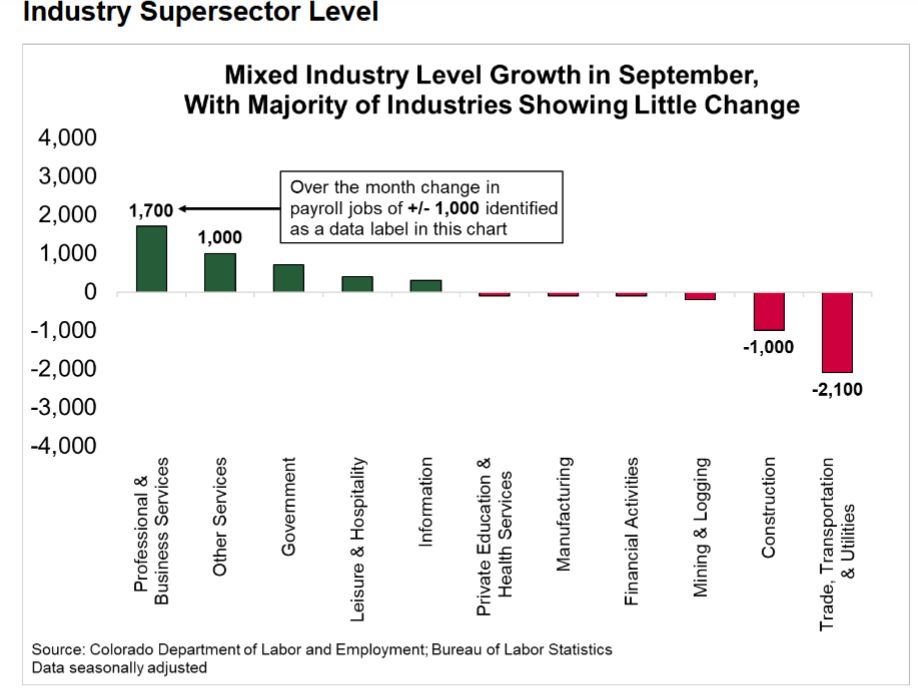 Colorado’s labor department tracks 11 job supersectors monthly to track job growth. Here’s the change for each sector for September, with the Professional & Business Services adding 1,700 jobs since August, but the Trade, Transportation & Utilities sector losing 2,100 jobs. (Provided by the Colorado Department of Labor and Employment).
Those six sectors included jobs in mining and lodging, construction and what’s known as “Trade, Transportation & Utilities,” which lost the most ground, dropping 2,100 jobs between August and September.
Wonhof said the state’s data is similar to September federal unemployment claims for workers in transportation and warehousing, which grew 7.4%.
In September, Houston-based ConocoPhillips announced plans to cut a quarter of its U.S. workforce, or up to 3,250 workers. Safeway told the state that it planned to close 10 stores in Colorado, impacting more than 600 employees, though the grocer hoped to place affected workers in other stores.
 A UPS delivery truck on the road. (Handout)
And by October, package-delivery service UPS was wrapping up layoffs of 48,000, according to the company’s third-quarter report. That was part of its ongoing reconfiguration of its business to add more automation and consolidate operations.
Those are big changes, but the company continues to hire, and is still looking for seasonal workers for the holidays at “hundreds of locations across the country,” said Karen Tomaszewski Hill, a UPS spokesperson. She did not have details on Colorado but pointed to its careers page, where there were a dozen openings in Denver on Friday.
“We did not do a national hiring (news) release this year or last year,” she added. “But there was no change in the strategy. … The strategy for UPS has always been the same. We balance staffing with demand and make sure we have the right people at the right time.”
September unemployment rate falls to 4.1%
Colorado’s unemployment rate fell one-tenth of a percentage point to 4.1% in September from August. The U.S. rate did the opposite, increasing by one-tenth of a percentage point to 4.4%.
The state’s labor force also decreased by 3,400 workers and the number of working-age adults who were employed or looking for a job dropped 67.3%, the lowest labor-force participation rate since November 2020. More than 3.1 million Coloradans were employed, while 134,300 were unemployed in September.
October unemployment rates won’t be released since the data wasn’t collected during the federal shutdown. Wonhof said employers were still surveyed for October, but a month later, so job growth numbers are anticipated.
He doesn’t expect too much interruption due to missing data. “A single data point does not make a trend,” he said in an email. “Accordingly, we encourage anyone utilizing data from these surveys to examine the values over time (i.e. over multiple months).”
The November jobs report for Colorado is scheduled to be released Jan. 7.
➔After a chaotic year, experts predict what lies ahead for Colorado’s economy in 2026. There’s good news and bad news, but mostly flat news on the state economy front >> Read story
Sun economy stories you may have missed
 Storage cabinets in the data hall at the Novva Data Center in Colorado Springs, Colorado, March 18, 2024. (Mark Reis, Special to The Colorado Sun)
➔ More data centers are coming to Colorado, demanding more power than they’ll need. Will customers foot the bill? >> Read story
➔ Health insurance prices in Colorado set to soar for 225,000 people as Senate fails to extend subsidies. The average person who shops for health coverage on their own will see a 101% increase in what they pay in 2026 unless the subsidies are extended. >> Read story
➔ Did that Colorado station sign really say gas for only $1.69? Yes, it did. Fill-ups are even cheaper here than the falling national average. Here’s why. >> Read story
 Retired registered nurse Peggy Locke, 77, at her home in the Westwood neighborhood of Denver on Friday, Oct. 31, 2025. (Joe Mahoney, Special to The Colorado Trust)
➔ Older adults on fixed incomes are finding homeownership in Colorado financially harder than ever. The average yearly cost of owning and maintaining a house in Colorado is $25,766, 20% higher than the national average. That doesn’t include the mortgage. >> Read story
➔ Telluride ski patrollers reject resort’s pay plan, setting the stage for a holiday strike. After authorizing a strike last month, the 72-member ski patrol union Monday voted to reject Telluride Ski & Golf’s final offer. >> Read story
➔ $50 million in funding for Denver Summit stadium advanced by City Council committee after deal-threatening delay. The decision comes after the women’s soccer team announced they are considering other locations in case delays with the investment continue. >> Read story
Other working bits
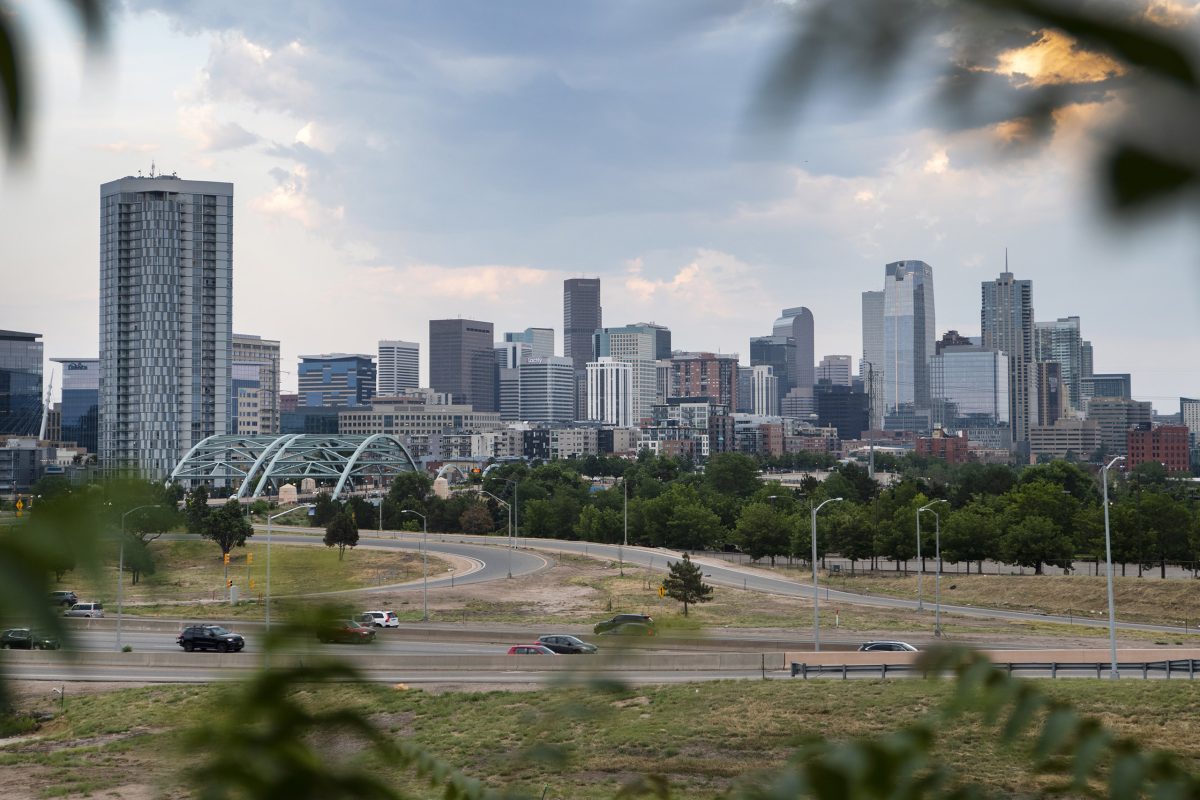 Downtown Denver is seen from the Highland Park neighborhood in Denver, Colorado on Thursday, July 16, 2021. (Olivia Sun, The Colorado Sun)
➔ Colorado: Sixth most regulated state but 11th best for business. That’s according to the updated scorecard from the Colorado Chamber. Most of the rankings are from outside sources, like CNBC, US News and Aspen Technology Labs. But ranking as the sixth most regulated state comes from the Chamber’s own report in partnership with business analysis firm StratACUMEN.
“The Chamber has conducted three annual business surveys since then as our rankings began declining, and our members consistently tell us that regulations are the problem,” said Chamber spokesperson Cynthia Eveleth-Havens in an email.
She also pointed out that while CNBC ranks Colorado “11th best state for business,” the state ranked fourth three years ago. The latest rank was weighed down by the cost of doing business here — landing a D+. “We believe that score is largely due to our costly and burdensome regulatory climate,” she added.
Need to know what those regulations are? Here’s the Chamber’s legislative summaries. >> Explore the scores
➔ What costs in Colorado have risen the most in 22 years? College tuition. A new report from the Common Sense Institute graphed the cost of different goods and services for Denver between 2002 to 2024. During that 22-year span, college tuition topped the literal chart, up 300%.
While prices do have a tendency to increase over 22 years, durable goods and household furnishings stayed pretty flat. But then again, this chart doesn’t include 2025 data, in which imported durable goods are seeing price increases due to new tariffs. The report from the conservative think tank in Greenwood Village, also touches on the impact on Denver household budgets. Spoiler alert: Coloradans are saving less and spending more. >> See report
➔ Cola distributor moving to Colorado Springs, will add 170 new jobs. Utah-based Swire Coca-Cola already employs 1,300 people mostly in Denver. But instead of adding on its existing plant, the company picked southeastern Colorado Springs to invest $475 million and build a new 620,000-square-foot facility, where it expects to create 170 net new jobs and produce more than 230 beverage options across more than 60 brands, according to the Colorado Springs Chamber & Economic Development Corp. Construction is expected to start in 2026 on the new bottling facility at Peak Innovation Park. >> Details
Got some economic news or business bits Coloradans should know? Tell us: cosun.co/heyww
Thanks for sticking with me for this week’s report. Remember to check out The Sun’s daily coverage online. As always, share your 2 cents on how the economy is keeping you down or helping you up at cosun.co/heyww. ~ tamara
Miss a column? Catch up:
What’s Working is a Colorado Sun column about surviving in today’s economy. Email tamara@coloradosun.com with stories, tips or questions. Read the archive, ask a question at cosun.co/heyww and don’t miss the next one by signing up at coloradosun.com/getww.
Support this free newsletter and become a Colorado Sun member: coloradosun.com/join
Corrections & Clarifications
Notice something wrong? The Colorado Sun has an ethical responsibility to fix all factual errors. Request a correction by emailing corrections@coloradosun.com.
Type of Story: News
Based on facts, either observed and verified directly by the reporter, or reported and verified from knowledgeable sources.