
International ratings agency Moody’s has revised Trinidad and Tobago’s outlook from stable to negative, citing short-term risks tied to falling official foreign exchange reserves.
This marks the second time in three months that an international ratings agency has revised the country’s outlook from stable to negative.
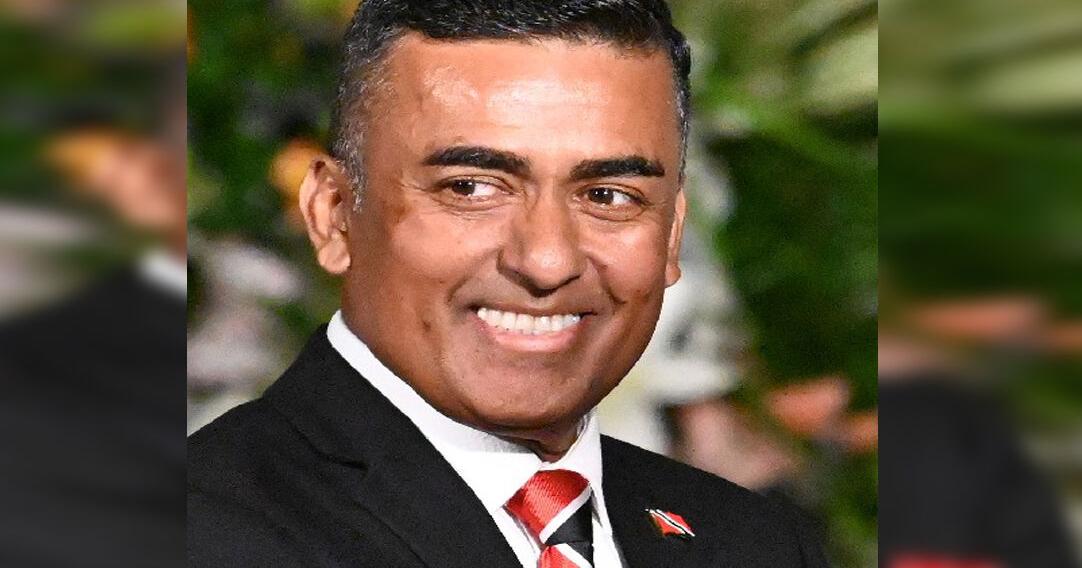
However, Finance Minister Davendranath Tancoo yesterday pushed back on the timing of the move, saying that Moody’s acted “too prematurely” before the Government’s new fiscal and growth measures could take effect.
Moody’s yesterday said it had shifted the country’s outlook to negative, citing short-term downside risks.
The agency pointed specifically to a drop in the Central Bank’s liquid foreign exchange reserves, which under its methodology exclude the Heritage and Stabilisation Fund (HSF).
According to the Central Bank’s most recent data, Trinidad and Tobago’s net official reserves stood at US$4.6 billion at the end of October, representing 5.4 months of import cover.
“Net Official Reserves” is a metric that outlines the foreign exchange available to defend the Trinidad and Tobago dollar and to pay for the country’s import bill and all government foreign obligations.
In a release from the Finance Ministry, Moody’s maintained the Government of Trinidad and Tobago’s long-term local and foreign currency issuer and senior unsecured ratings at Ba2.
Moody’s said the rating reflects the country’s strong credit profile, including substantial fiscal buffers such as the Heritage and Stabilisation Fund and cash-equivalent assets totalling 45% of GDP, as well as expected gains in oil and gas production by 2027.
“While our credit rating was maintained just as we expected my only recommendation was that Moody’s should have taken a few more months to ascertain the impact of the recently implemented Government strategies – a comprehensive policy agenda aimed at rebalancing growth, revitalising the economy, securing a sustainable fiscal trajectory and stabilising foreign exchange reserves,” Tancoo stated in the release.
“To adjust in December prior to affording the measures the opportunity to take effect in Fiscal 2026 was too premature in our view,” he said.
Narrow definition of forex reserves
Tancoo said Moody’s negative outlook was driven largely by its narrow definition of foreign exchange reserves.
“The decline in Moody’s narrow definition of foreign exchange reserves happened to be the contributing factor in their negative outlook. Their definition of foreign exchange reserves not only excludes gold and Special Drawing Rights, but, more critically, ignores all the significant foreign currency assets managed by other economic agents,” Tancoo said.
“Indeed, Trinidad and Tobago’s net international investment position currently stands in surplus of US$7.5 billion; in other words, our country holds US$7.5 billion more of US dollar assets, than US dollar debts,” he said.
Tancoo said this underscores the country’s foreign-currency resilience and shows that, on a net debt-to-GDP basis, Trinidad and Tobago outperforms many countries in Latin America and the Caribbean.
“I am confident that the prudent and foresightful management of our significant foreign exchange reserves, in addition to the dynamism of our Government’s new macro-fiscal approach, will foster greater economic resilience and drive a stabilisation of our outlook in the near future, as we work towards rating upgrades,” Tancoo said.
On December 16 last year, Moody’s affirmed Trinidad and Tobago’s Ba2 rating with a stable outlook.
The agency said the rating reflected the country’s return to sustained growth, led mainly by the non-energy sector.
Moody’s noted then, however, that the outlook remained stable due to a decline in the country’s foreign exchange reserves in early 2024, caused by lower energy receipts amid falling gas prices.
S&P revises outlook
In September international rating agency Standard and Poor’s affirmed T&T’s investment grade rating at BBB-, while revising the outlook from stable to negative.
“S&P’s affirmation of Trinidad and Tobago’s investment grade status reflects the country’s long established democratic institutions, economic stability, favourable external profile and buffers (‘This profile includes a strong external creditor position, supported by assets in the Heritage and Stabilisation Fund (HSF)’). However, S&P has revised the outlook from stable to negative, signalling the need for reforms to enhance fiscal sustainability and improve economic diversification,” the Finance Ministry stated in a release on September 25.
“We could revise the outlook to stable over the next 24 months if we believe government policies will improve fiscal sustainability, and lead
to more favourable long-term GDP growth prospects and sustain the country’s external profile,” S&P stated.