
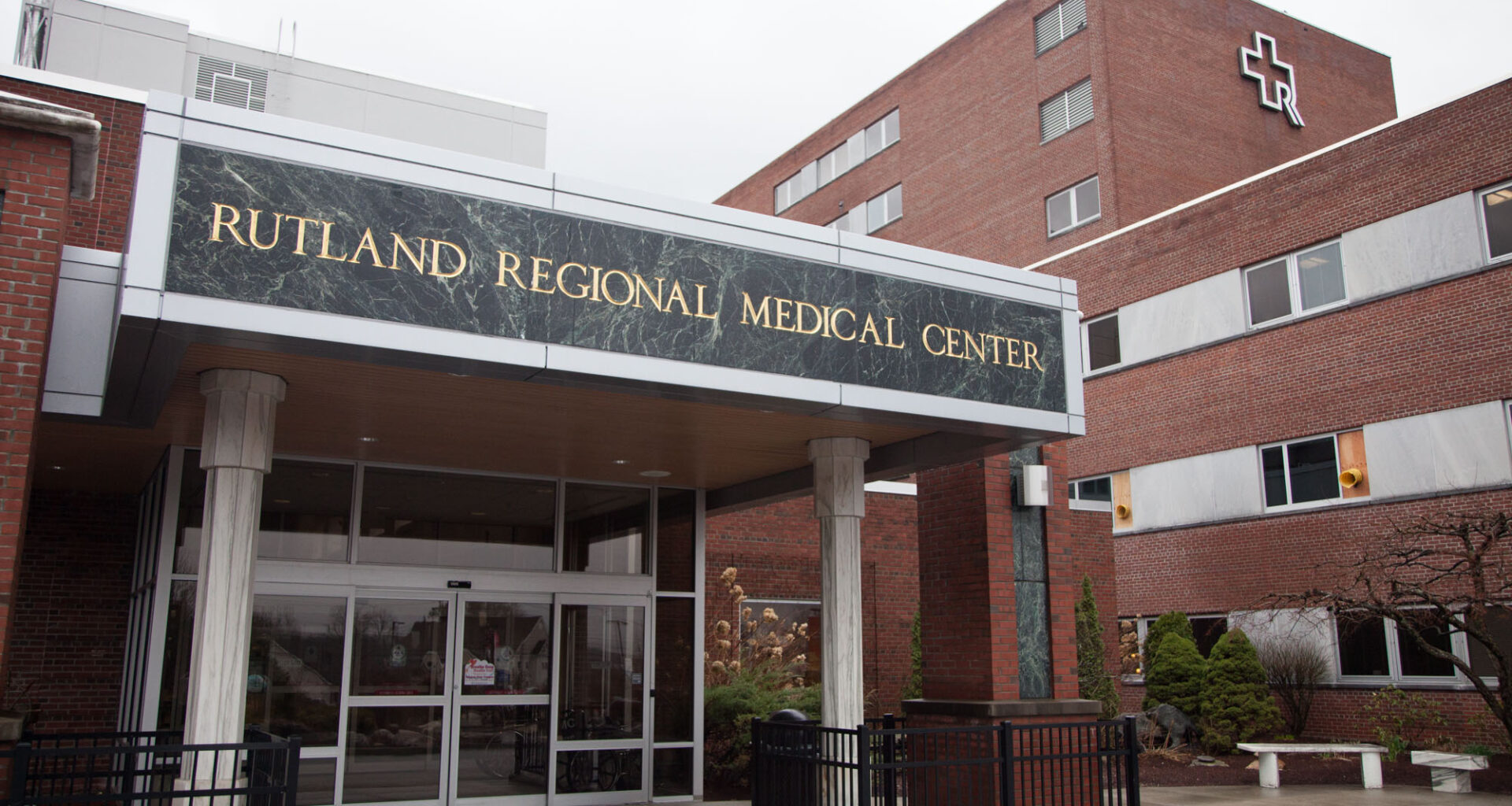
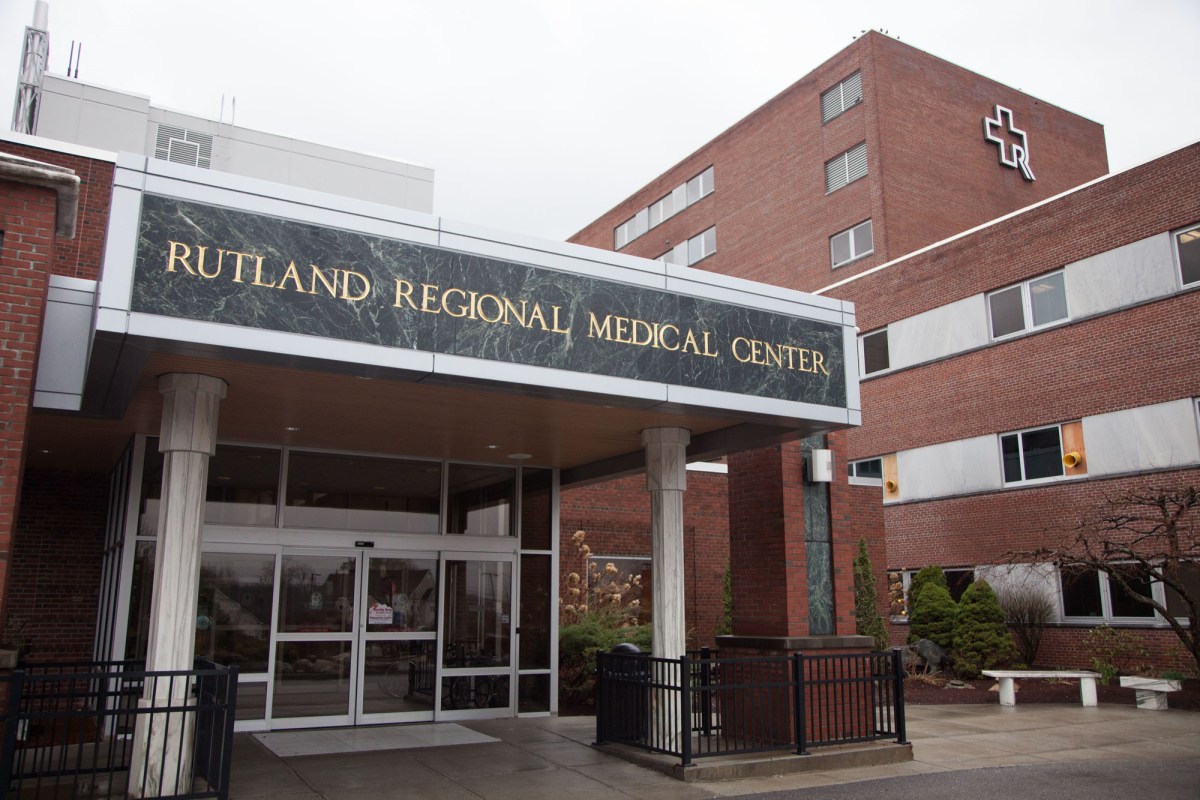
 Rutland Regional Medical Center. File photo by Mike Dougherty/VTDigger
Updated at 5:54 p.m.
Rutland Regional Medical Center has voluntarily withdrawn its request to close five pediatric inpatient beds following a bruising public hearing and over 150 public comments in opposition to the decision.
The hospital says it still intends to pursue a redesign of its pediatric services, but it will work directly with the Vermont Agency of Human Services to continue this transformation work rather than going through the state’s main health care regulator, the Green Mountain Care Board.
Last Friday, the care board held the first hearing of its kind to evaluate the potential closure.
READ MORE
by Olivia Gieger
December 9, 2025, 6:00 pmDecember 9, 2025, 6:06 pm
During that meeting, regulators interrogated the hospital’s confusing financial reports, whether its administrators had assessed the true cost of the closure to families and the state’s health care system and if it had considered alternatives — like having fewer beds or more adaptable ones.
Rutland’s desire to close the inpatient beds is part of a broader challenge rural hospitals across the state are facing as they struggle to balance low patient volume while maintaining care quality and still balancing their budgets.
In Friday’s hearing, care board member David Murman distilled the issue to a question.
“How do we as a rural state balance access to essential services that are needed in communities with the reality that some of these services are fairly low volume, and we have very few options for admitting pediatrics in Vermont?” he asked.
The hospital is not alone in this push to close pediatric services. Thursday’s news comes the same week as a high-profile paper landed in the journal Pediatrics finding a much broader trend of hospitals around the country drastically reducing their pediatric inpatient services over the last 20 years. The authors found that hospitals providing no pediatric care beyond the emergency department more than doubled.
If the Rutland hospital had closed its pediatric inpatient beds, most of the region’s children would have needed to receive care through extended stays in the emergency department or through a transfer to a larger, academic hospital, like University of Vermont Medical Center in Burlington, about two hours away.
The potential pediatric bed closure has served as a kind of trial run for the Green Mountain Care Board’s newly granted ability to block hospital service cuts, under Vermont’s Act 68, signed into law this year. The hospital’s withdrawal of its request came before the care board could vote on the potential closure.
The hospital’s shifting approach to shuttering its pediatric beds hints at an open question: Which state actor is responsible for coordinating these changes?
The Agency of Human Services leading the charge on more holistic, broad hospital transformation efforts, with authority granted by the same state law that empowered the care board’s ability to review service cuts, Act 68. Throughout the summer and into the fall, the agency has collaborated with hospitals to develop transformation plans and award grant funds to implement some of those ideas.
When the hospital first announced its intention at the end of October to close the pediatric beds, the Agency of Human Services’ transformation progress and plan was still unclear to those at the Rutland hospital. At that time, the Rutland hospital’s leadership said it was coordinating with both the care board and the state agency.
However, on Nov. 24, the agency released its initial statewide transformation template (the same day, it turned out, that the hospital submitted its full intent of closure report).
In his Thursday letter to the care board, Mitchell Baroody, Rutland Regional Medical Center’s chief legal officer, argued the care board’s authority in Rutland’s closure process had “become moot,” following that November guidance from the Agency of Human Services.
Days earlier, though, during a Dec. 5 care board hearing, Judi Fox, the Rutland hospital’s CEO, voiced the opposite understanding when directly asked about it.
Twice during the hearing, care board chair Owen Foster asked the hospital administrators why they had chosen to make this change now, rather than going through the agency’s transformation planning efforts.
“While finances were a piece of the equation, again, it’s really in trying to understand how we were going to continue to staff the unit when we had and have fairly low (occupancy). So it wasn’t led with necessarily transformation in mind, but we certainly wanted to consider how this change in care delivery would impact and support goals that we believe the state of Vermont was looking for all hospitals to engage in,” Fox said in response to his first question.
Fox later in the meeting said that, from her conversations with the agency, she understood the pediatric bed closure would be considered “hospital optimization and not necessarily a transformation,” though the difference between those two terms remained unclear.
Now, as the hospital engages with the agency on this more holistic transformation effort, its administrators have also voiced an interest in expanding its labor and delivery services to host a regional hub for obstetrics.
“RRMC recognizes the strong community interest and diverse perspectives since we announced the pediatric proposal. Advancing the redesign through AHS’ statewide transformation framework will allow for a more comprehensive plan that reflects both community needs and long-term sustainability,” Fox wrote in a Thursday press release.
“Our responsibility is to do what is best for our patients, our workforce, and our community,” she added.
Correction: A previous version of this story mischaracterized the drive time between Rutland Regional Medical Center and University of Vermont Medical Center.