
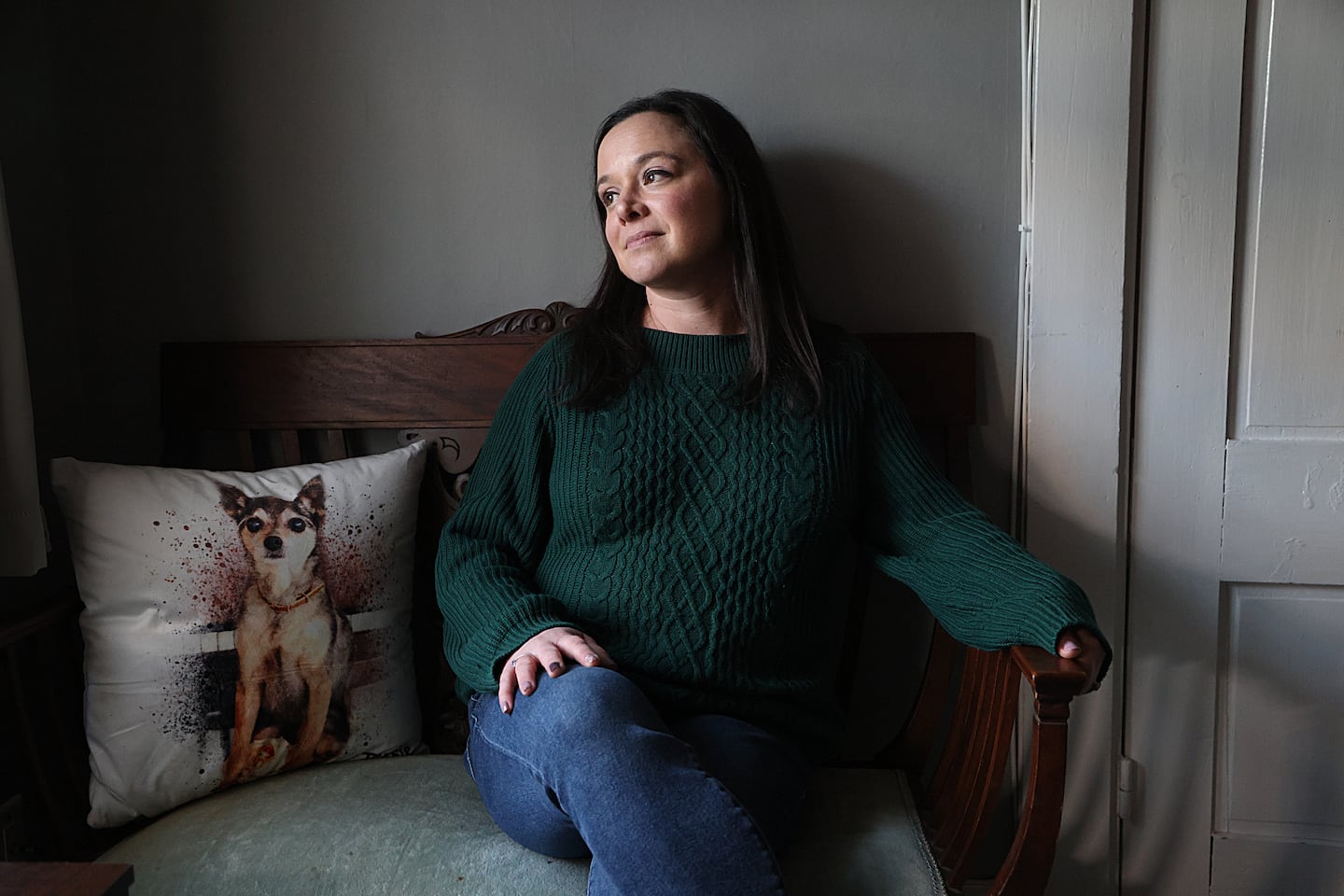
“My goal in life is always to be a great mom,” she said, “and you look back on a lot of moments you wish you’d handled differently.”
Katie Connelly takes propranolol, too, to quiet the physical symptoms of anxiety that hit when she’s heading to a medical setting — an unfortunately common occurrence because of her Crohn’s disease.
Get Love Letters: The Newsletter
A weekly dispatch with all the best relationship content and commentary – plus exclusive content for fans of Love Letters, Dinner With Cupid, weddings, therapy talk, and more.
“I’ve got so much medical trauma,” said Connelly, of Cambridge, “and I get super triggered.”
Wait. Propranolol? The 60-year-old medication approved by the FDA to treat the symptoms of cardiovascular disease?
Yes, that propranolol. But now, in a world gone mad with anxiety, a growing number of people, many of them women, are taking a low dose of it for situational anxiety. And these days, everything is a situation.
Propranolol works differently from anti-anxiety drugs like Xanax, Ativan, or Valium. Those act directly on the brain and can leave people feeling sedated, foggy, or zoned out. Propranolol doesn’t address the underlying roots of anxiety, but instead blocks its physical symptoms.
Like any drug, propranolol carries the risk of side effects, some potentially serious, and it can also “mask” important underlying causes of anxiety, but despite concerns, it’s working its way into society.
Since 2020, prescriptions have risen 28 percent, based on the most recent IQVIA data, with September figures cited by The Wall Street Journal. (IQVIA, which collects and analyzes prescription sales, medical claims, and other records, did not respond to Globe requests to confirm the statistic.)
Jillian MacLeod, a psychiatric nurse practitioner with Northeast Health Services, in the South End office, is also seeing the rise.
MacLeod has a caseload of 400 patients, and when asked what percentage take it to handle everyday life, she said 20 or 30 percent. “Which is a lot,” she said, sounding almost taken aback.
One patient, a recent widow with intense social anxiety, uses it to make it through trips to the grocery store. Another, a young woman, took it before initiating a “where is this relationship going?” conversation with her boyfriend.
The holidays, MacLeod noted, are a big trigger. Some patients popped beta blockers as they drove to Thanksgiving dinner, the better to remain calm during unwanted questions about pregnancy, unemployment, weight gain, the lack of a significant other, and so on.
“It’s hard to live in this world we live in,” she said.
Culturally, the drug is portrayed lightly — as if it’s nothing more than a breath mint. And indeed one firm, the tele-health start-up Kick, sells propranolol mints in cute little packages.
“No insurance, appointment, or video needed,” its website reads. “Intake only takes about 10 minutes.”
 Bowen Yang and Rachel Sennott onstage during the 97th Oscars nominations announcement at Samuel Goldwyn Theater on Jan. 23, 2025, in Beverly Hills.Handout/The Academy via Getty Images
Propranolol went viral during the Academy Awards in March, when actress and comedian Rachel Sennott was asked about her pre-show affirmations, and said she looked in the mirror and told herself: “Take that beta blocker, girl. Swallow it down and lock in.”
Needless to say, there’s beta blockers merch (baseball caps, a cute pill case) and a Kardashian angle (Khloe took her mom’s beta blockers). On Instagram, the ads are light, jokey.
“Meditation can take years to master,” reads one social media post from Kick. “But I’ve got 10 minutes before my voice cracks in front of 12 executives.”
The drug is the toast of some anxiety subgroups on Reddit.
“Propranolol will turn you into the mf you’d like to be,” a Redditor named DopamineSeeker20 wrote earlier this year.
But the darker side is on display, too. “About a year ago I was prescribed Propranolol 10mg ‘as needed’ for anxiety or attending public functions or crowded venues,” another Redditor wrote.
“Now, I feel like I have to take it every morning before work, otherwise I fall apart, get super-debilitating vertigo, palpitations, the oh-so-fun feeling of impending doom …”
The drug is not technically addictive, said Nassir Ghaemi, a psychiatrist at Tufts Medical Center and a professor at Tufts University School of Medicine, but even so, it can cause harm.
“It slows down the heart rate, so if your heart rate is slow to begin with, it can lead to dizziness or fainting or even a heart arrhythmia,” Ghaemi said.
It can also make the symptoms of asthma or diabetes less obvious, he said, “and that can lead to people not seeking help.”
But some, like Connelly, the woman with Crohn’s, say they rely on it to make challenging situations bearable. In her case, that includes times when she’s heading to the hospital, and when she’s talking to medical groups in her role as a patient advocate.
“It lets me not sweat through my pink blazer,” she said.
Beth Teitell can be reached at beth.teitell@globe.com. Follow her @bethteitell.