
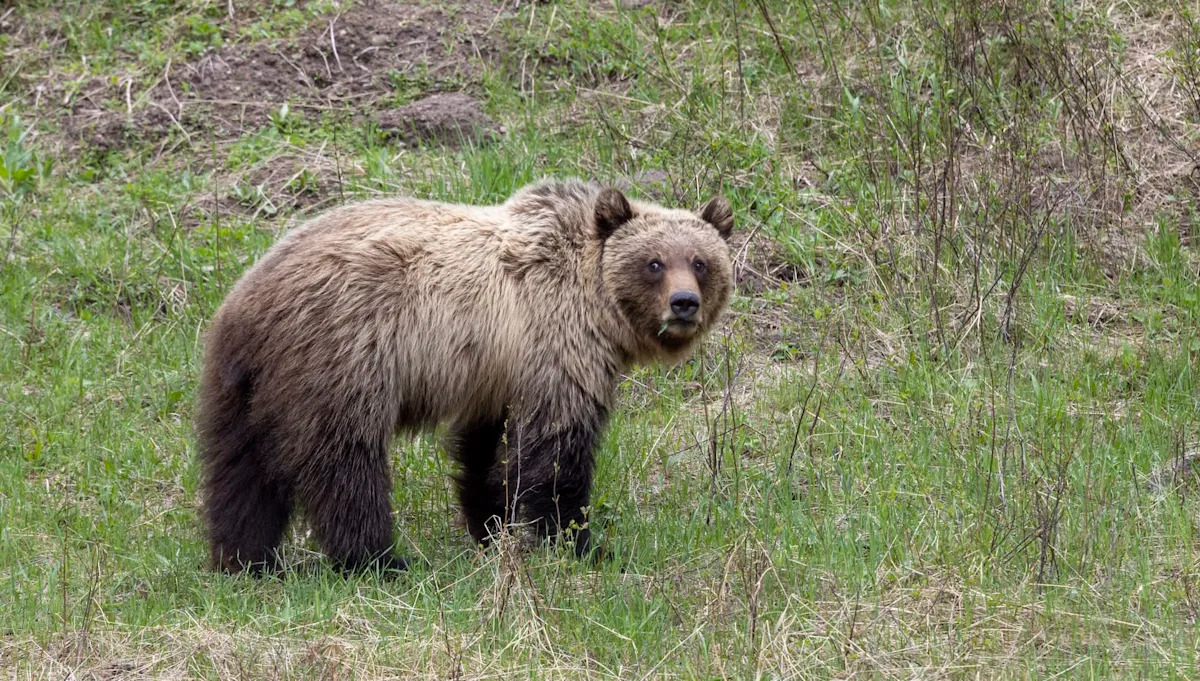
A grizzly bear attacked a hunter in Alberta, Canada, leaving the man “seriously injured” and in need of an emergency airlift to the hospital.
Now, the rare but serious encounter is drawing attention to shifting wildlife behavior as bears stay active later into the fall.
What’s happening?
As Global News reported, the attack occurred near Alberta’s Jumpingpound forest area, about 45 to 50 minutes west of Calgary. While one hunter was targeted in the attack, his hunting partner remained unharmed, managing to shoot and kill the attacking bear.
Alberta Fish and Wildlife Enforcement Services said the attacking bear was a sow and suggested the bear likely felt threatened and was protecting its cubs.
In the days following the attack, officials found three cubs in the area likely belonging to the deceased bear, per CBC.
According to the publication, officials with Alberta Fish and Wildlife “consulted biologists and other wildlife specialists at Forestry and Parks and Environment and Protected Areas, and determined the best course of action was not to interfere with the cubs and allow them to hibernate naturally.”
Local residents told Global News they accept living in the area means living in close proximity to grizzlies and other wildlife.
“Generally, you don’t see them,” area resident Ray Nicoll told the outlet. “They’re pretty much nocturnal, but every now and then we do run across one.”
But an expert told Global News that seeing bears at this time of year is unusual, blaming unseasonably warm fall weather for delaying hibernation.
“Climate change studies are coming back and showing that we are going to see some of those food sources such as berry bushes coming later,” Kim Tichener, owner of the company Bear Safety and More, told the publication.
“So there is going to be bears awake longer as they feed on some of these food sources and it certainly has been an incredible fall and bears are still out.”
Delayed hibernation means bears stay awake longer, increasing the chances of interactions with people.
Why is this attack concerning?
This alarming attack highlights a growing trend of dangerous human-wildlife interactions, many of which are linked to environmental stressors.
Higher-than-normal fall temperatures — which are increasingly common due to planet-warming pollution — can delay hibernation for bears.
When bears remain active later in the season, they spend more time searching for scarce food and roaming into areas where people live, work, and hunt. This significantly increases the likelihood of dangerous encounters like this one.
Warming temperatures can also bring wildlife closer to humans as they search for food, shelter, and comfortable temperatures. As wild animals are pushed closer to human spaces, there are significant safety concerns for both people and wildlife.
What’s being done about grizzly bear attacks?
To avoid any conflict with wild bears, the U.S. Fish and Wildlife Service recommends staying at least 100 yards away from bears — roughly the length of a football field.
Those looking to enjoy nature often have an easier time of avoiding encounters by staying on trails, making more noise, and frequently moving.
“Make noise. Travel in groups. [Carry] bear spray physically on your body,” Tichener, owner of the company Bear Safety and More, told Global News said. “Letting out whoops and hollers every couple of minutes as you’re walking.”
If confronted by a bear, don’t run. Instead, back away slowly while facing the bear. If it still moves toward you or tries to attack, use bear spray to ward off the animal. In an attack from a grizzly, Tichener advised dropping to the ground and playing dead while protecting the neck.
“Most of the time, they just turn and they run away,” she told Global News. “They want to get as far away from you as much as you want to away from them.”
Get TCD’s free newsletters for easy tips to save more, waste less, and make smarter choices — and earn up to $5,000 toward clean upgrades in TCD’s exclusive Rewards Club.