
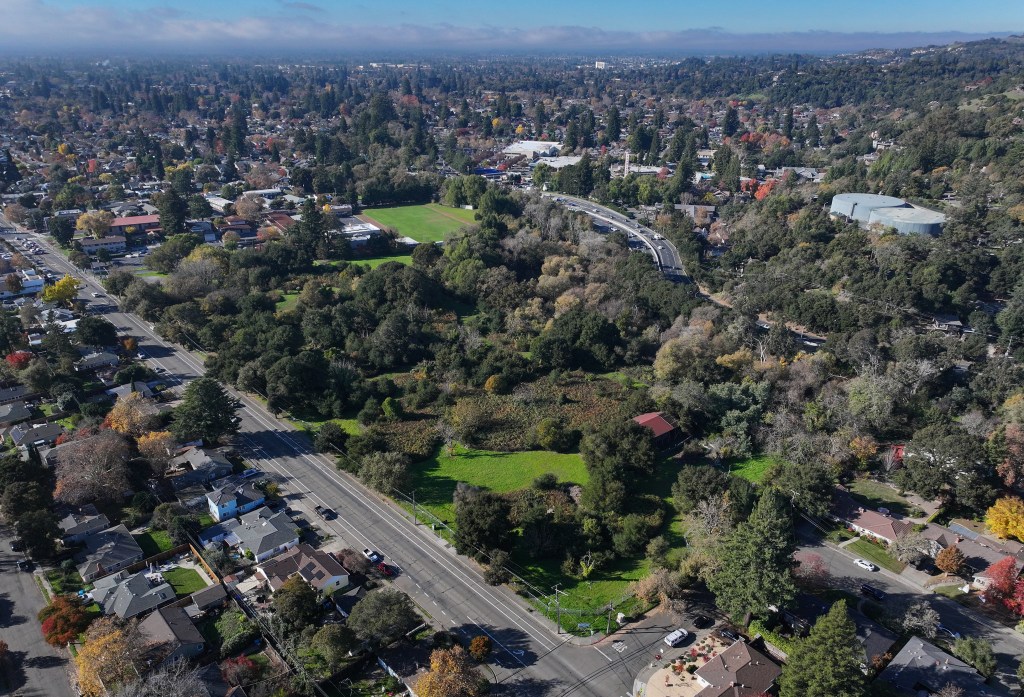
Early conceptual plans for a housing development proposed around the historic Carrillo Adobe in east Santa Rosa didn’t make the grade among roughly 100 residents who turned up in person and online to get a first look.
For more than an hour, the development team was hit with a flurry of comments from residents opposed to increased density they fear would change their largely single-family home neighborhood, exacerbating traffic and parking concerns.
Critics also raised concerns that the project would encroach on the vulnerable remains of the adobe, considered the birthplace of Santa Rosa.
The 188-year-old mud brick building was built by Doña Maria Carrillo, her sons and Indigenous workers and is a historic city landmark. It’s believed to be built on the site of a prehistoric Southern Pomo village along the banks of Santa Rosa Creek.
The discussion Monday at a neighborhood meeting showed an early rift between developers and members of the surrounding community pressing for major changes to the plans.
The neighborhood meeting — initially planned in a smaller City Hall conference room but moved to council chambers due to the expected crowd — is a first step in the planning process and no formal action was taken.
Mark Pilarczyk, vice president of development with Swenson Builders, which is heading the project, said his team was listening to residents’ feedback and was willing to work with the neighborhood on the plan.
Monday’s meeting came as developers work to revive a long-disputed proposal for housing surrounding the adobe. A previous proposal, approved two decades ago, stalled amid economic upheaval.
The latest preliminary plans for Creekside Village, as the project is known, call for 162 three-story townhome-style units spread across 23 buildings on Montgomery Drive between the St. Eugene’s Cathedral off Farmers Lane and Franquette Avenue.
The Adobe site and riparian area along Santa Rosa Creek would be set aside from the development for future use as a park.

The Carrillo Adobe in Santa Rosa on Tuesday, December 9, 2025. (Christopher Chung/The Press Democrat)
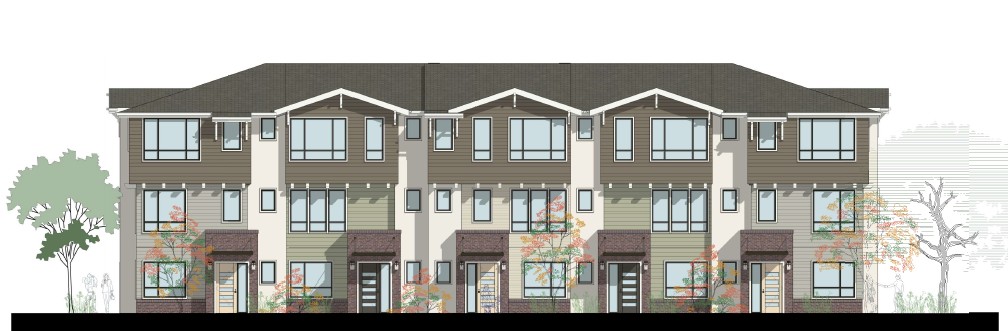
A San Jose developer has revived conceptual plans for townhomes surrounding one of Santa Rosa’s most important historic landmarks, the Carrillo Adobe off Montgomery Drive. (City of Santa Rosa)
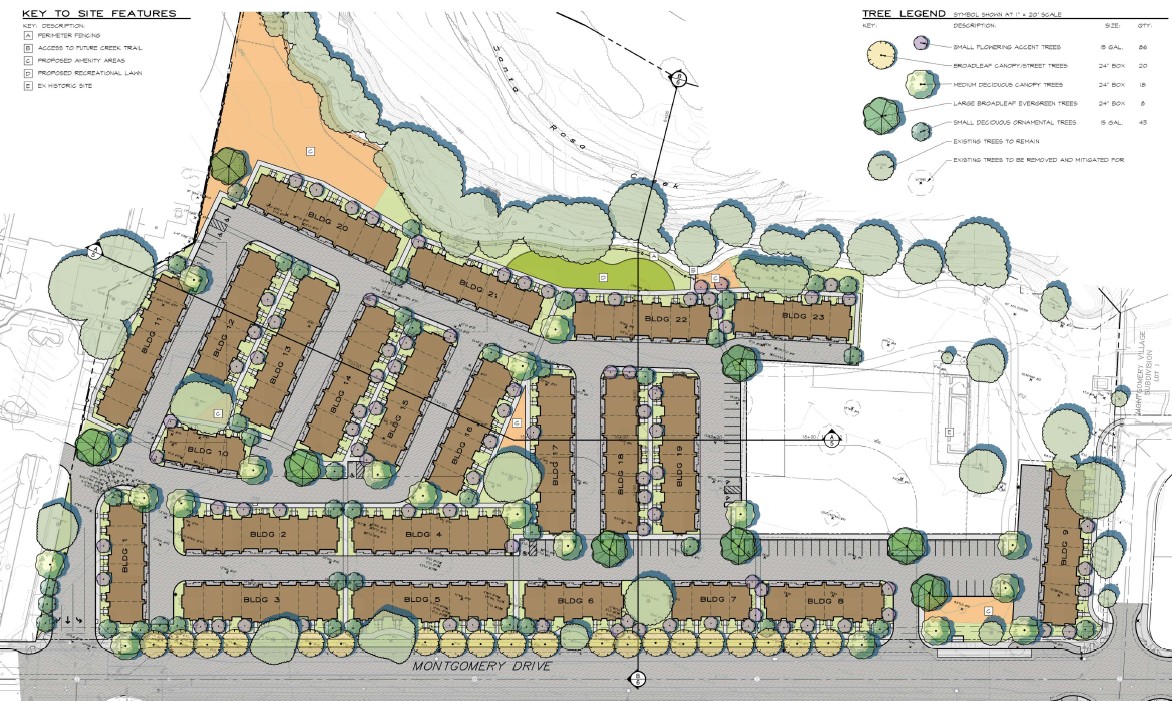
A San Jose developer has revived conceptual plans for townhomes surrounding one of Santa Rosa’s most important historic landmarks, the Carrillo Adobe off Montgomery Drive. (City of Santa Rosa)

The Carrillo Adobe property between Montgomery Drive, left, and Highway 12, right, with St. Eugene’s Cathedral property, top, in Santa Rosa on Tuesday, December 9, 2025. (Christopher Chung/The Press Democrat)
Show Caption
1 of 4
The Carrillo Adobe in Santa Rosa on Tuesday, December 9, 2025. (Christopher Chung/The Press Democrat)
The project is likely to require a new environmental analysis, traffic studies and other planning reviews, and residents will have several opportunities to weigh in.
Swenson Builders bought the 14.8-acre property for $5.1 million from the Catholic Diocese of Santa Rosa, which offered it up for sale more than 20 years ago to help repay debts.
Various iterations of the project have come forward since.
Residents on Monday argued the size and scope of the latest proposal are incompatible with their neighborhood and the townhomes would tower over the single-story homes nearby.
They raised concerns that added density would worsen traffic on busy Montgomery Drive and lead to parking overflowing onto residential streets or Montgomery Village across from the project site.
The project as proposed “represents a complete disregard” for the established character of the village-style neighborhood, said Lesley Ann Gibbons, who has lived with her family in the area for nearly a quarter century.
She said the project should fit the area and “not attempt to redefine it.”
“Growth here should reinforce our identity and not overwrite it,” she said.
Supporters, meanwhile, said community members, particularly young families and seniors, are being squeezed out by rising housing prices and rent.
Lauren Fuhry, a nearby resident and member of housing advocacy group Santa Rosa YIMBY, said entry-level homes and diverse housing such as townhomes were sorely needed in the city.
While some residents conceded there’s a critical need for housing and said they were open to construction on the site, they called on project backers to come forward with a plan that better integrated the development into the neighborhood, including reducing the overall height of the townhomes and increasing parking.
Pilarczyk, with Swenson, noted the proposal calls for fewer units than allowed on the site.
The property is zoned for medium density residential up to 18 units per acre — about 194 units on the 10.77 acres proposed for housing development.
He also said the development will feature more than two parking spaces per unit. A new traffic signal at Hahman Drive, one of the planned entrances to the development, should help alleviate congestion and the city could require additional traffic mitigation measures as part of project approvals.
Residents and preservationists also worried that housing under the latest iteration appeared to encroach closer to the adobe and that units planned on the north and south end of the landmark would reduce visibility to the site.
Larry Carrillo, a descendant of the original founders of the adobe who has long pushed for the site’s preservation, said the proposal was substantially different than what neighbors and some preservationists supported 20 years ago.
The City Council in late 2005 approved a $40 million project on the site that called for 140 for-sale condominiums plus 25 apartments for low-income seniors.
That scaled down plan came after the council rejected a prior proposal for 265 apartments that preservationists argued didn’t set aside enough land around the adobe and neighbors worried was too dense.
The proposal carved out about 6 acres from the development along the creek and around the adobe to be preserved.
It stalled during the 2007 Great Recession and later efforts to start construction never got underway.
While Pilarczyk said the new proposal largely maintains the same layout as the earlier project, he noted the park acreage has been slightly reduced.
Just about 4 acres would be set aside in the latest proposal.
Carrillo, who said he became aware earlier this year that Swenson was considering a new project, said the Friends of the Carrillo Adobe would not support the project as currently proposed and will continue to push for the adobe to be protected as part of any future development.
“The Friends of the Carrillo Adobe will not be backing the project as shown and we will do everything to possibly stop any portion of it that affects the adobe the way that it’s shown,” he said.
Other residents echoed Carrillo’s concerns, criticizing Swenson for shrinking the amount of land set aside around the adobe and for being a poor steward of the crumbled landmark, which sits behind chain-link fencing and under a protective roof but is otherwise untended.
They called on the developer to preserve the entire eastern portion of the site and urged the city to require that the park be developed first, prior to housing, to avoid further degradation of the site.
Community members will have another chance to weigh in on the plans when the concept goes before the Design Review and Preservation Board sometime in January.
The board is tasked with ensuring new development adheres to the city’s architectural design and landscaping standards as well as serving as the city’s historic preservation review authority. The meeting next month will offer an opportunity for board members to ask questions and provide feedback on the overall concept, layout and design. No formal action will be taken.
Once developers submit formal plans, the city will mail notices to everyone within 600 feet of the site.
The project will require a major design review and a tentative map, and those entitlements will be reviewed by the Design Review and Preservation Board and Planning Commission, respectively.
You can reach Staff Writer Paulina Pineda at 707-521-5268 or paulina.pineda@pressdemocrat.com. On X (Twitter) @paulinapineda22.