
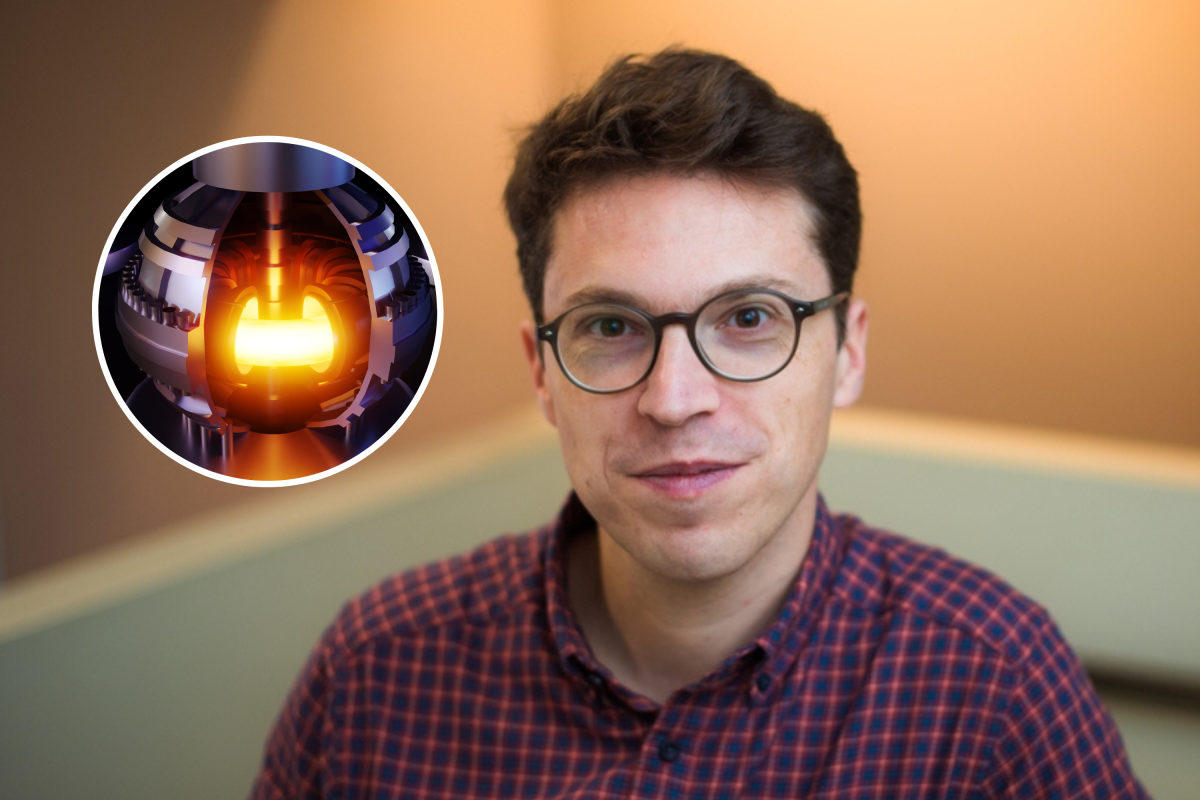
The fatal shooting of professor Nuno Loureiro of the Massachusetts Institute of Technology (MIT) has prompted an outpouring of grief from the scientific community and renewed attention on his scientific legacy.
Loureiro, a leading plasma physicist and director of MIT’s Plasma Science and Fusion Center, was known for research tied to fusion energy and astrophysical plasma dynamics.
Who Was Nuno Loureiro?
Nuno Loureiro was a physicist who served as the director of MIT’s Plasma Science and Fusion Center. He also held faculty appointments in MIT’s Department of Nuclear Science and Engineering and Department of Physics.
According to MIT, Loureiro studied physics in Portugal and the U.K., completing his postdoctoral research at the Princeton Plasma Physics Laboratory before working as a researcher at the Institute for Plasmas and Nuclear Fusion at the Instituto Superior Técnico in Lisbon and then joining MIT in 2016.
In January this year, Loureiro was among 11 MIT faculty members awarded the Presidential Early Career Award for Scientists and Engineers, one of the U.S. government’s highest honors for early-career researchers, recognizing his work on magnetic fields and plasma physics.
 What Happened to Nuno Loureiro?
Loureiro, 47, was shot Monday night at his home in Brookline, Massachusetts, according to the Norfolk District Attorney’s Office.
Massachusetts State Police responded to a call from the Brookline Police Department reporting that a man had been shot on Gibbs Street.
Loureiro was transported to a local hospital, where he was pronounced dead on Tuesday morning.
MIT confirmed Loureiro’s death and said the university is offering support services to students, colleagues and others affected. In a statement to Newsweek, MIT said: “Our deepest sympathies are with his family, students, colleagues and all those who are grieving.”
What Research Was Professor Nuno Loureiro Working On?
Loureiro was a theoretical plasma physicist, a field that studies the behavior of electrically charged gases under extreme conditions.
Plasma physics is foundational to both fusion energy research and the study of astrophysical phenomena such as stars, solar flares and magnetic fields in space.
At MIT, Loureiro’s research focused on topics including magnetic reconnection, plasma turbulence and the generation and amplification of magnetic fields.
Magnetic reconnection is a phenomenon that occurs when magnetic fields pointing in opposite directions are torn apart and reformed; this explosively releases energy stored in the field, heating up and accelerating particles.
Reconnection is the powerhouse behind the eruption of solar flares from the surface of Sun. The same process can also occur when Earth’s magnetic shield is buffeted by an oppositely-polarized solar wind—accelerating particles which whizz along the geomagnetic field lines to the poles, producing the northern and southern lights.
According to NASA—which is investigating this process around Earth with its “TRACERS” satellite mission, launched in July this year—a single magnetic reconnection can release as much energy as the whole U.S. uses in a day.
Understanding how reconnection works is vital in the effort to unlock nuclear fusion—the process that powers the Sun—here on Earth.
Donut-shaped reactor designs called “tokamaks” use magnets to contain plasma heated to millions of degrees, thereby recreating the conditions found in stars where fusion takes place.
Magnetic reconnection is an obstacle to commercially viable fusion, however, as it can cause “crashes” that keep the plasma temperature below the threshold required for fusion.
In their recently published works, Loureiro and his colleagues modelled how reconnection is affected by feedback on different scales, instabilities resulting from different drift velocities between electrons and ions and in plasma, and the radiative cooling of plasma current sheets.
As director of MIT’s Plasma Science and Fusion Center, Loureiro oversaw research programs aimed at improving the scientific understanding needed for future fusion energy systems.
In June this year, he was quoted in an MIT announcement about a new facility designed to accelerate fusion research, describing it as an effort to address “the most complex fusion technology challenges” tied to the global energy transition.
While fusion energy is often discussed as a potential source of clean power, experts note it remains an experimental and developing field.
Loureiro’s work contributed to the broader scientific foundation of plasma and fusion research rather than a finished or deployable energy technology.
What We Know So Far About The Homicide Investigation
Authorities have released limited information as the investigation into Loureiro’s death remains ongoing. Investigators have confirmed the case is being treated as a homicide, but as of Tuesday evening, no suspect had been taken into custody and officials have not released details about a possible motive.
In a statement to Newsweek, Norfolk District Attorney’s Office said: “This is an active and ongoing homicide investigation. No further information is being released at this time.”
Do you have a tip on a science story that Newsweek should be covering? Do you have a question about plasma physics? Let us know via science@newsweek.com.