
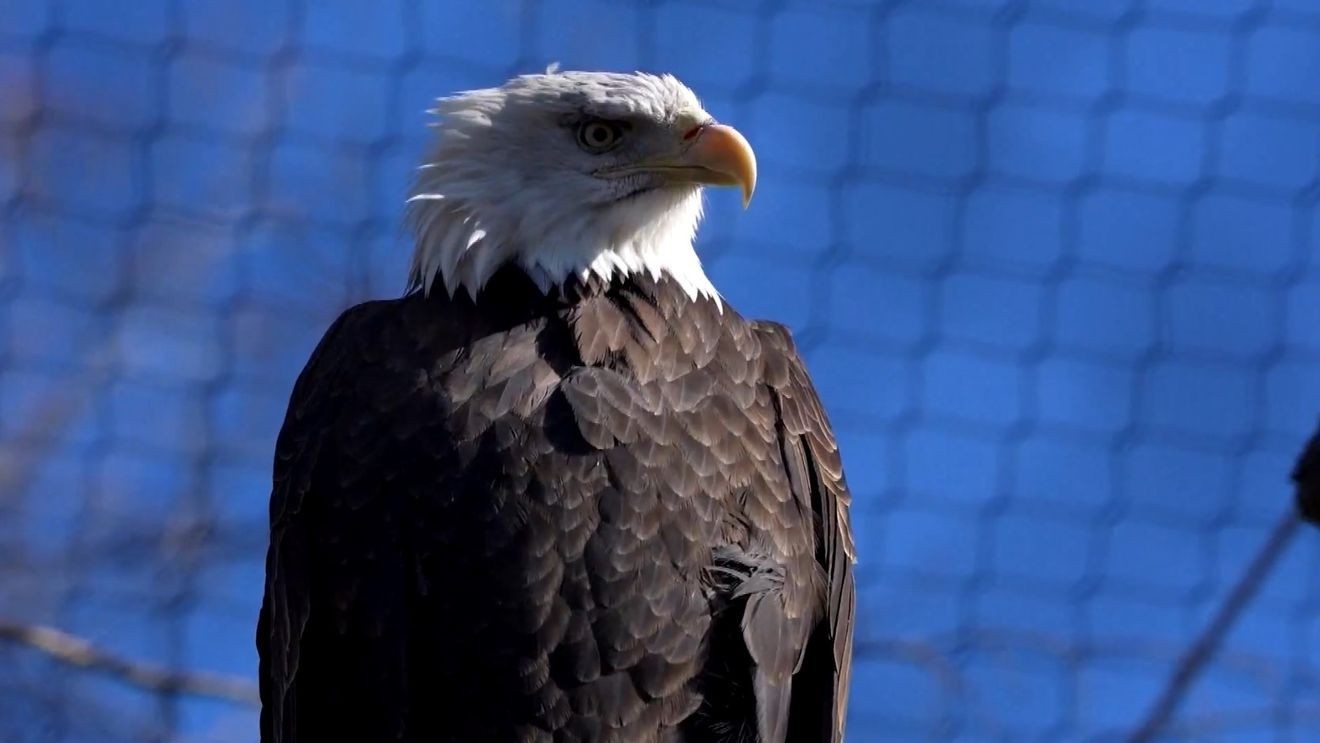
As temperatures plummet in the northern regions, Missouri transforms into a winter refuge for bald eagles, one of the nation’s most iconic birds.
Janet Haslerig; an Avian Ecologist for MDC explained, “December through February is the perfect time for eagle viewing, mainly because we have thousands of eagles that come down from Canada and the Great Lakes. They leave their breeding grounds and arrive in Missouri for hunting opportunities.”
The key to Missouri’s appeal lies in its open water. “Bald eagles go wherever there’s food and open water available. Missouri is known for its big rivers and wetlands, so it makes it a perfect spot for bald eagles in the wintertime,” Haslerig said.
Unlike songbirds, bald eagles are not considered migratory; they move based on food and water availability.
“They go where the water is open and where there’s plenty of food,” Haslerig noted. For optimal eagle viewing, timing is crucial.
“You want to get there a little after sunrise. You’re able to see bald eagles flying and fishing. You can also see them later in the evening when they gather at roost sites—sometimes 10 to 50 birds in one location,” Haslerig advised.
Preparation is essential before heading out. “Make sure you check the weather and dress warmly. And don’t forget your spotting scope, binoculars, or even a camera. You want to stay at a distance,” Haslerig recommended.
The Missouri Department of Conservation hosts several “Eagle Days” events statewide, offering visitors a guided opportunity to observe the birds up close.
“MDC hosts several Eagle Days events throughout the state, but there are also public viewing areas you can visit on your own—like the Ozarks, Bagnell Dam, Eagle Bluffs Conservation Area, and Lost Bluff,” Haslerig said.
You can see a list of Eagle viewing spots and information about upcoming Eagle Days events can be found here.