
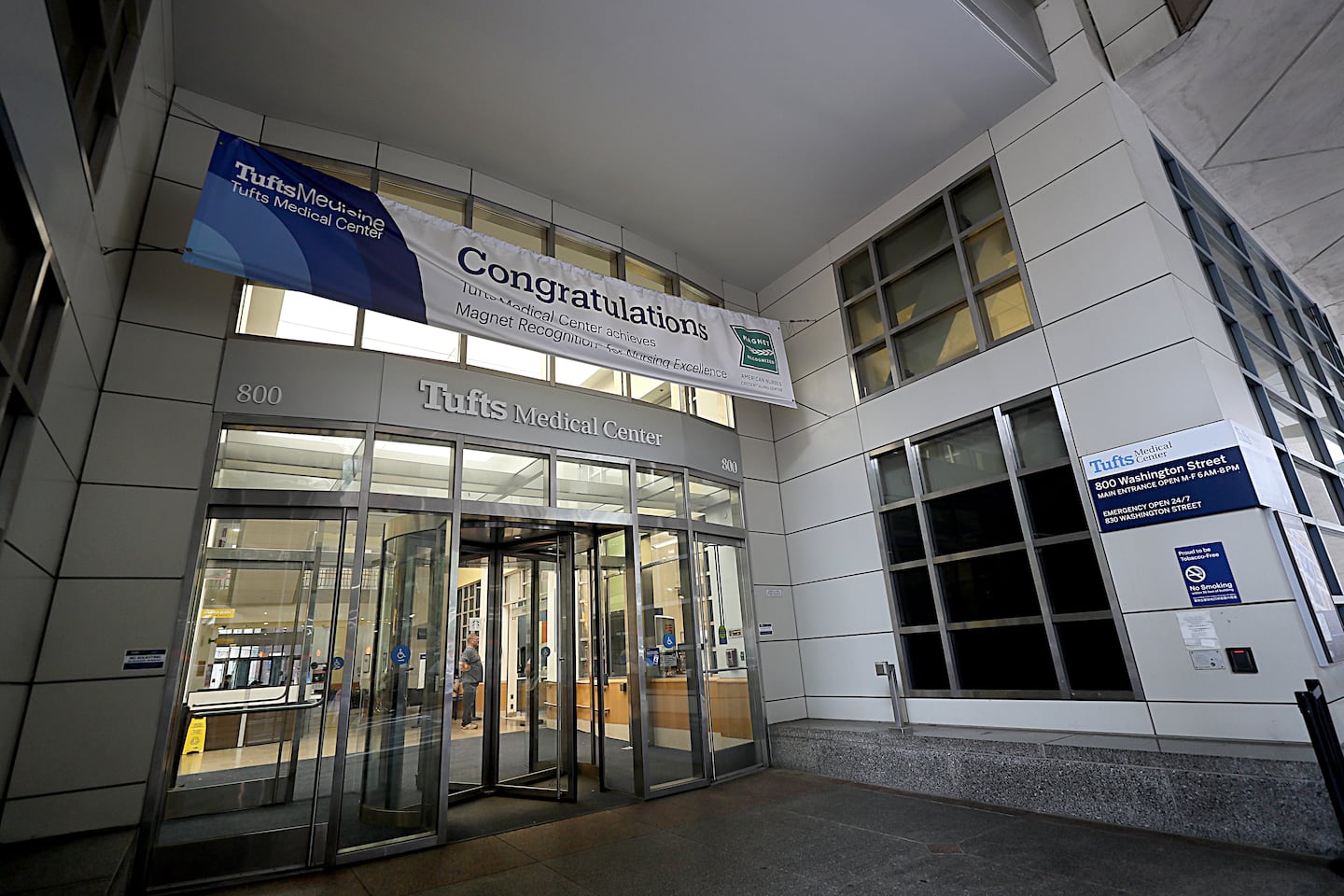
“I wouldn’t count us out,” said Tufts CEO Michael Dandorph in an interview. “Historically we’ve been talked about as a struggling system … but we’re building momentum.”
The differences in approach and outlook from UMass and Tufts Medicine exhibit just how unique the state’s hospitals can be, even as they grapple with many of the same challenges, and foreshadow just how dynamic the hospital market is likely to be in the years ahead.
“The approach that UMass seems to be taking, which is typical particularly of public entities, is you can cut your way out of a problem. And what Tufts is saying is we have to grow our way out of the problem,” said David Rosenbloom, a professor at the Boston University School of Public Health. “In the long run, organizations that try to grow their way out of problems are more successful than organizations that try to cut their way out of a problem.”
Despite their differences, the past year was tough for both organizations.
In reporting for the year that ended in September, UMass Memorial reported a $159.7 million operating loss on $4.7 billion in revenue, a massive swing from the $25.2 million gain on $4.3 billion in revenue reported in the same period last year.
Among the drivers of the losses, the federal government shutdown meant the timing of state Medicaid supplemental payments didn’t line up with the hospital’s fiscal year. That eliminated $67 million from operations. Though that money is likely to be provided to the health system in future years, it will be partially offset by expected increases in the uninsured population and decreases in insurance revenue, coupled with looming federal cuts that will eliminate billions of Medicaid dollars the state receives from the federal government.
The health system also brought a new hospital into its mix with the acquisition of Milford Regional Medical Center and its physician group. The Milford system alone lost $9 million, contributing to the red ink.
UMass additionally owns its own behavioral health nonprofit, Community Healthlink. The program serves almost entirely Medicaid patients, and lost $25 million in fiscal 2025.
Adding to the challenges were higher labor costs, which rose 23 percent to $2.7 billion, contributing to operating expenses of $4.9 billion. Meanwhile operating revenue only grew 9 percent to $4.7 billion.
“The thing that’s hardest over time is salaries and benefits will go up much faster than revenue,” Dickson said. “So you have to try to cut your supply expenses, cut some of your other programs losing money, theoretically. There is just no way you will get a rate increase from commercial payers … that will keep up with labor costs.”
Things are likely to get harder, Dickson said. Some commercial insurers are increasingly denying certain bills, including paying a lower amount for patients in the hospital less than two days, and refusing to pay more money if a patient is readmitted to the hospital within 30 days of being discharged. And then there are the pending Medicaid cuts.
As a result, the health system is pulling back on growth. Dickson said the system is seeing through projects that have been in the works for years, including investing $54 million in a new proton beam for cancer care. Other projects have been halted, including plans to expand the maternity wing on Memorial campus, and hopes to convert double rooms into single rooms at Marlborough Hospital.
 A view of UMass Memorial Medical Center in Worcester in 2015.Pat Greenhouse/Globe Staff/file 2015
Dickson acknowledged UMass had a healthy reserve, which will help the system weather the challenges better than it was able to in the past. But he was still looking at potential service closures.
“We’re exploring all options and hoping not to have significant program closures,” Dickson said. “But we can’t lose $160 million every year. We just can’t.”
Tufts, meanwhile, is taking the opposite approach.
The health system reported a $58.6 million operating loss on $3 billion in revenue for the year ending in September. Though the financials have greatly improved from the $250.7 million loss on 2.6 billion in revenue reported for the same period a year prior, the health system notched its fourth year operating in the red.
Yet executives said they were in the midst of a turnaround. And though the work is still underway, they celebrated the progress.
Among the achievements were growing revenue 12.4 percent to $3 billion in the year that ended in September, largely through seeing more patients and a rise in organ transplants, neuroscience surgeries, and cancer care. The system better leveraged its electronic medical record system to collect bills on the care it was delivering.
Meanwhile the system’s reliance on expensive contract labor has dropped precipitously. In October 2023, the system contracted with 310 full-time equivalents, which by March 2025 had dropped to 28. As a result, the system went from spending upwards of $17 million a month on contract labor to less than $1 million. Lower labor expenses helped hold expense growth to only 4.7 percent year over year.
Those changes have only been the start. The health system plans to take out over $370 million in debt as part of a wide-scale energy investment plan. Approximately $290 million will bolster the health system’s reserves.
Another $74 million will go to investments, which will include building a combined heat and power generation plant at the Lowell General campus and solar panels at Lowell General and Melrose Wakefield hospitals. The plan is expected to generate an average of $9 million of energy savings per year to support paying down debt.
Bond rating agencies viewed the plan favorably in November, with Standard & Poors revising its outlook on Tufts debt from negative to stable.
Dandorph, the CEO, said he recognized the “headwinds” to come, but he and his team must focus on the hard work of their financial turnaround.
“I can’t guarantee we won’t have to address program or service closures. But we’ve proven we will do what we need to do to stay around,” Dandorph said. “You may say it’s optimistic. I’d say it’s pragmatic. These communities rely on us.”
Rosenbloom didn’t disagree with Tufts’ reasons for optimism, saying the organization had beaten tough odds before.
“The imminent demise of Tufts has been broadcast for the last 30 years,” he said. “Their ability to actually survive has surprised many people. I can understand how they may be viewing this as just another challenge that they will overcome.”
Yet there is little doubt the challenges for providers with a large number of patients on government insurance will be immense, as more people become uninsured, and as the federal government reduces Medicaid payments to states. That may further restructure the market for years to come, Rosenbloom said, as rich hospital systems grow richer and those that serve the poor grow poorer.
Jessica Bartlett can be reached at jessica.bartlett@globe.com. Follow her @ByJessBartlett.