
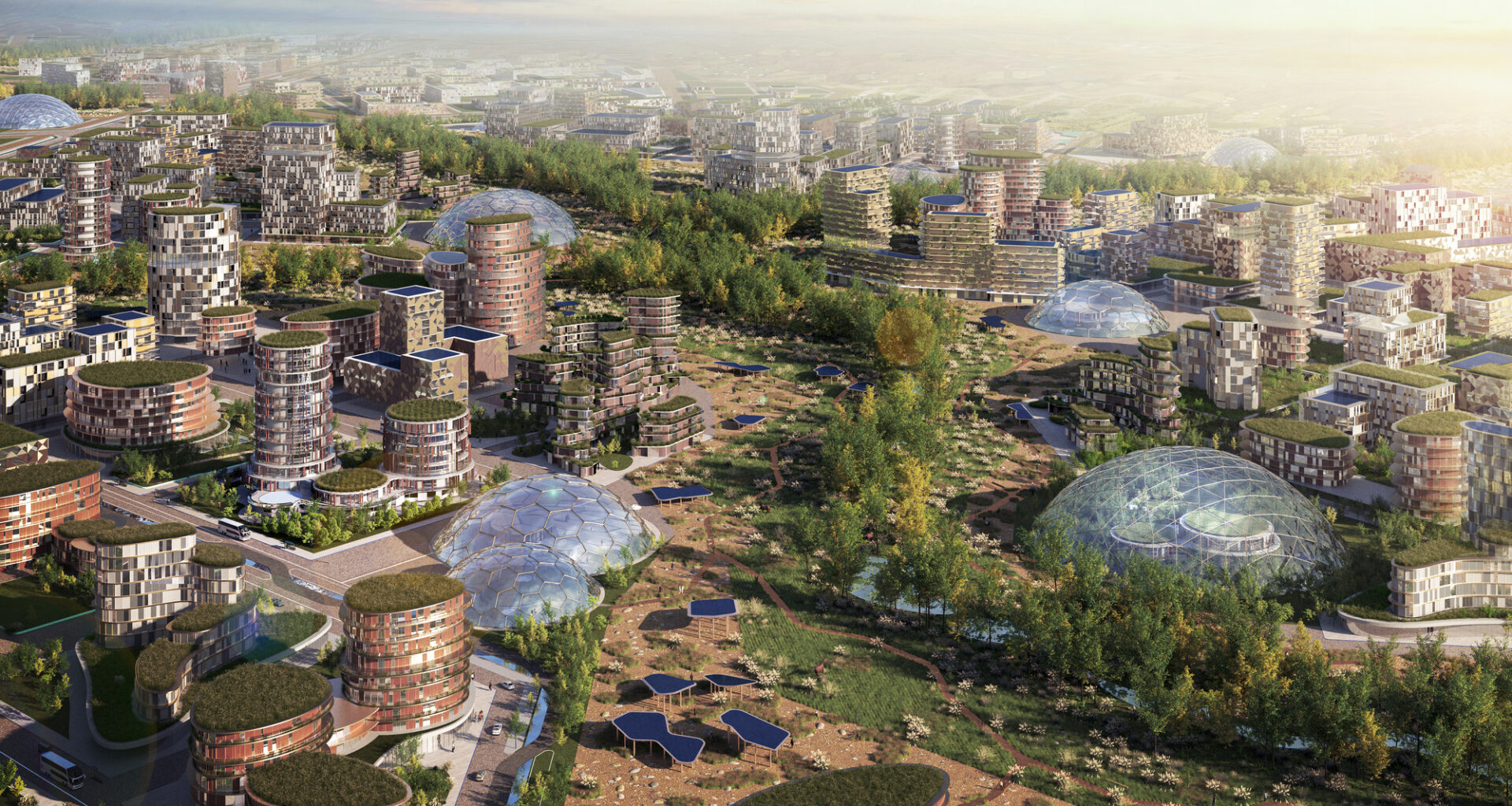
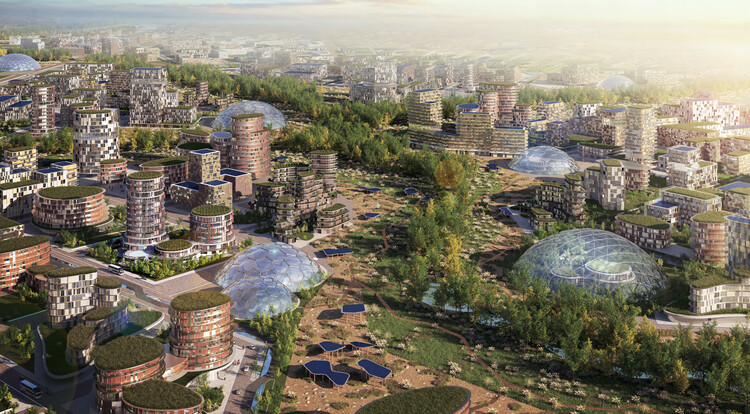
 Hunnu City Ecological Corridor. Image Courtesy of Bechu & Associés
Share
Or
https://www.archdaily.com/1037250/bechu-and-associes-wins-competition-for-hunnu-city-master-plan-supporting-mongolias-vision-2050
Bechu & Associés has been selected as the winner of the international open competition for the masterplan of Hunnu City, a new satellite city planned south of Ulaanbaatar, Mongolia. Announced in 2025, the winning proposal establishes a long-term urban framework for a 31,503-hectare site located near Chinggis Khaan International Airport, with phased development planned between 2025 and 2045. The project forms part of Mongolia‘s broader territorial strategy under the Ulaanbaatar 2040 Master Plan and the national Vision 2050 framework, positioning Hunnu City as a new emerging major city intended to support population decentralization, economic diversification, and long-term urban resilience.


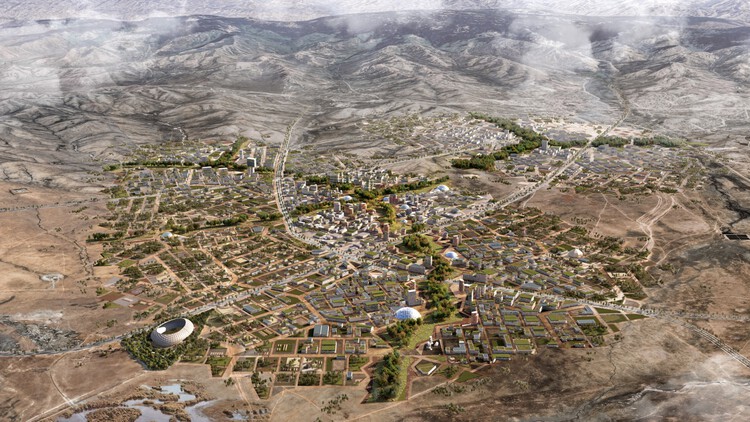 Hunnu City. Image Courtesy of Bechu & Associés
The winning master plan by Bechu & Associés, developed in collaboration with IQP Italdesign, SOA Architecture, and an international team of consultants, proposes a regenerative and landscape-driven urban model shaped by the environmental and cultural conditions of the Mongolian steppe. Rather than applying a fixed or centralized urban form, the project is conceived as an adaptive system designed to grow over time. Drawing inspiration from the geometry of the traditional ger, the symbolic significance of the number nine, and natural processes such as water flows, wind patterns, and solar exposure, the plan organizes the city as a constellation of interconnected urban cells. This structure enables the city to respond to climatic extremes while maintaining flexibility as social and economic conditions change.
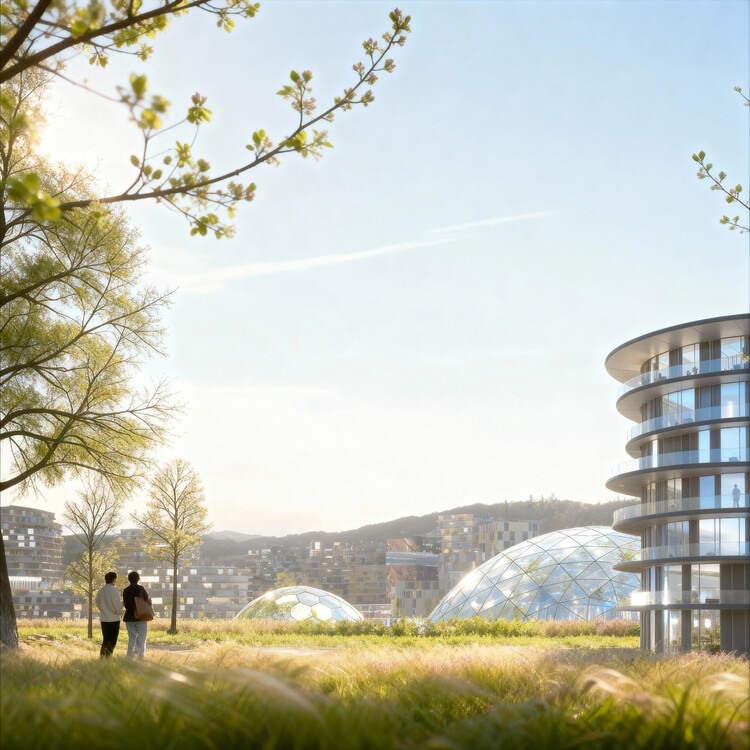 Hunnu City. Image Courtesy of Bechu & Associés
At the core of this urban framework are circular hubs known as Amid Od, or “stars of life,” which function as the primary social, cultural, and climatic anchors of the city. Referencing the spatial logic and communal role of the ger, each Amid Od integrates a mix of public programs including education, healthcare, cultural facilities, sports, mobility infrastructure, and climate-adaptive public spaces. Designed to support daily life across harsh seasonal conditions, these hubs act as social condensers while organizing surrounding residential, productive, and landscape zones through a gradual transition from dense mixed-use areas to open steppe.
Related Article Urban Regeneration in Greece: The Ellinikon Master Plan and Beyond
The international competition for Hunnu City was launched in response to Mongolia‘s long-standing urban challenges, particularly the high concentration of population and economic activity in Ulaanbaatar. Despite the country’s vast territory, more than half of Mongolia‘s population resides in the capital, placing increasing pressure on infrastructure, housing, and environmental systems. As part of the Ulaanbaatar 2040 Master Plan, the competition sought proposals for a new satellite city capable of redistributing growth while responding to extreme climatic conditions, cultural heritage, and long-term sustainability goals.
 Hunnu City. Image Courtesy of Bechu & Associés
The strategic location of Hunnu City, approximately 52 kilometers south of Ulaanbaatar, informed the competition brief, which emphasized connectivity, logistics, and international accessibility alongside cultural and environmental considerations. Aligned with the objectives of Mongolia’s Vision 2050, the project sets the conditions for the gradual emergence of a new satellite city, integrating strategies for water capture and reuse, renewable energy production, biodiversity enhancement, and smart infrastructure systems, supported by climate modelling and sustainable mobility planning.
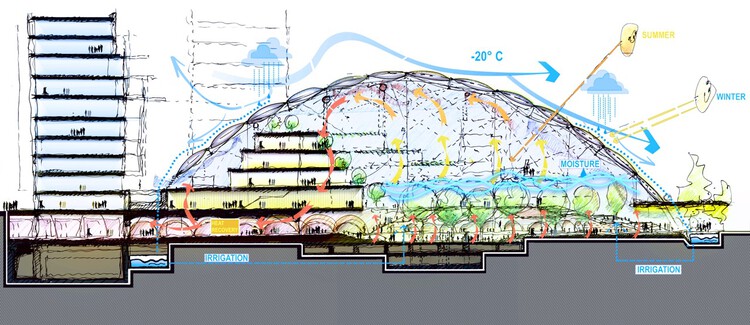 Hunnu City, Big Bubble Section 100m. Image Courtesy of Bechu & Associés
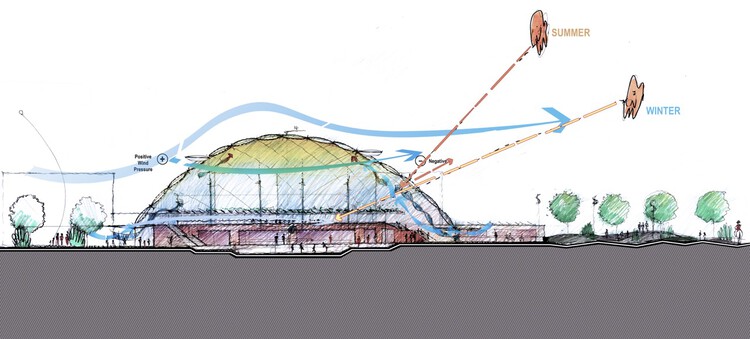 Hunnu City, Small Bubble section 30m. Image Courtesy of Bechu & Associés
In related competition news, Zaha Hadid Architects, in collaboration with RINA as team leader alongside Studio Plicchi, WSP, STI Engineering, and BC Building Consulting, has been selected to design the Malpensa Hospital in Italy. Elsewhere, the State of Qatar announced the selection of Frida Escobedo Studio, working with Buro Happold and Studio Zewde, to design the new headquarters for the Ministry of Foreign Affairs. Meanwhile, Kistefos Museum has named Swiss practice Christ & Gantenbein as the winner of its international competition for a new museum building at the Kistefos site in Jevnaker, north of Oslo.