
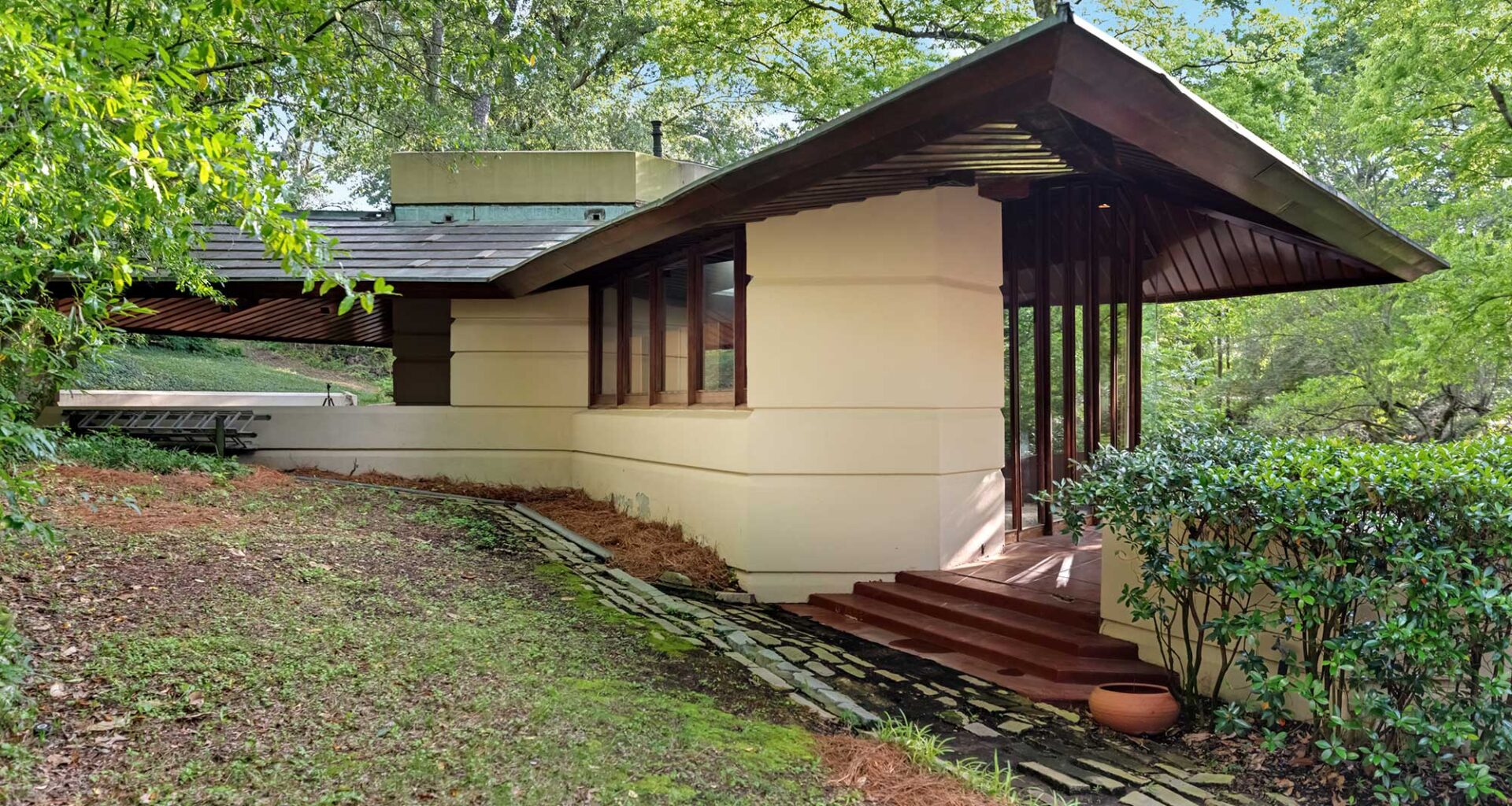
Tucked away in the tree-lined Woodland Hills within Jackson’s Fondren neighborhood, one particular house has sat at the bottom of a small wooded hill since the early 1950s. Famed American architect Frank Lloyd Wright designed the house in 1948 and completed it by 1954 on behalf of a Jackson oil industry worker named J. Willis Hughes, whose family lived there through the 1970s.
Originally known simply as the “Hughes House,” the building eventually came to be called “The Fountainhead,” named for the Ayn Rand novel of the same name due to rumors that Rand based the novel on Frank Lloyd Wright’s life.
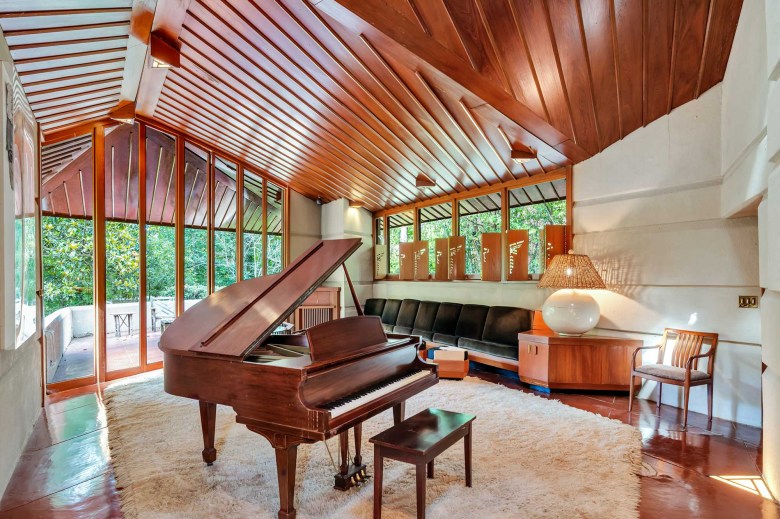 Frank Lloyd Wright’s architectural designs included geometric patterns as seen in the vaulted wooden ceilings here. Photo courtesy The Mississippi Museum of Art
After the Hughes family left the house, an architect named Robert Parker Adam purchased it and spent a number of years working to restore it before listing the property out to Crescent Sotheby’s International Realty.
The house has never had another resident since. While the United States Department of the Interior eventually entered the property into the National Registry of Historic Places by 1980, it has otherwise sat empty for decades.
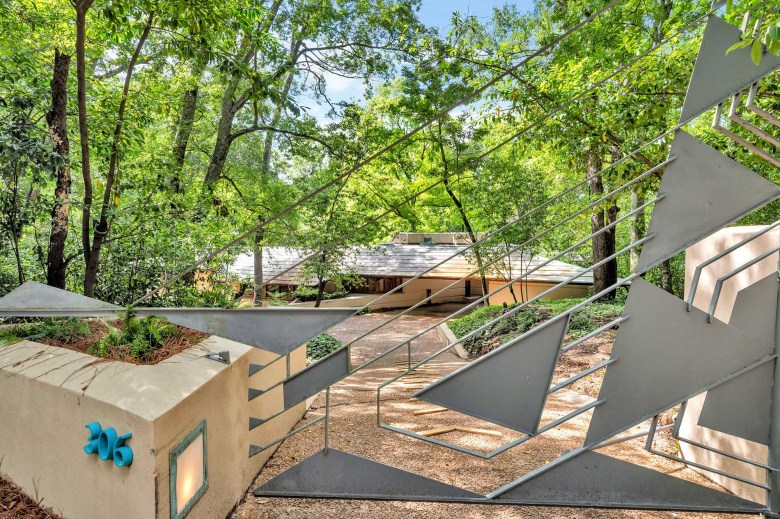 The Fountainhead, a home built in 1954, resides in the Fondren neighborhood of Jackson, Miss. Photo courtesy The Mississippi Museum of Art
The Mississippi Museum of Art in downtown Jackson recently stepped up and purchased the property from Robert Parker Adams’ wife, Sherri Adams, in the name of restoring and preserving the historic home after receiving approval from the Jackson Planning and Zoning Board and the Jackson City Council.
“We’re honored to be the next stewards of this architectural masterpiece,” museum director Betsy Bradley told the Mississippi Free Press. “A number of other museums around the country have acquired similar landmarks, and all of them require a great deal of maintenance to keep the original structural and design integrity intact. This is our chance to keep this marvel from falling into disrepair and to allow it to become the architectural showcase we all know it can be.”
‘Stepping Back in Time’
Fountainhead, which Frank Lloyd Wright designed when he was 81 years old, is an example of what the famed architect dubbed “Usonian” design philosophy. Usonian homes are usually one-story buildings with middle-class families in mind that use local materials in their construction and feature flat roofs, abundant natural lighting and overhangs supported with beams on only one end.
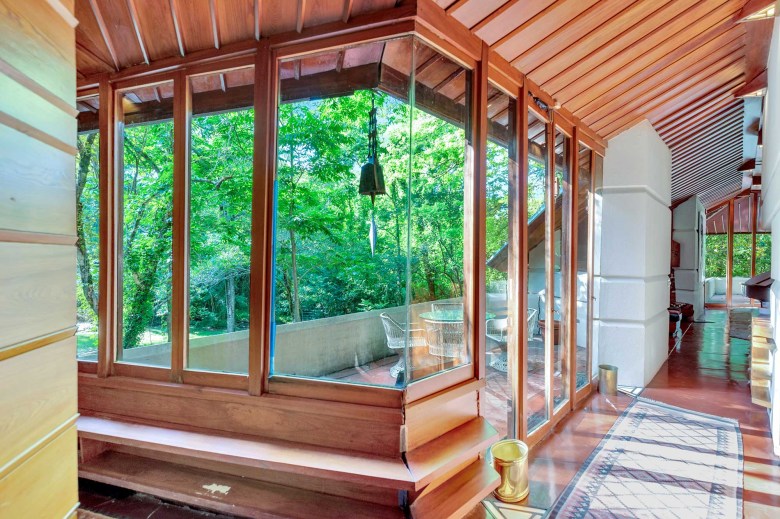 The Mississippi Museum of Art has been partnering with a number of architectural firms to restore and maintain the property. Photo courtesy The Mississippi Museum of Art
Situated on roughly an acre of land, the 3,558-square-foot house has four bedrooms, two full and two half bathrooms, a basement, and porches surrounding the structure. The walls and ceilings consist of Heart Tidewater Red Cypress wood, and the house has no stud walls, sheetrock, brick, tile, carpeting or paint, a press release from the Mississippi Museum of Art explained. The house does have hardwood floors, wooden shutters, skylights, a carport, a terrace, three fireplaces and a copper-sheeted roof.
“What Frank Lloyd Wright made with Fountainhead is like a 3D work of art,” Betsy Bradley said. “The fact that it only ever had two owners means all the original design aspects are still there, even the original kitchen, so it’s like you’re stepping back in time. The whole structure and every geometric angle has its design perfectly married to the landscape around it. He wanted to eliminate barriers between life inside and life outside for anyone who lived in one of his homes, so everything is adjacent to where an activity needs to happen and is easy to navigate.”
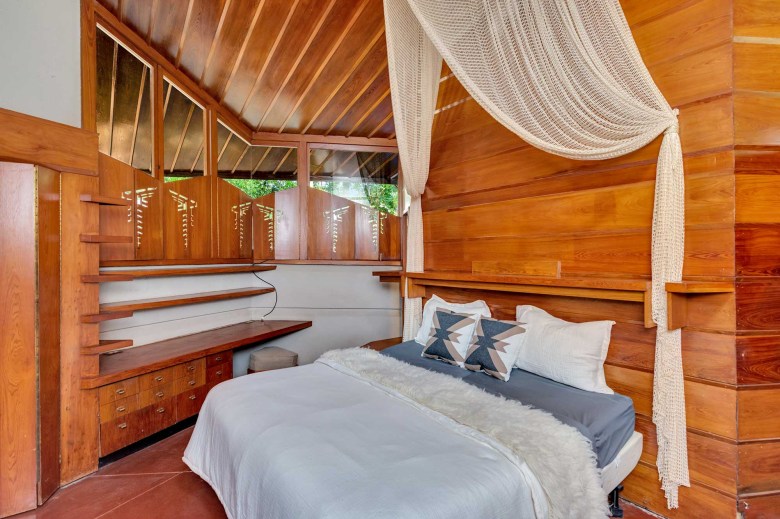 Many interior rooms include wooden shelving and fixtures to let in a lot of natural light. Photo courtesy The Mississippi Museum of Art
The Mississippi Museum of Art is partnering with a number of architectural firms to restore and maintain the property. Once the work is complete the museum plans to officially open Fountainhead to the public for tours. Visitors will be able to travel to Fountainhead via shuttle buses from the museum. The museum will announce the public opening at a later date.
“Frank Lloyd Wright had a long and productive life, but you still won’t see one of his houses just every day,” Bradley said. “Preserving the legacy of such a genius of commercial and residential architecture will have a profound impact on the city of Jackson.”
For more information on Fountainhead or the Mississippi Museum of Art, visit msmuseumart.org/or call 601-960-1515.
Related