
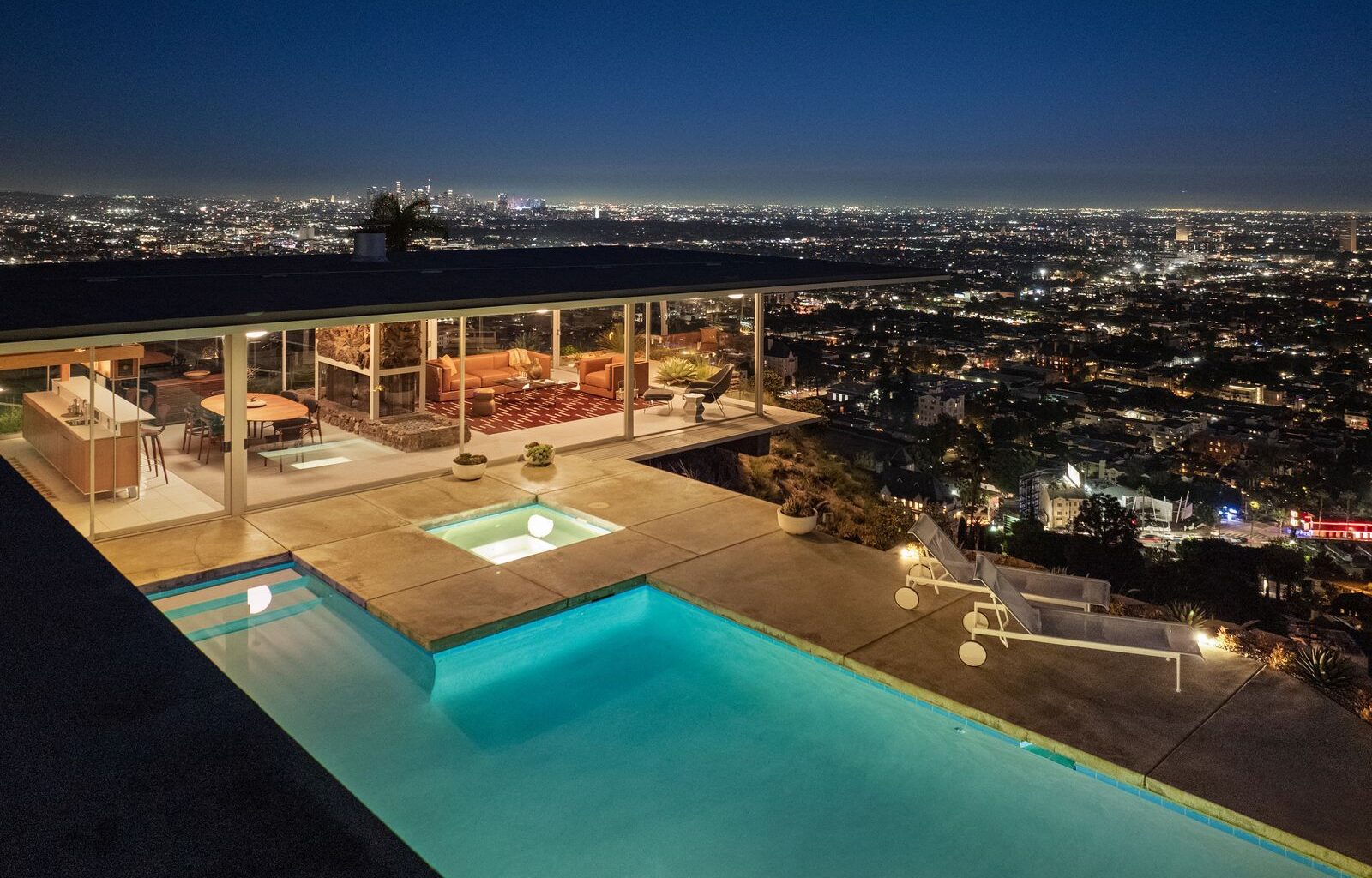
As any regular reader of this publication is likely aware, there is a robust economy for modernist houses by significant architects. The most recent home to come to market is the iconic Stahl House for $25 million, designed by Pierre Koenig in the late 1950s as part of the well-known Case Study Houses, which advocated for mass-produced, affordable housing in the postwar period. Like many modernist houses, the Stahl House’s quiet story as an affordable and experimental model home for the postwar working class has bifurcated from its current, very audible, very unaffordable sale price.
From a real estate perspective, the price of the Stahl House is reasonable in comparison to recent historic house listings, such as the Ennis-Brown House by Frank Lloyd Wright asking $23 million (it sold for $18 million), or that of the Brown House by Richard Neutra, once owned by designer Tom Ford and after, writer and producer Ryan Murphy, who recently listed it at $33.9 million (it went for $24 million in September of 2025). These sales make the $8.75 million sale of Richard Neutra’s Lovell Health House to the Wirths (of Hauser-Wirth notoriety) and Frank Lloyd Wright’s Freeman House sale at a reported $1.8 million seem almost affordable. Like much of Los Angeles’s speculative real estate market, the prices of significant architecture are not established by rational means but by irrational notions of celebrity and desirability; these houses and their association with a particular mode of artful living drive up their prices, transforming previously humble family homes into coveted and rarefied assets. Historical value does not correlate with market value, but the bibliographic length of a house well published doesn’t hurt.
With the listing of the Stahl House, Bruce Stahl and Shari Stahl-Gronwald, the children of the original owners, are purportedly searching for an institution or individual who promises to preserve the house, as they have for the past six decades using much of their own resources (much applauded). The question is not if the house will sell—the question is to whom? By its price point, private ownership is inevitable. There is no public institution or nonprofit organization capable of acquiring it for this amount, so the asking price sets the terms of ownership: an individual buyer, likely a billionaire, of which Los Angeles has plenty. The high asking price all but guarantees the Stahl House will remain private, raising the question of whether and how critical public access to the house will be continued. (The Stahl family has not responded to request for comment.)
Los Angeles’s Stahl House, designed by Pierre Koenig in the late ’50s and completed in 1960, recently went up for sale by the children of the original owners for $25 million.
Koenig designed the Hollywood Hills residence as part of Los Angeles’s Case Study Houses, a postwar experiment in creating affordable, easily replicable homes.
The modernist residence features a steel-and-glass construction and an open floor plan.
While governance, funding, operations, staffing, and access vary across dozens of modernist and historic sites in Los Angeles—including the Neutra VDL Studio and Residences, Schindler House, Frank Lloyd Wright’s Hollyhock House, Green & Green’s Gamble House, and the Eames House—what unites them is their public mandate. Nonprofit organizations and architectural institutions carry a responsibility to not only preserve the physical state of their architecture but also the social fabric between house and public, by making their sites broadly accessible. While visitations can be free, ticketed, prescheduled or by tour, there is determination to provide democratic access. On any given Saturday, whether planned in advance or with an impromptu desire, one can stop by these houses during public hours and knowingly secure entry.
Privately owned houses offer no such opportunities. The Ennis House, Sowden House, and Freeman House are highly difficult to access. The general public, without celebrity status, pedigree, special circumstance, or financial means, will not be able to step foot inside most of these homes. (I suggest you try to schedule a visit.) The reasons proliferate: owners lack capacity to maintain a calendar of visits; the desired privacy of personal lives; diminishment of legal liability (some of these houses are in poor states); and for lesser stated reasons, the zoning laws governing residential sites. (Unknown to many, most significant modern or historic houses are constructed in residential zones and are not permitted to host frequent public visitors, as this would classify a house’s use as commercial.) For years, the Stahl House provided a creative solution to this issue by offering ticketed visits at highly regulated appointments. While less accessible than many of the other publicly stewarded houses, this was a decent compromise given the neighborhood constraints and zoning limitations.
Could an institution or nonprofit organization, such as the National Trust for Historic Preservation or the Getty Foundation, step up to purchase this house? Simply put, no. A brief look at the economic scale of modernist houses in relation to institutional and cultural budgets: The City of Los Angeles’s recent 2025-26 arts and culture allocation of $16.53 million (0.10 percent of the city’s entire expenses) barely covers funding for the hundreds of arts and nonprofit organizations and the four million residents it already serves. The cost of the Stahl House is currently equivalent in size to the annual budget of one of L.A.’s largest museums, the Hammer Museum. For even larger museums, such as the Los Angeles County Museum of Art (LACMA), with an annual budget of $75 million and a new $720 million construction project, perhaps the acquisition is proportionally feasible. Yet LACMA acquired the notable Sheats-Goldstein House by John Lautner in 2016 as a gift from its current owner and was only able to do so with the security of a $17 million endowment guaranteeing the house’s future maintenance and preservation. Even with this hefty endowment, LACMA acknowledges that the acquisition of this rare house (valued at $40 million at the time) is a bit of a reach for a museum whose mission is to collect artworks and not architecture. The same can be said for the Getty Foundation and Museum, the Museum of Contemporary Art, and the Hammer Museum—none of which collect houses.
Modern and historic houses in Los Angeles require a creative blend of private and public stewardship. The home’s structures and operations are all unique, which can make knowledge, resource sharing, and advocacy difficult. The circumstances of maintaining these houses are challenging for an individual owner alone, no matter their resources, as it requires an intense coalescence of attention, expertise, perspectives, and most importantly—public education. “Although each of these houses is owned and managed in a different way, they all have ongoing preservation and maintenance challenges, some quite daunting,” says Chandler McCoy, senior project specialist in the Getty Conservation Institute and head of the Conserving Modern Architecture Initiative. “Some have required extensive restoration and stabilization in the past and some are currently undergoing this work. It takes professional knowledge, ample funding, and long-term thinking to keep these places standing, and safely open to the public.”
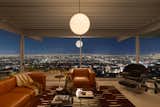
The current owners, the children of original owners Buck and Carlotta Stahl, kept up preservation of the home and opened it regularly to the public.
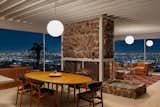
The fate of the home is now in limbo as it awaits a buyer, likely a private one, since no institution nor nonprofit can afford the asking price.
Los Angeles’s only UNESCO World Heritage Site, the Hollyhock House, is owned by the City of Los Angeles and depends on a mix of public and private funding partnerships, reflecting how little funding is dedicated to heritage preservation. The Neutra VDL Studio and Residences is the property of Cal Poly Pomona, gifted to the school in 1980 by the architect’s wife, Dione Neutra. The house’s preservation and operational funds are made possible through gifts from the public while depending primarily on the resourcefulness of its past directors, who are themselves full-time faculty members at Cal Poly’s architecture department. Under the purview of its previous dean of architecture, Milton Curry, the school of architecture at the University of Southern California decoupled from the two significant houses it owned—the more public-facing Gamble House and the lesser-known Freeman House, which was gifted to the school but inaccessible for public visits, because of damages sustained during the 1994 Northridge earthquake. (The Freeman House recently sold for $1.8 million to the Weintraub Real Estate Company, a development group, with a conservation easement held by the Los Angeles Conservancy.) The MAK Center for Art and Architecture (of which I served as director until 2024) stewards three significant buildings by the Austrian-American architect R.M. Schindler through a mix of public and international partnerships between two Los Angeles nonprofits, the MAK Center and Friends of Schindler House, and the Austrian institution Museum für angewandte Kunst (MAK). The most public-facing of its sites, the Schindler House, remains the property of the Friends of Schindler House, the volunteer board established by Pauline Schindler more than 30 years ago, while MAK Center operates, programs, and helps maintain the house for public access and art and architecture programming.
The need for preservation is often the most visible aspect of architectural stewardship, and so it often eclipses the many other forms of institutional labors that enable modernist houses to keep their doors open and their publics engaged. These intangible acts of care, often taking the form of labor such as maintaining, repairing, interpreting, curating, explaining, advocating, and ticketing (which is a surprisingly resource-intensive aspect of operations) are what enliven our cultural understanding, experience, and access to our histories. Institutions work to negotiate a complex network of stakeholders, whether legal owners, financial supporters, or cultural advocates, to enable public access. Private homeowners carry no such mandate. While the Stahl family took it upon themselves to maintain public access to the house (a laudable commitment to its legacy), no mechanism guarantees future property owners will pursue the same goals. It is also not a question of preservation alone—private homeowners can and do a relatively good job of preserving their properties for both personal and financial reasons, if they have the means to do so. They are, after all, part of their portfolio of assets. The question is one of public access and institutional stewardship—an urgent reminder that the work to be done is not merely the preservation of the material life of the house but also its relation to a public which claims it as its heritage.
I am not a preservationist. My perspective comes entirely from institutional questions—what happens to an architectural site and its social fabric after the act of preservation has occurred? The critique here is not centered solely on capitalism and speculative property ownership. With the recent federal dismantling of cultural and educational institutions, the American capacity for institutional imagination is disintegrating. We are losing our capacity and imagination for democratic processes and systems—our ability to organize collectively, holistically, and with broad equity and repair in mind. That Los Angeles can only preserve its modernist history through real estate transactions is perhaps the most audible cry for help for all of our cultural heritage sites. Why is the city incapable of a more visionary strategy for its architectural engagement? Why are there no major public resources, stewardship, or foundations leading the resource distribution for these important historical sites? These homes cannot survive on private ownership alone, and the Stahl House sale is just the latest sign that it’s time for new collective strategies to safeguard who these sites are ultimately for: the public.
Top photo by Jilbert Daniel | Visual Media LA
—
Related Reading: