
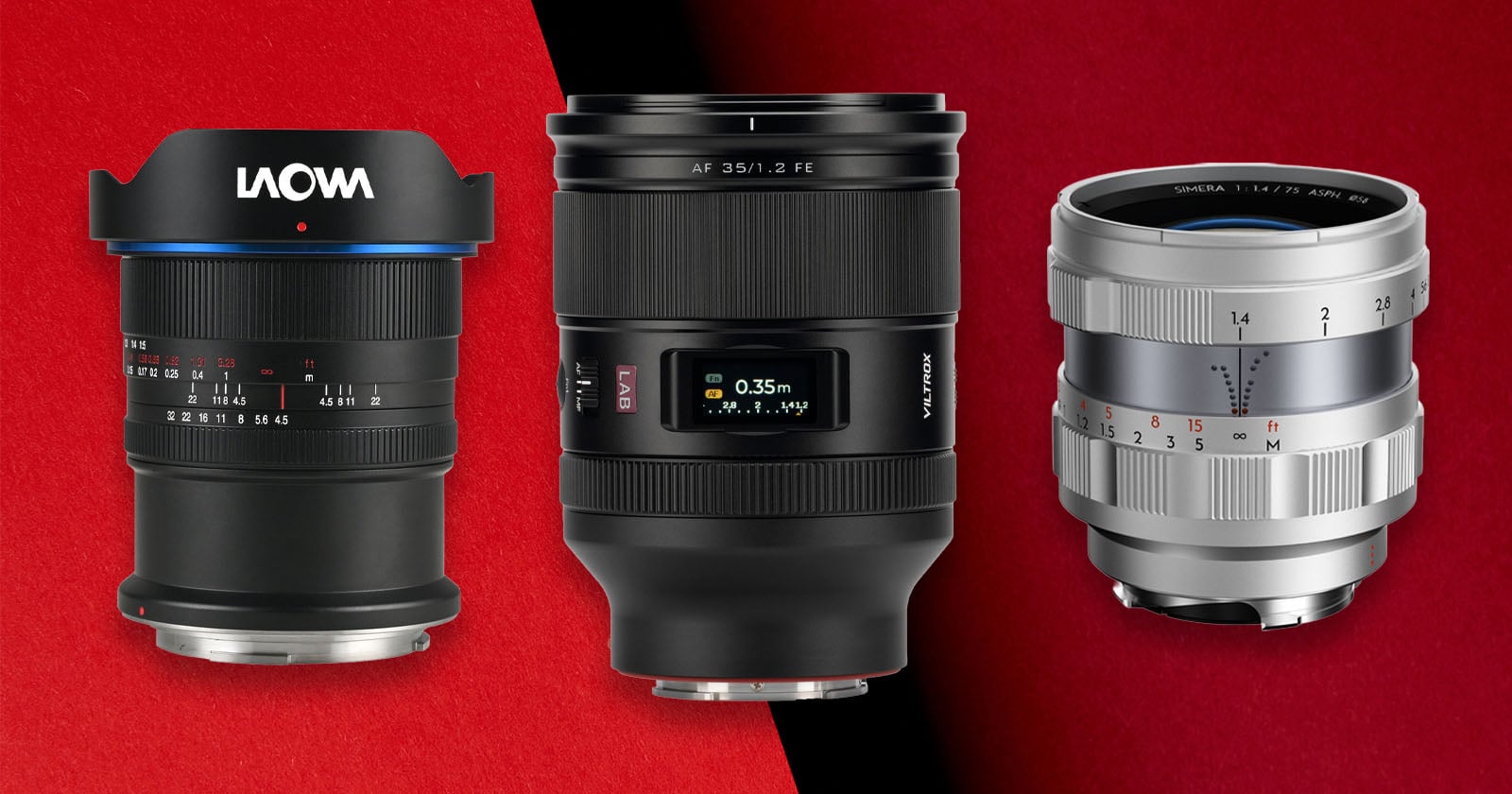
We’re kicking off our annual recap series with a look back at the best and most interesting Chinese lenses of 2025. From 7Artisans to Viltrox, let’s remember some great Chinese glass that hit the scene in 2025.
Unlike the rest of the articles in this series, which will focus just on individual brands, this one considers all the major Chinese lens makers. PetaPixel committed to reviewing more Chinese lenses this year, as they are popular options for photographers and videographers seeking to achieve high-level performance on a budget. We lived up to this promise, reviewing great lenses from Viltrox, Thypoch, Laowa, Sirui, Light Lens Lab, and Meike. These dozen-plus Chinese lens reviews in 2025 only scratch the surface of all the glass Chinese makers released this year, but they certainly offer a great look at the quality photographers can expect from the most prominent players.
Viltrox in 2025: Many Amazing Lenses Help Cement Viltrox as a Major Maker
Let’s start with Viltrox, among the most respected and well-known Chinese lens companies. Viltrox has been very busy this year, launching a diverse range of lenses including a $99 28mm pancake lens, professional LAB primes for E and Z-mount, and even AF adapters to put E-mount glass on Nikon Z cameras.
Viltrox kicked off the year in style with the 135mm f/1.8 LAB lens, a fantastic fast telephoto prime lens for portrait photographers. The lens showcased that although its lenses are always relatively affordable for their specs, Viltrox is much more than a budget brand. The company can make seriously great glass that goes toe-to-toe with the best Japanese companies.
The 135mm f/1.8 is not the only LAB lens Viltrox launched this year. The 35mm f/1.2 LAB joined the fray later in the year, delivering another fantastic lens, not just for the price, but period.
Then there are the Pro-series lenses, like the 50mm f/1.4 Pro. Although not quite as good as the Viltrox LAB lenses, the 50mm f/1.4 Pro is darn good.
The Viltrox 85mm f/1.8 Pro proved similarly impressive, delivering excellent quality at just $600.
There were many new Viltrox products we didn’t have time to review that came out this year too, including six AF-equipped primes for the DJI Ronin 4D, the affordable AF 25mm f/1/.7 Air for APS-C cameras, the 50mm f/2 Air, the AF 28mm f/4.5 Z that is barely bigger than a body cap, more Epic series anamorphic cinema lenses, an AF 85mm f/1.4 Pro prime, an aerial lens for the DJI DL system, the AF 56mm f/1.2 Pro for APS-C, and new ultra-wide Air lenses.
Not to be outdone, Viltrox also launched a brand-new lens series in October with the AF 85mm f/2 Evo, joined the L-Mount Alliance, released conversion lenses for the Fujifilm X100 series, dropped a 2x teleconverter for E-mount, and even quashed rumors about Sony tinkering with its E-mount philosophy with the a7 V camera. Oh, and Viltrox launched some new on-camera monitors and flashes.
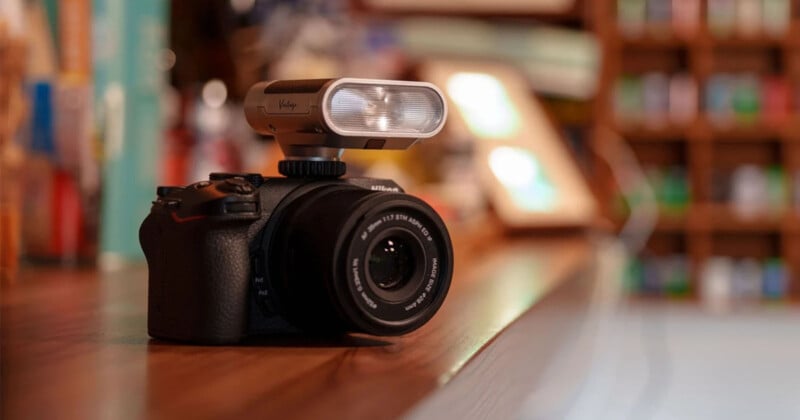 Credit: Viltrox
It was an absurdly busy year for Viltrox, and one that demonstrated that the company is seriously good at making lenses. Viltrox is very much a company on the rise, and there is every reason to believe it will have an even better and more prolific 2026 than its excellent 2025.
We aren’t going to grade every company in this article because we don’t have enough first-hand product experience to evaluate each brand fairly, but Viltrox earned an easy “A.”
Viltrox’s Grade for 2025: A Thypoch in 2025: Specialized, Excellent Glass
While not nearly as prolific as a company like Viltrox, when Thypoch releases a lens — and it released a decent number this year — it’s very good. The best example of that is the Thypoch Simera 75mm f/1.4 prime, which nearly earned its way into the 2025 PetaPixel Awards.
Both PetaPixel‘s editor-in-chief, Jaron Schneider, and our expert reviewer, Chris Niccolls, love the Thypoch Simera 75mm f/1.4 for its optical performance, brilliant physical design, and character.
PetaPixel also reviewed the Thypoch Simera 28mm f/1.4 and Eureka 50mm f/2 lenses this year, and each proved similarly impressive both in terms of their performance and build quality.
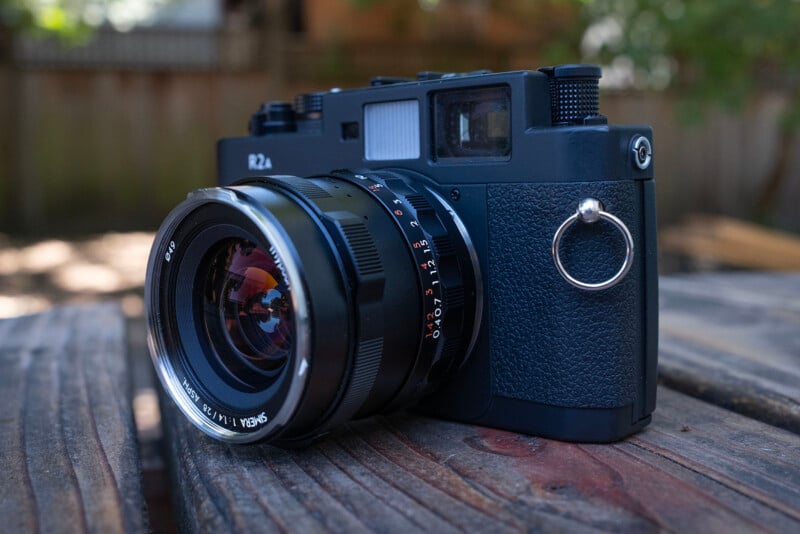 Thypoch Simera 75mm f/1.4
Beyond the Thypoch lenses we reviewed this year, the company also announced the Simera 21mm f/1.4 ASPH. and striking Eureka 28mm f/2.8, which channels the spirit of the built-in prime lens from the 1950s-era Ilford Advocate camera. The company also made the welcome move away from its polarizing focus lock switch mechanism design, which, while not a new product, is still good news for many fans of Thypoch lenses moving forward.
Thypoch has always made beautiful lenses, but they haven’t always been as good for picture-making as they are to look at. It is safe to say the company’s new lenses in 2025 bucked this trend without sacrificing any of their beauty. Thypoch is marching to the beat of its own drum, and photographers are better off because of it. The Simera 75mm f/1.4 is a strong example of the best Thypoch has to offer. More like that in 2026, please.
Thypoch’s Grade for 2025: B+ Light Lens Lab in 2025: Remaking Legendary Lenses and Still Making a Brand-New Film Emulsion
Light Lens Lab is an interesting Chinese lens maker. The company does a bit of everything and has a lot of things in the works, including a camera and a Seagull TLR upgrade kit. The company is also making a brand-new film emulsion, which remains in active development.
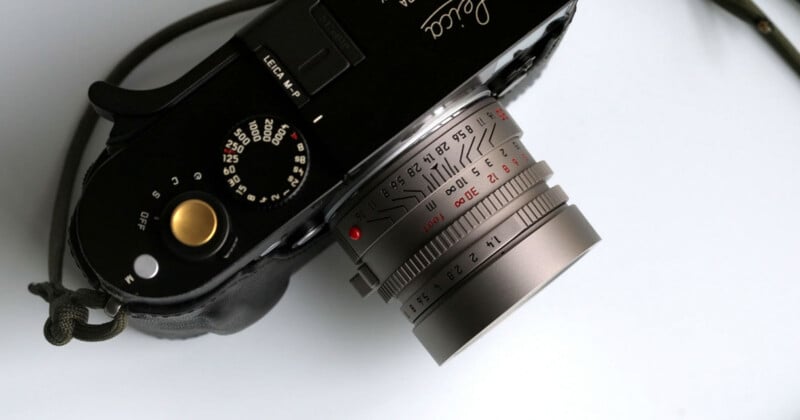
Beyond these ambitions, the company also recreates classic lenses, providing a new generation of photographers with opportunities to experience rare glass. One such example is the Light Lens Lab 50mm f/1.5 Z21, a recreation of the beloved P. Angenieux Type S21 50mm f/1.5 lens made in the 1950s. This is a highly sought-after lens that can set photographers back many thousands of dollars. The Light Lens Z21 faithfully recreates the classic lens for a modern audience, and the results are outstanding.
It’s an awesome lens, and we hope that Light Lens Lab’s next lens, the 35mm f/1.4 Aspherical “11873” that recreates the double-sided aspherical version of the Leica Summilux 35mm f/1.4, will be just as good. We’re also keen to see what comes of Light Lens Lab’s film project, Seagull TLR upgrade, and whatever else the company sets its sights on. Light Lens Lab is committed to celebrating what makes photography special, and we’re here for it.
 Credit: Light Lens Lab Light Lens Lab’s Grade in 2025: B The Best of the Rest Chinese Lenses in 2025
We didn’t review many Laowa lenses this year, but all three were quirky. The most recent of the bunch are the ambitious but disappointing Laowa 200mm f/2 and the unusual, fun 8-15mm f/2.8 FF II fisheye zoom. The third Laowa lens we reviewed this year, the 15mm f/4.5 Macro, proved more impressive than the other two. While none of these lenses have broad appeal, they reflect Laowa’s willingness to think outside the box and do interesting things. For that, Laowa should be applauded.
Laowa has some other interesting new lenses either on shelves now or coming very soon, like the 35mm f/2.8 Zero-D Tilt-Shift 0.5x Macro, 20mm T2 Proteus 2x Anamorphic lens, 180mm f/4.5 1.5x Ultra Macro telephoto, 12mm f/2.8 Lite Zero-D, and the world’s first shift lenses for full-frame cinema cameras. As is the case every year, Laowa made a wide range of very different lenses in 2025, and the photo and video world is a more interesting place with Laowa in it, even if some lenses miss the mark a bit.
While their names are similar, Chinese makers 7Artisans and TTArtisan were up to very different things this year.
7Artisans announced a wide variety of optics, including a cheap 18mm f/5.6 full-frame prime, a bunch of cinema lenses, including some really impressive cine primes, and more. Although the company’s Floral Bloom lens proved polarizing, there’s no question that 7Artisans released impressive lenses this year.
As for TTArtisan, the story is similar, but the company focused more on photo lenses than on cinema lenses. The company kicked 2025 off with the AF 23mm f/1.8 APS-C prime in January, followed shortly thereafter with the reveal of a folding instant camera that uses Instax film.
In March, TTArtisan brought its 75mm f/2 AF lens to L-Mount. In April, the company dipped its toes back into video with the 35mm T2.1 lens that has controllable bokeh styles, before returning to photo-oriented products in May with the Tilt 35mm f/1.4.
While not an all-encompassing recap of TTArtisan’s 2025, some other highlights include the affordable 14mm f/2.8 prime for astrophotographers and the 17mm f/4 Tilt-Shift lens for full-frame mirrorless cameras, filling a void in many mirrorless systems.
PetaPixel went hands-on with some other Chinese lenses this year, including the beloved Meike 35mm f/1.8 Pro and the Sirui Aurora 85mm f/1.4.
Chinese Lenses in 2025: Keep ‘Em Coming
For many years, it was all too easy to dismiss Chinese lenses as cheap knockoffs that failed to meet expectations. While that is still true of some lenses from Chinese makers, there have been many counterexamples in recent years. This year, especially, Chinese companies delivered some fantastic, high-quality lenses that deserve just as much attention as lenses from the big boys in the photo industry.
Viltrox, especially, proved its mettle this year. The company’s LAB and Pro series lenses are fantastic, legitimately good choices for high-end and professional work. Evo and Air lenses offer good performance at very low prices, too. The company even joined the L-Mount Alliance this year, although it is still working on bringing its glass to L-Mount cameras.
Light Lens Lab and Thypoch both do things quite differently from Viltrox, focusing on more niche, specialized, and vintage-inspired glass. Each company achieved some great things this year.
Laowa, 7Artisans, TTArtisan, Sirui, and Meike all released interesting options for photographers and videographers this year at accessible prices.
2025 was an outstanding year for new Chinese lenses, and 2026 could prove to be even better.
Image credits: Header photo created using an asset licensed via Depositphotos.