
Disney is the undisputed heavyweight champion of the entertainment industry, wielding a level of cultural influence that few corporations in history have ever achieved. While Marvel and Star Wars became massive Disney properties, the House of Mouse built this empire on the back of its animated classics, establishing a standard of excellence that defined childhoods across generations. Films like The Lion King, Beauty and the Beast, and Aladdin proved that animation could deliver Broadway-caliber music and emotionally resonant storytelling, cementing the studio’s reputation as a factory of dreams. Even when the industry shifted beneath their feet, the studio eventually adapted, producing modern juggernauts like Frozen and Moana that kept the merchandising machine running at full speed.
However, Disney’s pristine legacy is not without its significant blemishes. The transition into the 21st century was a particularly turbulent era for the studio as it struggled to find its identity amidst the rise of computer-generated imagery and a changing audience demographic. This period of experimentation resulted in a string of creative misfires that often felt desperate rather than inspired. While the studio has mostly recovered, these specific films serve as a reminder that even the most powerful entertainment entity on the planet is capable of producing content that completely misses the mark.
5) Brother Bear
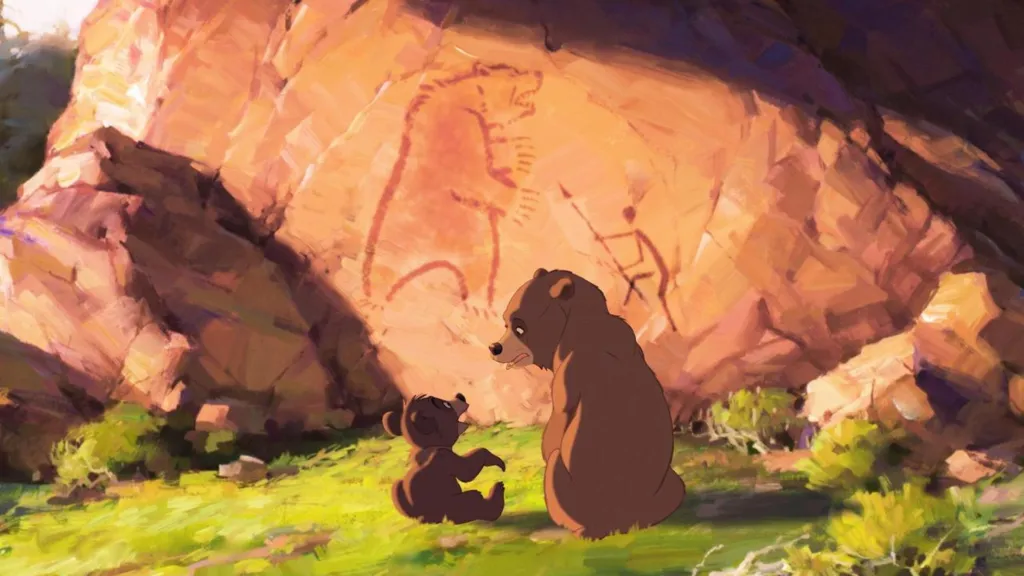 Image courtesy of Walt Disney Animation Studios
While it has its defenders, Brother Bear suffers from a wandering plot and tonal inconsistency. The film follows a young Inuit hunter named Kenai (voiced by Joaquin Phoenix) who is magically transformed into a bear as punishment for killing one, forcing him to see the world through the eyes of his prey. He is accompanied by a talkative cub named Koda (voiced by Jeremy Suarez), creating a buddy-road-trip dynamic that quickly becomes grating rather than endearing. The movie struggles to balance its spiritual themes with forced comedy, resulting in a narrative that feels disjointed and emotionally manipulative. Even the songs by Phil Collins fail to recapture the magic of Tarzan, and the animation, while occasionally beautiful, cannot save a script that drags for much of the runtime. Brother Bear aims for profundity but achieves only boredom, serving as the perfect example of Disney’s lack of direction during the early 2000s.
4) Chicken Little
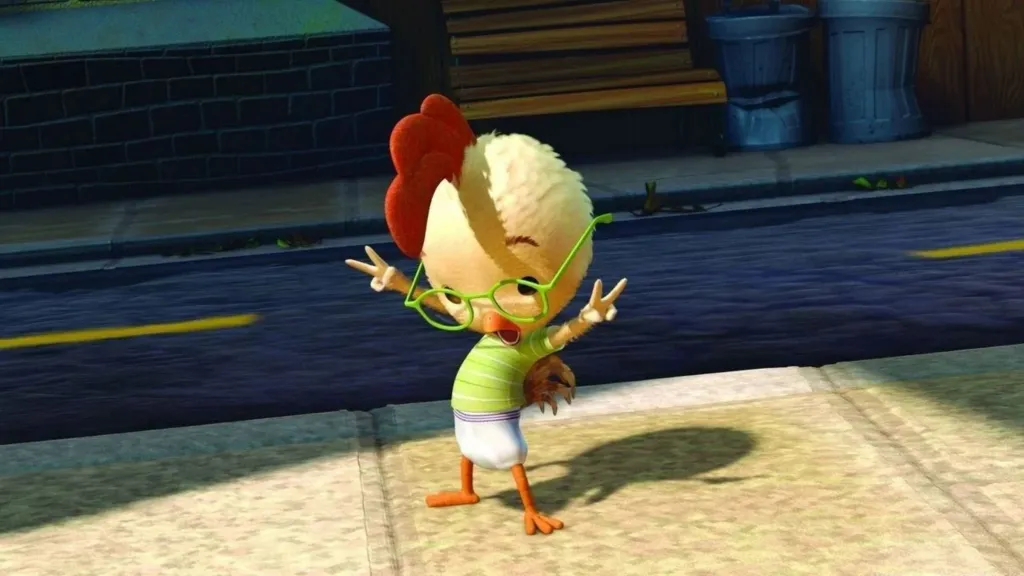 Image courtesy of Walt Disney Animation Studios
Chicken Little represents Disney’s first attempt to make a fully computer-animated feature without the help of Pixar, and the result is arguably the ugliest film in their entire library. The story reimagines the classic fable with a sci-fi twist, following Chicken Little (voiced by Zach Braff) as he tries to convince his town that the sky is falling while dealing with his emotionally distant father, Buck Cluck (voiced by Garry Marshall). The movie is relentlessly mean-spirited, deriving most of its humor from the physical and emotional abuse of its protagonist. In addition, the character designs are unappealing, the pop-culture references are dated, and the pacing is frantic to the point of exhaustion. Unlike the heartfelt stories that the studio is known for, this film is cynical and abrasive, lacking any of the warmth or sincerity that audiences expect from the brand.
3) Wish
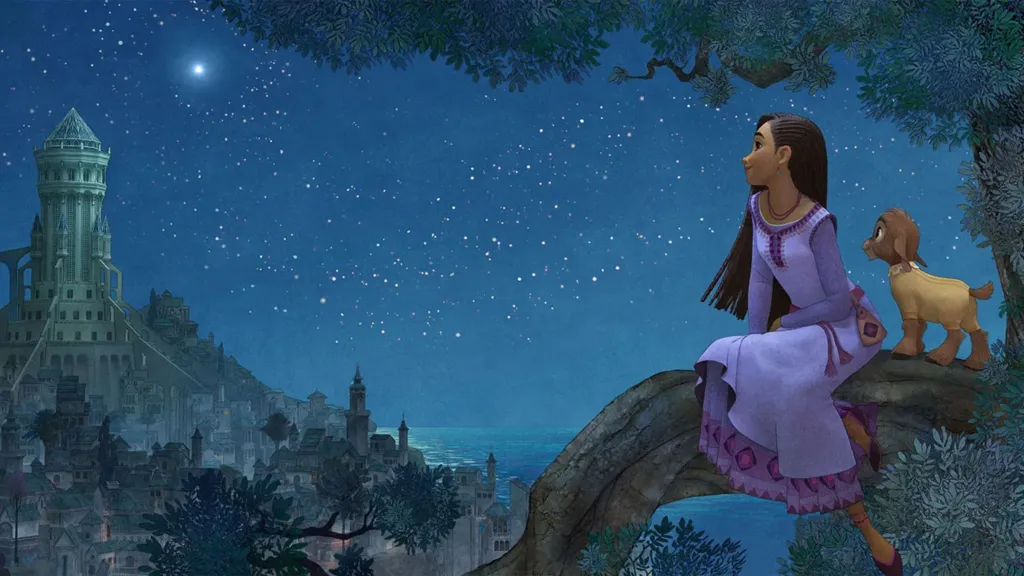 Image courtesy of Walt Disney Animation Studios
Disney marketed Wish as the culmination of 100 years of storytelling, but the final product feels less like a movie and more like a corporate checklist of Easter eggs. The narrative centers on Asha (voiced by Ariana DeBose), who discovers that the beloved King Magnifico (voiced by Chris Pine) is actually stealing the wishes of his citizens. While the concept had potential, the execution suffers from a rushed script, uninspired songs, and a visual style that attempts to blend 2D and 3D techniques but ends up looking unfinished. The film prioritizes referencing past glories over building a cohesive world of its own, resulting in a hollow experience that fails to generate any emotional connection. Furthermore, the villain’s motivation is nonsensical, and the humor often falls flat, leaving the audience with a celebration that feels cynical rather than magical.
2) Home on the Range
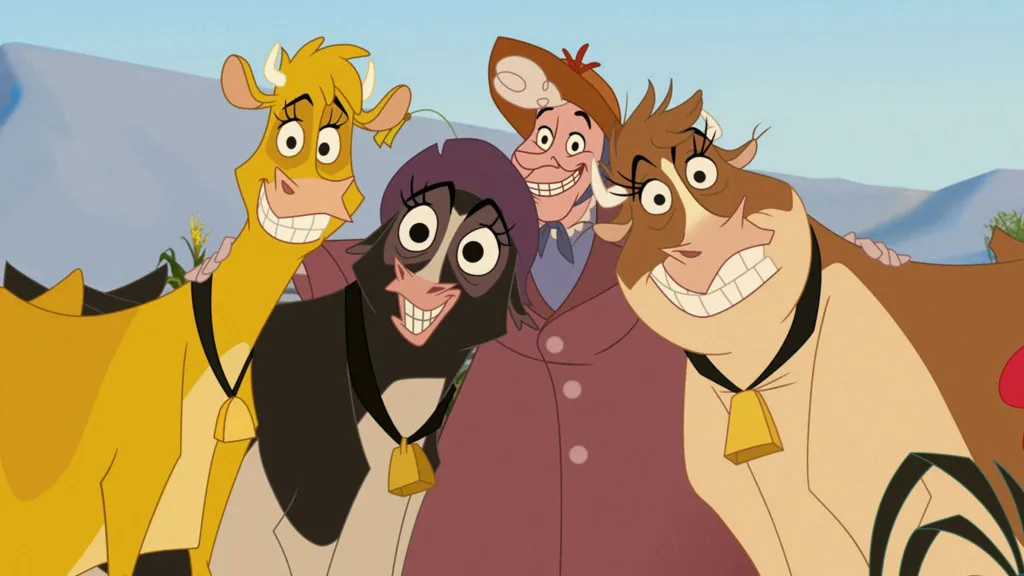 Image courtesy of Walt Disney Animation Studios
The 2004 release of Home on the Range is widely cited as the film that killed traditional hand-drawn animation at the studio for nearly a decade. This western comedy follows a trio of dairy cows led by Maggie (voiced by Roseanne Barr), who attempt to capture a cattle rustler named Alameda Slim (voiced by Randy Quaid) to save their farm from foreclosure. The premise is incredibly thin, but the execution is even worse, relying on loud humor and a visual style that feels cheap compared to the lush artistry of the Disney Renaissance era. The film lacks the sophistication and timeless quality of its predecessors, aiming for low-brow gags that alienate adults without offering enough genuine entertainment for children. Critics and audiences alike rejected the movie, and it remains a stark example of a studio that had completely lost touch with what made its storytelling special.
1) Dinosaur
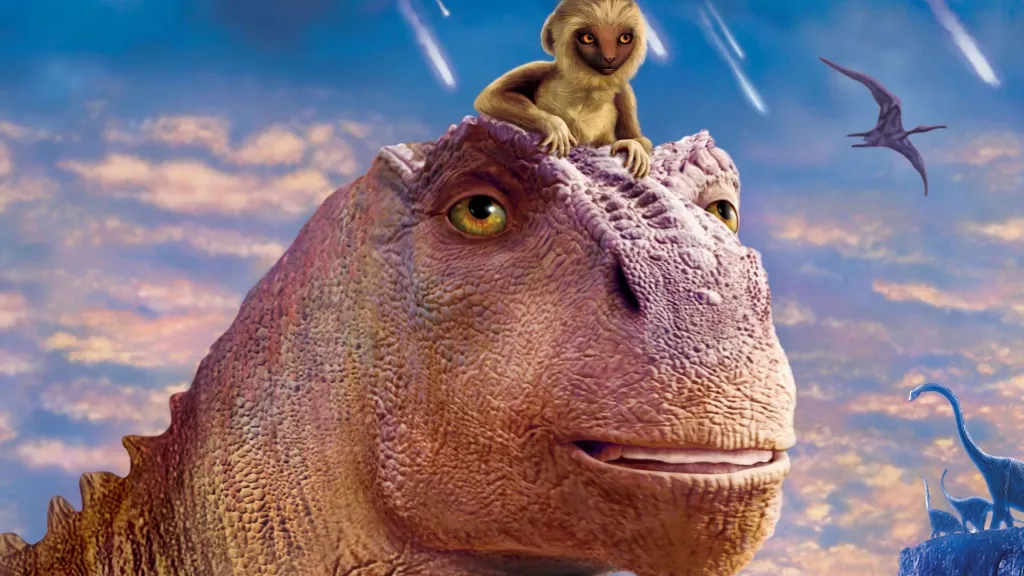 Image courtesy of Walt Disney Animation Studios
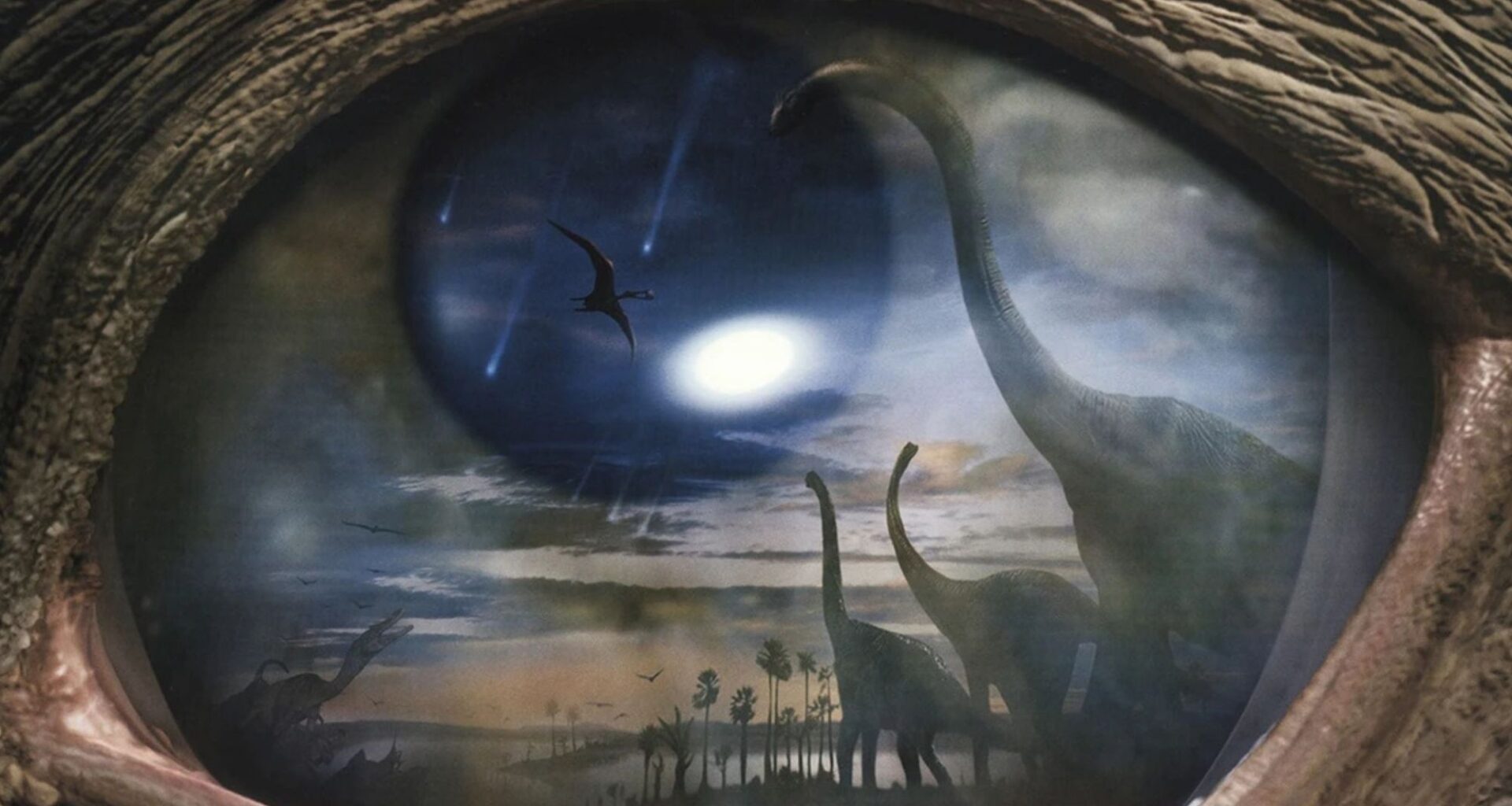
Released at the turn of the millennium, Dinosaur was intended to be a technological showcase that blended photorealistic backgrounds with computer-generated characters. While the visual effects were groundbreaking for the year 2000, the narrative underneath the spectacle is painfully derivative and entirely devoid of the charm that defines the Disney brand. The story follows an Iguanodon named Aladar (voiced by D.B. Sweeney) who is raised by lemurs and forced to migrate across a harsh landscape, a plot that is essentially a less engaging version of The Land Before Time. The film strips away the musical numbers and the colorful character designs usually associated with the studio, resulting in a grim and gray experience. Dinosaur proves that visual fidelity cannot compensate for a lack of heart, standing as a dry and forgettable entry in a canon known for its emotional depth.
Which Disney animated film do you think is the biggest disappointment of the modern era? Leave a comment below and join the conversation now in the ComicBook Forum!