
In a mountainous region of Indonesia, covered by dense jungle, an international team managed to confirm the existence of a species thought to be lost: the echidna. The discovery occurred in one of the least explored corners of the planet. The news reignited the debate about how much biodiversity remains outside scientific records.
For decades, the absence of data had established the idea of a silent extinction. Only ancient references and a specimen preserved in a European museum remained. The possibility of finding it alive seemed increasingly remote.
The confirmation came through trap cameras installed in inaccessible areas. The images revealed that the animal still inhabits an almost intact ecosystem. The record marked a turning point for research and conservation.
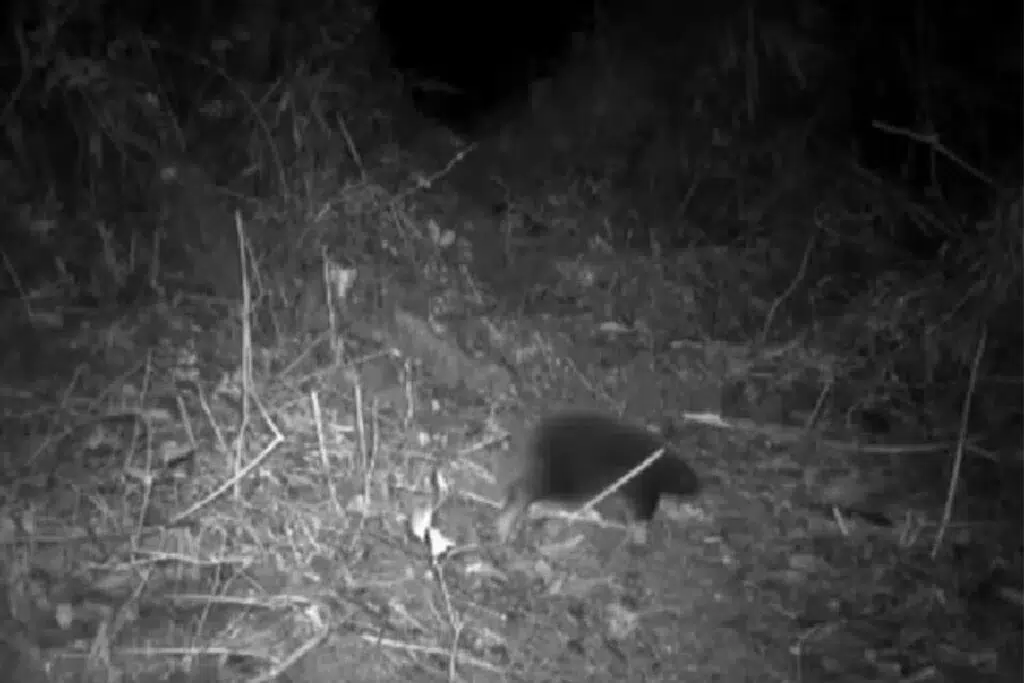 The unexpected return of an ancestral mammal rekindles hope for biodiversity. Photo: Gizmodo.
A unique mammal that reappeared after half a century
The long-beaked echidna of Attenborough had not been observed in the wild for more than 50 years. Its name barely survived in scientific publications and historical archives. For many specialists, its disappearance was considered definitive.
That perception changed upon reviewing the last memory card of the expedition. There appeared an unmistakable silhouette, brief but enough to confirm its identity. The record showed an active animal, integrated into its natural environment.
The rediscovery allowed for the verification that the species managed to withstand the passage of time. It also evidenced the importance of conserving less intervened regions. In these refuges, nature still maintains intact evolutionary processes.
An extreme expedition in an almost intact natural refuge
The research took place in the Cyclops Mountains in Indonesia. It is a mountain range with peaks exceeding 2,000 meters. The area is covered by dense jungles and extremely difficult-to-access terrain.
For weeks, the team advanced through narrow ridges and unstable slopes. The cameras were placed in strategic points of the forest. The goal was to record elusive fauna and assess the general biodiversity.
In addition to the echidna, new species of insects and amphibians were documented. Healthy populations of birds of paradise and tree kangaroos were also detected. The set of findings confirmed the exceptional ecological value of the region.
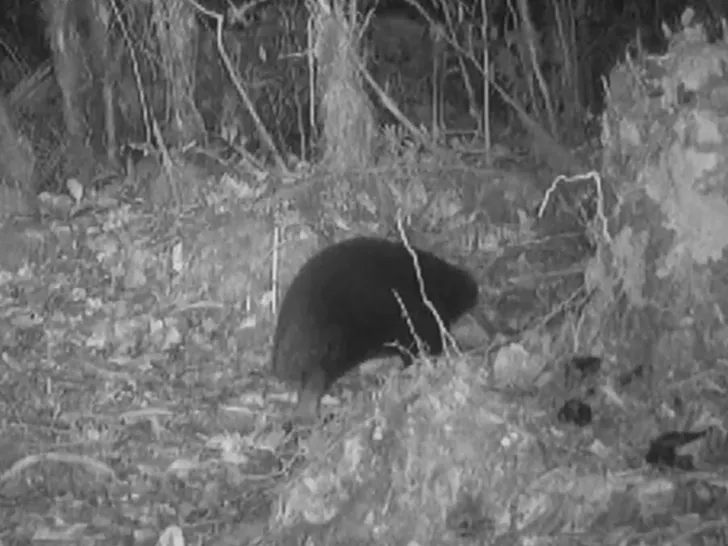 The unexpected return of an ancestral mammal rekindles hope for biodiversity. Photo: TMZ.
A warning sign and opportunity for conservation
Of the four known echidna species, three have long beaks. At least two of them are listed as critically endangered. The rediscovery changes the scenario for the protection of this group.
The area where the echidna lives faces growing threats. Deforestation and human expansion are advancing over sensitive areas. The loss of this ecosystem could be irreversible.
The discovery opens an opportunity to promote urgent conservation measures. Protecting the habitat means safeguarding multiple species at the same time. Science and environmental management find a key meeting point here.
The long-beaked echidna and its conservation status
The long-beaked echidna of Attenborough belongs to the group of monotremes. It is one of the few mammals that lay eggs. Its evolutionary lineage dates back more than 200 million years.
Its spiny body, dense fur, and elongated snout clearly distinguish it. It feeds on insects it finds on the forest floor. These characteristics make it a key piece for studying the early evolution of mammals.
The lack of recent observations prevented the assessment of its actual conservation status. The new record allows for the initiation of studies on its population and threats. Its survival depends on the effective protection of the last forests it inhabits.
From a remote forest, nature has surprised once again. The return of this species demonstrates that there are still secrets to be discovered. Protecting these last refuges can make the difference between extinction and hope.