
Sign up for the Slatest to get the most insightful analysis, criticism, and advice out there, delivered to your inbox daily.
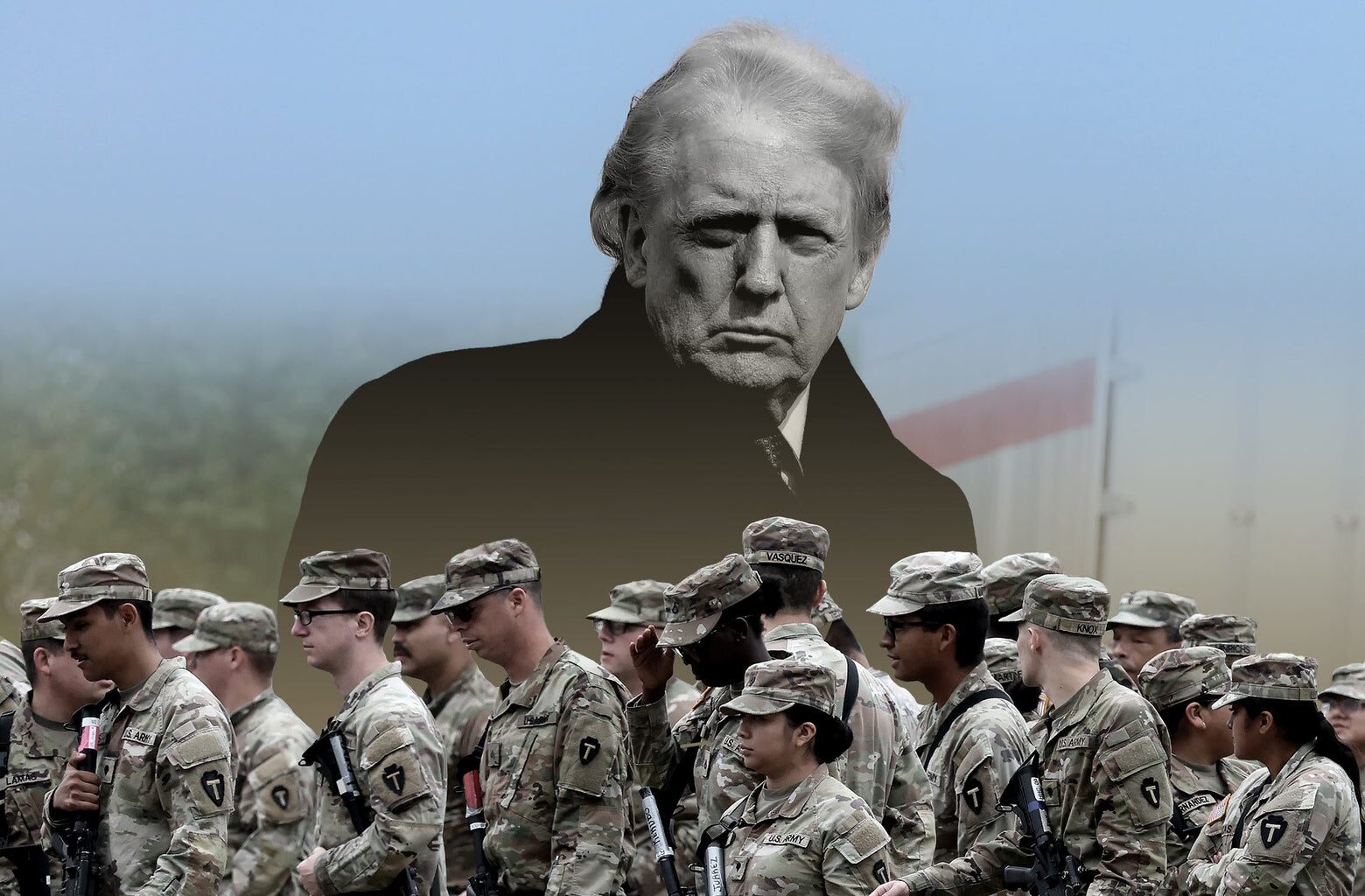
The Supreme Court dealt a rare and remarkable defeat to President Donald Trump on Tuesday, blocking his deployment of the National Guard to assist immigration agents in Chicago. By a 6–3 vote, the court held that Trump’s federalization of the Guard was likely unlawful, with the majority severely restricting the president’s broader authority to deploy troops for domestic law enforcement. The decision constitutes a significant setback for the administration’s efforts to flood blue cities with National Guard members; it also arguably marks Trump’s biggest Supreme Court defeat since his return to office, with major implications for other aspects of his agenda that go beyond the conservative legal movement’s long-standing priorities.
Tuesday’s ruling in Trump v. Illinois caps off, for now, a clash between federal and state authority with the potential to set off a genuine constitutional crisis. It began in October, when Trump deployed members of the Illinois and Texas National Guards to Chicago to help out with Operation Midway Blitz, an immigration enforcement initiative. The president claimed that both residents and local law enforcement were obstructing the operation, necessitating federalization of the Guard. He ordered Guard members to protect Immigration and Customs Enforcement and Customs and Border Protection as they engaged in a campaign of brutality and terror against Latino communities. Chicago and Illinois both sued, and a federal judge ruled that Trump’s use of the Guard was probably unlawful. An appeals court agreed, prompting the Justice Department to seek relief from SCOTUS.
The parties’ dispute centered on a federal statute that lets the president deploy the Guard when he is “unable with the regular forces to execute the laws of the United States.” Chicago asserted that, as a factual matter, Trump could still execute the law; the Justice Department claimed he could not. But after a few weeks of silence, the justices declined to resolve this fact-bound question; instead, they sought additional briefing on a different issue: the meaning of “regular forces.” The DOJ thought the phrase meant federal law enforcement, like ICE and CBP, and Chicago acquiesced to that reading at SCOTUS. But the justices seemed unsure in light of an amicus brief filed by Georgetown Law professor Marty Lederman that argued it meant the military, not police.
On Tuesday, the court formally sided with Lederman, ruling sharply against the Trump administration. It concluded that “regular forces,” as used in the statute, “likely refers to the regular forces of the United States military.” And, of course, Trump had not tried to quell the alleged crisis in Chicago with the military; instead, he went straight to the National Guard. Chief Justice John Roberts, Justice Amy Coney Barrett, and Justice Brett Kavanaugh joined with the three liberals to rule against him on that basis. That lopsided outcome is extraordinary on its own.
But Roberts and Barrett then joined with the liberals to go even further. This 5–4 majority held that the relevant statute applies “only where the military could legally execute the laws.” And “such circumstances,” they noted, are “exceptional,” because the president is broadly forbidden from deploying the military for domestic law enforcement under the Posse Comitatus Act. There are a few narrow exceptions—namely, the Insurrection Act, which applies only during an insurrection, invasion, or complete breakdown of civilian law enforcement. But outside those extreme scenarios—which no party has yet argued are present in Chicago—the military may not “execute the laws” of the United States. And that, the majority explained, means the National Guard may not “execute the laws in Illinois,” either.
Kavanaugh refused to embrace this broader holding, warning that it would unduly limit the president’s control over the armed forces during “future crises.” He insisted that the president must have more discretion to deploy the Guard when he is practically unable to send in the military. Kavanaugh’s position would carve a pretty glaring loophole into the majority’s holding: It would allow the president to simply announce that he cannot call in the “regular forces” for some practical reason, then summon the National Guard instead.
That workaround would neuter the majority’s broader message, which seems to be that the president can’t make up some reason why he needs the military, then federalize Guard members because it’s more convenient. By forcing the president to call on the military as a first resort for domestic law enforcement—then reminding him that he can very rarely do so lawfully—the majority sharply restricted his use of any troops in American streets. It is unclear if Kavanaugh agrees with this bottom line. (In a footnote, the justice also appeared to walk back his notorious September opinion insisting that immigration agents may engage in racial profiling, which greenlit so-called Kavanaugh stops; he wrote on Tuesday that, actually, officers “must not make interior immigration stops or arrests based on race or ethnicity.”)
Justice Samuel Alito’s dissent, joined by Justice Clarence Thomas, is most notable for its total lack of self-awareness. Alito complained that the majority decided the case with “scant briefing and no oral argument,” when he himself has joined innumerable decisions in favor of Trump that were decided the exact same way. He also suggested that his colleagues imperiled the lives of immigration agents, writing: “Whatever one may think about the current administration’s enforcement of the immigration laws or the way ICE has conducted its operations, the protection of federal officers from potentially lethal attacks should not be thwarted.” Yet courts have consistently found that the Trump administration has exaggerated or fabricated threats to these officers; it is, in fact, the officers themselves who have engaged in the most disturbing acts of violence. (Justice Neil Gorsuch’s brief dissent objected to the rapid resolution of such “fraught” questions on a “highly compressed schedule”—though he, too, has regularly joined shadow docket orders that resolved equally weighty questions in Trump’s favor.)
Dahlia Lithwick and Mark Joseph Stern
The Democrats Had One Huge Shutdown Win. Trump Tried to Thwart It. He Just Failed.
Read More
Why, after handing so many victories to the Trump administration over the last year, did the court draw the line here? There are two obvious answers. First, most of the prior cases involved legal issues long settled within the conservative legal movement. Roberts, Barrett, and Kavanaugh have spent their whole careers arguing for the president’s power to fire executive officials. But the Federalist Society has not reached a consensus on the president’s authority to send troops into American cities; to the contrary, its emphasis on federalism might seem to counsel against this sweeping claim of power. Trump’s agenda and the Supreme Court’s priorities may be starting to diverge, with the president pushing some conservative justices far out of their comfort zones and into uncharted territory. These are the cases where the center of the court may be inclined to draw a line.
Trump Just Faced the Biggest Supreme Court Defeat of His Second Term So Far
This Content is Available for Slate Plus members only
The Real Reason the MAGA Coalition Is Breaking
Second, the National Guard cases have, in the lower courts, devolved into a furious dispute over the facts. The Trump administration keeps getting caught lying about the alleged violence against ICE, leading some judges to argue that he should lose because he is, as a matter of demonstrable reality, able to “execute the laws” without help from the armed forces. By adopting Lederman’s reading, the Supreme Court sidestepped this debate, ruling against Trump without having to call him a liar. The justices clearly did not want to get sucked into this increasingly acerbic and inherently political discourse.
Still, this conflict is far from over. One irony of the court’s decision is that it gives Trump a reason to go nuclear and invoke the Insurrection Act, which really does allow him to send in the military for domestic law enforcement. That law only applies during insurrection, rebellion, or a complete breakdown of state police, none of which is present in Chicago or anywhere else in the U.S. Tuesday’s ruling—with its marked skepticism toward Trump’s deployment of troops at home—suggests that the majority would not approve an invocation of the act on this record. But as Kavanaugh flagged in an ominous footnote, the matter remains unresolved. So that battle looms in the distance. Right now, though, it is just a relief to know that there is still a limit to SCOTUS’ indulgence of this administration’s abuses of power.

Sign up for Slate’s evening newsletter.