
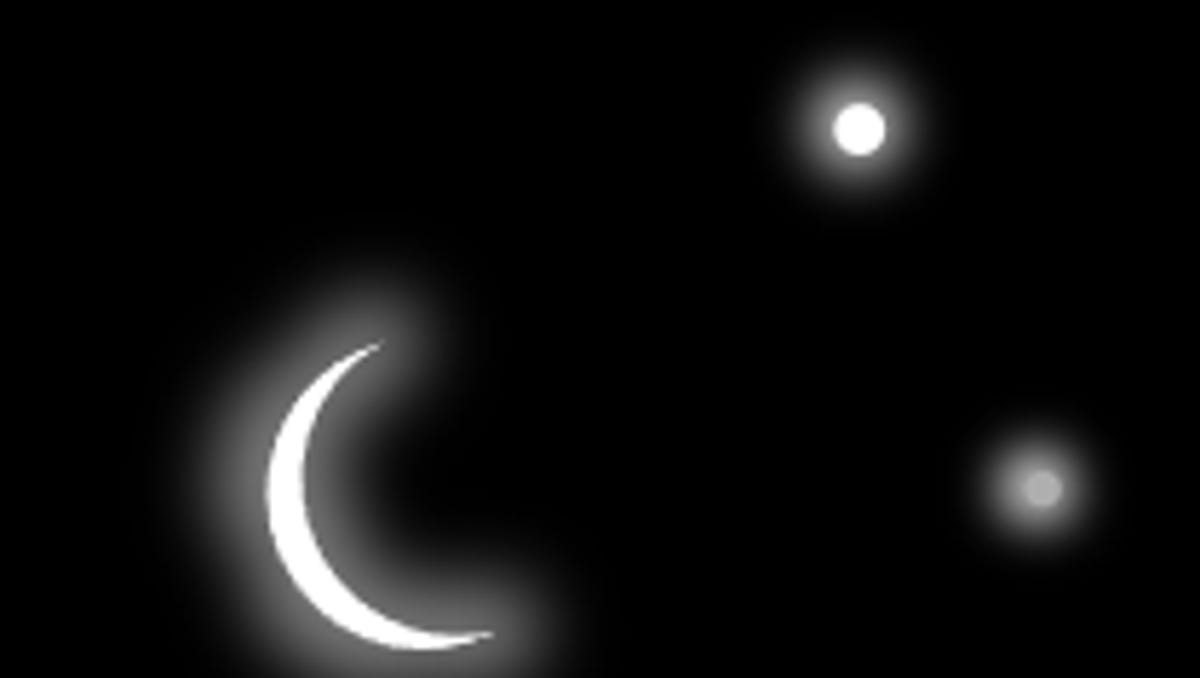
If you’ve seen posts claiming a celestial “smiley face” will light up the night sky over Christmas, don’t get your hopes up — it’s not actually happening.
Viral photos circulating on social media, including several Facebook posts, show an image of the phenomenon, known as a triple conjunction, and encourage skywatchers to look for a special alignment of Venus, Saturn, and a thin crescent Moon that resembles a smiley face over Christmas evening.
That would be undeniably magical, especially over the holiday, but the event is missing from astronomy calendars, NASA guides and Astronomy.com‘s “Sky This Week” column, presumably because it’s not actually happening.
For clarity, it’s not that such an event is impossible. A real triple conjunction did occur earlier this year, on April 25, 2025 — but even then, social media exaggerated what the sky actually looked like.
Another notable triple conjunction took place on Sept. 19, when a waning crescent moon, Venus, and the bright star Regulus in Leo appeared close together in the pre-dawn sky. The three objects were about one degree apart, forming a tight grouping visible across much of the world. It was notable for their proximity, but it did not resemble a smiley face.
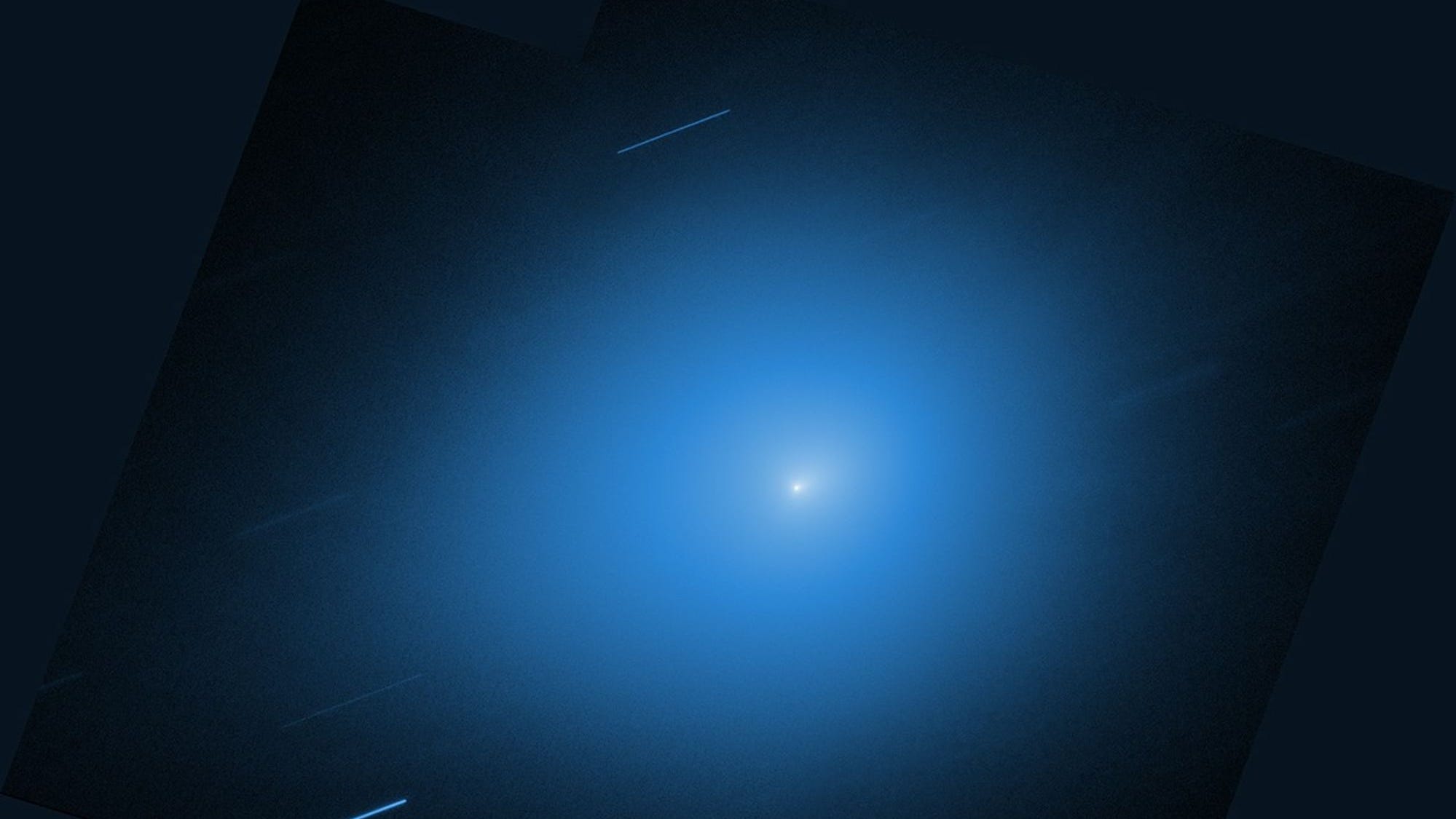

NASA and ESA Release Stunning 3I/ATLAS Comet Photos
Witness the breathtaking images of the interstellar comet 3I/ATLAS captured by NASA’s Hubble Space Telescope and ESA’s JUICE orbiter.
While the crescent moon will be visible over dark skies this Christmas, the other planets or stars will not be in the right positions to complete a smiley-face alignment.
Recent social media posts have simply swapped the month from “April” to “December”, claiming the smiley-face alignment will appear on Christmas evening
That said, there is still something in the night sky this Christmas worth spotting — that it’s sure to bring a smile to your face: the Christmas Tree Cluster.
What is the Christmas Tree Cluster?
On the evening of Thursday, Dec, 25, as the constellations Orion and Gemini rise in the east, you’ll find a lesser-known constellation in between them called Monoceros. Hidden within Monoceros is the Christmas Tree Cluster, a grouping of stars shaped a bit like a pine tree, according to Astronomy.com. Nearby is the Cone Nebula, which appears to reach toward the top of the “tree.”
You don’t need a massive telescope to see it. With binoculars or a small scope, you can make out the cluster’s brighter stars forming a rough triangle or arrowhead, with the brightest star at the base acting as the tree’s trunk. Under slightly higher magnification, more stars pop out, and larger telescopes may even reveal the faint glow of surrounding nebulae.
It may not look exactly like a perfectly decorated Christmas tree, but the star pattern is festive enough to earn its holiday name — a little sparkle in the night sky for those who look up this Christmas.
What is the ‘Smiley Face’ moon?
The “smiley face” moon is not a special type of moon — it’s an optical illusion created by the alignment of celestial objects in the sky. The effect relies on a thin crescent moon, which naturally forms a curved shape resembling a smile, according to USA TODAY.
The “eyes” of the face are usually two bright planets, most often Venus and Saturn, positioned above the crescent Moon. When these three objects — the Moon and the two planets — appear in the correct relative positions, they form a simple triangular arrangement that looks like a smiley face.
The illusion depends heavily on your location on Earth. From some places, the moon may appear too close or too far from the planets, or the entire “face” might appear tilted on its side. The brightness of the planets also affects the visual impact, with Venus often shining much brighter than Saturn.