
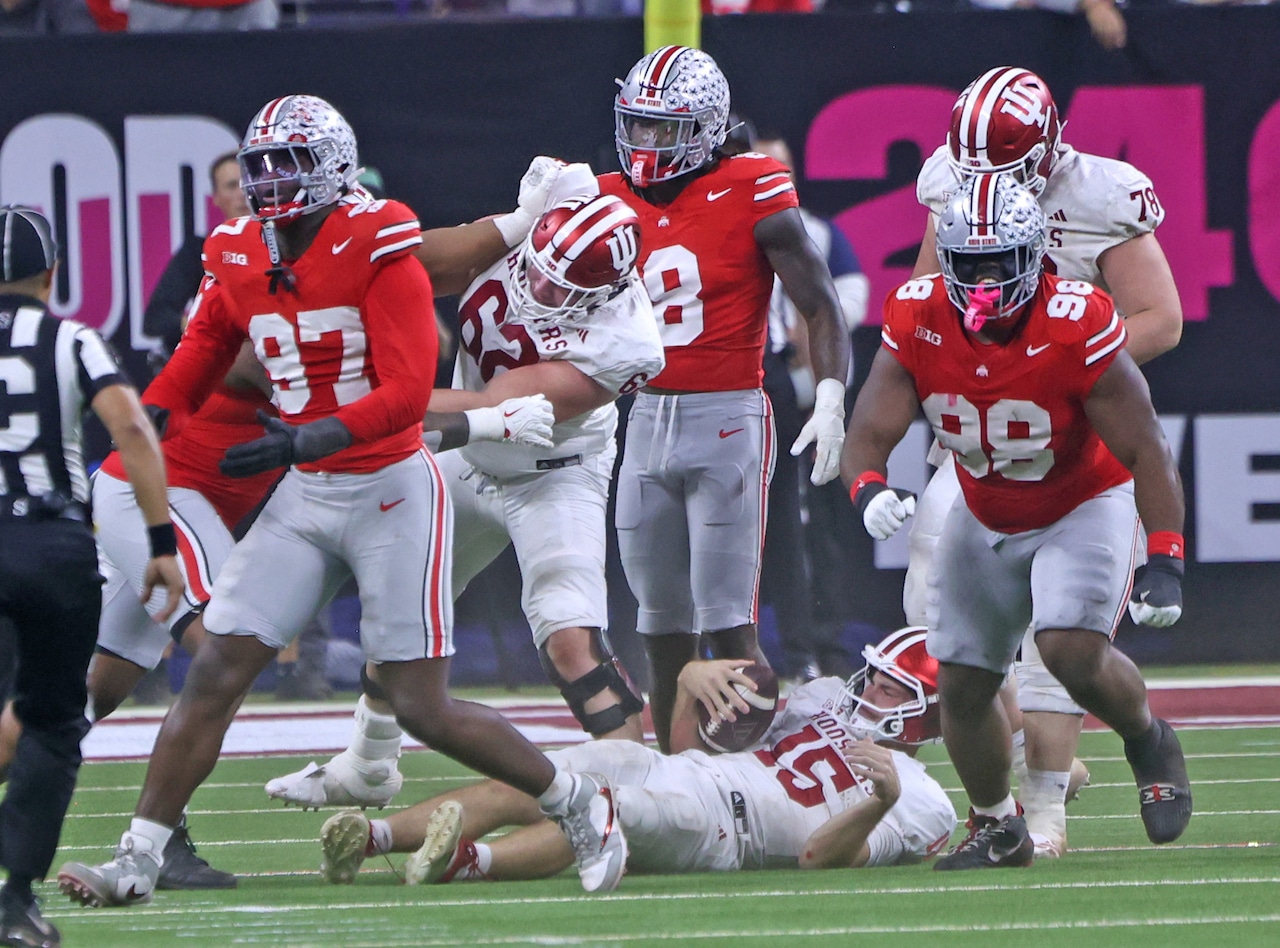
COLUMBUS, Ohio — When Kenyatta Jackson approached his coaches after repeatedly being held by opposing offensive linemen with no flags thrown, he likely expected sympathy, maybe assurances they’d speak to the officials. What he got instead reveals everything about the uncompromising mentality driving Ohio State’s dominant defense.
“I got hold held coach,” Jackson explained.
The response? Not what most would expect.
“Well, why are you putting yourself in a position to get held? Get off the ball quicker. Use your technique better,” Stephen Means recounted during the podcast. “Like it was almost like shame on you for being tackled by an offensive lineman.”
This seemingly harsh response exposes the brutal yet effective philosophy underpinning the Buckeyes’ defensive approach: excuses don’t exist, even when they’re legitimate. Instead of allowing players to develop a victim mentality about officiating, coaches redirect that frustration into something actionable—be so dominant that no hold can stop you.
The approach is particularly noteworthy given how obvious some of these missed calls have been. Stefan Krajisnik acknowledged this reality on the podcast: “It goes both ways. Calls get missed all the times. M Patricia said it. There’s 70 players in a game. Every single play is not going to go your way. But some of the holds were like really like not at all.”
When fans watch games, they can clearly see Jack Sawyer, JT Tuimoloau, and Kenyatta Jackson being grabbed, tackled, and restricted by offensive linemen with no flags thrown. The frustration has reached a boiling point, especially considering Ohio State defensive ends have gone extended stretches without drawing a single holding call.
The coaching staff’s response to this situation demonstrates a sophisticated two-pronged approach. While publicly challenging their players to transcend officiating, they’re quietly fighting those battles behind the scenes.
As Andrew Gillis explained: “I think you just got to tell him like hey man you got to be better than this and then behind the scenes Matt Patricia Ryan Day Larry Johnson whoever they got they start yell they start talking to refs they start yelling refs they start talking to Big 10 they start smitting clips They do they’ll do the work for you behind the scenes.”
This approach accomplishes multiple objectives simultaneously. It protects players from developing a “nothing is my fault” mentality while still advocating for them through proper channels. It transforms frustration into motivation rather than excuses. And perhaps most importantly, it creates a defensive unit that doesn’t collapse when things don’t go their way.
The implications extend beyond just holding calls. This mindset has built a defense that doesn’t break when adversity strikes, doesn’t crumble when officials miss calls, and doesn’t need perfect conditions to dominate opponents.
This mental toughness becomes increasingly critical in playoff scenarios, where one or two controversial calls can determine national championships. While other teams might fall apart after a questionable non-call, Ohio State’s players have been conditioned to immediately refocus and elevate their play beyond the reach of officiating impact.
As the Buckeyes head into their playoff matchup with Miami, this resilient mindset could prove decisive. No matter what happens with officiating, whether calls go their way or not, Ohio State’s defenders have been programmed with an uncompromising message: be so good that nothing else matters.
In the highest-stakes environments college football offers, that mentality might be the difference between heartbreak and a national championship.
Here’s the podcast for this week: