

Cold, snowy weather isn’t the only thing headed for Michigan this winter. Dozens of species of “weird and wonderful” ducks are also coming to the state.
Michigan’s waterways will be filled with a fascinating cast of characters. As colder temperatures and icy winds freeze Arctic or boreal waters, ducks make their way south to the relative warmth of the Great Lakes state, according to the Michigan Department of Natural Resources.
Michigan is a winter haven for more than 30 duck species.
RELATED: Snowy owls migrate in booms and busts. This winter could be a boom
These species feature unique beauty, like the northern pintail with its three-piece-suit plumage; delightful adaptations and behaviors, like surf scoters that dive into cresting waves; and awe-inspiring gatherings, including thousands of redhead ducks that float on open water.
Here are five of the “weird ducks” and other waterfowl we might spot this time of year, and how to successfully ID them:
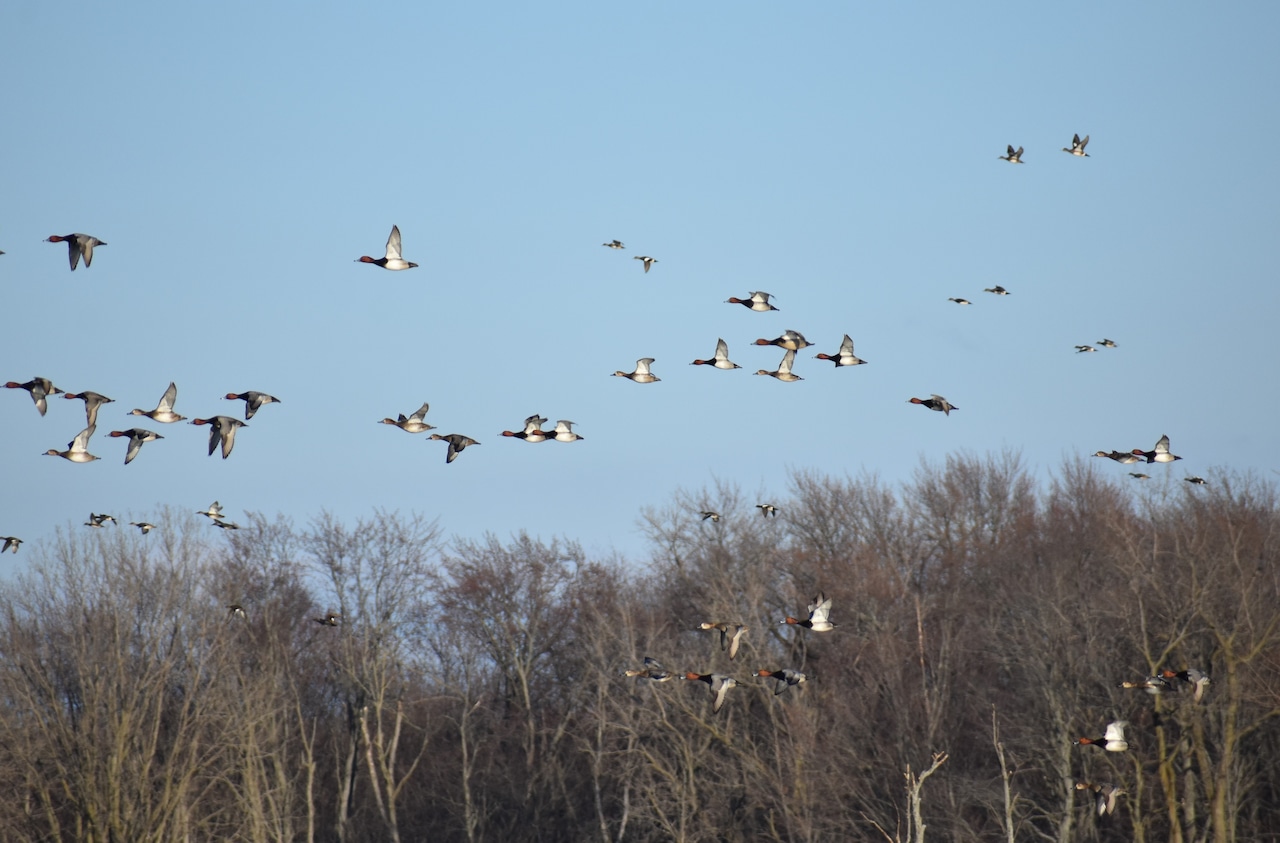 A flock of redhead ducks by Ryan Dziedzic.
Redheads: Look for the telltale cinnamon-hued heads on the males of this species; the females will be close by, with medium-brown coloring on their bodies. In the winter these sociable ducks can sometimes be seen gathering in massive flocks on open water, where their numbers can reach well into the thousands.
RELATED: Christmas Count: World’s longest-running bird census is happening now
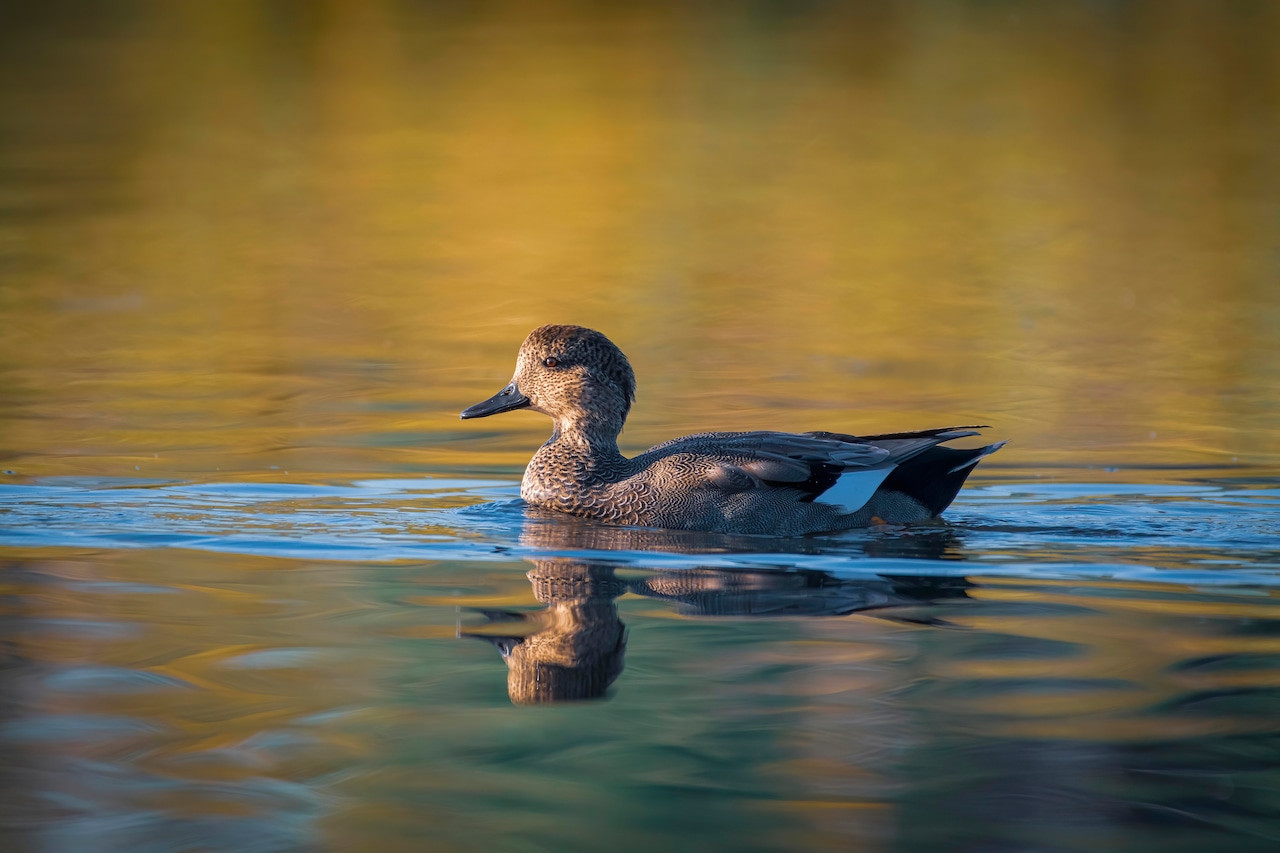 The gadwall, a dabbling duck, can be found in southern Michigan marshes, lakes and river mouths. Photo: Chris Rusnak/AudubonChris A. Rusnak
Gadwalls: From afar these birds might not look like much, but if you’re able to see them through binoculars or a spotting scope, you can appreciate the males’ subtle yet intricate shades and patterns. ID the males by looking for a black rump, white wing patch and dark bill; the females will look similar to female Mallards.
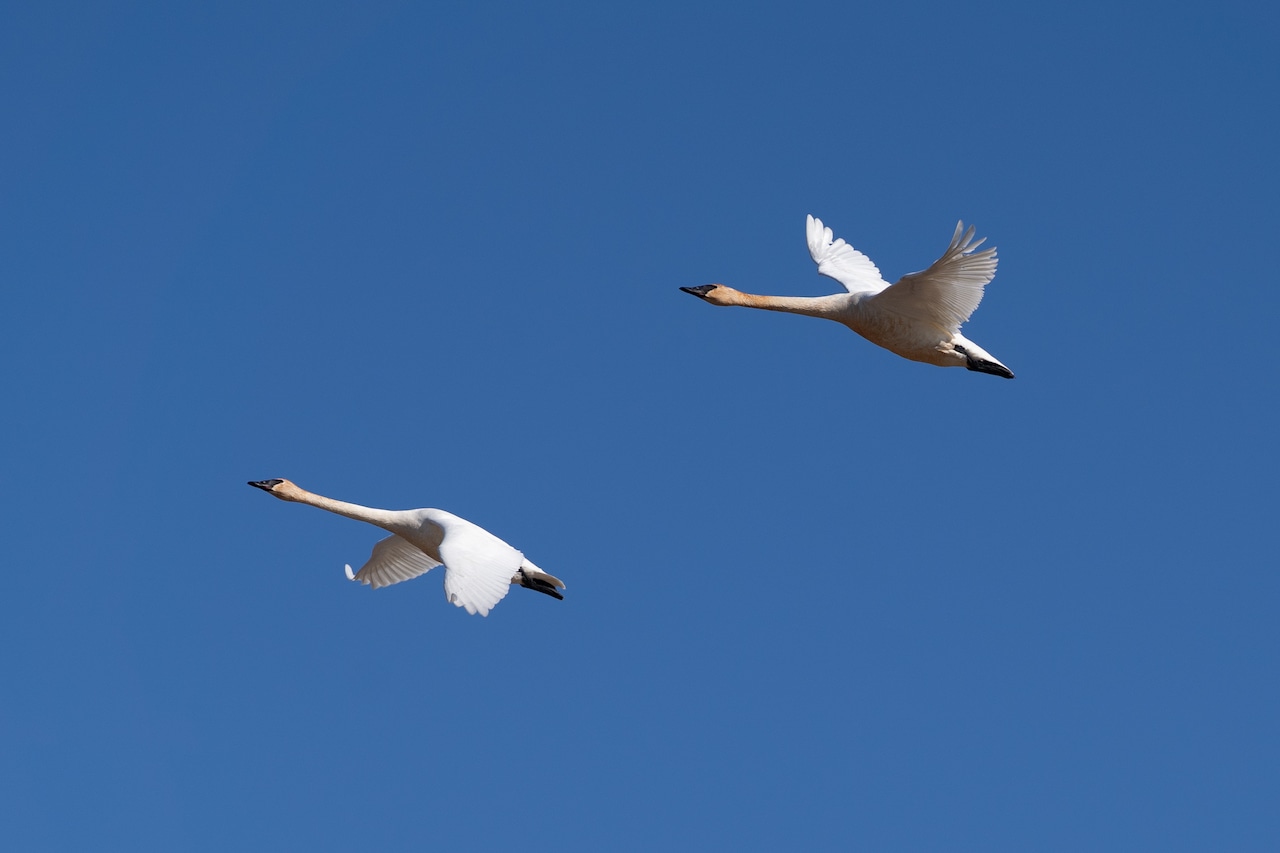 Two Tundra swans fly above the Ferguson Bayou Trail at Shiawassee National Wildlife Refuge in Saginaw on Saturday, April 13, 2024. This guided nature hike was a collaboration event between Saginaw Art Museum, Shiawassee National Wildlife Refuge, and Friends of Shiawassee. Julian Leshay Guadalupe | MLive.com
Tundra Swans: Nicknamed “whistling swans” for the distinct whistle sound made by their wings, these beautiful water birds might be spotted flying far overhead in large family groups of up to 100 birds. Identify Tundra Swans from other swans by the “U” shape where their black bill meets their face; sometimes a small yellow patch is also visible near the eye.
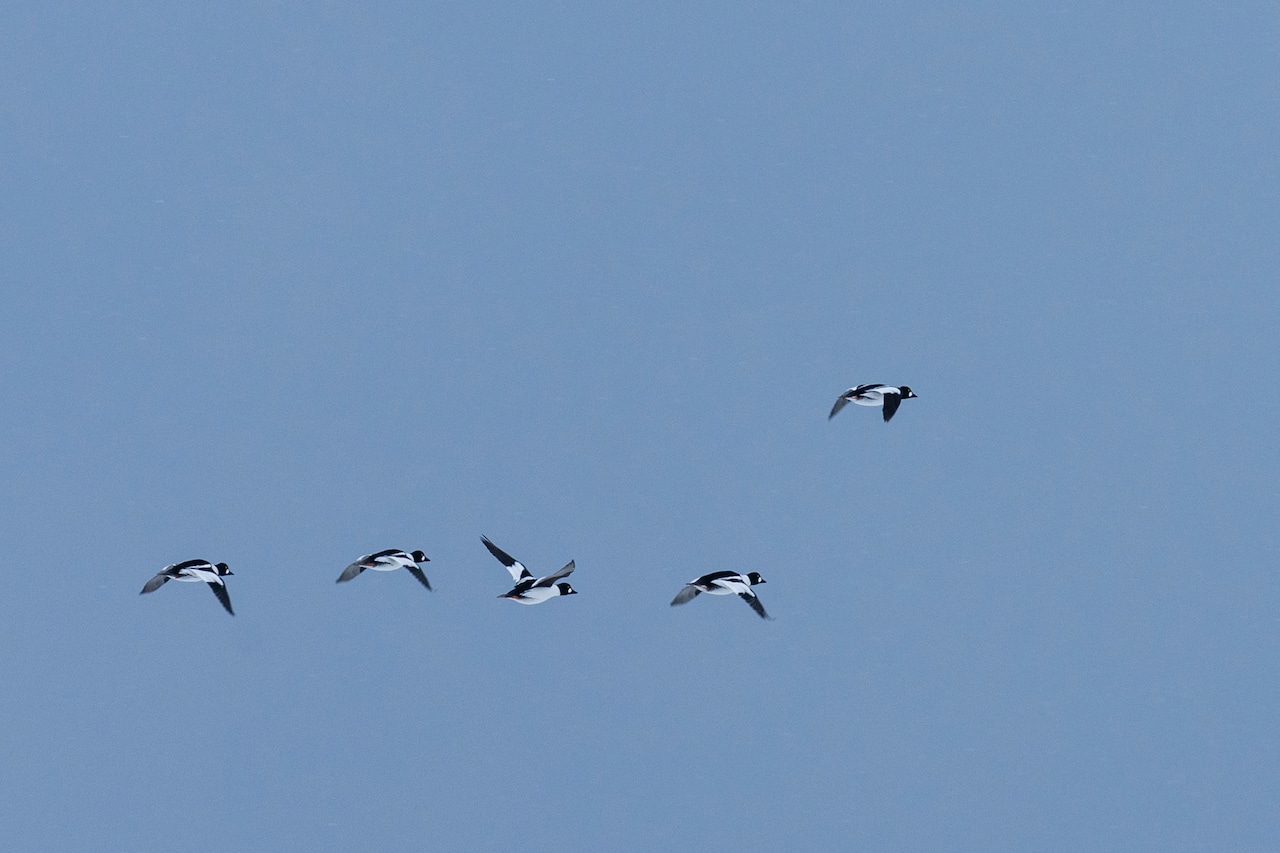 Buffleheads take flight at Pere Marquette Park in Muskegon, Mich. on Thursday, Jan. 23, 2025. The lakeshore had several days in a row with wind chills in the negative teens.Joel Bissell | MLive.com
Buffleheads: Zippy little birds, with an emphasis on “little” — these are among the smallest ducks in Michigan. From a distance the males appear black and white, but if you look closely you’ll see a patch of mesmerizing iridescent green and purple. This time of year you can find Buffleheads in pairs or small groups on sheltered bodies of water like bays, lakes, ponds, estuaries and slow-moving rivers.
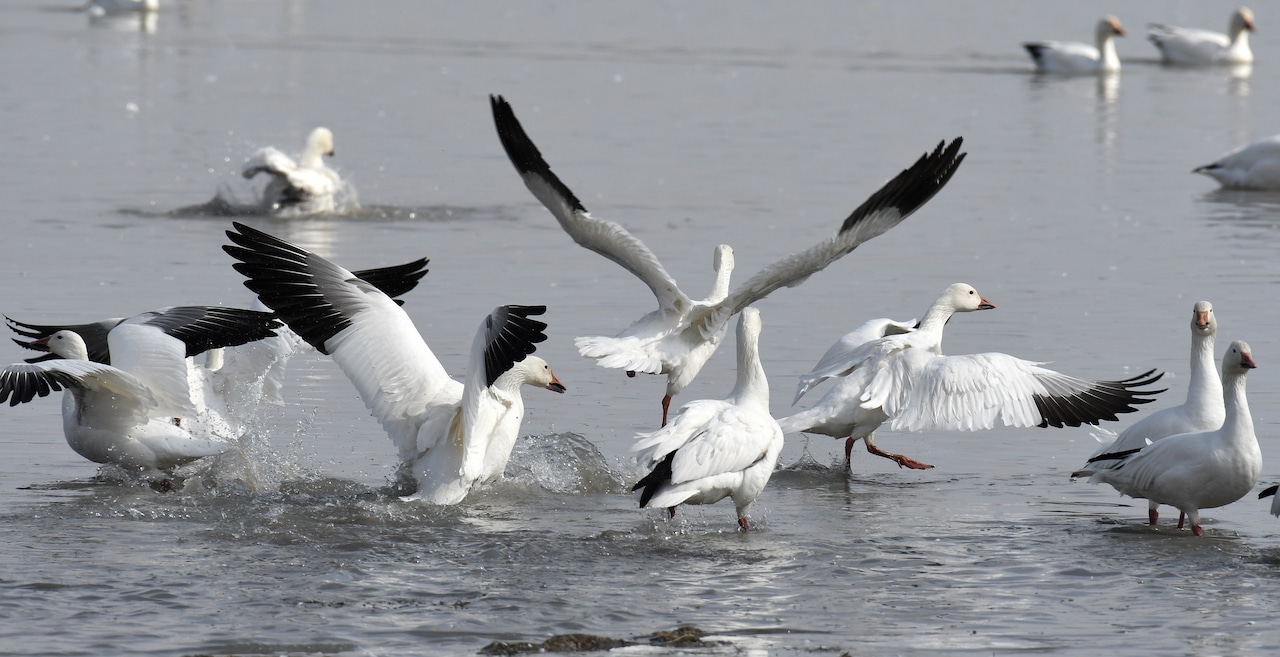 Snow geese on Cayuga Lake viewed from Lower Lake Road near Cayuga Lake State Park Wednesday, March 17, 2021. Photo by Mike Greenlar
Snow Geese: These birds are not as common in Michigan as they are in Illinois and Indiana, so winter sightings can feel special. Look for Snow Geese in open fields or shallow waters, paying close attention since these birds come in two different color “morphs,” or patterns: The white morph has a white head and body with black wing tips, while the blue morph has a dark body and white head. Both have pink bills with a dark line.
Find more winter birding opportunities here.