
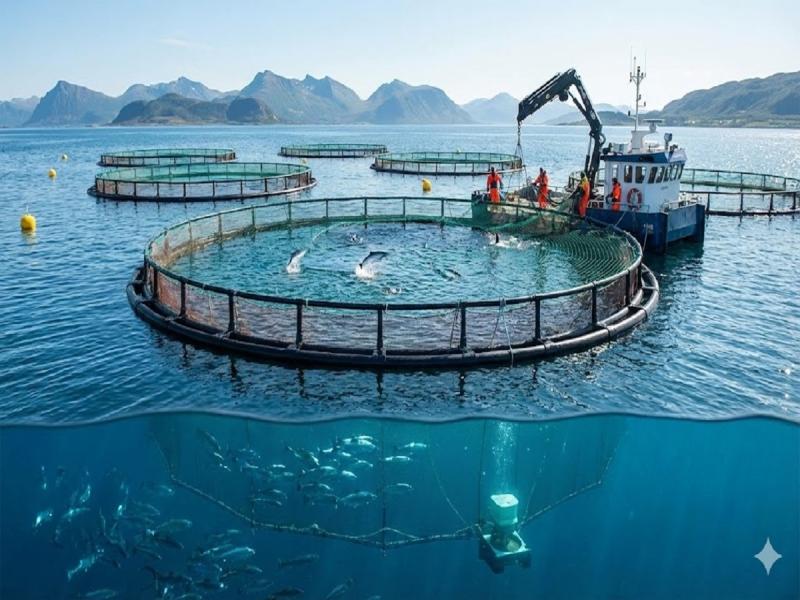
Fish Farming
Fish Farming Market Overview
The global fish farming market is projected to grow at a CAGR of 5.34% during the forecast period 2024-2031. Fish farming, also known as pisciculture, is a segment of aquaculture where fish are cultivated in controlled environments, such as tanks or artificial enclosures like ponds, primarily for human consumption. The market growth is driven by rising demand for dietary fish protein and the increasing adoption of aquaculture practices worldwide. Fish farming is considered one of the fastest-growing areas of animal food production, with commonly farmed species including salmon, tuna, cod, trout, and halibut. Enhanced rearing processes such as systematic stocking, optimized feeding, and protection from predators-are being implemented to maximize yield and quality, further supporting the expansion of the global fish farming industry.
Get a Free Sample PDF Of This Report (Get Higher Priority for Corporate Email ID):- https://www.datamintelligence.com/download-sample/fish-farming-market?Juli
Recent Developments:
✅ December 2025: A leading aquaculture technology provider launched an AI‐driven feeding and water quality management system that optimizes feed conversion and reduces waste in intensive fish farms.
✅ September 2025: A major global aquafeed manufacturer introduced a sustainably sourced, high‐protein feed formulation designed to improve growth rates and health in salmon and trout farming.
✅ July 2025: Several commercial fish farms in Norway and Chile expanded their operations by deploying modular recirculating aquaculture systems (RAS) to enhance production efficiency and environmental sustainability.
✅ April 2025: A biotechnology firm unveiled a novel probiotic supplement for aquaculture that enhances fish immunity and reduces reliance on antibiotics, gaining adoption across tilapia and catfish farms.
✅ February 2025: A consortium of aquaculture research institutions published new best‐practice guidelines for sustainable fish farming, focusing on disease management, feed efficiency, and reduced environmental impact.
Mergers & Acquisitions:
✅ November 2025: A leading global aquaculture technology firm acquired a precision feeding systems startup to strengthen its portfolio of intelligent feed management solutions for commercial fish farms.
✅ September 2025: A major aquafeed manufacturer completed the acquisition of a marine biotechnology company specializing in sustainable, high‐efficiency feed additives to improve fish growth and health.
✅ June 2025: A prominent recirculating aquaculture systems (RAS) provider merged with an environmental water treatment specialist to deliver integrated solutions for sustainable fish farming operations.
✅ March 2025: A large seafood producer acquired a regional tilapia and catfish farming network to expand its aquaculture footprint in emerging markets and enhance supply chain integration.
✅ January 2025: A global agriculture and aquaculture conglomerate entered a strategic acquisition of a data analytics and IoT solutions provider focused on real‐time monitoring and optimization of fish farming environments.
Buy Now & Unlock 360° Market Intelligence:-https://www.datamintelligence.com/buy-now-page?report=fish-farming-market?Juli
Key Players:
• Alpha Group Ltd. – Holds a 12.5% share, driven by advanced aquaculture technologies and integrated fish farming operations.
• Fish Farming Technologies – Holds a 10.8% share, supported by innovations in automated feeding systems and water quality monitoring solutions.
• Cermaq Group – Holds a 9.7% share, fueled by large-scale salmon farming and sustainable aquaculture practices.
• Cooke Fish Farming – Holds a 8.9% share, with growth from diversified species farming and global market expansion.
• Marine Harvest ASA – Holds a 11.2% share, driven by global seafood production, R&D in breeding, and sustainable aquaculture initiatives.
• Nippon Suisan Kaisha – Holds a 7.4% share, supported by aquafeed solutions and fish farming operations across Asia-Pacific.
• Tassal Group Ltd. – Holds a 6.5% share, fueled by innovative farming techniques and traceable seafood supply chains.
• Thai Union Group – Holds a 5.9% share, driven by integration of aquaculture with processing and distribution operations.
• Stolt Sea Farm – Holds a 4.8% share, supported by specialized breeding programs and offshore farming technologies.
• Cooke Aquaculture, Inc. – Holds a 5.6% share, leveraging operational expansion and adoption of advanced technologies.
• Leroy Sea Food Group – Holds a 6.7% share, fueled by high-quality salmon production and extensive global exports.
Market Segmentation:
➥ By environment, marine water accounts for approximately 60% of the market share, driven by the farming of high-value species such as salmon, tuna, and groupers in offshore and coastal aquaculture systems. Freshwater environments hold a 40% share, supported by species like tilapia, pompano, and other freshwater fish raised in controlled ponds and recirculating aquaculture systems (RAS).
➥ By fish type, salmon dominates the market with a 35% share, owing to its high global demand, large-scale production, and export opportunities. Tilapia holds around 21% of the market, benefiting from its rapid growth, adaptability to freshwater systems, and affordability. Tuna represents 15% of the market, supported by commercial aquaculture and the growing processed seafood industry. Groupers hold 12% share, driven by their premium value and increasing marine cage cultivation. Snappers account for 10% of the market, fueled by rising consumption in tropical regions and premium seafood demand, while pompano represents 7% of the market, with growth largely seen in Asian and Middle Eastern markets.
Speak to Our Analyst and Get Customization in the report as per your requirements:-https://www.datamintelligence.com/customize/fish-farming-market?Juli
Regional Insights:
Asia-Pacific dominates the fish farming market with approximately 45% share, driven by traditional fish consumption, large-scale aquaculture, and favorable climatic conditions. Key countries include China, India, Vietnam, and Indonesia, with high production of tilapia, carp, and shrimp. Rapid urbanization, rising disposable incomes, and government support for aquaculture bolster growth.
Europe holds around 20% share, characterized by advanced aquaculture practices, strict quality standards, and high-value species farming such as salmon and trout. Sustainability and traceability regulations drive investments in eco-friendly techniques.
North America accounts for 18% share, with strong adoption of salmon and trout farming, premium seafood consumption, and growing use of recirculating aquaculture systems (RAS) to reduce imports and enhance local production.
Latin America represents 10% share, driven by increasing demand for affordable fish protein and government initiatives to boost aquaculture production. Challenges include infrastructure, disease management, and feed quality.
Market Dynamics:
Drivers
The growth of the fish farming market is primarily fueled by the increasing awareness of the health benefits of consuming fish. Fish is a low-fat, high-quality source of protein, rich in omega-3 fatty acids, vitamins such as D and B2 (riboflavin), and essential minerals including calcium, phosphorus, iron, zinc, iodine, magnesium, and potassium. Regular consumption of fish can help lower blood pressure, reduce the risk of heart attacks or strokes, support infant vision and nerve development during pregnancy, prevent inflammation, and reduce the risk of arthritis. Omega-3 fatty acids also help decrease the risk of abnormal heartbeats or arrhythmias. As consumers increasingly prioritize preventive healthcare and healthier diets, demand for fish as a nutritious protein source continues to rise, driving the expansion of the fish farming industry.
Restraints
Challenges in the fish farming market include disease outbreaks in aquaculture, environmental concerns such as water pollution and ecosystem disruption, and the high operational costs associated with intensive farming practices. Additionally, fluctuations in feed prices and regulatory restrictions on aquaculture practices can limit production scalability and affect profitability.
Opportunities
Emerging technologies in aquaculture, such as automated feeding systems, water quality monitoring, and selective breeding for disease-resistant fish, provide opportunities to enhance yield and efficiency. Expansion into underdeveloped regions and increasing consumer demand for sustainable and organic fish products also present significant growth prospects. Moreover, innovations in feed formulations and integrated multi-trophic aquaculture can reduce environmental impacts while improving production output, creating a favorable outlook for market growth.
📌 Request for 2 Days FREE Trial Access: https://www.datamintelligence.com/reports-subscription
☛ Power your decisions with real-time competitor tracking, strategic forecasts, and global investment insights all in one place.
✅ Competitive Landscape
✅ Sustainability Impact Analysis
✅ KOL / Stakeholder Insights
✅ Unmet Needs & Positioning, Pricing & Market Access Snapshots
✅ Market Volatility & Emerging Risks Analysis
✅ Quarterly Industry Report Updated
✅ Live Market & Pricing Trends
✅ Import-Export Data Monitoring
☛ Have a look at our Subscription Dashboard: https://www.youtube.com/watch?v=x5oEiqEqTWg?Juli
Contact Us –
Company Name: DataM Intelligence
Contact Person: Sai Kiran
Email: Sai.k@datamintelligence.com
Phone: +1 877 441 4866
Website: https://www.datamintelligence.com
About Us –
DataM Intelligence is a Market Research and Consulting firm that provides end-to-end business solutions to organizations from Research to Consulting. We, at DataM Intelligence, leverage our top trademark trends, insights and developments to emancipate swift and astute solutions to clients like you. We encompass a multitude of syndicate reports and customized reports with a robust methodology.
Our research database features countless statistics and in-depth analyses across a wide range of 6300+ reports in 40+ domains creating business solutions for more than 200+ companies across 50+ countries; catering to the key business research needs that influence the growth trajectory of our vast clientele.
This release was published on openPR.