
Posted on Monday, December 29, 2025
|
by The Association of Mature American Citizens
|
0 Comments
|
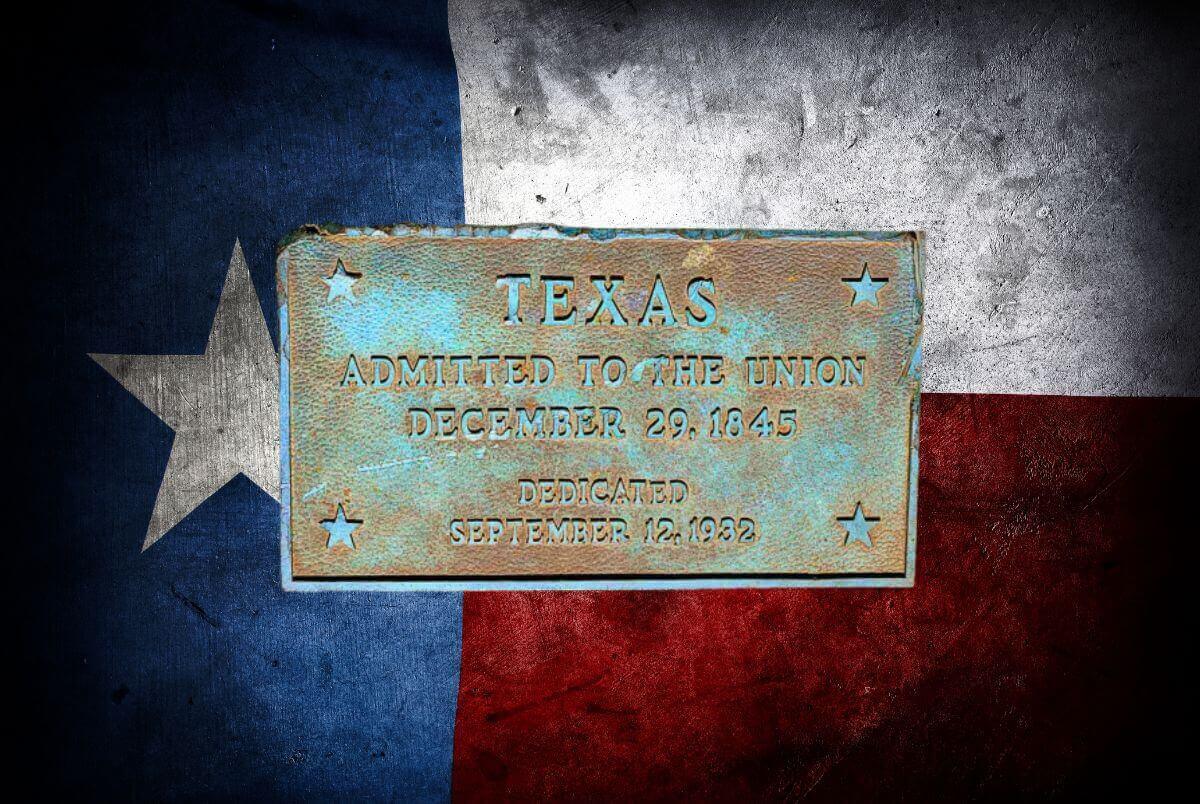
On December 29, 1845, a landmark moment in American history unfolded as the Republic of Texas was formally admitted into the United States as the 28th state, reshaping the nation’s geographic, political, and social landscape. After nearly a decade as an independent republic, Texas’s entry into the Union marked the culmination of intense diplomatic negotiation, sectional political conflict, and the broader American drive for expansion.
The story begins with Texas’s break from Mexico in 1836, following the Texas Revolution. Anglo-American settlers and Tejanos clashed with Mexican authorities over cultural, legal, and political issues — most notably immigration and slavery — eventually prompting Texans to declare independence and establish the Republic of Texas. Though victorious on the battlefield, Texas found itself diplomatically isolated, with the Mexican government refusing to recognize its sovereignty, and relations with other major powers, including Great Britain and France, remaining tentative.
From almost the moment of its independence, many Texans sought union with the United States, but annexation proved deeply controversial. In Washington, political leaders wrestled with the implications of incorporating such a vast territory, particularly one that permitted slavery. Northern politicians feared that admitting Texas as a slave state would intensify sectional tensions and shift the balance of power in Congress in favor of Southern interests. These concerns, coupled with the risk of war with Mexico — which still claimed Texas as part of its territory — slowed efforts toward statehood for years.
Efforts to bring Texas into the United States gained real momentum in the mid-1840s. After the U.S. Congress approved a joint resolution for annexation and President John Tyler signed it in March 1845, Texans voted overwhelmingly to accept; they drafted a state constitution and embraced the promise of union. By December 29, 1845, Texas was officially part of the United States, adopting statehood without first becoming a U.S. territory, a rare course that reflected its unique position as an independent republic turning into a state.
Texas’s admission had immediate and far-reaching consequences. The Mexican government, incensed by the annexation, severed diplomatic ties with the United States — a rupture that would soon help spark the Mexican-American War in 1846. The war and its aftermath significantly expanded U.S. territory across the continent, but also exacerbated debates over the expansion of slavery, contributing to the sectional conflicts that eventually led to the Civil War.
Texas entered the Union as a slave state, a status deeply intertwined with its culture and economy at the time, and one that would have profound implications for national politics in the decades that followed.
This stands as a pivotal date in U.S. history — not only a milestone in territorial growth but also a moment that highlighted the tensions and ambitions of a young nation expanding westward while reckoning with its greatest contradictions.
