
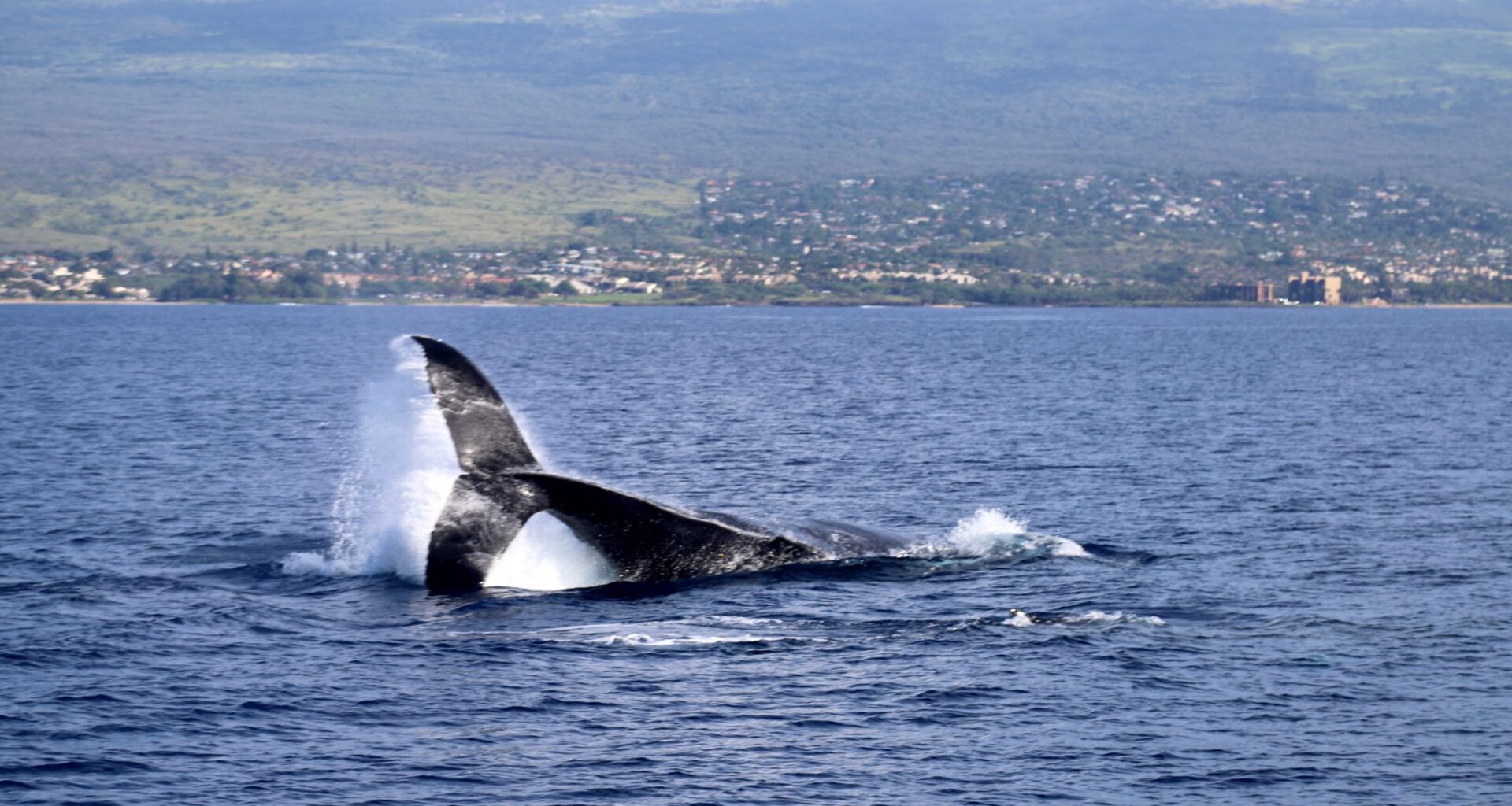
Over the next seven years, the U.S. Navy estimates its ships will injure or kill just two whales in collisions as it tests and trains in Hawaiian waters, and it concluded those exercises won’t significantly harm local marine mammal populations, many of which are endangered.
However, the Navy also estimates the readiness exercises, which include sonar testing and underwater explosions, will cause more than 3 million instances of disrupted behavior, hearing loss or injury to whale and dolphin species plus monk seals in Hawaiʻi alone.
That has local conservation groups worried that the Navy’s detailed report on its latest multi-year training plan is downplaying the true impacts on vulnerable marine mammals that already face growing extinction threats in Pacific training areas off of Hawaiʻi and California.
“If whales are getting hammered by sonar and it’s during an important breeding or feeding season, it could ultimately affect their ability to have enough energy to feed their young or find food,” said Kylie Wager Cruz, a senior attorney with the environmental legal advocacy nonprofit Earthjustice.
“There’s a major lack of consideration,” she added,” of how those types of behavioral impacts could ultimately have a greater impact beyond just vessel strikes.”
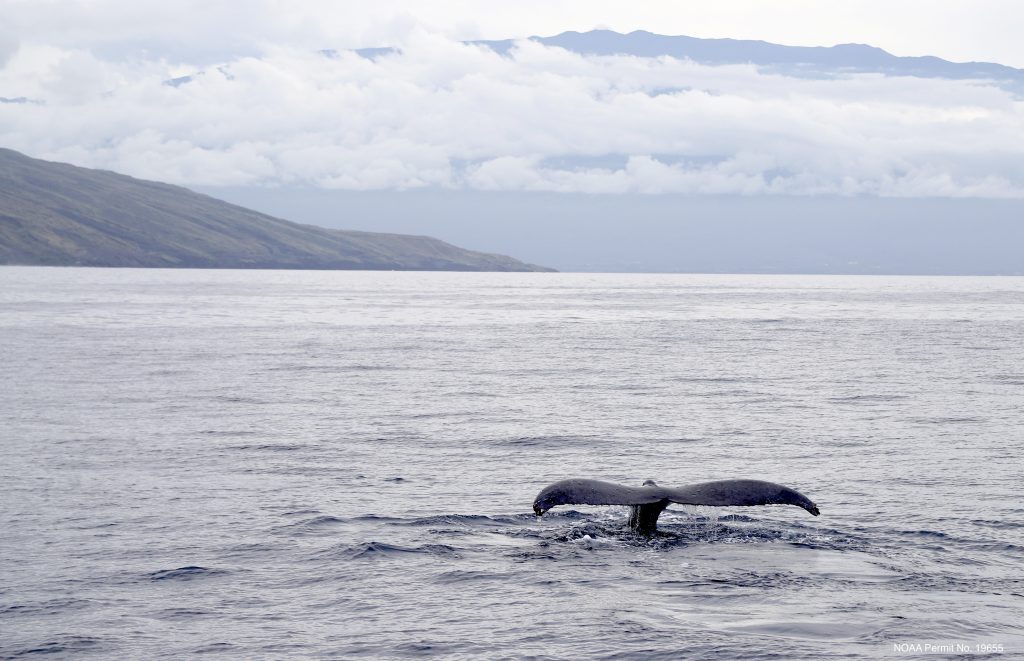 An estimated 10,000 to 12,000 humpbacks travel to Hawaiʻi waters to breed, give birth and nurse their young each year. (Marina Riker/Civil Beat/2023/NOAA Permit No. 19655)
The Navy, Cruz said, didn’t consider how its training exercises add to the harm caused by other factors, most notably collisions with major shipping vessels that kill dozens of endangered whales in the eastern Pacific each year. Environmental law requires the Navy to do that, she said, but “they’re only looking at their own take,” or harm.
The Navy, in a statement earlier this month, said it “committed to the maximum level of mitigation measures” that it practically could to curb environmental damage while maintaining its military readiness in the years ahead. The plan also covers some Coast Guard operations.
Federal fishery officials recently approved the plan, granting the Navy the necessary exemptions under the Marine Mammal Protection Act to proceed despite the harms. It’s at least the third time that the Navy has had to complete an environmental impact report and seek those exemptions to test and train off Hawaiʻi and California.
Limited Protections
The report covers the impacts to some 39 marine mammal species, including eight that are endangered, plus a host of other birds, turtles and other species that inhabit those waters.
The Navy says it will limit use of some of its most intense sonar equipment in designated “mitigation areas” around Hawaiʻi island and Maui Nui to better protect humpback whales and other species from exposure.
Specifically, it says it won’t use its more intense ship-mounted sonar in those areas during the whales’ Nov. 15 to April 15 breeding system, and it won’t use those systems there for more than 300 hours a year.
However, outside of those mitigation zones the Navy report lists 11 additional areas that are biologically important to other marine mammals species, including spinner and bottle-nosed dolphins, false killer whales, short-finned pilot whales and dwarf sperm whales.
Those biologically important areas encompass all the waters around the main Hawaiian islands, and based on the Navy’s report they won’t benefit from the same sonar limits.
For the Hawaiʻi bottle-nosed dolphins, the Navy estimates its acoustic and explosives exercises will disrupt that species’ feeding, breeding and other behaviors more than 310,000 times, plus muffle their hearing nearly 39,000 times and cause as many as three deaths. The report says the other species will see similar disruptions.
Pump The Brakes?
Exactly how the Navy’s numbers compare to previous cycles are difficult to say, Wager Cruz and others said, because the ocean area and total years covered by each report have changed.
Nonetheless, the instances in which its Pacific training might harm or kill a marine mammal appear to be climbing.
In 2018, for instance, a press release from the nonprofit Center For Biological Diversity stated that the Navy’s Pacific training in Hawaiʻi and Southern California would harm marine mammals an estimated 12.5 million times over a five-year period.
This month, the center put out a similar release stating that the Navy’s training would harm marine mammals across Hawaiʻi plus Northern and Southern California an estimated 35 million times over a seven-year period.
“There’s large swaths of area that don’t get any mitigation,” Wager Cruz said. “I don’t think we’re asking for, like, everywhere is a prohibited area by any means, but I think that the military should take a harder look and see if they can do more.”
The Navy should also consider slowing its vessels to 10 knots during training exercises to help avoid the collisions that often kill endangered whales off the California Coast, Cruz said.
Hawaiʻi-based Matson two years ago joined the other major companies who’ve pledged to slow their vessels to those speeds during whale season in the shipping lanes where dozens of endangered blue, fin and humpback whales are estimated to be killed each year.
Those numbers have to be significantly reduced, researchers say, if the species are to make a comeback.
“There are ways to minimize harm,” Center for Biological Diversity Hawaiʻi and Pacific Islands Director Maxx Phillips added in a statement, “and protect our natural heritage and national security at the same time.”
Civil Beat’s coverage of climate change and the environment is supported by The Healy Foundation, the Marisla Fund of the Hawai‘i Community Foundation and the Frost Family Foundation.

Sign up for our FREE morning newsletter and face each day more informed.
Sign Up
Sorry. That’s an invalid e-mail.
Thanks! We’ll send you a confirmation e-mail shortly.