
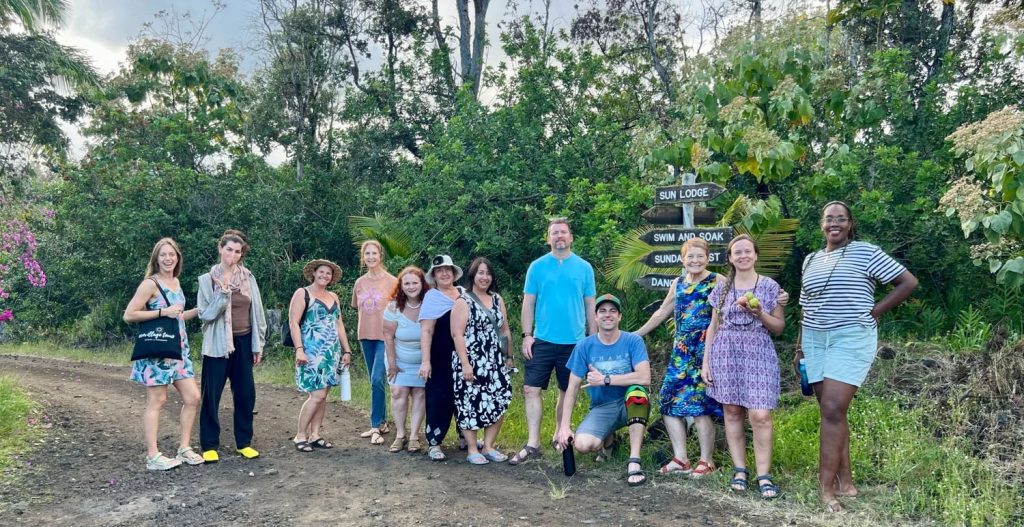
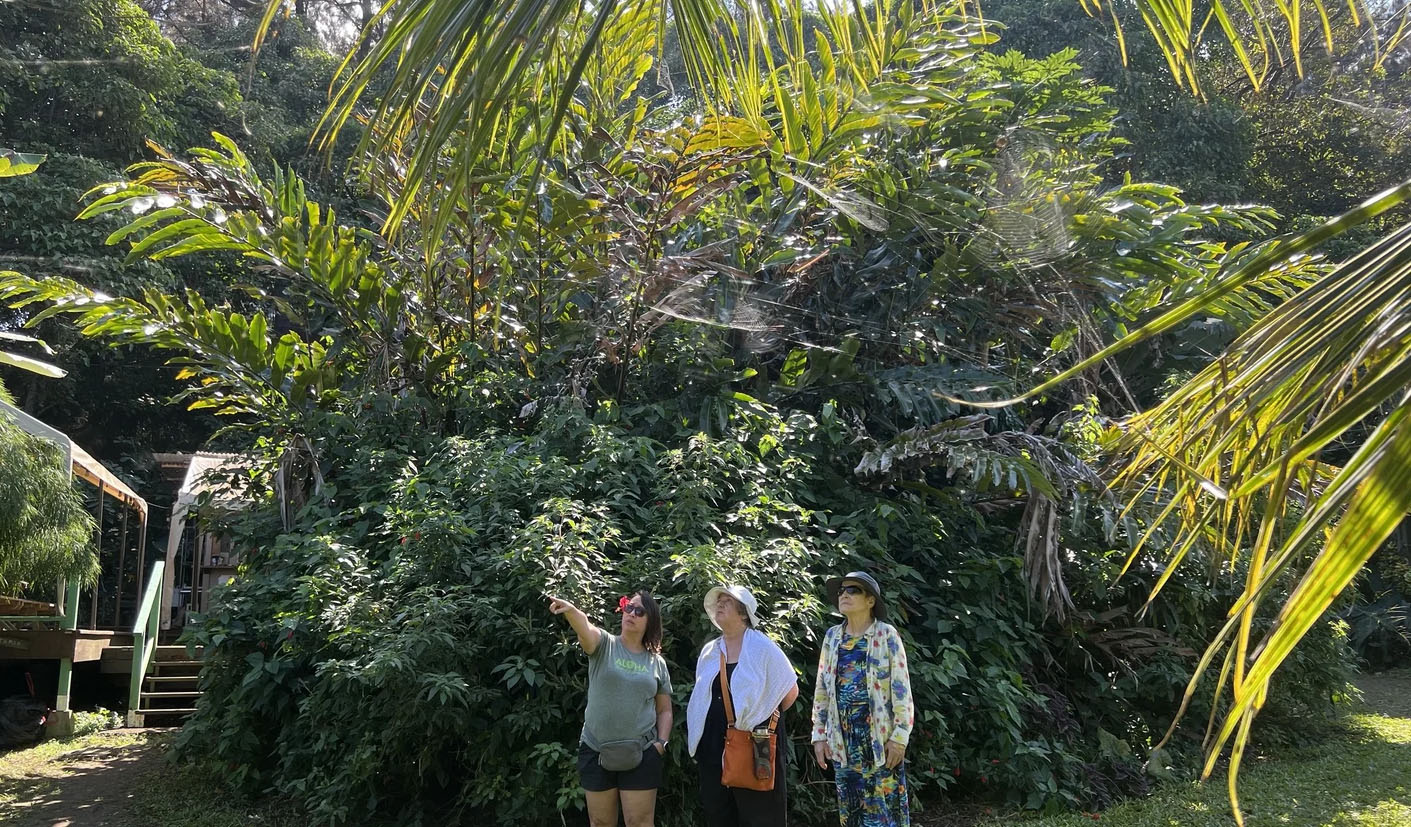
 Visitors look up at the trees growing in community during the last Ecovillage Tour in Hawaiʻi. (Courtesy of Ecovillage Tours)
Twelve visitors are set to explore areas of the Big Island next week that most tourists don’t experience, including gardens, farms and a riverside ecosanctuary that all are helping to build a more sustainable future.
The eight-day, eight-location experience from Jan. 4-11 is led by Ecovillage Tours, which provides all-inclusive visits to off-the-beaten-path communities who are open to showcasing their way of life, including indigenous and regenerative farming, and communal living.
The Vermont-based company hosts excursions year-round in Costa Rica, Bali, India, Portugal, Spain, France, Greece and Italy, as well as Hawai’i and Vermont.
The upcoming Big Island tour will be led by Kona resident Katarina Zavalny, one of the lead volunteers for the Kona Resilience Hub and founder of Aranya Solutions, a nonprofit that develops programs and trains communities to be self-sustaining.
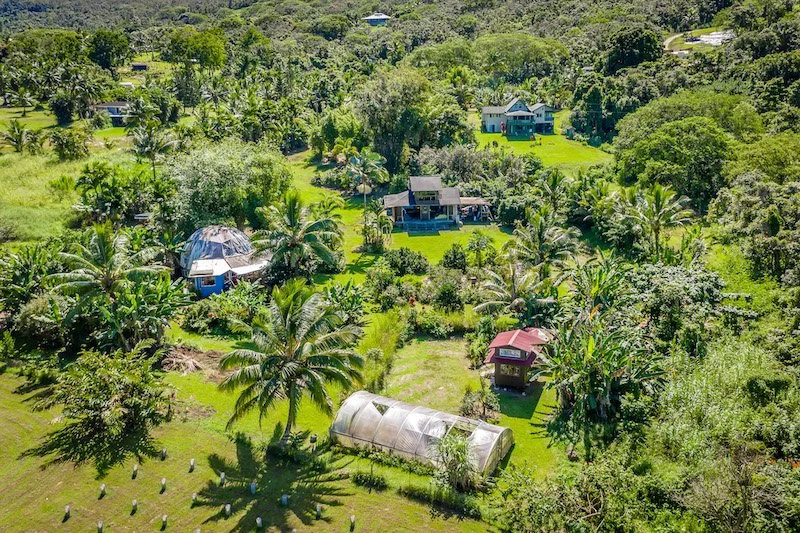 An aerial photograph shows the dwellings in a community during the last Ecovillage Tours in Hawaiʻi. (Courtesy of Ecovillage Tours)
ARTICLE CONTINUES BELOW ADARTICLE CONTINUES BELOW AD
One stop will be at Kahua Paʻa Mua in Hāwī. It is a culturally grounded, ʻāina-based program teaching youth and adults to grow their own food and creating agricultural entrepreneurs through hands-on learning.
Kahua Paʻa Mua frequently offers farm tours to provide students and local families the chance to engage in culture-based, hands-on activities such as crop production, animal care and garden maintenance.
During the day at Kahua Paʻa Mua, the people on the tour will learn different aspects of traditional Hawaiian farming as well as the more modern, Korean Natural Farming, and how both methods have effected the response of the plant.
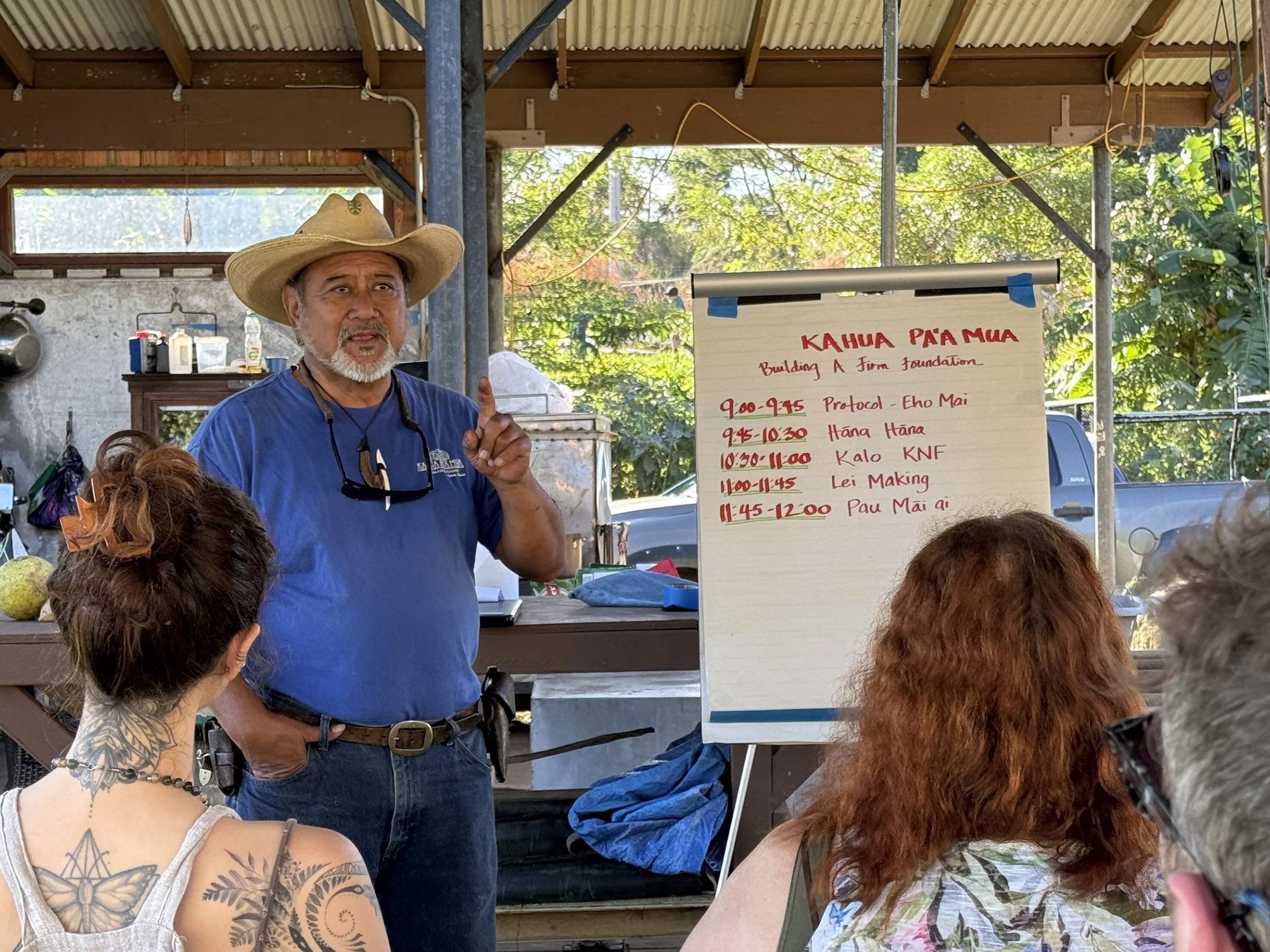 David Fuertes, Executive Director of Kahua Paʻa Mua, gives visitors the schedule for the day during the last Ecovillage Tours visit to Hawaiʻi. (Courtesy of Ecovillage Tours)
The travelers also have the opportunity to connect with the culture through lei making. They are able to learn the history and significance of the practice and about different native flora that can be used to make lei.
ARTICLE CONTINUES BELOW AD
Visitors with Ecovillage Tours have only been coming to Hawaiʻi for two years. This year, the group also will be visiting:
Laʻakea Ecovillage in Pāhoa: An intentional permaculture community with 10 adults on 23 acres designing and maintaining agriculturally productive ecosystems. (Permaculture is a holistic design system mimicking natural ecosystems to create sustainable, self-sufficient human habitats.)
Pueo Ridge Farms in Hāwī: A 10-acre homestead community with an orchard and farm that produces local food as well as a stage and studio for events and activities such as yoga and aerial arts.
Sundari Gardens in Kalapana: An association of properties with 21 garden areas across 10 acres, including ponds, medicinal gardens, a permaculture-based food forest, and unique flowers.
Starseed Ranch in Kapaʻau: A 26-acre off-grid estate with fruit trees and gardens that provide food for markets and school programs, also offering space for youth education and healing retreats.
Rainbow Bridge in Nīnole: A riverside ecosanctuary connecting people back to nature with workshops, healing retreats, and gatherings focused on stewardship and creative expression.
Terra Luna Gardens in Pāhoa: A 20-acre permaculture farm where co-stewards of the land learn from each other while teaching others the skills needed to thrive together in community.
According to the University of Hawaiʻi Economic Resource Organization, 75 percent of Hawaiʻi residents believe that the negative impacts of tourism outweigh the benefits, making the ethics of travel a large part of Ecovillage Tours’ mission.
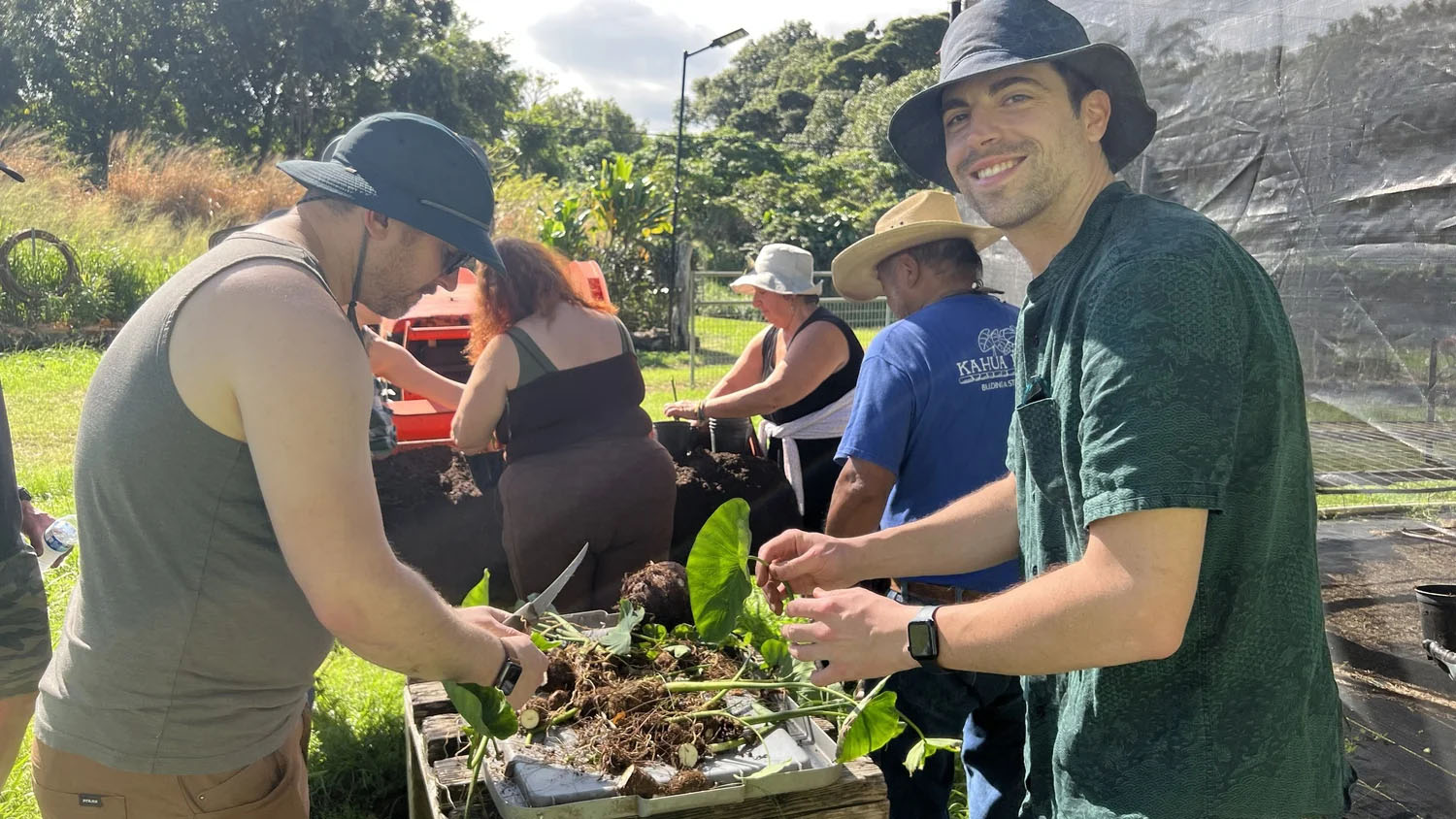 A visitor smiles while harvesting kalo during the last Ecovillage Tours visit to Hawaiʻi. (Courtesy of Ecovillage Tours)
Ecovillage Tours often step into culturally rich regions that carry deep history and plenty of challenges. On all trips, the company compensates each community visited, supports local economies, offers volunteer and hands-on support, and maintains open dialogue about privilege and responsibility.
The cost was $2,999 for the upcoming Hawaiʻi excursion. Ecovillage Tours offered its first full scholarship and two partial scholarships for the Hawaiʻi trip to open access and cultivate long-term, place-based impact for residents.
ARTICLE CONTINUES BELOW AD
These scholarships were partially funded by a County of Hawaiʻi IMPACT Grant and partner nonprofit, Aranya Solutions. They were available to local Hawaiʻi-based changemakers interested in bringing back ideas and inspiration to strengthen regenerative efforts across the islands.
Although the upcoming January tour has sold out, more are scheduled this year for those interested.
For more information, visit the Ecovillage Tour website.