
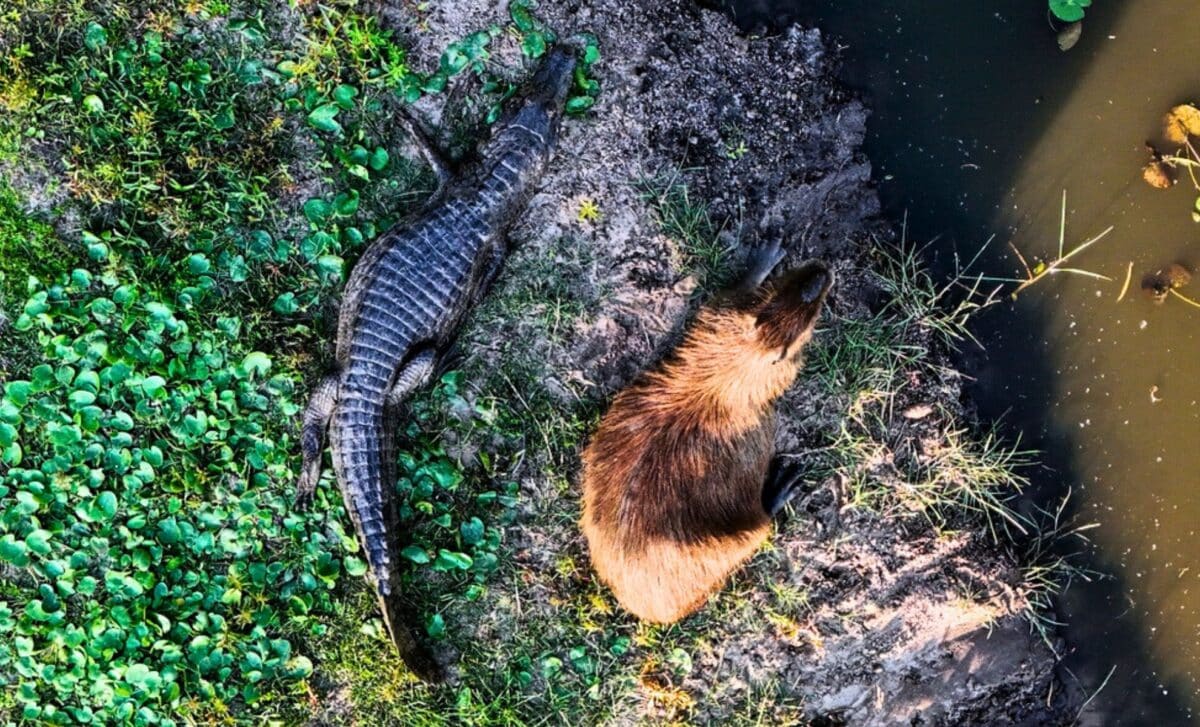
In South America’s wetlands and riverbanks, one animal seems to move with unusual ease through landscapes that many species avoid. The capybara, a large herbivorous rodent, is often seen in the same waters as crocodilians—sometimes resting nearby, undisturbed. Their ability to coexist with these predators has drawn quiet fascination from researchers.
In recent years, the same animal has appeared in an entirely different setting: suburban Argentina. There, capybaras have been described not as peaceful neighbours, but as invaders. Their presence has led to complaints of damaged lawns, injured pets, and a growing call for intervention.
This contrast raises a complex ecological question. How does a species that thrives among natural predators become a source of conflict in human environments?
Predators Rarely Take the Risk
Capybaras (Hydrochoerus hydrochaeris) share habitat with crocodilians, including the yacare caiman, across much of their natural range. Despite this proximity, adult capybaras are not common prey. Dr Elizabeth Congdon, a capybara researcher and associate professor at Bethune-Cookman University, told IFLScience that attacks by caimans are rare, particularly when fish and other easier prey are available.
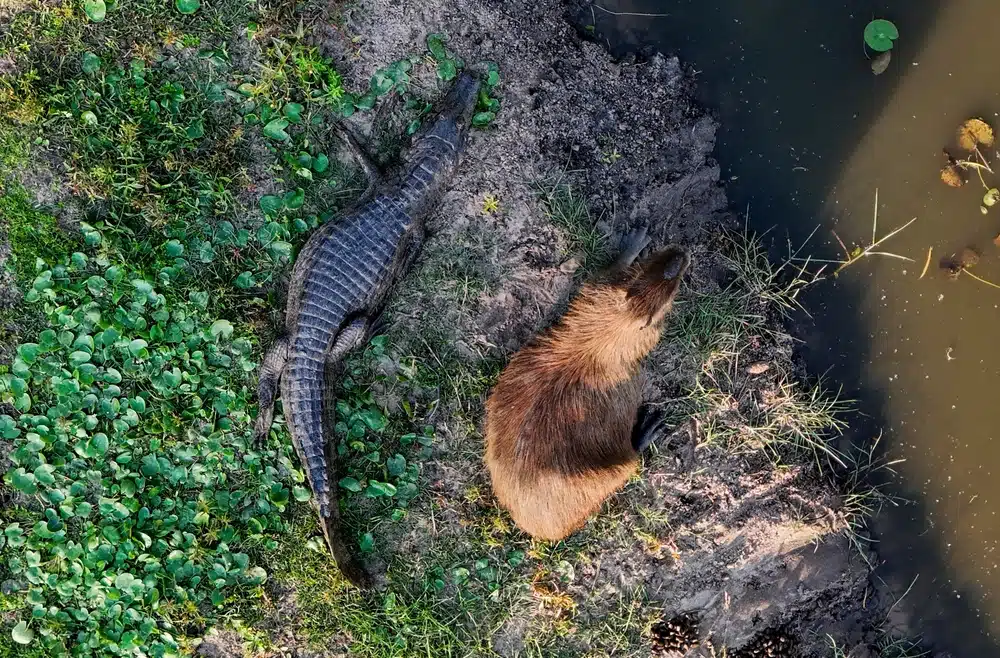 Caiman and Capybara from drone view at Esteros del Ibera, Corrientes, Argentina. Credit: Shutterstock
Capybaras grow to more than 45 kilograms and possess strong incisors that can inflict injury. This size and defensive potential may explain why predators tend to avoid them unless under pressure. “Capybaras have big, sharp teeth. Combined with their body size, I think they are just not worth the trouble and risk of injury,” Congdon said.
Their adaptations extend to the water. With webbed feet and sensory organs positioned high on their heads, capybaras can remain mostly submerged while scanning their surroundings. They can stay underwater for up to five minutes, aiding escape from threats. These aquatic traits are outlined in the Rainforest Alliance’s capybara species profile, which also notes their preference for habitats near lakes, rivers and swamps.
Juvenile capybaras are more frequently targeted by predators such as ocelots, anacondas, and harpy eagles, but overall, adults are rarely part of a caiman’s regular diet. Researchers attribute this to risk aversion in predators and the availability of less challenging food sources.
Human Spaces Present Different Risks
In urban areas, the interaction is less passive. In 2021, residents in Nordelta, an upscale development near Buenos Aires, reported an increase in capybara sightings. Gardens were damaged, pets confronted, and fences bypassed. A report from USA Today included video coverage showing the animals roaming freely through the neighbourhood.
 Capybara and jacare caiman on shoreline, Pantanal, Brazil. Credit: Shutterstock
These events occurred in an area built over natural wetlands that once supported capybara populations. As construction expanded and fragmented the habitat, capybaras began moving back into altered landscapes. Conservationists cited urban sprawl and habitat loss as primary causes of the conflict, noting that native species often return when ecological buffers are removed.
Capybaras are legally protected in several South American countries, yet they are also widely hunted and farmed. The Rainforest Alliance notes that their meat and hides are used commercially, and farming operations have emerged to reduce pressure on wild populations. These farms have introduced new considerations around animal welfare, regulation, and land use.
Social Behaviour Enhances Survival
In natural environments, capybaras rely on more than just physical defences. They form herds that can include more than a dozen individuals, and their group dynamics contribute to their survival. Members take turns standing guard while others feed or rest, reducing vulnerability to surprise attacks.
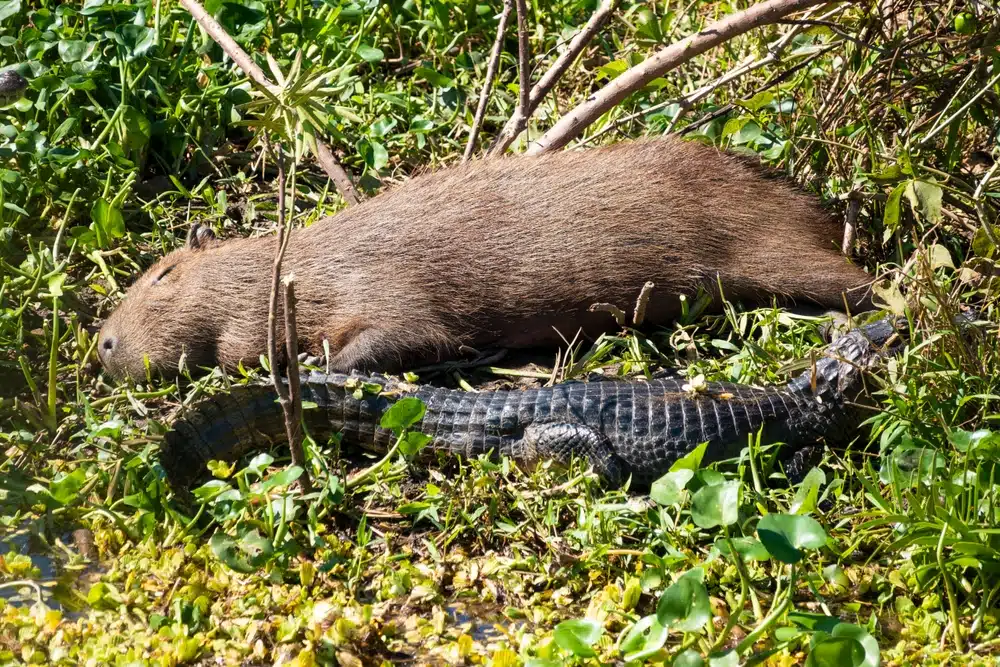 Capybara laying down sleeping with a Caiman in Brazilian wetlands, Pantanal, Brazil. Credit: Shutterstock
Communication also plays a role. Capybaras use a broad range of vocalisations—chirps, whistles, purrs—to maintain contact and warn of danger. Their use of scent marking helps define group territories and maintain cohesion. These behavioural adaptations, commonly observed in the wild and in managed settings such as zoos, contribute to their reputation for social intelligence.
Several academic studies have explored capybara behaviour in depth. One example is Dr Congdon’s research on dispersal and social structure, including her paper on female mate choice and group dynamics, published in the Journal of Mammalogy. The study highlights how capybara social systems influence group stability, reproduction and dispersal patterns.
In a 2019 article for Zoo Biology, Congdon also examined digestive physiology in captive capybaras, documenting how the animals efficiently extract nutrients from fibrous plant material. This digestive efficiency enables them to survive on low-quality vegetation, giving them an edge in environments where resources are limited.