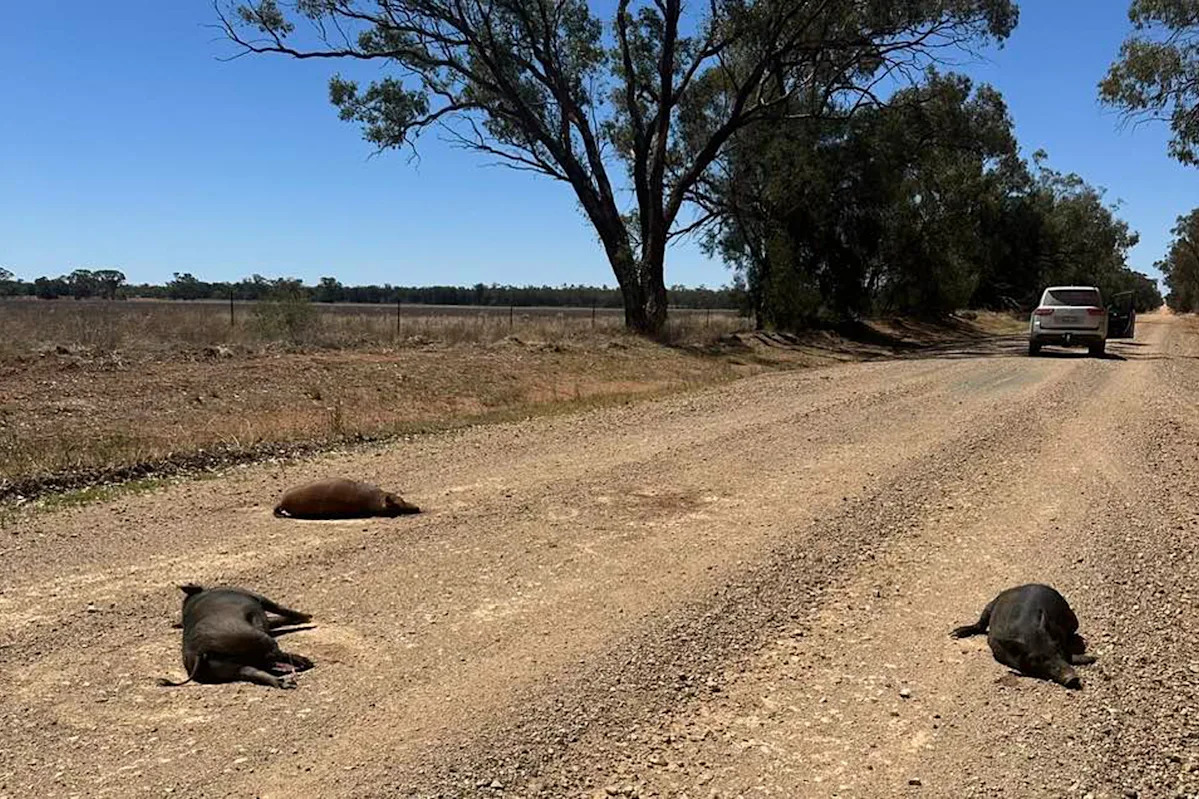
A photo taken of a rural Australian road has revealed a growing issue with an invasive animal costing Australia over $156 million a year. The image, taken by Helen Dalton, independent MP for Murray, on a drive in New South Wales’ central west shows three feral pigs lying in the middle of the road.
It’s sparked fresh fears that “numbers are exploding”, causing a major biosecurity risk to Australia’s agricultural sector, threatening native wildlife and posing a “serious danger” to road users.
“This is no longer just an environmental issue — it’s a public safety, economic and biosecurity emergency,” Dalton said of the feral pig issue.
“It’s a hell of a problem with animals that are way out of control…it’s a big problem for everyone,” she told The Land.
Feral pigs were originally introduced by European settlers in the 1800s for food and hunting, and have since spread rapidly across the continent.
Australia is now estimated to have up to 24 million feral pigs spread across the country, from western Victoria through NSW and up into Queensland, across northern Australia. There are even feral pigs found to be living on a few offshore islands.
Once populations of feral pigs are established, they destroy crops, pasture and wild environments.
But Dalton believes for many, the issue is “out of sight out of mind”.
“They just don’t get it,” she said of her city-based peers.
Dalton knows all too well the impact invasive species are having on rural communities, having previously called for a reintroduction of bounties on foxes in NSW.
Are you being impacted by invasive animals? Contact newsroomau@yahoonews.com
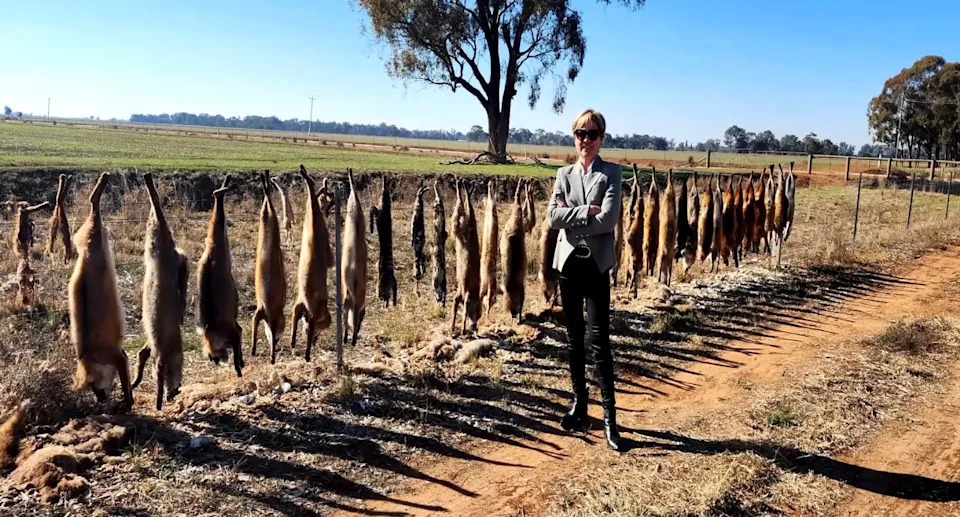
Helen Dalton has previously advocated for a bounty on another invasive species, foxes. Source: Supplied
True impact of feral pigs impossible to determine
Dr Heather Channon, Australia’s first National Feral Pig Management Coordinator, is leading the implementation of the National Feral Pig Action Plan.
In an interview with Yahoo News, Dr Channon previously said the true impact is virtually impossible to determine due to how difficult it is to monitor their movements through the dense environment.
According to the Australian Bureau of Agricultural and Resource Economics and Sciences (ABARES), the annual cost to Australia’s agricultural sector from feral pigs, including management expenditure and residual production losses, is estimated at more than $156 million.
“We don’t have actual population information,” Dr Channon said, adding that the last five years of favourable weather and seasonal conditions have allowed the pests to thrive.
How can we fight back against invasive animals?
There are several methods already being used to tackle the problem, including baiting, aerial shooting, trapping and exclusion fencing.
However, in some regions, including bushland and rainforests, those methods prove more difficult.
Dr Channon said Australia’s feral pig response needs stronger coordination, better data, and longer-term commitment.
Her team is preparing a report for the federal agriculture department on reducing agricultural impacts, with key recommendations focused on “strategic coordination” and “area-wide management” to ensure landholders work together rather than in isolation.
She said more support is needed for communication between private and public land managers so control efforts can be better timed and more effective.
“Effective feral pig management is all about people,” she said. “It’s about how we work together, use all the available tools consistently, and stay engaged for the long haul, because the solutions will take time to deliver.
“And we really need to remove at least 70 per cent of the population annually just to prevent the rapid recovery.”
Do you have a story tip? Email: newsroomau@yahoonews.com.
You can also follow us on Facebook, Instagram, TikTok, Twitter and YouTube.