
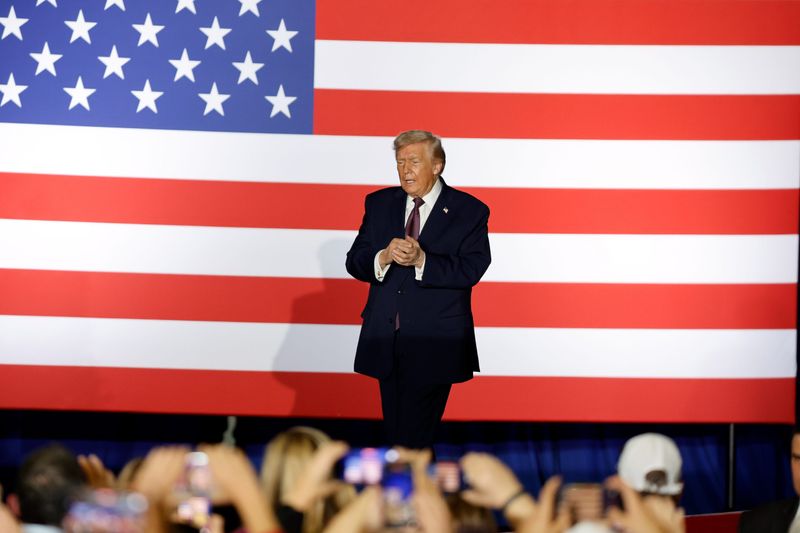
In 2026, the United States stands at such a threshold – and the energy, courage, and solidarity already stirring across the country, rooted in a majority that has never fully surrendered to elite manipulation, suggest that a better direction remains very much within reach.
As 2026 dawns, the United States under Donald Trump’s second term faces interconnected crises that test the resilience of its political system, economy, and global role. The stunning rebuke delivered by Indiana’s Republican Senate on December 11, 2025 – rejecting Trump’s aggressive mid-cycle redistricting plan despite intense White House pressure, threats of primaries, and even swatting incidents against fellow GOP lawmakers – has exposed real limits to executive coercion.
In a deep-red state with a GOP supermajority, 21 Republican senators joined Democrats to preserve democratic norms, signalling that loyalty to principle can still outweigh fear of reprisal. This moment, alongside the persistent “No Kings” protests mobilising millions, highlights growing public refusal to accept unchecked power.
These developments coalesce into three major axes of crisis that will likely shape 2026: domestic political fragmentation and mass mobilisation; economic hardship met with elite deflection tactics; and imperial overreach in unresolved foreign conflicts. Yet amid the strain, cracks in the facade also reveal openings for renewal, accountability, and a more responsive democracy. And it must be remembered that though Trump has actively challenged constitutional and democratic norms, the American political system’s guardrails – a large multi-state system, thousands of city jurisdictions, courts, some media resistance, as well as an increasingly mobilised populace – remain pretty robust.
And at a certain point in the life-cycle of a popular leader, what are considered virtues and strengths that positively stand out become vices and weaknesses. With a series of issues at the fore today – the Epstein files, the affordability crisis, the continued support for aggressions and threats across the world from Venezuela, to Greenland, to Gaza, among others – President Trump appears to be on the verge of such an outcome.
First axis: Domestic political fragmentation and the limits of MAGA control
Despite years of propaganda – both domestic and foreign – portraying Americans as gullible, polarised, or “stupid,” the reality remains far more nuanced and encouraging. Trumpism, even at its electoral peak, has always been a minority belief and movement, consistently rejected by the majority of voters. In 2024, Trump secured victory with a popular vote share hovering just above 50% in a low-turnout context, but broader sentiment polls show that core MAGA positions – on election denialism, extreme nationalism, or unchecked executive power – command support from only a committed minority, often below 40%.

Illustration: Pariplab Chakraborty.
More importantly, even within Trump’s core supporters, there is widespread rejection of elite dominance and the rule of big money. Grassroots disillusionment over withheld Epstein files, billionaire influence via donors and figures like Elon Musk, and perceived betrayals on economic promises reveal a populist base that resents being used as a vehicle for preserving establishment power.
The Indiana revolt stands as a powerful emblem of this broader resistance. Senators, facing personal harassment and political threats, including a pipe bomb, chose constituency voice and democratic fairness over partisan gerrymandering that would have erased Democratic representation. This defeat – Trump’s most significant legislative setback on domestic redistricting – has ripple effects, cooling similar efforts in other states and emboldening moderate Republicans elsewhere.
At the same time, the “No Kings” movement continues to grow in sophistication and reach. From millions protesting the June military parade to October’s nationwide wave of over seven million participants, diverse coalitions – progressives, labour unions, civil rights groups, and even disillusioned conservatives – are forging broader solidarity. Grassroots MAGA discontent creates unexpected convergences: shared anger at billionaire influence and broken promises transcends traditional divides.
As midterms approach in November 2026, these currents could reshape the political landscape. Sustained mobilisation, potential coordinated strikes, and anniversary actions in January offer pathways to tangible concessions – on immigration policy, transparency, or worker protections. History shows that when citizens organise across lines, real change follows.
Second axis: Economic hardship and elite divide-and-rule strategies
Tariff-induced inflation, supply-chain disruptions, and federal cuts through DOGE have deepened economic anxiety for working families. Yet this pain is also catalysing new forms of resistance. Labour leaders and community organisers increasingly link workplace struggles to broader democratic demands, building coalitions that refuse to let hardship be weaponised against the most vulnerable.
Elite responses – amplifying foreign threats and stoking racism to fracture solidarity – remain potent but are showing diminishing returns. Attempts to scapegoat immigrants or external enemies encounter growing pushback from multiracial, multi-generational movements that insist on democratic rights, due process, and shared prosperity. The fact that Trumpism’s hardest edges remain minority views, even among many who voted for pragmatic reasons, undermines long-term elite efforts to divide. When workers see their interests aligned across communities rather than divided by manufactured fear, the old playbook loses its grip. The rising visibility of cross-class, cross-racial organising offers genuine hope that economic justice can become a unifying rather than divisive force.
Third axis: Imperial overreach and stalled perpetual wars
Abroad, entanglement persists. Ukraine negotiations remain deadlocked despite ceasefire proposals; Gaza’s fragile truce faces ongoing violations and uncertain phase-two talks; Venezuela confronts escalating U.S. pressure through sanctions, seizures, and military violence. These conflicts drain resources and attention while accelerating multipolarity and straining alliances.
Yet here too, signs of restraint emerge. Domestic political costs – economic fallout, public fatigue, and institutional resistance like Indiana’s – may force pragmatic recalibration. A public whose majority consistently rejects perpetual war and elite-driven adventurism creates space for diplomatic off-ramps and reduced commitments. As global partners and adversaries alike adapt to a less unipolar world, the United States has an opportunity to pivot toward cooperative engagement rather than coercive dominance. But the imperial creed saturating the American establishment will require mass discipline via protests that rock the system to keep it in check or to roll it back.
In 2026, these three axes will intersect decisively. Midterms will serve as a national referendum on the direction of the country. Mass mobilisation, institutional courage, and economic pressure could compel meaningful course corrections – greater transparency, fairer representation, worker protections, and a less hubristic foreign policy.
What gives grounds for genuine optimism is the evidence already visible: ordinary citizens and elected officials refusing intimidation; coalitions building across traditional divides; movements learning from past successes and adapting with discipline and creativity. The persistent minority status of hardcore Trumpism – and the base’s own rejection of big-money rule – underscores a deeper American resilience against propaganda narratives of helplessness or division. The latest opinion polls confirm the trend: Trump’s popularity is tanking.
When people organise, speak truth to power, and insist on accountability, systems bent toward elite preservation can begin to bend toward broader interests.
2026 need not be merely another year of crisis. It can become a turning point toward renewal – where democratic resilience reasserts itself, where economic policy serves working families rather than billionaires alone, and where America engages the world with at least some humility rather than unbridled hubris. The cracks in the imperial facade are widening, but through them light is entering. The choices made by citizens, organisers, and even dissenting lawmakers in the months ahead will determine whether that light illuminates a path to a fairer, more peaceful future.
History is not predetermined. Moments of strain have often preceded moments of reconstruction. In 2026, the United States stands at such a threshold – and the energy, courage, and solidarity already stirring across the country, rooted in a majority that has never fully surrendered to elite manipulation, suggest that a better direction remains very much within reach.
Inderjeet Parmar is a professor of international politics and associate dean of research in the School of Policy and Global Affairs at City St George’s, University of London, a Fellow of the Academy of Social Sciences, and writes the American Imperium column at The Wire. He is an International Fellow at the ROADS Initiative think tank, Islamabad, on the board of the Miami Institute for the Social Sciences, USA, and on the advisory board of INCT-INEU, Brazil, its leading association for study of the United States. Author of several books including Foundations of the American Century, he is currently writing a book on the history, politics, and crises of the US foreign policy establishment.
This article went live on January first, two thousand twenty six, at twenty-eight minutes past ten in the morning.
The Wire is now on WhatsApp. Follow our channel for sharp analysis and opinions on the latest developments.