
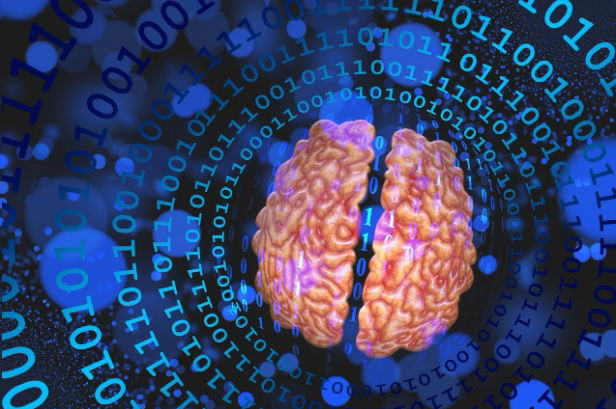
The human brain is capable of processing advanced information, but not in the same way that computers do. Still, for many years, researchers have compared the mind to software, implying that processes similar to the computation our brains perform could run on any advanced machine.
Now, a new theoretical study argues that many standard beliefs about consciousness are rooted in this misleading idea, where the authors express that this metaphor fails to accurately describe important details about the origins of consciousness.
The study, appearing in Neuroscience & Biobehavioral Reviews, argues that, in biological systems, physical processes drive computation. In the brain, physics, energy use, and real-time changes shape computation. This view claims that consciousness arises from the physical material doing the computing, not just from running the correct code.
A Debate Between Two Theories
Most modern theories of consciousness fall into two main groups. Computational functionalism argues that mental states required for consciousness depend solely on how a system processes information. In this view, a machine could be considered conscious if it processes information in the right way, no matter what it is made of.
On the other hand, biological naturalism connects consciousness specifically to properties of physical, living brains and bodies. In this framework, the biological substance is not just a vehicle for thought, but plays an active, irreplaceable role in producing consciousness.
Both perspectives address important aspects, but neither fully explains consciousness. The authors say the ongoing debate points to something missing in current theories.
A Different Approach to Computation
The paper introduces a third idea: biological computationalism. Instead of rejecting computational functionalism outright, this study questions the theory’s narrow definition.
In classical computing, algorithms are abstract instructions that can run identically on any machine, such as a laptop or server. In the brain, there is no clear distinction between software and hardware. The physical structure of neural tissue is not just a background detail, but a key part of how computation happens.
How Brains Actually Compute
To define this concept, the researchers highlight three key features of biological computation. First, brain computation involves multiple processes. Neurons generate electrical spikes, and synapses release neurotransmitters in clear events. These actions take place in a setting where physical conditions are constantly changing: voltage fields move, chemical gradients spread, and ion levels shift over time.
These ongoing physical processes do not just occupy the background. They influence each neural event and change in response to those events, as ongoing feedback drives computation in the brain.
Second, biological computation does not divide cleanly into separate levels. In computers, engineers can clearly distinguish between software and hardware. By contrast, this distinction is absent in the brain. Activity in ion channels influences dendrites, which in turn affects the behavior of the entire brain. In other words, there is no location in the brain where an algorithm exists independently; instead, within the brain, processes that alter the physical structure are what change how computation occurs.
Third, the brain’s ability to compute is limited by the energy available to the individual. These limits influence learning, memory, stability, and coordination across neural networks. In this view, the brain’s close connections at different levels are not only complex but also provide an efficient way to use energy.
The Medium Is the Message
All these features support the paper’s main idea: in biological systems, the physical material is built into the algorithm. Computation unfolds over time through physical processes, not just through abstract ideas.
This perspective goes against many common assumptions about artificial consciousness. If independent thought depends on computation that is grounded in biological material, then building conscious machines could require more than improving digital algorithms or developing more advanced technology.
Implications for Artificial Intelligence
A majority of modern AI systems are trained to connect inputs to outputs. However, their computational ability is still a digital process, running on hardware designed for a different kind of information processing than that of a living brain.
Brains, in contrast, compute in real physical time. Ongoing interactions among electrical, chemical, and energy-based processes shape how information is combined and adapted. If these interactions are essential for computation, then simply making digital AI bigger or faster may not solve the underlying challenge.
The authors do not argue that artificial systems are incapable of consciousness, nor do they claim that carbon-based biology is required for consciousness. The recent study is purely theoretical, they note, and does not include any experiments to test this new theory, leaving many open questions about the concepts it presents.
Fundamentally, the researchers’ aim with their recent work was to shift the discussion of consciousness away from software comparisons, and instead bring the focus back to the concept of a physical basis for computation being a requirement.
The paper, “On biological and artificial consciousness: A case for biological computationalism,” appeared in Neuroscience & Biobehavioral Reviews.
Austin Burgess is a writer and researcher with a background in sales, marketing, and data analytics. He holds a Master of Business Administration, a Bachelor of Science in Business Administration, and a Data Analytics certification. His work combines analytical training with a focus on emerging science, aerospace, and astronomical research.