
It has been a tough year for medicine. The U.S. research enterprise has been scrambled by a series of political decisions with long-reaching consequences. But make no mistake: Science didn’t stop, and medicine has had its share of major advances.
As I have written for years, this is biology’s century — a period of unprecedented advancement in medical science driven by an explosion of data, an unprecedented level of biological understanding, and a flood of private-sector money. What makes 2025 unique is that these advances, from an innovation in biotech that saved a baby with an ultra-rare disease to the arrival of a potent new weapon in the war on HIV, came against the backdrop of government decisions that will limit even the most promising science in the future. Here is a look at what 2025 brought.
A gene edit and a baby
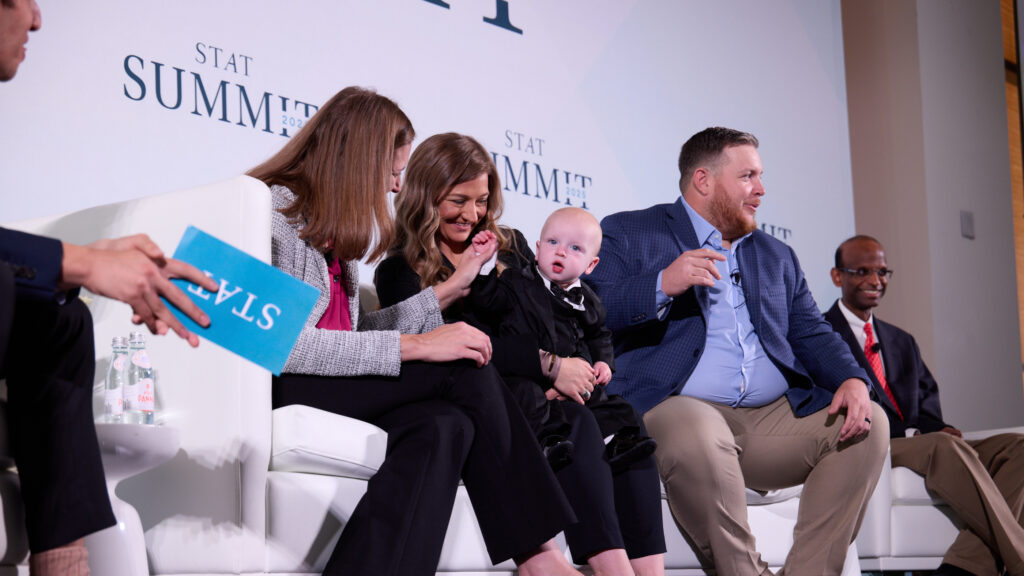
Ask anyone in biotech for the defining moment of medical innovation this year, and they’ll point you to KJ Muldoon. When he was just 6 months old, the genes of cells in KJ’s liver were edited using CRISPR — the technology that won researchers the Nobel Prize in chemistry in 2020 — to correct a unique mutation.
The treatment did not cure KJ, but it allowed him to resume a normal diet and means he is no longer facing the liver transplant that he likely would have needed otherwise. What was striking about the case was that KJ’s treatment had been developed by researchers at the University of Pennsylvania on a one-off basis. The question now is whether — and how — the medical system can adapt to make more cases like this possible.


STAT Plus: What Baby KJ means for the CRISPR gene-editing industry
Regulators have moved to lower barriers for the development of these “n of 1” treatments, but there is no commercial model to encourage them. The only approved gene-editing treatment, for sickle cell disease and beta thalassemia, is used to treat a larger population and still has a list price of more than $2 million.
A strong crop of new medicines
The Food and Drug Administration has approved 44 brand new drugs this year, down six from a year ago but still a bumper crop — and more than twice as many as were approved in 2010, when the pharmaceutical industry saw itself facing an innovation crisis.
Most new medicines are incremental advances, but every year a few stand out for either their immediate impact or their potential. Here are some that meet those criteria.
Yeztugo: Gilead’s long-acting medicine for the prevention of HIV infection is the closest thing yet to a vaccine against the disease. The Trump administration’s dismantling of USAID and cuts to other HIV-prevention programs could blunt its impact, but deals Gilead has made with generics makers could still lead to broad distribution. An agreement with the Global Fund to Fight AIDS, Tuberculosis, and Malaria could provide the drug to 2 million people in resource-limited countries over three years.
Journavx: A non-opioid painkiller developed by Vertex Pharmaceuticals was approved at the start of the year. There are questions about how effective it is, but if patients, doctors, hospitals, and insurers embrace it, Journavx could spare some people from being exposed to addictive treatments. It’s one to watch.
New antibiotics: Two new antibiotics were approved to treat gonorrhea. Nuzolvence was produced by the partnership of Innoviva Specialty Therapeutics and the Global Antibiotic Research & Development Partnership, and Blujepa by GSK. That’s important because even as bacteria have become more resistant to common antibiotics, antibiotic drug development has been stymied by scientific and commercial challenges.
Progress against cancer
Sometimes it is not a single drug that changes everything, but advances that add up one after another. Take lung cancer, for instance, for which the FDA in 2025 approved five new drugs targeting different subtypes of the disease. They are among a broader group of targeted medicines that have in recent years extended the lives of patients with metastatic disease.
STAT Plus: Chasing CAR-T, biotech finds its next gold rush in autoimmune disease
Among new approvals, for instance, was one for the combination of Rybrevant and Lazcluze, from Johnson & Johnson, which was shown to extend the time before tumors grow significantly in non-small cell lung cancer caused by a mutation in the gene EGFR. So did the targeted therapy Tagrisso, from AstraZeneca, when given with chemotherapy.
Other advances register here, too. Enhertu, an antibody-drug conjugate, which combines a genetically targeted therapy with a chemotherapeutic warhead in a single molecule, became the new standard of care for patients’ whose tumors test positive for a protein called HER2 when added to an existing drug, Perjeta. Adding Enhertu delayed tumor progression by a median seven months.
Vaccines delivering more for less
Being vaccinated against shingles is already important; it is, quite simply, a painful disease no one wants. But there is building evidence of another reason: The herpes zoster virus that causes shingles may also contribute to the development of Alzheimer’s. A study published using data in Wales, where there was a specific birthdate cut-off for getting a shingles vaccine, helped back up this idea.
Another example of a vaccine doing more than was intended: HPV vaccinations have nearly eliminated cervical cancer in some countries, and can also prevent head and neck cancer. Emerging data say the vaccine may work well as one dose, instead of two. It’s not clear whether the U.S. will move in that direction, but the news could be a big deal in areas where vaccines are in short supply.
STAT Plus: With the Wegovy pill, Novo Nordisk undercuts Eli Lilly in direct-to-consumer market
The GLP-1 pills
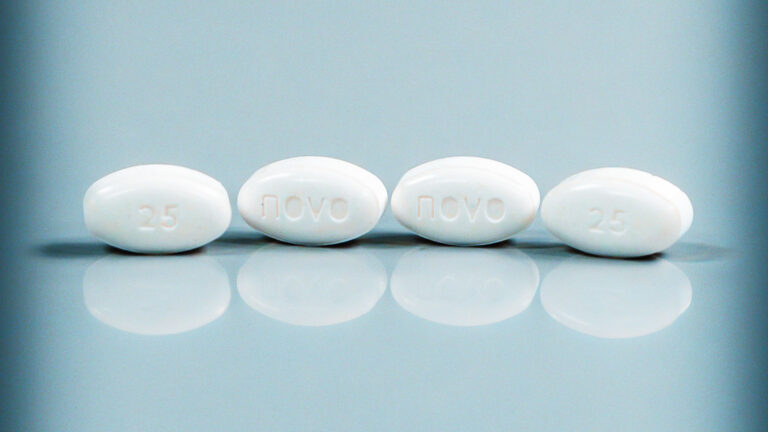
GLP-1 agonists — weight loss drugs like Wegovy and Zepbound — are changing society’s health and our culture. In December, a higher dose of semaglutide, the active ingredient in Wegovy, was approved for weight loss (and the reduction of cardiovascular risks) as a pill instead of an injection. The drug was developed by Novo Nordisk. In some ways, it’s a small thing; Novo previously had a GLP-1 pill approved to treat type 2 diabetes. But another new such pill is coming soon from Eli Lilly, and the availability of these medicines will be one more way that they reshape the world.
What to watch
There was also some more futuristic progress afoot.
A new gene therapy showed promise in Huntington’s disease, although it seems to have run into hurdles at the FDA and full data have not yet been presented.
Researchers have made significant progress in creating genetically engineered pigs whose organs can be transplanted into people, potentially alleviating the organ shortage. Work is moving forward with kidneys, and a gene-edited lung was transplanted into a brain-dead patient as a first step toward trials.
One of the biggest hurdles in biotechnology is that so much progress relies exclusively on companies. It was heartening, then, that an Italian nonprofit was able to bring a gene therapy to market successfully.
Here’s hoping for more breakthroughs in 2026 — and smoother sailing for medical science writ large.