
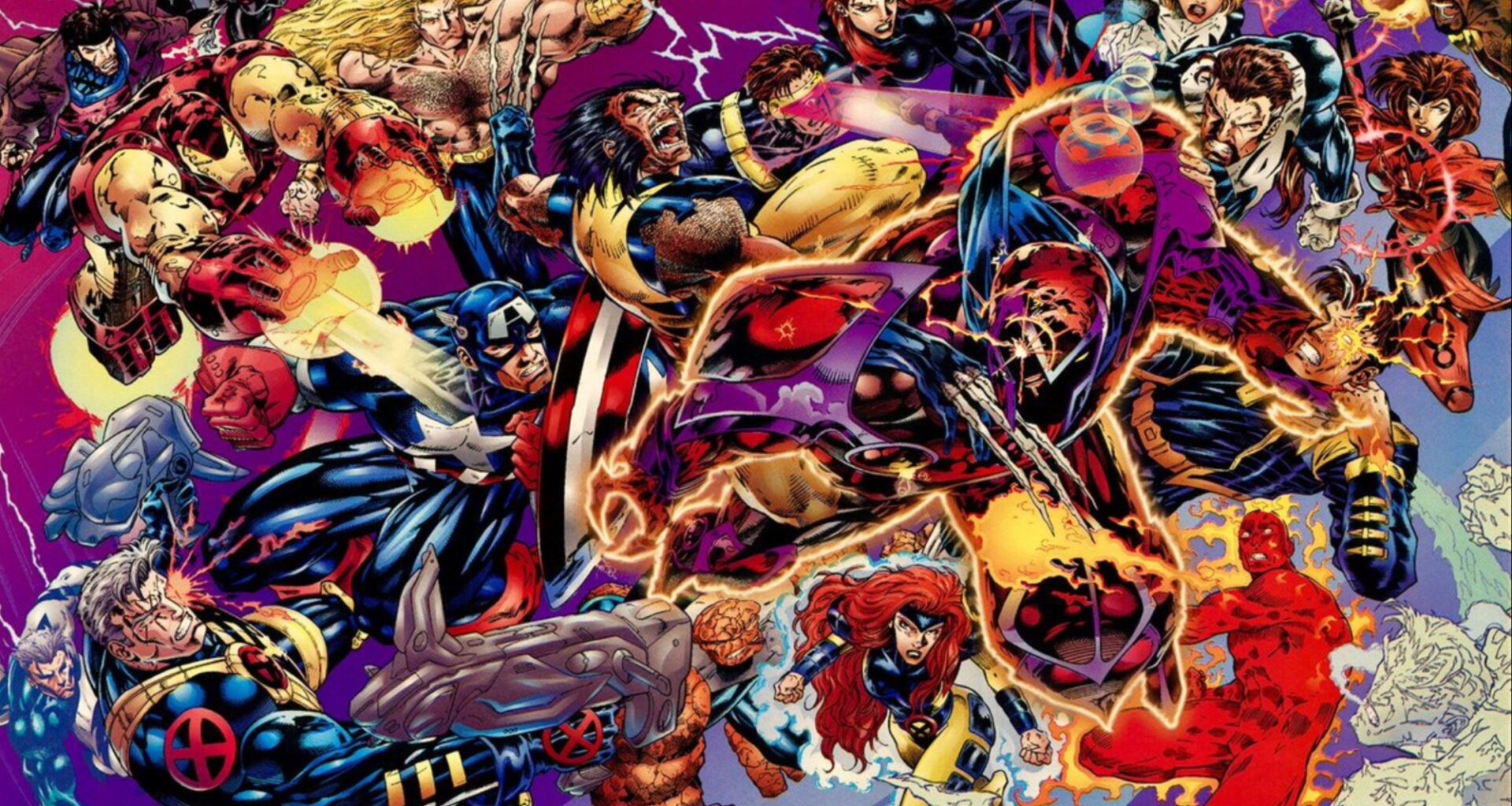
Being a Marvel fan in the ’90s wasn’t always easy. The ’80s were basically a second Golden Age, and Marvel was putting out some of the best superhero comics throughout the decade. In the ’90s, the writing started to go down the tubes as art became more of the focus, with artists like Todd McFarlane, Ron Liefeld, Jim Lee, Marc Silvestri, Erik Larsen, Whilce Potracio, and Jim Valentino becoming big names and shifting the focus. The Image exodus saw a new generation of artists step up and the writing taking on another back seat on a lot of books, as the X-Men and Spider-Man became the dominant Marvel paradigm. All of this led to 1996, when a major X-Men story was about to become the biggest Marvel story ever: “Onslaught”.
“Onslaught” has something of a bad reputation in 2025. It’s looked at as one of the biggest examples of the rot at the House of Ideas 30 years, a bad crossover event in every sense. However, I’d like to present a different vision of the story. The ’90s were the X-Men’s decade, and “Onslaught” was the culmination of numerous plot lines. It also pushed the Marvel Universe forward, leading to some amazing comics in the years to come. “Onslaught” has been maligned for decades, but it’s time to admit we’ve been too hard on it.
“Onslaught” Is Nothing Like You Remember and Stronger For It
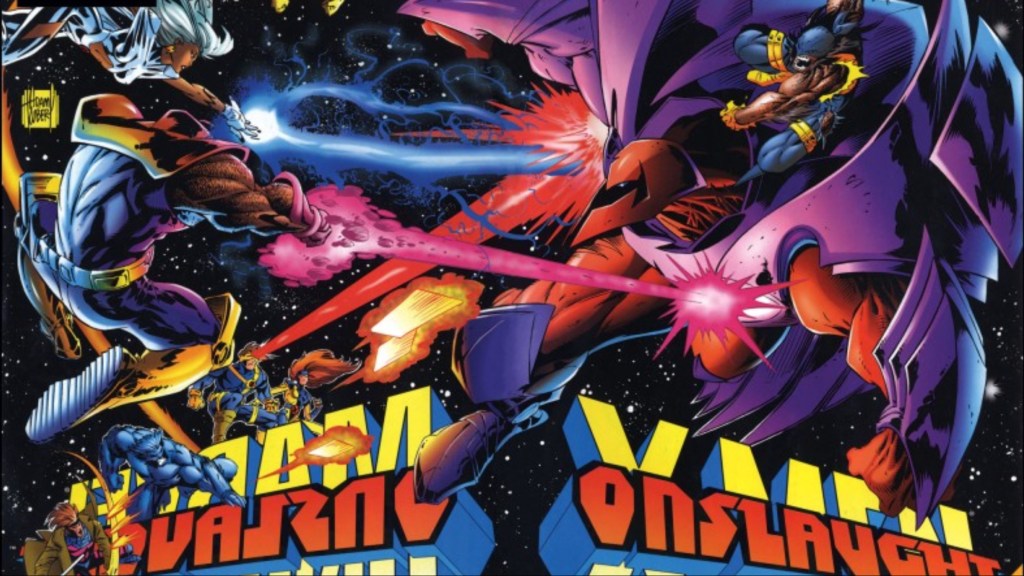 Image Courtesy of Marvel Comics
As some one who had been mostly reading X-titles back then, I’ve always had a certain fondness for “Onslaught”. It paid off the “X-Traitor” storyline introduced in Uncanny X-Men #282, revealing that the one who betrayed the team was Xavier all along. It tied into “Fatal Attraction” (although you’d never know that unless you read a particular issue of Wolverine during the story), and ended with a big bang that changed the landscape of the Marvel Universe and set up some very good (and very bad) comics that would beget more great comics down the line.
“Onslaught” is a certain kind of X-Men story, one that had been building up for about a year of books over on the X-Men side of the Marvel Universe. If you weren’t reading Uncanny X-Men in 1995, you wouldn’t really understand anything in Onslaught: X-Men #1, the story that kicked the crossover off, and the rest of the story would be just a bunch of sound and fury that ended with a big dumb fight that kicked off the dreaded Heroes Reborn reboot. However, like most of the greatest Marvel event stories over the years, if you go back and give it a chance, “Onslaught” will surprise you.
If you were to read the story now, all you need to know is that Xavier has been acting funny and a mysterious bad guy has been menacing the team. From there, you get the stellar Onslaught: X-Men #1 kick-off comic, which is the X-Men versus Onslaught with awesome art from Adam Kubert; this was his first Marvel event comic and he knocked it out of the park. From there, the story sees Onsalught take control of a fleet Sentinels with the help of Dark Beast and attack New York City. There are two different chapters of the story: the Phases and the Impacts. Phases are the most important parts of the story and the Impacts are ancillary (Wolverine #104 is an Impact, but you need to read it).
Unsurprisingly, the best chapters of the story come in X-Men (Vol. 2) #53-56 and Uncanny X-Men #336-336. Fantastic Four #415-416 are better than they have right to be, Cable #33-36, The Incredible Hulk #444-445, X-Factor #125-125, The Amazing Spider-Man #415, and Wolverine (Vol. 2) #104-105 are all great as well. Read those issues, along with Onslaught: X-Men #1 and Onslaught: Marvel Universe #1, and you’ll get a pretty exciting well-paced story. Greats like Mark Waid, Peter David, Larry Hama, Scott Lobdell, Dama Kubert, Andy Kubert, Carlos Pacheco, Ariel Olivetti, Ian Churchhill, Joe Madureira, Warren Ellis, and more give readers some sensational issues, building the event’s central conflict nicely. By the time you get to the big fight in Onslaught: Marvel Universe #1, you’ll have gotten a coherent, exciting story from a time in Marvel history that gets a lot of hate.
“Onslaught” Has Always Been Unfairly Maligned
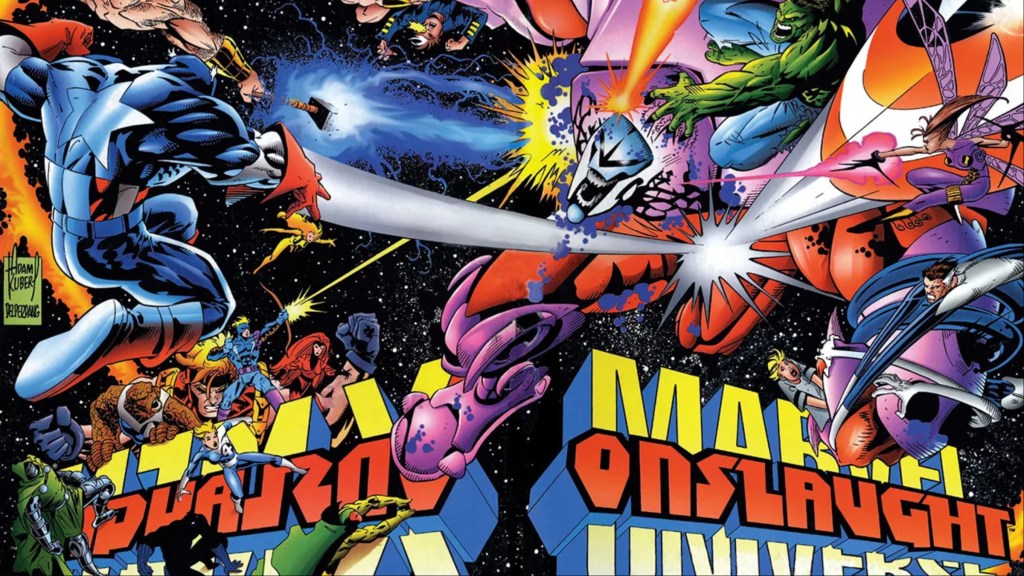 Image COurtesy of Marvel Comics
I think one of the problems with “Onslaught” as a story is that a lot of people assume it’s some kind of confusing X-Men story. However, it’s not; the X-Men parts of the story are only important if you had been reading X-Men books back in the ’90s. What “Onslaught” really is a story that’s pretty familiar to Marvel fans: an all-powerful villain attacks the heroes, trying to gain more power in order to remake the world in his twisted image. There’s some cool fights, some interesting lore, and a big dumb fight at the end with killer art that sets the Marvel Universe in some interesting directions, with The Incredible Hulk and Thunderbolts putting out best of all time stories.
Heroes Reborn was bad, yes, but it led to the much better Heroes Return, which gave readers some of the best Avengers stories of all time. “Onslaught” isn’t poetry or anything, but it’s a pretty entertaining event story, with some of the best art from the best artists of the ’90s giving readers some awesome fights and moments. For years, you’ve been told that this story is terrible and you can skip it, but honestly, it’s always been a pretty cool story. It’s nowhere near perfect, and it doesn’t reinvent the wheel or anything, but it was fun and it led to a Marvel renaissance that would bear fruit in the years to come, even if it seemingly failed at first. Without “Onslaught”, a lot of great things for Marvel’s heroes never take place and it’s certainly worth your time to read.
What do you think of “Onslaught”? Leave a comment in the comment section below and join the conversation on the ComicBook Forums!