We live in a era of nearly universally grim climate projections, when the rapidly changing weather of our world threatens everything from our ability to maintain a home or get insured, to the future viability of the staple crops that we consider integral to the American diet. But opening up any can of worms even tangentially related to climate change always serves as a reminder of how incredibly complex and interconnected all of these systems are: Move one slider a little bit, and you watch the dominoes begin to fall, rapidly gaining strength until they can topple mountains. In the same way, you can find a seemingly audacious headline–like the fact that the nation of Japan is in the midst of an unprecedented rash of deadly bear attacks on residents–and then trace it back to a tangled web of causes, which range from demographics inherent to the country’s population, to environmental and forest management, to yes … climate change, of course. How could it not come back, in some part, to climate change? What, you thought all the bears just went nuts one day? As much as I love B-movies, I’m afraid we don’t have the luxury of living in the premise for one.
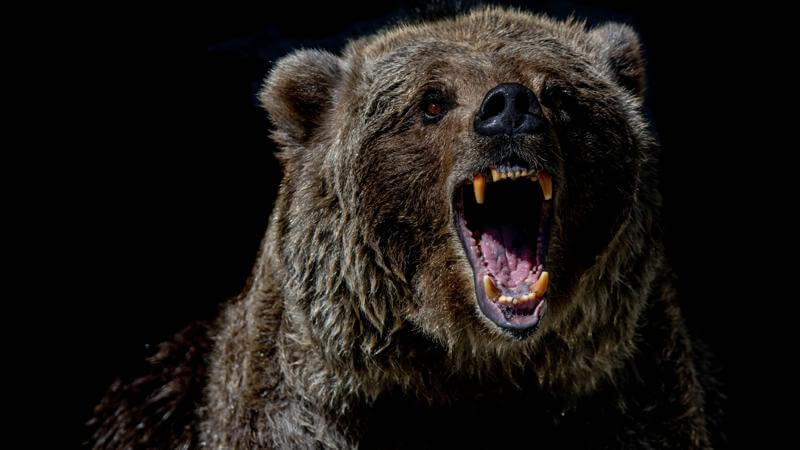
That said: Damn, those Japanese bears, though. In the year 2025 alone–and this data isn’t even final–there were at least 235 bear attacks on people in Japan, which resulted in at least 13 fatalities. This is, suffice to say, a shockingly large number of bears attacking and especially killing human beings compared to the historical baseline for Japan–and it’s a lot even in comparison to the number of attacks in a far bigger, more populous and more bear-rich nation like the United States. Here in the U.S.A., we typically average only a few dozen bear attacks per year, and that’s in a nation with almost three times the overall population. But on some level, it’s because Japan has fit a third of our total population into a space smaller than just the state of California that likely puts them on a collision course with their native bears … and the fact that the Japanese population has been in steady decline for years is actually another major factor in why bear attacks have now become a major problem.
To explain how this ursine calamity has happened, let’s break down how several seemingly unrelated topics have contributed to a bear attack epidemic.
An Aging, Decaying Rural Japan
The well-documented overall population decline of Japan has been going on at this point for more than 16 years, to the point that the country’s total population is now shrinking by almost 1 million per year. This decline is driven by social and economic forces that have driven down the birth rate, with more young Japanese citizens choosing to forgo marriage or children for reasons related to work or money, and an increasingly large segment that is disinterested in the very idea of romance or sex. At the same time, even the country’s increased openness to immigration hasn’t nearly offset the overall population decline, due to the high proportion of the population that is now elderly. Unless something drastic changes in terms of immigration or fertility in Japan, this decline will continue for several more decades at least before it evens out.
When people discuss the declining population of Japan, the conversation tends to steer toward critical industries and labor shortages, but it ultimately even has profound effects on things so seemingly spurious as “deadly bear attacks.” This is tied to the human pullback from areas that once effectively served as a buffer zone between humans and bears, because there are simply fewer humans to populate those rural areas. Fewer people living in areas referred to as the satoyama (where populations skew much older), the border zone between mountains and flatlands traditionally used for timber harvesting, rice farming, etc., means that more of these rural communities/farmlands have been allowed to become fallow or wild as they are abandoned by human residents. This in turn leads to unmanaged forest areas becoming overgrown, which can cause failures in crops such as beechnuts, a staple part of the omnivorous diet of the widespread Japanese black bear. Moreoever, with the humans pulling back from the rural areas, and the forests providing less food, a larger-than-expected population of those bears then finds itself foraging and expanding into formerly human-occupied areas. When a mother bear has her cubs and hibernates with them in these areas, the young bears learn to forage in the vicinity of human settlements, ultimately creating a new generation of bears that associates human dwellings with food. The country has seen the same issue with other wild animals running amok as well, such as deer and wild boar.
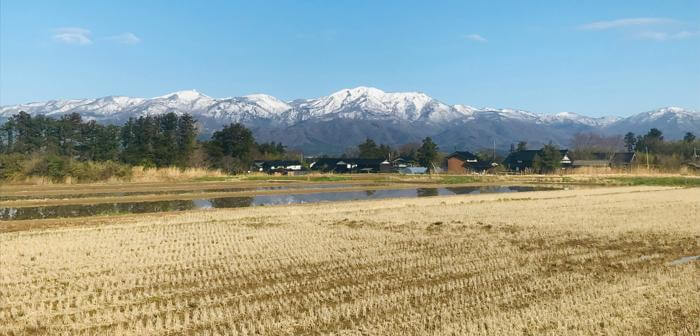
Rural Japan has increasingly been abandoned by an elderly population, allowing the bears to move closer to cities.
Within a generation, this creates “urban bears” that are less wary of going places that few bears ever would have before. As a result, human encounters with bears and sightings of bears have exploded in recent years–there were reportedly 36,814 bear sightings by people between April and October of 2025 alone, which is almost twice the previous year. Even Tokyo itself isn’t immune; it had 142 bear sightings during this period. And with proximity, occasional attacks become a statistical certainty, particularly when you’re talking about a population of urban Japanese residents who has never encountered a bear before and has less of an idea of how to act/react to the presence of one. People are increasingly encountering these bears while just out in the midst of daily errands, with results that can turn deadly for both parties.
Socially, this has resulted in some degree of bear panic in Japan in recent years, but even attempts to cull the population throughout the 2020s have been less effective than anticipated, leading researchers to believe that they had significantly underestimated just how many bears there were in Japan in the first place. Residents have responded by flocking to anti-bear products and safety devices, from wearing bells to deter an encounter, to the government employing noisemaking drones that mimic dogs in an effort to dissuade the bears and move them away. There have been tangible economic effects here: The stock of bear spray producer Tiemco has risen 33% since the summer, and rifle manufacturer Miroku has surged 16%.
Why not just hunt more bears, one might ask? Well, human population issues crop up here as well: Professional bear hunting in Japan is a ceremonial, symbolic activity that is carried out almost exclusively by older men who are now aging out of the pastime without being replaced. These matagi, as they are known, are in steep decline.
Climate Change, Beetles and Blight
And now we get to the inevitable contribution of climate change. In addition to the loss of certain components of their diet due to a lack of human forest management and pullback from rural spaces, Japan’s bears have also seen another critical component of their diet decimated by the loss of several species of acorn-producing oak trees. These primary Japanese oak species, konara and mizunara, have both fallen prey in the last few decades to a fungal infection called “Oak wilt,” which is estimated to have killed 70% of the konara and up to 30% of the mizunara oak in Japanese broadleaf forests.
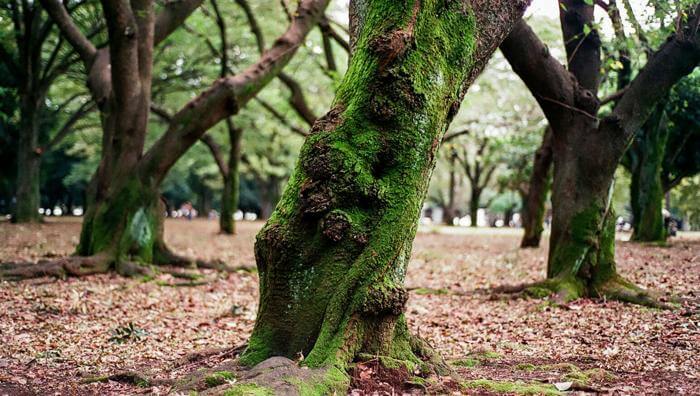
This oak wilt is introduced to the trees by an insect known as the oak ambrosia beetle, which carries within it a species of fungus that interrupts the tree’s ability to carry nutrients. These beetles are native to Japan, but didn’t always have such a large physical range and amount of activity as they do today. Years ago, the beetles would be killed off during cold weather months, but higher year-round temperatures as a result of climate change have allowed the beetles to both increasingly survive/be active during winters, and to migrate to higher altitudes and latitudes than they could previously have survived. This in turn has spread the oak wilt-causing fungus further than ever before, and the lack of human population/people employed in forest management in these areas has blunted human efforts to combat the spread of the insects and fungus. The end result: Oak trees die, there are far fewer edible acorns available for the bears, and the bears respond by moving closer to human settlements in search of human-cultivated replacement food sources. It all ties back in to our changing climate, which puts stress on food chains in ways we can’t even imagine.
The chaos this year in Japan, highlighted by incidents of bears breaking into supermarkets and hotels in search of food, or attacking people on city streets, in the vicinity of resorts or as they forage for mushrooms, has now inspired an intense mobilization of resources. In November, members of the country’s military were deployed to the northern Akita Prefecture specifically to “protect the lives and livelihoods” of residents against the bears. At the same time, even the United States embassy in Japan issued a rare “wildlife alert” to U.S. residents and tourists visiting the country, saying that “Bear sightings and attacks have increased in parts of Japan, especially in municipalities close to or adjacent to populated zones,” with a warning that Americans need to “be aware of your surroundings.”
Is the U.S. the Next Bear Attack Hotspot?
Not to be lost in our examination of the remarkable rash of Japanese bear attacks is our own potential for a similar domestic bear problem in the United States. Although we haven’t had nearly so many attacks or fatalities in recent years as Japan is now experiencing, an examination of historical bear attack data in the U.S. does show something interesting: Our own number of fatalities is noticeably increasing as well.
Granted, these are not huge numbers. There have only been roughly 180 recorded, fatal bear attacks, in fact, in all of North America since the year 1784, although it should obviously be noted that surely there are more frontier incidents in there that were never reported, especially prior to the 20th century. We should also note, though, that about 15% of those fatalities were in incidents with captive bears, many of them boiling down to trainers being attacked or especially idiots jumping into bear enclosures out of stupidity, mental illness or suicidal ideation.
As you break down the attacks by decade, you can see that the number of fatal bear attacks in the U.S.A. in particular was very low by the time we reached the middle of the 20th century. In the entire decade of the 1960s, there were only four reported deaths in the U.S. that involved wild bears. In the 1970s, that number was six deaths due to wild bears. In the 1980s, it was eight. In the 1990s, it was 11. And so on.
That pace, however, has continued rising to a point where the numbers begin to seem significant. By the 2010s, the number of attacks had increased, and there were 19 fatalities in the United States from wild bear incidents … and an increasing number of those deaths have come at the claws of the smaller but more widespread American black bear, which killed very few people in earlier decades. You can’t help but wonder: Are the similar factors at play here as are driving what has become a full-on crisis in Japan? Is climate change/human action leading to a loss of food sources that is driving the American black bear into closer contact with people in the U.S.? And will the pace keep accelerating?
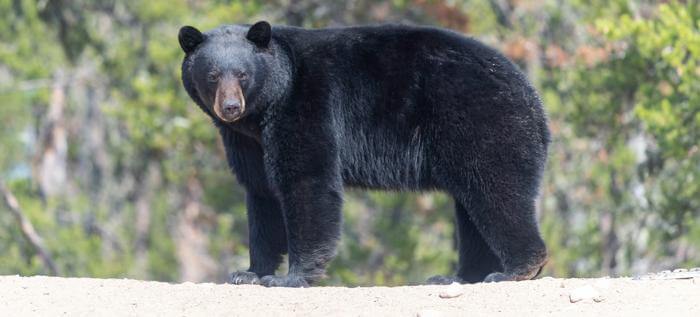
If the 2020s so far are any indication, then the answer might be yes. We’re only halfway through the decade, and so far there have already been 17 fatal bear attacks on people within the United States in those five years, a pace that is almost double the prior decade. Perhaps notably, that includes even more black bear attacks and deaths, including in places that had never recorded a bear death before. Shocking as it might be considering the state’s reputation for wildlife anarchy, Florida recorded its first death via bear attack in the state’s history in 2025. A grim foreshadowing, perhaps, of the world we could all be living in sooner rather than later as our climate continues to morph around us?
This climbing rate of bear attacks in the United States hasn’t exactly gotten a ton of attention, but it feels like a topic that is poised on the edge of exploding into the public consciousness. Will we realize only too late that the issue has become critical, like the ursine crisis in Japan? How many Simpsons-style Bear Patrol vans and stealth bombers will be necessary to cull the population, given that we’ll refuse to respond by taking climate change more seriously? I’ll leave you with the obligatory .gif that I know someone is almost certainly prepping for the comments section, and a little friendly advice: Next time you’re out for a hike, you should probably keep an eye out.