
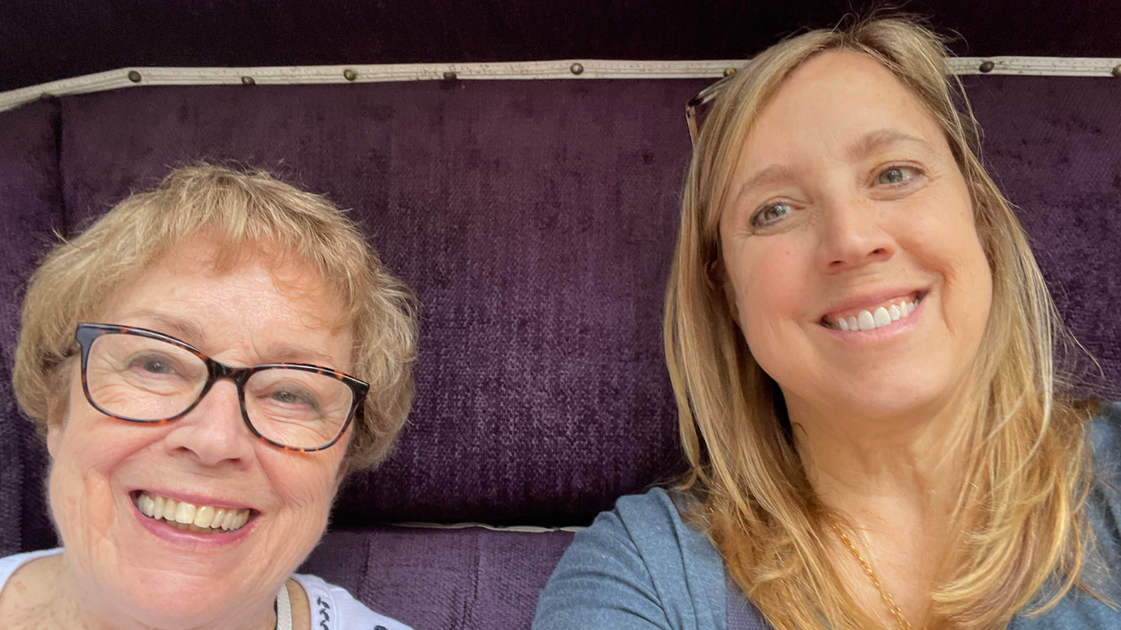
Lately, I find myself weeping in my bed when the night sky is at its blackest and my husband, Geoff, is dead asleep on his side, his silhouette a distant mountain range. I press my face into my damp pillow to mute the occasional, plaintive chirp.
I’ve never been much of a crier, so these late-night keening sessions make no sense. I’m a 59-year-old, happily married woman, and my children are healthy and grown, yet when the lights go out and the world lies down, a single phrase repeats itself in my mind: I want my mom.
If you believe in deeply personal journalism — the kind that connects us in our hardest, most honest moments — please consider becoming a HuffPost member today.
My mother isn’t missing or gone. She lives a short 20-minute drive away in an assisted living facility. When I visit, she looks like herself, shorter than me, hair dyed brown and styled in pert curls, with a smile people say looks like mine. When she speaks, her word choices, her intonations and the way she moves her hands are all her, but if you sit with her for more than a few minutes, you learn she’s less like herself and more like a carnival hologram — repeating a limited, looping set of thoughts and comments:
“I have nine windows in my apartment.”
“My cat is the best roommate I’ve ever had.”
“Did I tell you your husband reminds me of my dad?”
For decades, my mother had been single and independent, living on her own, volunteering and singing in a local chorale. At 78, she was in excellent health and had great energy, so I was taken by surprise when she announced she’d be moving into a retirement community near my home.
“An old folks’ home?” I said. “But you’re in great shape.”
“It’s not a ‘home,’ it’s a retirement village. Just like apartment living, but I don’t have to cook anymore.”
“No loss for the world there,” I snorted, and she elbowed me.
Together, we visited the facility, more like a resort with scheduled activities and concerts than the 1970s nursing home my paternal grandmother had lived and died in. But still. Weaving through walkers and motorized scooters to get to the facility’s restaurant, I said, “These people, they’re nice, but they seem… elderly.”
She squared off with me. At 5’1”, she projects an air of sweet amiability, but she’s actually stubborn as an old root.
“My mother was sick my entire childhood,” she said. It was true. Her poor mother suffered for nine years, Bible in hand and disapproval on her face, until she finally died, releasing my 17-year-old mother. “I’m not doing that to you.”
“It’s not remotely the same! I’m older, and you’re not sick, or nasty.” I looked at her sideways. “At least most of the time.”
On our way out, we passed a locked industrial door, behind which was the “Assisted Living Wing” and “Memory Ward.” Pastel-colored cutouts of flowers and butterflies, the sort you’d see taped to a nursery school wall, decorated the door.
“What’s in there?” I asked, and made scary ghost sounds.
“You, if you keep it up.”
It never occurred to me there might be something she wasn’t telling me.
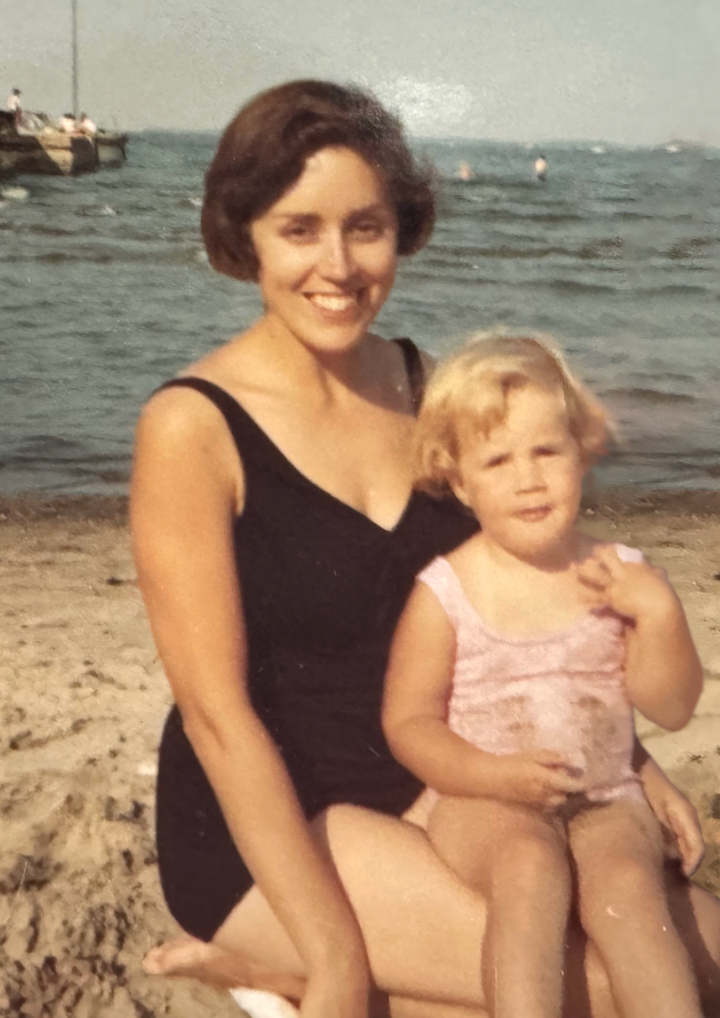 The author, age 2, with her mother
Courtesy of Kathryn Smith
On March 12, 2020, the day after Tom Hanks and Rita Wilson announced they had COVID-19, my mother’s Toyota Camry pulled into my driveway, and out she stepped with two suitcases, the food from her refrigerator, her recycling and her cat, named Jello, howling and spitting in its carrier.
“Just until we flatten the curve,” she said, reluctant to leave her apartment. “And not a minute more.” She lived with me for a year.
My mother and I are different people. She’s fussy. I’m casual — sloppy, even. She’s soft-spoken. I’m loud. She’s ladylike. I intentionally storm through a room. And while I know I’m not the refined young lady she hoped for as a daughter, she’s been my champion.
When I was young, I hated wearing dresses, so she sewed me pants. And when a male teacher told her, “Your daughter must wear dresses to school — pants are inappropriate,” she fired back, “You’re either going to let her wear pants, or you’re going to see her underwear, because she’s always upside-down on the monkey bars!” I got to wear pants.
At the beginning, we managed to find joy and beauty in our togetherness during the lockdown. We visited the local arboretum, haunted our old town, even had a picnic on the porch of our old house.
“Nobody lives here! Who’s going to care?”
We peeked in the windows and tried to see if any doors were unlocked. She stood watch for me while I crawled under the porch to see if old treasures I had hidden were still there.
“Nothing but spiders and dirt.”
I visited her room daily with chocolate chip cookies. “Wellness check,” I’d say, and she’d invite me into her too-warm space. I’d nudge Jello, ever a grumpy thing, off the armchair and sit down for a quick chat over the blaring television. It was during one of those visits that I first noticed something was off.
“Mom, you shouldn’t watch the news 24 hours a day. It’s grim.”
“I leave it on for the company — the voices.”
“You live with me. That’s enough voices for anyone. If you have to watch TV, can you at least watch Netflix?” I handed her the remote.
“That thing’s too complicated. I like the news,” she said and took a dainty bite of her cookie.
“For goodness’ sake! You just push this button here that says Netflix.” She waved me away.
The next day, she poured laundry detergent into our dryer.
“I don’t know what I was thinking,” she said. “I’ll pay for it.”
“It’s no big deal,” I said.
I’d once put the cereal box in the fridge and the milk in the cupboard. Our family can be spacey like that, so I wrote it off.
But as her memory glitched more frequently, I found myself becoming impatient. It was easier to be annoyed with her, easier to look away from what might be happening to her, from what might one day happen to me. It was easier to imagine she was being lazy-minded or stubborn.
“You just met with your surgeon two weeks ago, don’t you remember? Your pain is coming from your spine, not your hip, so you have to do physical therapy,” I told her one afternoon.
“DO YOUR PHYSICAL THERAPY! And can you wear your hearing aids? It’s very annoying to repeat myself all the time.”
“I don’t like physical therapy,” she said. “And anyway, you’re the only one I can’t hear.”
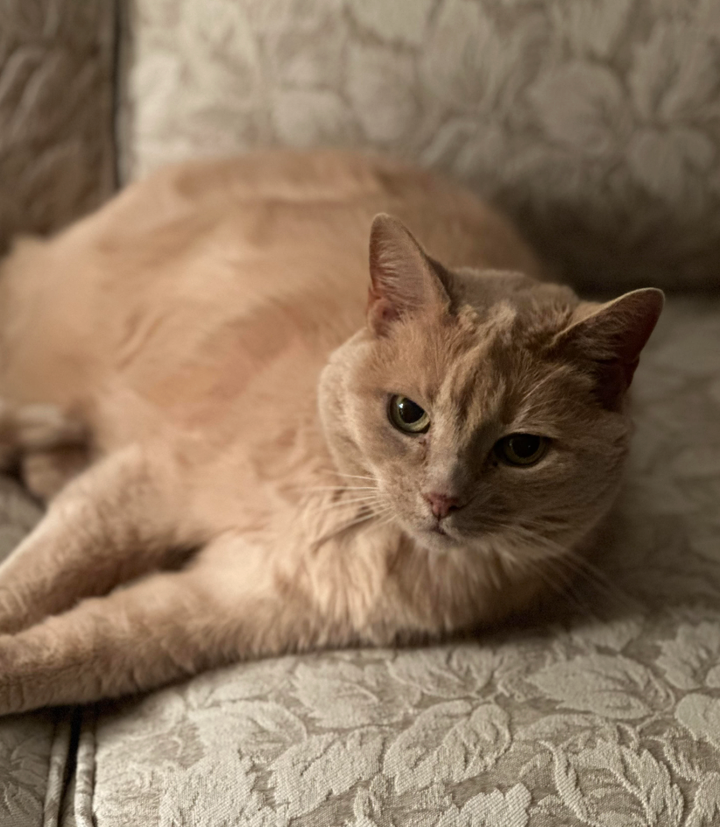 “This is Jello, and he’s daring me to even think about coming any closer,” the author writes.
Courtesy of Kathryn Smith
Our arguments regressed. We were silly, a little petty, almost joking, but not quite. I found myself using the same words she’d spoken to me when I was young, pantomiming a role reversal we didn’t realize was well underway.
“Do as you’re told!” I’d demand, only half joking when she ate mostly chocolate.
“You’re not the boss of me!” she’d say, and cross her arms.
And then she drove into oncoming traffic with my daughter in the car. It was a close call — the other car swerved. My daughter told me she’d never let Grandma drive her again.
I wish I could say I took her keys that day, but I didn’t. It’s difficult — removing your parents’ means of transportation. They’re not the Uber generation. You take their keys, you take their independence.
A few weeks later, I called my mother while waiting in the social distancing line that snaked around Trader Joe’s.
“Thank goodness you called! My phone isn’t working!” she said, breathless.
“You’re on your phone now, Mom,” I said.
“I couldn’t call anyone. I couldn’t find anyone’s numbers. I was all alone!”
It wasn’t upsetting that she couldn’t work her phone for a moment — many older people struggle with technology. It was upsetting that she was panicked, desperate and at a loss for what to do, when really, all she had to do was step out of her bedroom and ask any of her grandchildren for assistance. It was upsetting because she felt helpless and afraid.
“What’s going on, Mom?” I asked when I got home. It never occurred to me she could be any other than the way I had always known her: capable, pragmatic and independent. I didn’t know that these days — the early days — were the good days when she remembered where she was, who she was, who I was.
The day I took her keys was the day she mistook my daughter for me.
“It was easier to be annoyed with her, easier to look away from what might be happening to her, from what might one day happen to me.”
As intelligent, sentient beings, we sure can be shockingly unaware of our own emotions and why we’re feeling them. Recently, I was hiking in a forest near my home. I came upon an elderly woman in hiking boots sitting on a fallen tree near a brook, leaning on her walking stick. I couldn’t imagine how she had gotten there.
“Are you OK?” I asked.
She smiled. “I’m just taking a breather. I live a mile up there.”
She pointed her stick up the steep, wooded hill. She’d come from Sweden decades earlier to marry an American who’d recently moved them into a retirement home. Like my mother, she was born on the cusp of World War II. Unlike my mother, she spoke about politics, current events, a book she was reading. Then she got up and stretched. I didn’t want her to go.
“Can I visit you, maybe help with your errands?” I asked. She looked at me, puzzled, and I felt instant embarrassment. This was not a woman who needed help with her errands. She had just walked a mile into the woods. Why would she need me to visit her?
One of my husband’s pandemic projects was to hang birdhouses all around our yard. A storm knocked one down, and four bluish babies with giant open mouths tumbled out onto the grass. Blind, chirping and barely able to move, they reminded me of the P.D. Eastman book “Are You My Mother?” about a baby bird who searches for his mother. He asks everything he comes across: a dog, a hen, a steam shovel, “Are you my mother?”
As I slid a spoon under the wobbly birds’ bodies and poured them back into their home, I was struck by a thought: I’m the baby bird in P.D. Eastman’s book. I’m looking for my mother, who is slipping away from me. And the lovely Swedish woman in the woods? She is not my mother.
 The author with her mother. “We were off on some pandemic adventure,” she writes.
Courtesy of Kathryn Smith
Six months after my mom packed up Jello and moved back to her apartment, I got a call from the onsite nurse explaining she had accidentally consumed five weeks’ medication in two weeks. It was time for her to move into assisted living.
I remembered the door with the flowers and butterflies.
I believe she saw this coming. I believe she knew her mind was slipping, so she moved herself into a place where, at some point, she could get professional care, and where, like she said, she wouldn’t become a “burden.”
One of the things she says in her moments of clarity is, “My parents died young. I didn’t have anyone to model getting old for me.”
Thanks to her, I do. And thanks to her, as the child of a person who is getting old, I’m learning to be more patient, more understanding.
I call her daily. I visit her often. And every now and then, the mother I know returns for a cameo, then disappears just as quickly.
In her darker moments, she tells me, “I’ve had a good life, but if I could push a button and end it now, I would.” I’d like to tell her to hang on — that things will get better — but we both know that’s not true. So I just remind her she is beloved. And we list all the people who’ve loved her in her life, including the boyfriend she dumped in college.
I’m learning to love her differently, perhaps more deeply and from a place of gratitude, not of need and expectation. I’m trying to be the grown-up now — to champion her, the way she did me. It’s not easy. And in the wee hours of the night, when the loss of my mother as I knew her overtakes me, I allow myself to have a cry in my pillow.
Kathryn Smith has published fiction and creative nonfiction in Philadelphia Stories, poetry in Apiary, and twice won an honorable mention from Glimmer Train. She graduated with a B.S. in economics from the University of Pennsylvania and an MBA from the University of California at Berkeley. She is currently working on a memoir, “Stories of an Uncouth Girl.” You can reach her on Instagram @KathrynSmithStories.
Do you have a compelling personal story you’d like to see published on HuffPost? Find out what we’re looking for here and send us a pitch at pitch@huffpost.com.