
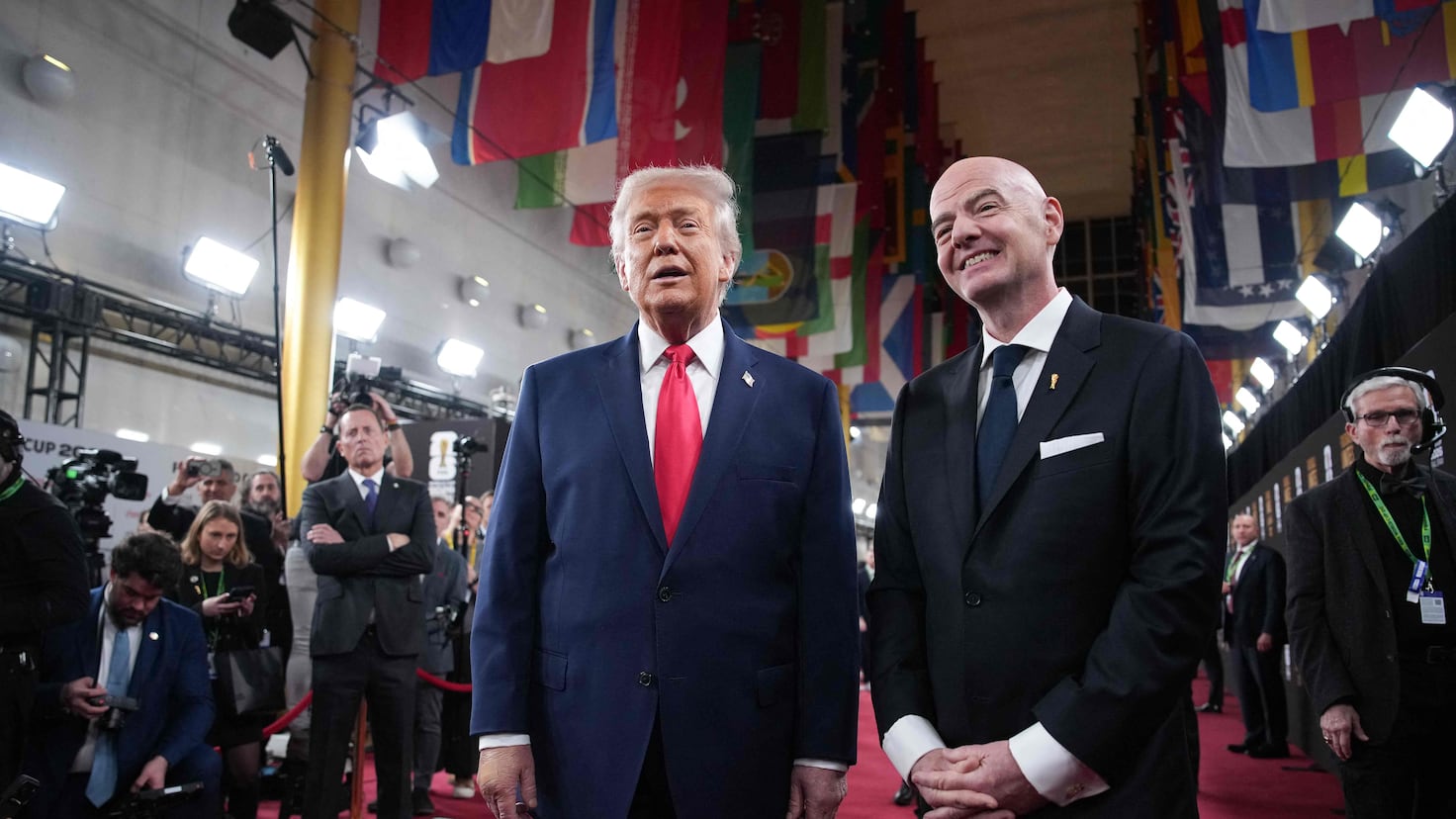
The 2026 World Cup has hardly been short of controversy. The world’s premier soccer tournament is set to unfold against a turbulent geopolitical backdrop, as well as a fraught domestic political climate in the United States, shaped by the sharp turns and controversial decisions of the Trump administration on both fronts.
From the deployment of the National Guard in Democratic-leaning cities to the aggressive immigration crackdown by ICE, not to mention a sweeping travel ban affecting 19 countries and airstrikes against Iran and Venezuela, the context is already charged. The most recent operation, which removed President Maduro from power, triggered a geopolitical shockwave with repercussions far beyond Caracas and Washington.
Calls for the US to lose the 2026 World Cup
Against that backdrop, some have argued that the United States should be stripped of its role as host of the 2026 World Cup. The argument often draws a parallel with FIFA’s decision to bar Russia from international competition following its invasion of Ukraine in February 2022. The comparison, however, does not hold up legally. There is no mechanism within FIFA’s regulations that would allow the organization to suspend the United States in the way it did Russia, let alone revoke its status as a World Cup host.
FIFA’s statutes do not specifically provide for sanctions against a country that invades or bombs another state, or that detains a foreign head of government. Sanctions apply only to member associations, not to the states under whose jurisdiction they operate. The closest relevant provision is Article 3 of FIFA’s statutes, which states that “FIFA is committed to respecting all internationally recognized human rights and shall strive to promote the protection of these rights.” Articles 16 and 19, which address the suspension of member associations due to political interference, apply strictly to sporting bodies, not to national governments. FIFA’s Disciplinary Code likewise contains no provisions dealing with military action against other countries; its scope is limited to discrimination and breaches of competition regulations within a sporting context.
 The exclusion of Russia in 2022
So why was Russia excluded after invading Ukraine? In that case, both FIFA and UEFA adopted an administrative, rather than purely sporting, decision. They argued that the consequences of the war, including international and economic sanctions, travel restrictions, and security risks, could compromise the integrity and neutrality of competitions. Those circumstances were deemed “force majeure,” allowing FIFA to act at its own discretion, beyond the strict letter of its regulations. The decision was later upheld by the Court of Arbitration for Sport following an appeal by the Russian Football Union.
Related stories
Get your game on! Whether you’re into NFL touchdowns, NBA buzzer-beaters, world-class soccer goals, or MLB home runs, our app has it all.
Dive into live coverage, expert insights, breaking news, exclusive videos, and more – plus, stay updated on the latest in current affairs and entertainment. Download now for all-access coverage, right at your fingertips – anytime, anywhere.