
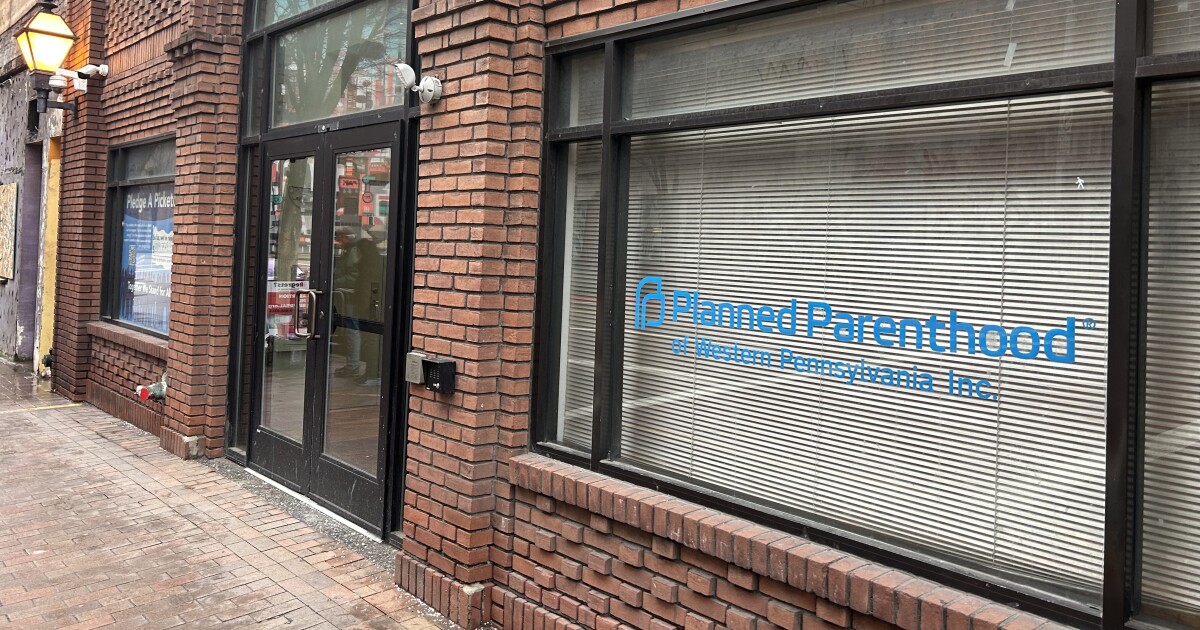
Planned Parenthood of Western Pennsylvania is temporarily closing three of its four family planning clinics, leaving a significant portion of the organization’s 13,000 patients without medical care in the interim. Planned Parenthood said the closure is the result of a shortage of nurses.
Planned Parenthood has confirmed that its Downtown Pittsburgh location will close Jan. 23 and its Greensburg location will close Saturday. The Bridgeville clinic closed its doors in December. It’s unclear how long the clinics will remain closed.
Nearly half a dozen registered nurses and certified nurse practitioners left the organization for other jobs over the last several months, according to Michael J. Gibson, communications director for Planned Parenthood of Western Pennsylvania (PPWP). Despite ongoing recruitment efforts, PPWP has been unable to fill those positions, he said.
“Demand for registered nurses and nursing practitioners is at an all-time high at a time when fewer and fewer are available or looking to move jobs,” Gibson said.
He acknowledged that the number of vacant positions may sound insignificant, but stressed that since PPWP offices are smaller than the region’s major health providers, each vacancy is felt more significantly by the remaining staff.
There is not yet a timeline for when PPWP will reopen the three locations, Gibson said. Pittsburgh’s abortion services will remain available. But the organization’s Johnstown office is the only location that will be fully operational.
Planned Parenthood will continue to offer telehealth services during the closures for prescriptions and referrals. But patients seeking exams, STI testing and other care will have to find other providers.
Alliyson Feldmann, chair of the Upper St. Clair Democratic Committee and a reproductive health advocate, was a patient at PPWP’s Bridgeville office. She said the clinic’s closure is a major loss for her community, even if it is temporary.
“I was devastated,” she said. “It’s hard enough to get into a doctor right now, let alone to find an OB-GYN that you’re comfortable with.”
While most Planned Parenthood patients are low-income, Feldmann said she switched from a UPMC provider to the PPWP Bridgeville office because she wanted to support the organization’s work in her community.
“I switched all my care over to the [clinic] in Bridgeville and sincerely have not had that level of care … in my entire life,” she said. “As a female patient, I was so happy with the kindness of the staff, the thoroughness, the comfort and ease … to ask questions and get an appointment there.”
But now that her doctor is no longer seeing patients, Feldmann is scrambling to find a new provider for her regular mammogram.
A massive spending bill passed by federal lawmakers in July included a provision to defund Planned Parenthood and prohibit Medicaid funding for the organization and those like it for one year. A federal judge in Boston overturned an earlier injunction on the funding cuts last week, allowing them to proceed while a lawsuit is ongoing. Pennsylvania Gov. Josh Shapiro is a named plaintiff in the lawsuit.
Nationwide, Planned Parenthood faces a precarious future as Medicaid funding becomes less reliable. Gibson noted that the organization’s unstable federal support paired with changing laws nationwide surrounding reproductive health care are obstacles to recruiting new nurses.
“It’s much harder to convince a nurse to come to sexual and reproductive care from oncology when oncology isn’t having nearly as many regulatory changes made unilaterally on them,” Gibson said.
But Gibson stressed that PPWP’s closures are not just the result of an unfriendly federal agenda. He said the organization’s staffing shortage is primarily due to Pennsylvania’s longstanding nursing crisis. According to the Hospital and Health system Association of Pennsylvania, the state is projected to have a shortfall of 20,000 nurses this year, the worst in the nation.
The clinics also pay slightly less than the region’s major health care providers UPMC and Allegheny Health Network. Gibson said recruiting nurses and certified nurse practitioners is extremely complex. He added that once PPWP fills its vacancies, new staffers will still need time to learn the organization’s policies and procedures. That makes it difficult to pinpoint a reopening date, Gibson said.
In the meantime, patients like Feldmann will have to find new providers, which can be difficult and come with waiting periods.
“I’m afraid for the women and birthing people in my community that have now lost access to another form of health care,” she said.
Pittsburgh’s downtown Planned Parenthood also serves many patients from eastern Ohio and West Virginia, which means the closures will be felt beyond Western Pennsylvania.
“The ripple effect is so far reaching. It’s going to affect … people across the class divide,” Feldmann said. “The fact that it’s 2026 … and we’re still having to fight to see a gynecologist is absolutely unacceptable.”