
Support CleanTechnica’s work through a Substack subscription or on Stripe.
US energy policy took a sharp turn against renewable energy beginning on January 20, 2025. Almost exactly one year later, signs that the policy has failed have already emerged. In the power generation sector, wind and solar (especially solar) have continued to dominate new capacity additions by a wide margin. However, the raw numbers only tell part of the story. New partnerships and alliances are also beginning to factor into the ability of renewables to withstand temporary shifts in federal energy policy, with the latest example being a new 50-project solar initiative hosted by the largest waste management firm in the US, WM.
So Much Winning For Renewable Energy
The wind and solar industries of the 21st century are worlds away from their earliest days as a fringe resource favored by off-gridders and DIY enthusiasts. At the end of last year, the SUN DAY campaign analyzed two years of federal energy data through September 2025 under the headline, “Solar Dominates for the 25th Consecutive Month Providing 98% of New U.S. Electrical Generating Capacity in September and >75% Year-to-Date.”
“Solar has now been the largest source of new generating capacity added each month for 25 months straight: September 2023 – September 2025. During that period, total utility-scale solar capacity grew from 91.82 gigawatts (GW) to 158.43-GW,” SUN DAY added.
During the same two-year period, wind accounted for 11.7 gigawatts while the next-most available power generation resource, natural gas, only registered 4.6 new gigawatts.
WM Rolls Up Its Landfills-To-Solar Sleeves
As the SUN DAY campaign advises, that data only covers utility-scale projects. Small-scale solar installations are also adding to the renewable energy momentum, and that’s where the brownfields-to-solar phenomenon comes in.
The US Environmental Protection Agency began advocating for solar arrays at landfills and other former industrial sites as early as 2010, with the launch of the RE-Powering America’s Land initiative. Though the EPA mission has changed under Trump, as of November 2025 the landing page for RE-Powering America’s Land was still active. The latest data available shows 624 renewable energy projects installed as of December 2024, with landfills accounting for 53% of the sites.
Solar accounted for 88% of the projects, with wind registering 5%. Biomass, geothermal, hydro, and “other” chipped in for the remainder, to reach a total of more than 4.3 gigawatts.
In partnership with the Reactivate branch of the leading US power producer Invenergy, WM proposes to add another 50 landfill-based solar and storage projects to the total, and possibly more. No word yet on the cumulative capacity additions that will result, but we’ll find out soon enough. If all goes according to plan, the first round of projects will be up and running before the end of 2027, including community solar projects.
The Brownfield-To-Solar Advantage
Massachusetts has emerged as one of the leading brownfields-to-solar hotspots in the US, and a new 7.1-megawatt solar and storage project in the town of Acton illustrates how the intersection with the community solar movement is stimulating interest among corporate stakeholders like WM.
The key is the ability of solar projects to generate new revenue from brownfield properties where opportunities for other forms of development are uneconomical or unavailable. With the addition of a community solar angle, brownfields-to-solar projects can also provide the site owner with an opportunity to improve their public image. Community solar projects are designed to save local ratepayers money on their electricity bills, and they are typically set up to ensure that low-income households are among those benefiting.
Along with the potential savings on electricity bills, the Acton project is also expected to support local grid resilience and inject new tax revenues into the community.
Those benefits are similar to the impact that WM is anticipating from its landfill-to-solar projects. The company lists increased access to energy savings and a boost for local tax revenues among the expected outcomes, alongside new opportunities for workforce training and new business opportunities for local contractors.
Help Is On The Way For US Farmers
WM is also known for deploying part of its portfolio of 250 municipal solid waste landfills to capture landfill gas. In 2022, for example, the company introduced a plan to invest $825 million in expanding its renewable natural gas infrastructure. The company has also previously hosted wind and solar development on landfills with various partners. The new, single-partner initiative with Reactivate represents a significant step-up in scale and scope for the company.
Reactivate is also instrumental in another new partnership aimed at supporting the domestic solar industry, called Farmers Powering Communities. The initiative pairs Reactivate with the longstanding farmland conservation organization American Farmland Trust and the solar developer Edelen Renewables Community Solar, with the aim of deploying farmland for small-scale community solar arrays.
Running counter to the canard that solar panels are responsible for the mass destruction of farms, FPC projects are designed to preserve farmland from other, more permanent forms of development. With a focus on deploying existing infrastructure and marginal lands, the partnership also supports the emerging science of agrivoltaics, in which solar panels, crops, and livestock grazing are managed in integrated systems (see more agrivoltaic background here).
Of course, all is not sweetness and light for the US wind and solar industries. The sudden U-turn in federal energy policy has slowed the momentum of the renewable energy movement, particularly in the case of offshore wind farms. Still, the new federal energy policy does explicitly support other forms of renewable energy including hydropower, biomass, and geothermal, with the emerging marine energy industry also included as a form of hydropower.
In one sign of things to come, earlier this week the US Department of Energy launched a new initiative to expand the nation’s geothermal energy profile. Historically, geothermal power plants have been limited to a few scattered locations in Western states, where optimal combinations of heat, rock, and water exist. New, next-generation technologies are now decoupling geothermal development from circumstances of nature. New underground mapping technologies are also opening up new geothermal opportunities. New Mexico alone, for example, was recently assessed at a geothermal potential of 163 gigawatts.
“The U.S. Department of Energy’s (DOE) Geothermal Technologies Office (GTO) has launched a new, 13-state effort to expand the use of firm, flexible geothermal power on the nation’s grid,” the Energy Department announced on January 7. “Led by the National Association of State Energy Officials (NASEO), the Geothermal Power Accelerator will work with participating states to set statewide geothermal goals, strengthen resource mapping, and advance policies and programs that reduce project costs and address regulatory barriers.”
The participating states are Arizona, California, Colorado, Hawai’i, Idaho, Louisiana, Montana, Nevada, New Mexico, Oregon, Pennsylvania, Utah, and West Virginia.
So much for bringing back the coal industry…
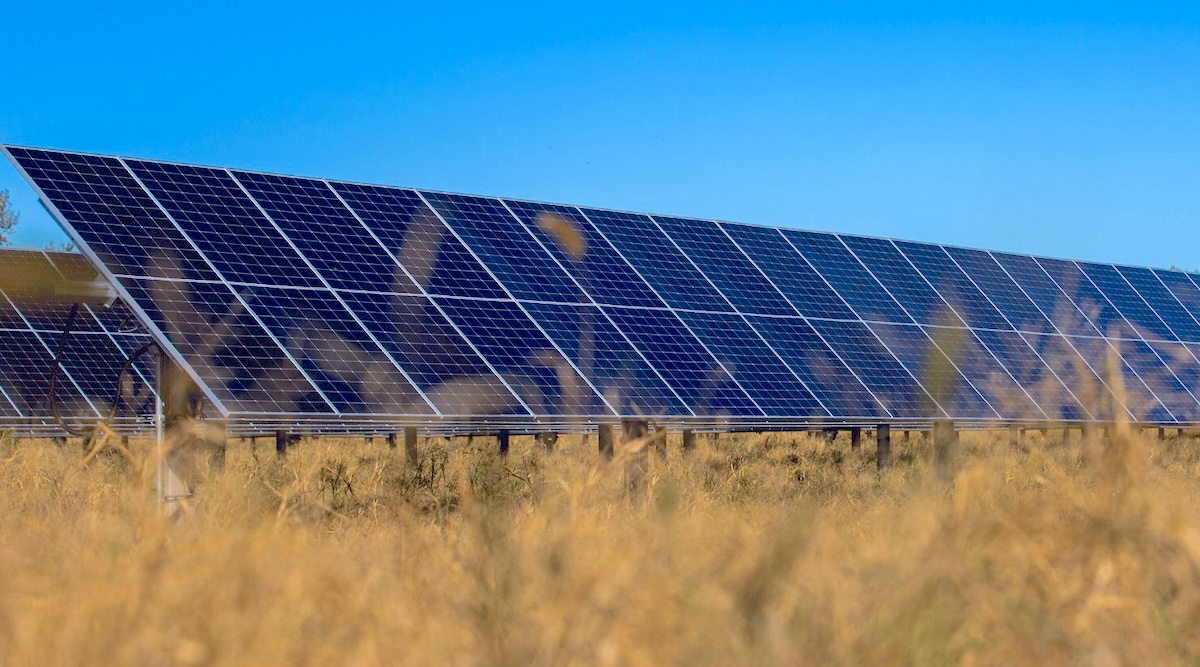
Photo: The renewable energy firm Reactivate will build solar power plants on 50 landfills owned by the nation’s largest waste management firm, WM (cropped, via prnewswire.com).
Sign up for CleanTechnica’s Weekly Substack for Zach and Scott’s in-depth analyses and high level summaries, sign up for our daily newsletter, and follow us on Google News!
Advertisement
Have a tip for CleanTechnica? Want to advertise? Want to suggest a guest for our CleanTech Talk podcast? Contact us here.
Sign up for our daily newsletter for 15 new cleantech stories a day. Or sign up for our weekly one on top stories of the week if daily is too frequent.
CleanTechnica uses affiliate links. See our policy here.