
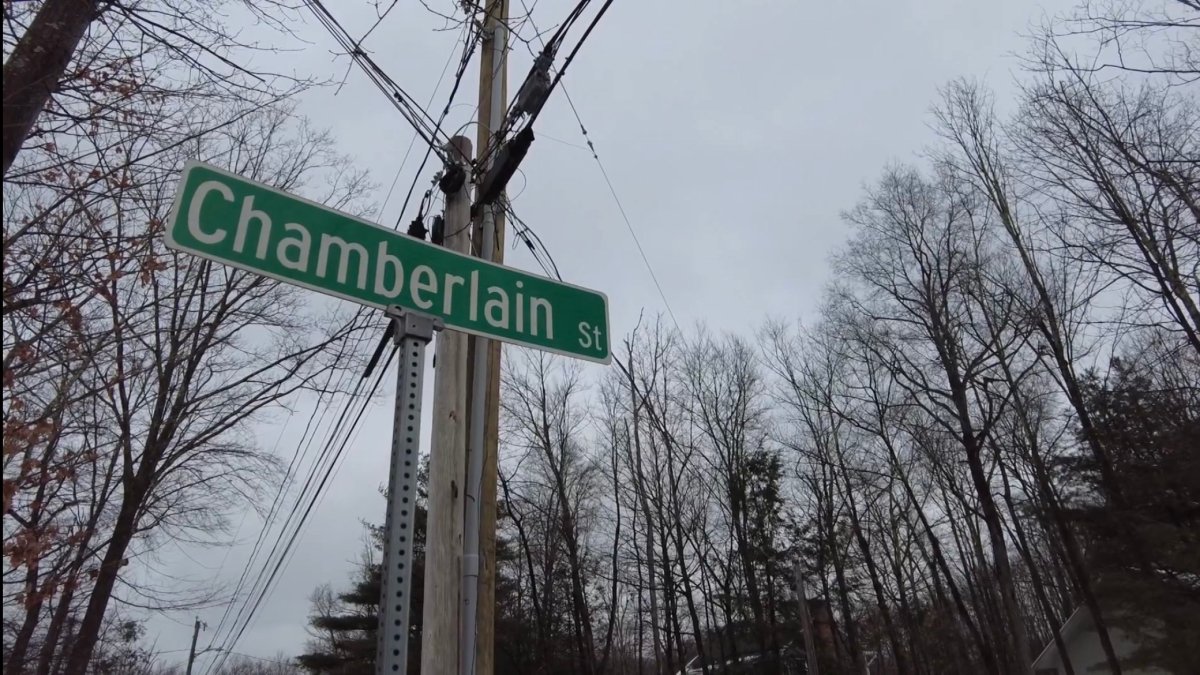
A bear looking to make a den under a home in Torrington prompted calls to CT DEEP over the weekend. It happened along Chamberlain Street in the town.
Neighbors in the area said this could be a resident bear that frequents the area.
DEEP considers this a great time to remind people about bears’ winter habits and why people should be bear-aware year-round.
“They play in the water back there,” explained Kathryn Richard, who lives along Chamberlain Street in Torrington.
She was showing us a typical route where she and her neighbors spot a specific bear. Being bear-aware is common in town.
“I’m not really afraid for them, because that’s a usual thing, we have to look out for them,” said Richard.
The Chamberlain neighborhood regularly sees bears using what Richard referred to as a “highway” or a path from a wooded area through their street and toward Route 202 in town. Richard lives along the path.
“In the summer, it’s almost daily, they have a path from over to behind this house, they go over to this bush here to the telephone pole, to our backyard, and across the street,” Richard said.
But over the weekend, a certain bear attempted to take residency in a neighborhood home… or more specifically, under it.
According to DEEP, they were called to Chamberlin Street for a bear attempting to den under someone’s house.
“I’m glad it’s not mine,” said Richard, laughing.
“It wasn’t trying to get into a house, it was trying to get under a house, for lack of a better way to put it,” explained Jenny Dickson, director of the Wildlife Division with CT DEEP.
She explained that this doesn’t count as a home entry, which is a major concern for the department because of the dangers involved.
It is, however, too close for comfort.
“As our bears have become more habituated, more food conditioned, they are a lot less afraid of us and our neighborhoods, they are looking for more non-traditional denning areas, and that could mean under our deck,” she said.
She noted that calls to the department have increased regarding what she described as “non-traditional” dens bears are considering, even in the winter.
“Bears are not true hibernators, and I think that’s one of the things that confuses people a lot,” she said.
Our bears here in Connecticut don’t hibernate the way you might think. Dickson explained that bears do sleep for long periods, and their heart rate and body temperature drop during a long slumber, but they don’t just sleep the winter away. They can be active.
“We need to be bear-wise year-round; it isn’t something we can get to December and say, ‘ Oh, it’s December first, we don’t have to worry about bears until March […]” she said.
That means taking bears into consideration through the winter months, and scaring them back into their habitat is key if they come too close.
“Recognize we play a part in trying to keep bears wild and trying to keep bears safe,” Dickson said.