
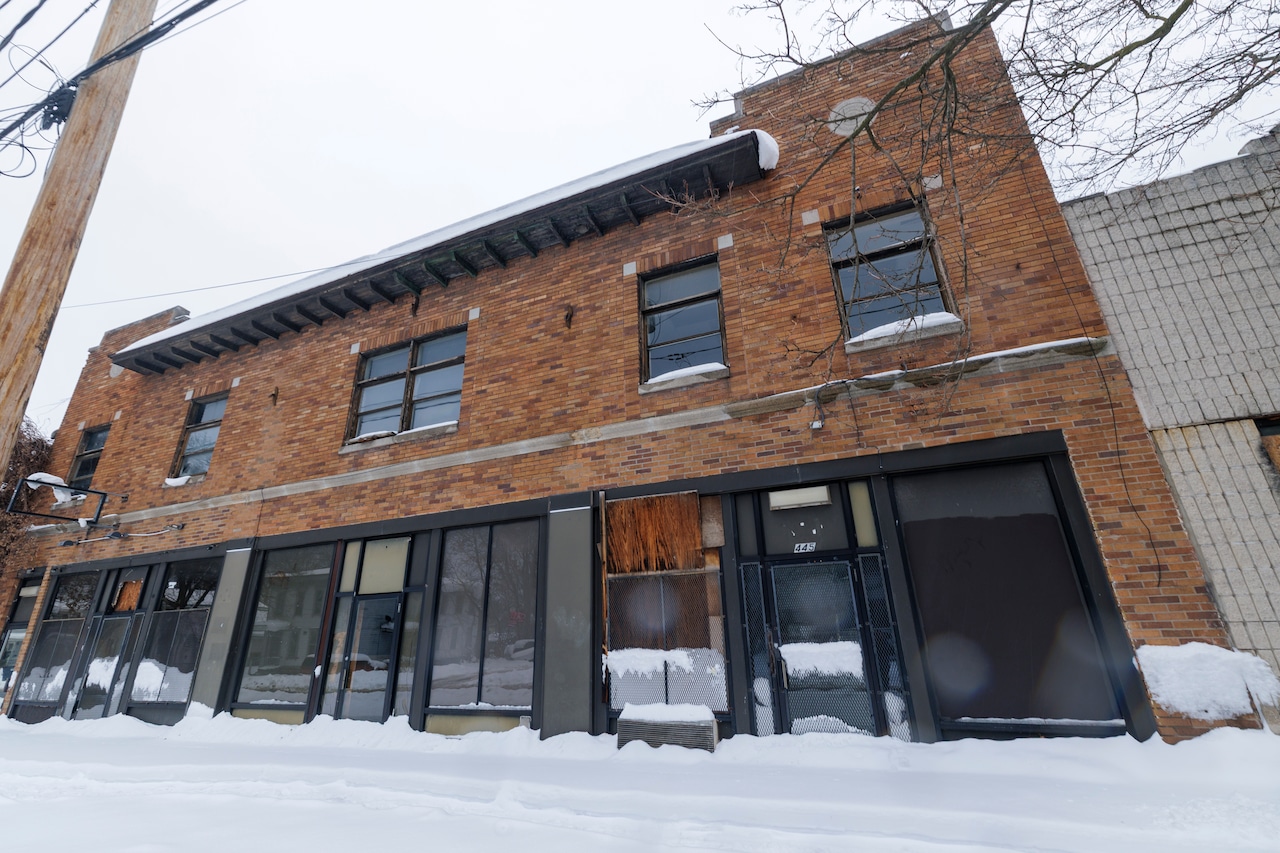
A theater will soon return to Syracuse’s Hawley Green neighborhood for the first time in over 75 years.
Grove Theater, LLC, headed by local director Garrett Heater, has been awarded a New York State economic development grant of $230,000 to undertake renovations at the site of the old Avon Theater at 439-445 Hawley Ave.
For Garrett Heater, president of Syracuse’s Covey Theater Company, the grant is a dream come true.
“It has been a longtime desire to find a permanent home for Covey, having our own space to control,” he told syracuse.com.
For the past 15 years, Covey has held performances at the Oncenter’s BeVard Studios or at the Hosmer Auditorium at the Everson Museum of Art. The Grove, Heater said, will give the grassroots non-profit theater group a permanent home, one where they can control schedules, fees and prices themselves.
“Having our own space has always been the dream,” said Heater, a Baldwinsville native and Syracuse University graduate.
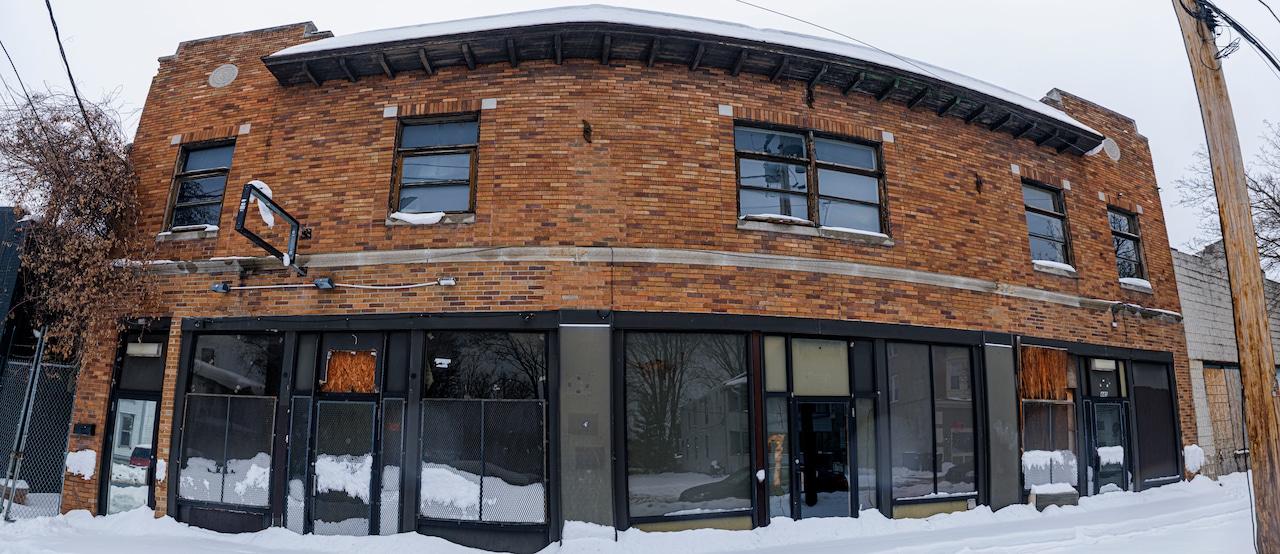 The former Avon Theater building on Hawley Street in Syracuse January 6, 2026. It will be renovated by Garrett Heater and rebranded as The Grove.N. Scott Trimble | strimble@syracuse.com
With a business partner, Heater bought the property in August 2004.
“We have faced a ton of obstacles,” he said.
A $50,000 facade grant from the city of Syracuse and now the New York State grant put them in a position to finally clear them.
“The confidence from the city and the state is a good thing,” Heater said. “This is so exciting for the city. I want it to benefit Syracuse. It has been very good for Covey.”
Heater imagines the theater will be an “economic driver” for Hawley Green alongside ArtRage Gallery, creating a walkable, year-round neighborhood destination for art enthusiasts.
“It will enhance Hawley Green and bring more culture to the neighborhood,” he added.
In addition to the three to four plays Covey performs each year, Heater said The Grove will be an affordable rental venue for local performing arts groups.
“We hope local dance companies, musicians and theater troupes engage The Grove Theater for their performing needs,” he said.
The venue will seat 150 and feature a three-quarter thrust stage with proscenium. This will encourage an immersive feeling for patrons and allow a wide-range of performance styles to occur. The venue also includes dressing rooms, a lobby, concession area and set construction space.
Abandoned and in disrepair, the space will be “transformed into a vibrant community space with affordable live theater space, first-floor commercial space and residential units on the upper floor.”
Heater has already moved more than seven tons of cold wet garbage from the space.
“It is a mess,” he said.
His goal is to have the theater ready for its first performance by the fall of 2027.
The 9,200-square-foot space includes a commercial storefront. Heater imagines something which would complement the theater, a dessert bar or coffee shop, “natural fits” for before and after performance snacking.
The Grove Theater’s name will be an homage to the old nickname for the fashionable area of residences which once stood between James Street and The Erie Canal.
“The name is so lovely,” Heater said, adding that it represents “growth, community and escape.”
The new venture will harken back to the days of the Avon Theater, its original name, which opened nearly a century ago in the summer of 1926.
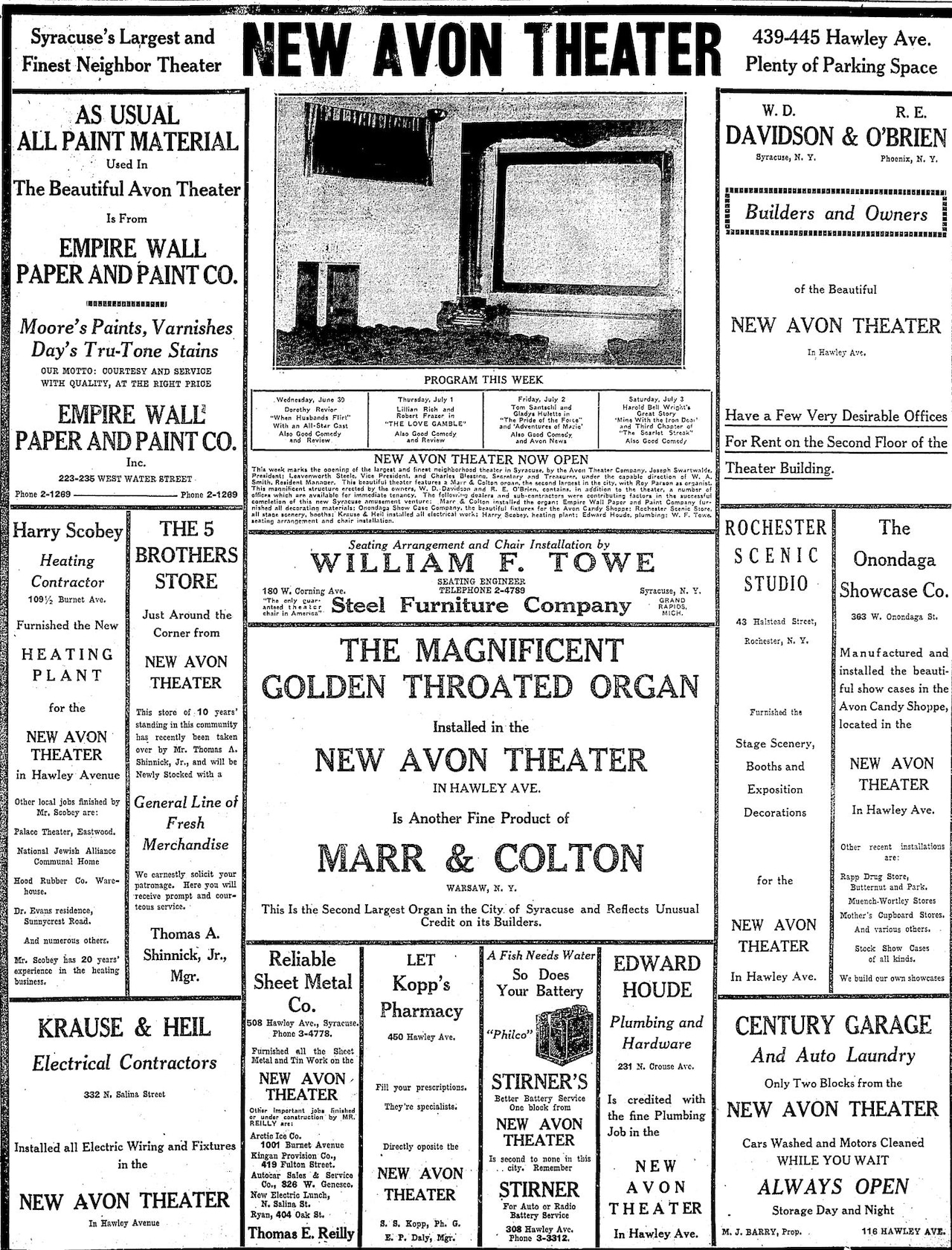 The new Avon Theater in late June 1926 on Syracuse’s Hawley Avenue. This full page ad, which included all the businesses who had an hand in its construction, called it “Syracuse’s Largest and Finest Neighbor Theater.” It ran June 30, 1930.poststandard.newspaperarchive.com
When it opened during the last week of June 1926, the Avon Theater, at 439-445 Hawley Avenue, billed itself as “Syracuse’s largest and finest neighbor theater.”
In a full-page advertisement in the June 30, 1926 Syracuse Herald, the Avon Theater Company promised:
“This beautiful theater features a Marr & Colton organ, the second largest in the city, with Roy Parson as organist. This magnificent structure, erected by the owners W.D. Davidson and R.E. O’Brien, contains, in addition to the theater, a number of offices which are available for immediate tenancy.”
Opening features for the premiere week included Dorothy Revier in “When Husbands Flirt,” Lillian Rich and Robert Frazer in “The Love Gamble” and the films “The Pride of Force” and “The Adventures of Magic.”
The opening was a success, despite a small fire in the projection room. The Avon was one of the largest movie theaters in the area outside of downtown Syracuse.
A year later, the theater was bought by motion picture chain Kallet Theaters Inc., owned by Michael Kallet of Oneida, and set to be renovated in 1928.
“New projecting machines will be installed and screens hung,” the Syracuse Herald reported. “Lighting fixtures will be replaced, and the interior of the theater will be greatly improved.”
Movies were shown there throughout the 1930s.
Disaster struck with extensive fires in 1941 and 1942 that severely damaged the building. The Feb. 28, 1942 fire wrecked the stage, screen and storeroom.
The Avon closed in the late 1940s. The building was renovated into three storefronts.
Businesses including a tile and bathroom outlet and a supply shop operated there. It was vacated entirely in 1986.
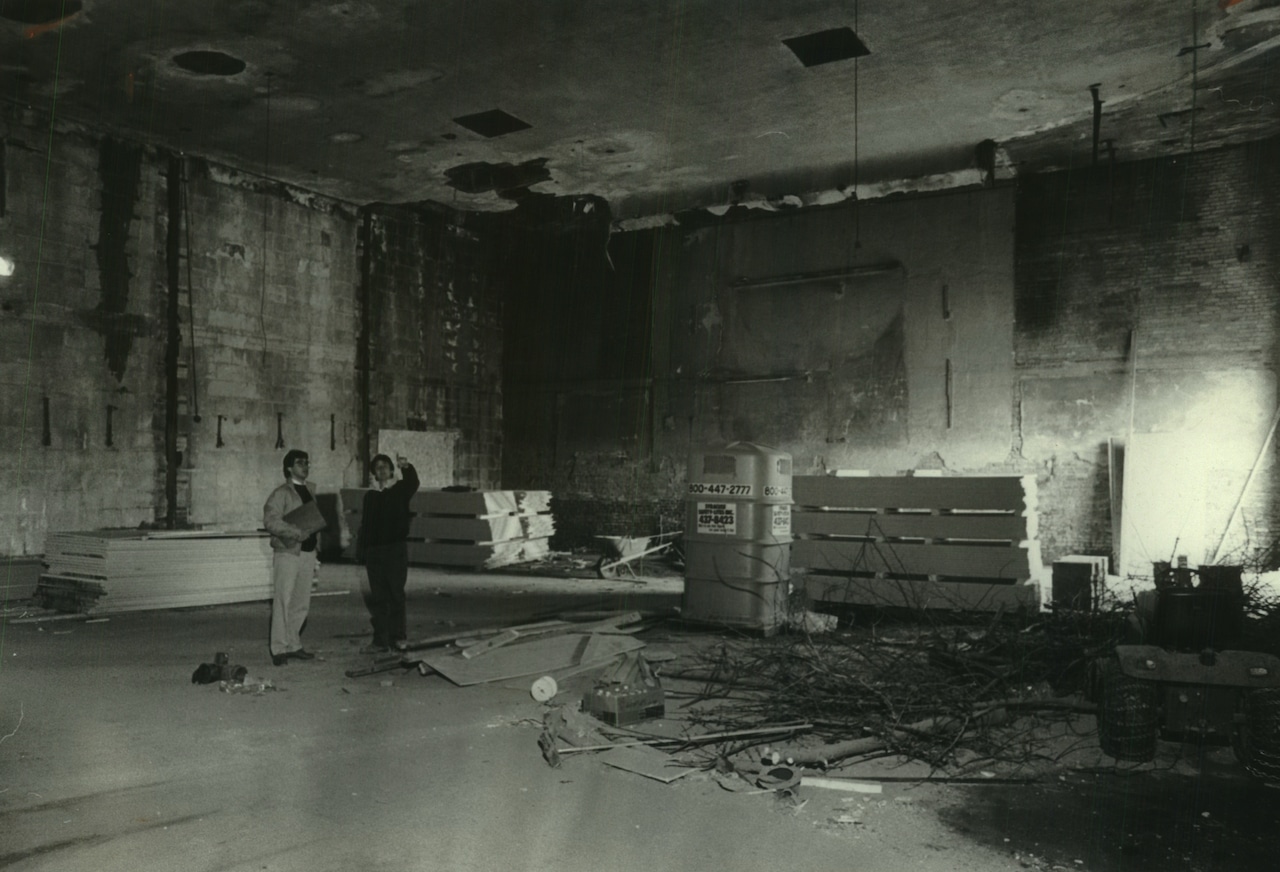 Bob Sekowski and Robert Vinal of the Northeast Hawley Development Association examine inside the Avon Theater on Hawley Avenue in 1987.C.W. McKeen
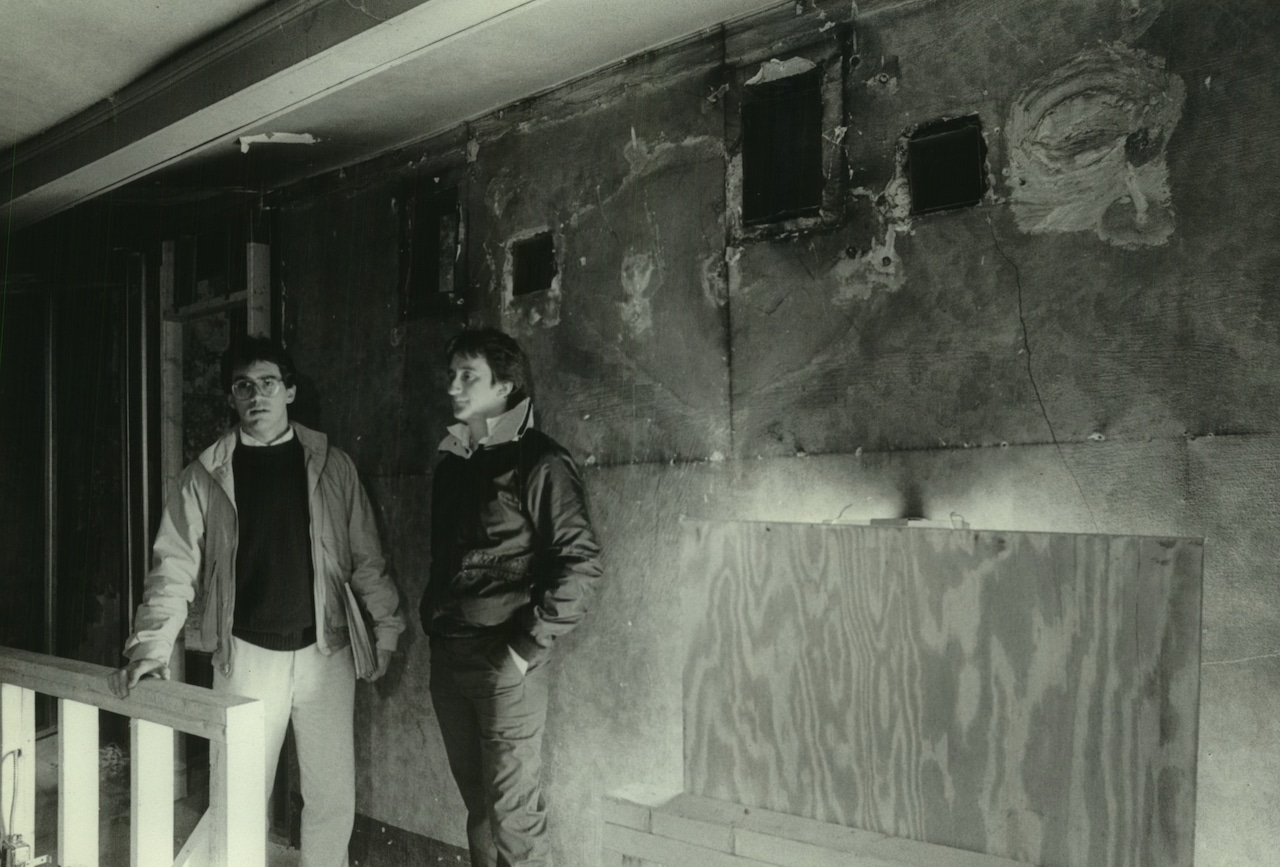 Bob Sekowski, left, and Robert Vinal, of the Northeast Hawley Development Association, stand near old projection booth of the Avon Theater in 1987. The brick building was boarded up and vacant at the time.C.W. McKeen
In 1987, the theater was converted into a retail, office and warehouse space by the Northeast Hawley Development Association, a neighborhood group dedicated to improving the area.
During their renovations, the only remaining signs of the old Avon were the sloping theater floor, projection booth and a balcony.
The major tenant was Eastern Copy Products, which moved its business from Burnet Avenue. According to Post-Standard archives, many small businesses were tenants there ever since.
The old theater’s barrel-vault ceilings and column-free original construction, which allowed for unobstructed views a century ago, are ready once again for opening nights and full houses.
Upstairs, there is room for three residential units.
“Someone could say ‘I live at the Grove Theater on Hawley Avenue,’” Heater said. “How cool is that?”