
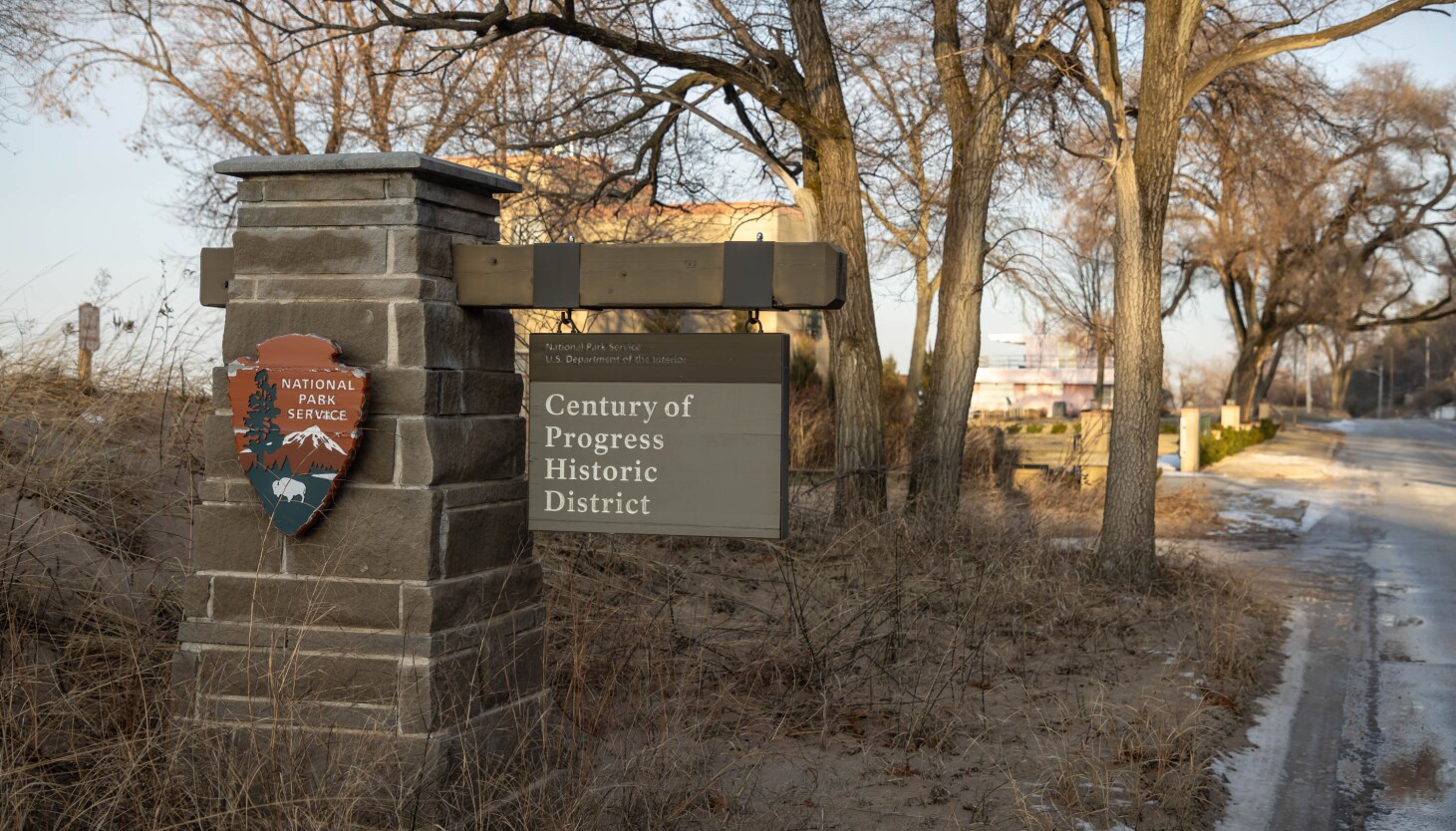
Five remnants of Chicago’s early-1930s Century of Progress World’s Fair sit at the edge of Lake Michigan, 52 miles from the fairgrounds in Beverly Shores, Indiana. Significant change is afoot at three of them.
The biggest revamp is at the House of Tomorrow, a 12-sided glass house where restoration finally began after years of delays. As Chicago Sun-Times architecture critic Lee Bey wrote late last month, the house’s pioneering design will soon be visible for the first time in more than 90 years, as a crew has started reversing the change made in 1935, when the building’s “original floor-to-ceiling exterior glass walls were replaced by a facade with much smaller windows.”
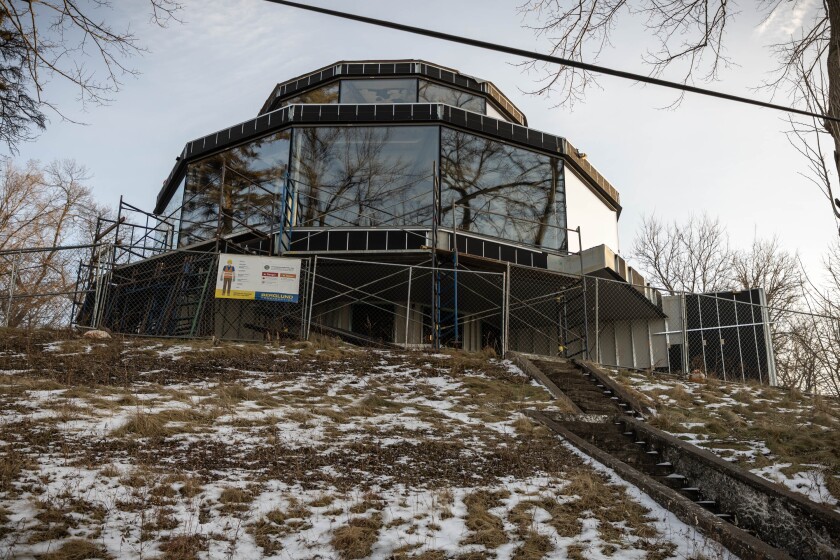
The House of Tomorrow’s iconic floor-to-ceiling glass walls are being restored.
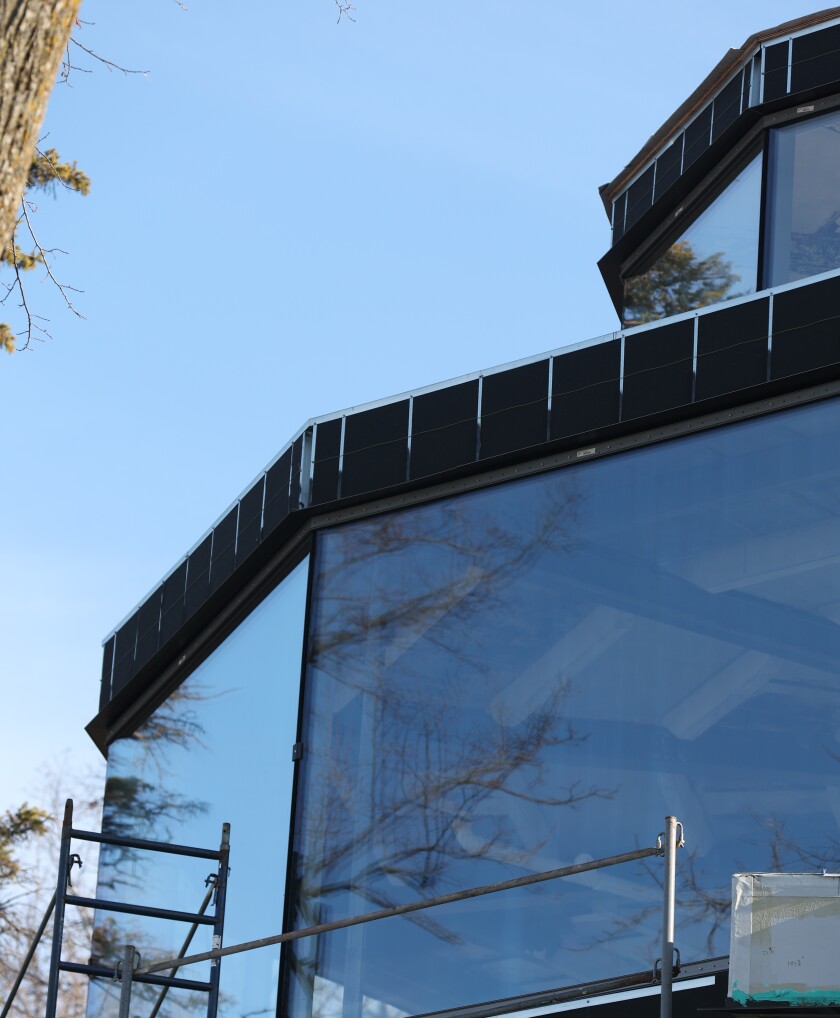
A closer look at the windows being installed on the House of Tomorrow.
Talia Sprague/Chicago Sun-Times
Also noteworthy is the pending change at the Florida Tropical House, a flamingo-pink structure that has to be the most Instagrammable of the five former demo houses. It arrived in Beverly Shores by truck and barge after the fair closed, in 1934 and 1935. Now, the building is set to change hands for the first time since 2000.
It’s a complicated situation: The National Parks Service owns the houses and leases them to Indiana Landmarks, which in turn subleases them to residents. The Florida Tropical House’s lease had 52 years left on it when it went up for sale in January 2024 for just under $2.5 million, to be paid in cash, no mortgage. The price is for the lease on the extensively restored house, meaning the buyer does not end up owning the structure itself.
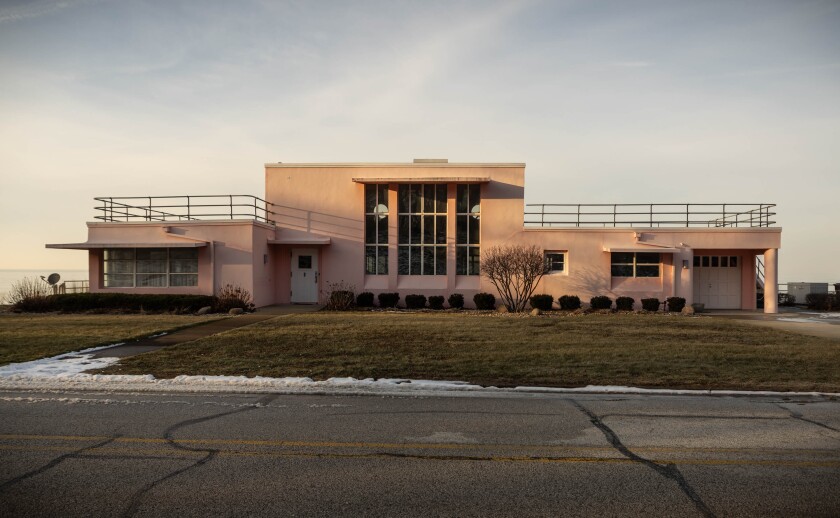
The Florida Tropical House.
The price was later reduced to just below $2.4 million, and on Dec. 22 the real estate listing was marked “pending,” meaning a contract is in place with a buyer.
The agents representing the property aren’t authorized to give any details on the contract, including the buyer’s identity.
But there’s conflicting information from the national park and Indiana Landmarks. Todd Ravesloot, facilities manager for the Indiana Dunes National Park, and Todd Zeiger, director of the northwest office of Indiana Landmarks, both told WBEZ they have not been contacted with details on any deal for the house and are not aware of a pending sale. The national park owns the houses and leases them to Indiana Landmarks, which in turn leases them to users. Both entities would have to vet a deal for the Florida Tropical House before it could go through.
The third Century of Progress house undergoing change is the Cypress Log Cabin, which Indiana Landmarks announced in October 2024 would become a short-term rental. It’s now the only overnight lodging inside the Indiana Dunes National Park. A three-bedroom house that sleeps 12, it’s listed on VRBO for $757 a night in the winter and more than $2,000 a night in the summer.
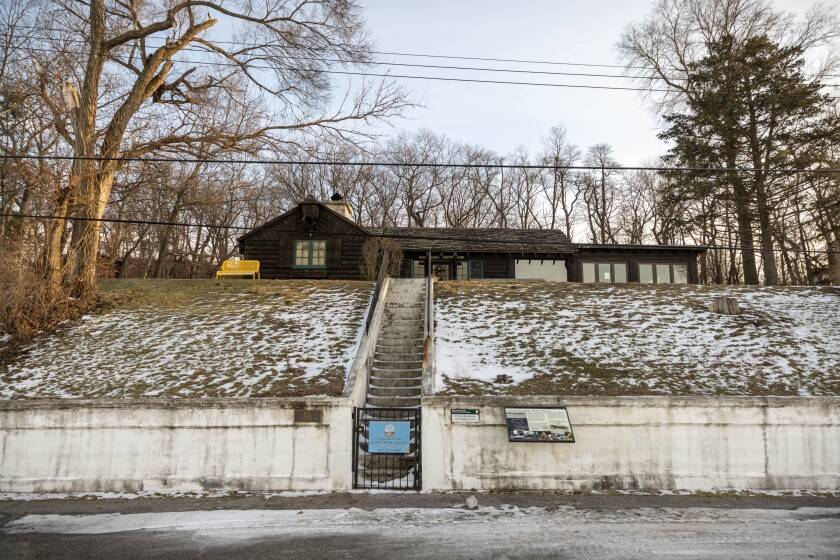
The Cypress Log Cabin has been turned into a short-term rental, the only overnight lodging inside Indiana Dunes National Park.
The other two houses in the cluster on Lake Front Drive are leased to private residents. But the recent and future changes add up to a big shift. While it’s not yet known what the next use of the Florida Tropical House will be, the other two are getting closer to the original vision of them as publicly accessible reminders of Chicago’s second World’s Fair, an event that showcased emerging modernity in cars, architecture, entertainment and other realms.
Held at the lakefront on and near what’s now Northerly Island, the Century of Progress hosted 39 million visitors in the summers of 1933 and 1934. Countless among them would have walked the Street of Tomorrow to see several models for future home types.
They included the 12-sided glass house by visionary architect George Fred Keck with a dishwasher and covered parking for both a car and a small airplane; a house made mostly of bolted-together steel panels, such as a cardboard box; and a house with a steel frame wrapped in Rostone, a product developed in Indiana from a mix of shale, limestone and alkali that its inventors expected to become a popular, inexpensive building material in the future. (It didn’t.)
When the fair closed, developer Robert Bartlett bought six of the demonstrator houses and announced he would move them to his fledgling community on the Indiana lakefront, Beverly Shores. The houses, Bartlett told the Chicago Tribune at the time, “represent what we find are the most outstanding examples of modern homebuilding, combining beauty and practical value. We believe they will have a decided influence on home building in metropolitan Chicago.”
Bartlett said that, once placed on their new sites, the homes would be open to the public for free. They would draw visitors to Beverly Shores, a town named for his daughter, Beverly. He planned a 3,600-acre lakefront development immediately northeast of the popular Indiana Dunes State Park. Envisioned as a rival to the towns on the North Shore, Beverly Shores would have a golf course, a botanic garden, a 32-room hotel and at least 500 houses.
The Great Depression was on, and like the Century of Progress’ show of hope for a better future, Bartlett expressed boundless optimism. He told the Tribune in 1933, four years after the start of the Depression, that very soon the nation and Chicago specifically would enter “a greater era of homebuilding than we have ever experienced.”
Along with the model houses, eight buildings from the fair’s Colonial Village would also arrive in Beverly Shores, including replicas of Benjamin Franklin’s house, the Virginia Governor’s mansion and Boston’s Old North Church. The replica of George Washington’s Mount Vernon home would operate as a tea room and hotel, with employees dressed in Revolutionary War-era clothing and powdered wigs.
The first of the houses to arrive in Indiana was the Cypress Log Cabin, dismantled and brought over by truck, then reassembled. The others came by barge in the spring and summer of 1935.
Of course, the Depression ground on for several years longer than Bartlett and many others expected. Many of his plans for Beverly Shores fizzled, and by 1960 the Tribune was opining that the World’s Fair buildings “had lost their appeal” as souvenirs of a long-past event. The replicas of the Virginia Governor’s mansion and Mount Vernon burned down, and others were lost as well. The Old North Church replica remains the only Century of Progress building still standing in Beverly Shores, other than the cluster of houses. It’s now a private home on Beverly Drive.
In the early 1970s, as development of the Indiana Dunes National Lakeshore (now a national park) ramped up, the park service bought up vast acreage in Beverly Shores, including the Century of Progress houses on the lakefront. Existing owners retained long-term leases called “reservation of use.”
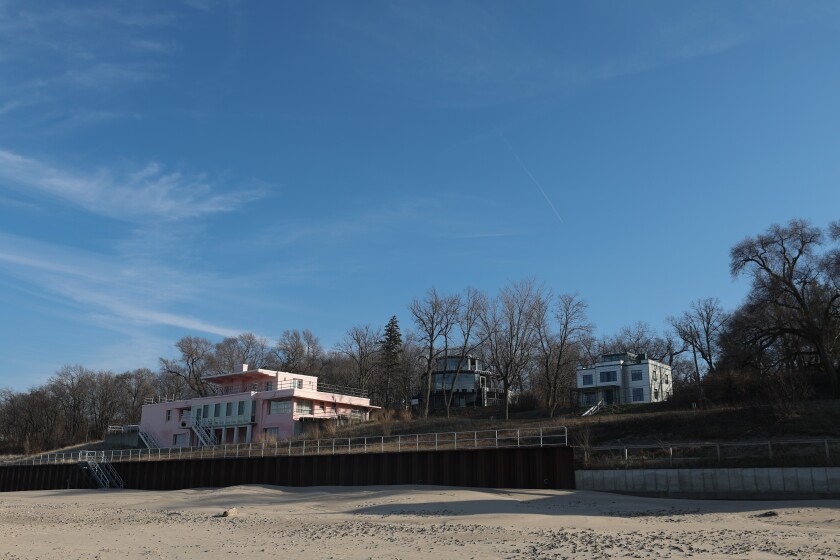
The Florida Tropical House (left), the House of Tomorrow (center) and the Armco-Ferro House (right).
Talia Sprague/Chicago Sun-Times
Some of the houses, most notably the 12-sided House of Tomorrow, didn’t benefit from the arrangement. It sat moldering for decades before this round of restoration started.
The Florida Tropical House could have gone the same way. In 1985, a Joliet couple who bought it outright in 1960 and later had a “reservation of use” with the park service told the Tribune they couldn’t imagine somebody taking over the lease and spending money to upgrade the house.
Fortunately for anyone who has been to Beverly Shores and seen the gloriously pink house framed against the blue water and sky, a family from Hammond, Indiana, were up for the challenge. By 2000, when the Beattys bought the structure, the house had a leaking roof, rotting wood support posts and a crumbling chimney, and many of its original Art Deco finishes were long gone.
“If I look at the enormity of it, I would drop out in a minute,” Bill Beatty told the Tribune in September 2000. With his two adult sons, he got to work, and now the house looks sharp. What’s next remains unclear until the sale of the lease closes.
Dennis Rodkin is the residential real estate reporter for Crain’s Chicago Business and In the Loop’s “What’s That Building?” contributor. Follow him @Dennis_Rodkin.
K’Von Jackson is the freelance photojournalist for In the Loop’s “What’s That Building?” Follow him @true_chicago.