
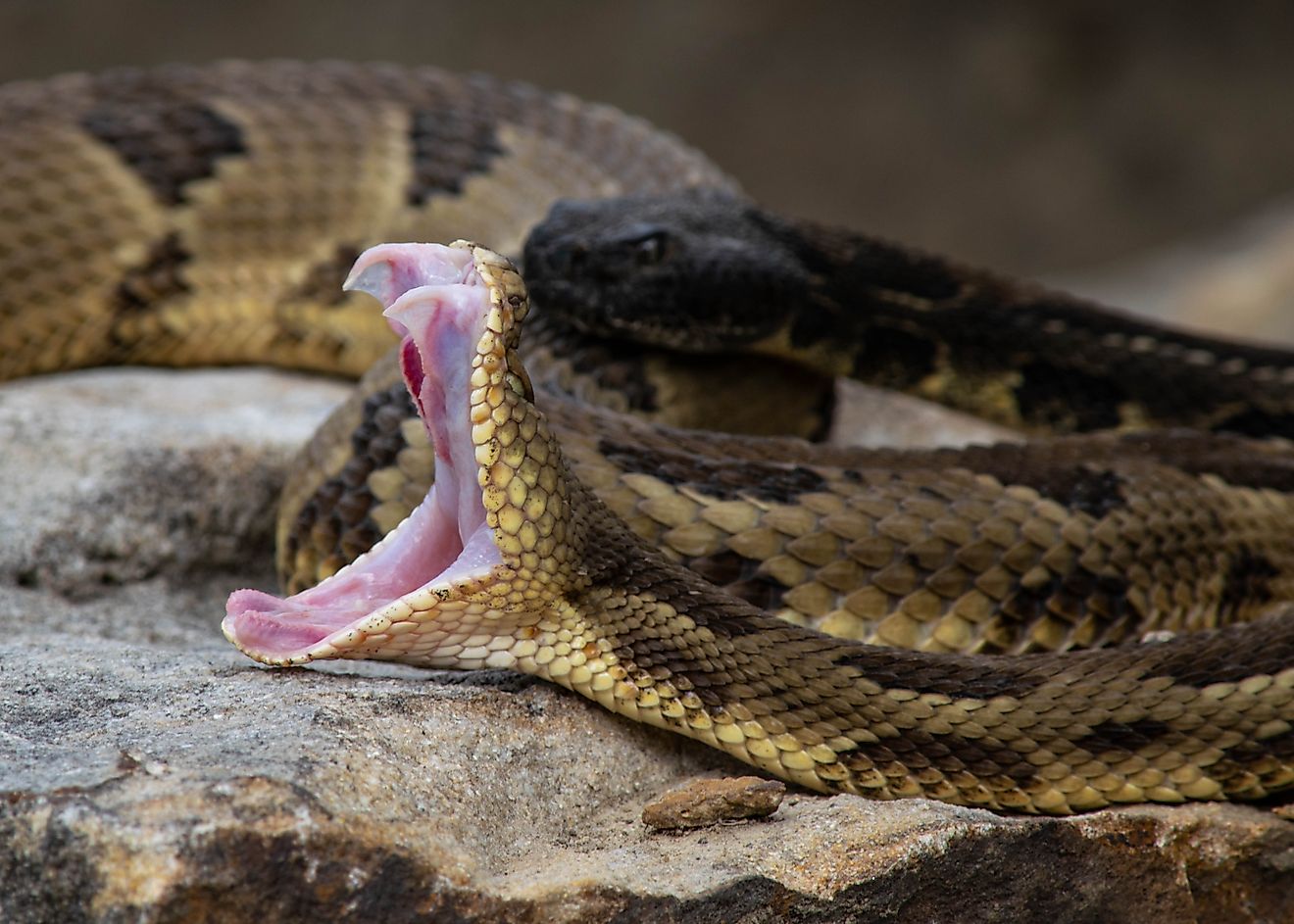
Snakes of all kinds are not all that common in New York, but there are a few places where they can be spotted. Pockets of rugged terrain across the Empire State still support small, protected populations of rattlesnakes, especially timber rattlesnakes, and on the rare occasion, massasauga rattlesnakes. These venomous reptiles rely on specific landscapes to thrive, mainly sun-exposed, rocky areas and undisturbed forestlands.
For hikers, climbers, and all outdoor explorers alike, understanding where local rattlesnakes are most likely to occur is just another simple safety precaution, for both you and them. With that, this article highlights several of New York’s known snake habitats, explaining why these areas are so well-suited for snakes and what draws people to the same terrain year after year. This overlap between wilderness and recreation in one of America’s most populated states makes know-how essential for safe travel outdoors.
Hudson Highlands
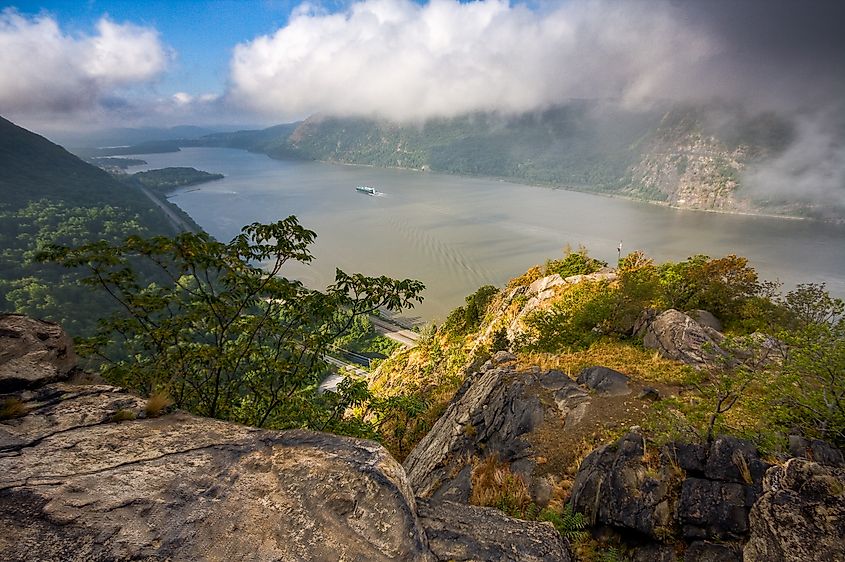 Breakneck Ridge is a popular scramble in the Hudson Highlands in New York. Image credit: Jeffrey Pang from Madison, NJ, USA/Wikimedia.org
One of the most well-known rattlesnake habitation zones in New York is the Hudson Highlands, particularly around Breakneck Ridge in Hudson Highlands State Park and Bear Mountain within Bear Mountain State Park. Timber rattlesnakes, a protected species in the state, are occasionally spotted in these heavily forested areas, especially during the warmer months when they emerge to bask.
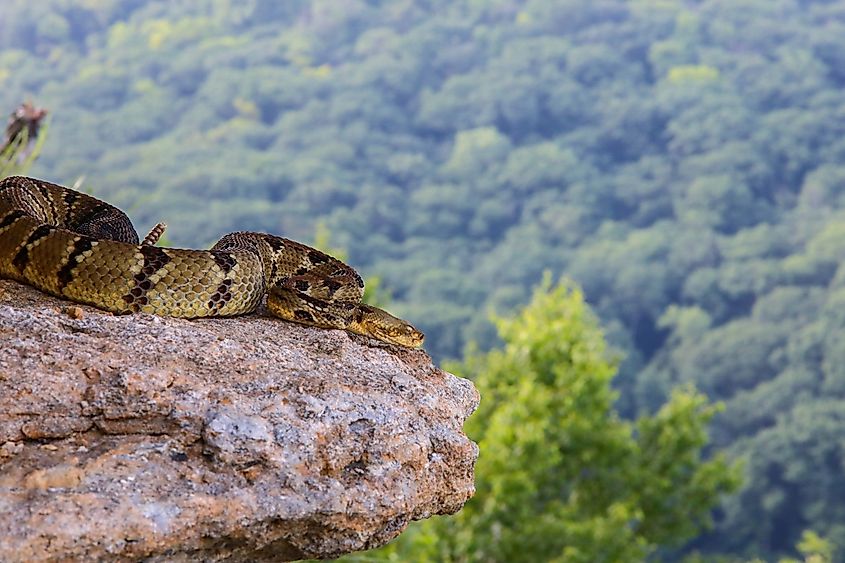 A timber rattlesnake basking on a rock outcrop in the mountains.
Although they are generally shy and avoid humans, their venomous bite makes awareness important in the summer, spring, and fall. Hikers, of whom millions visit the Hudson Valley every year, should stay on designated trails and be cautious near boulder outcrops and ledges, where these snakes often like to rest.
However, the Hudson Highlands offer more than just wildlife encounters, with incredible views of the Hudson River, challenging hiking trails, and diverse flora, making it a popular outdoor destination across the board. All of this is just a short drive north of New York City.
Allegany State Park
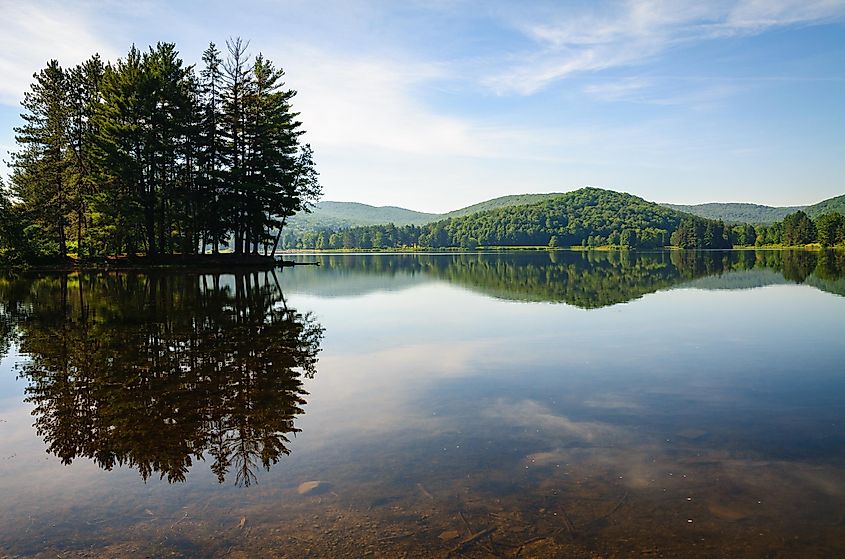 Allegany State Park in New York
The Allegany State Park in southwestern New York is another known location for rattlesnake sightings. This relatively remote park, located on the Allegheny Plateau, offers the types of open rocky patches, vibrant meadows, and forest edges that timber rattlesnakes prefer.
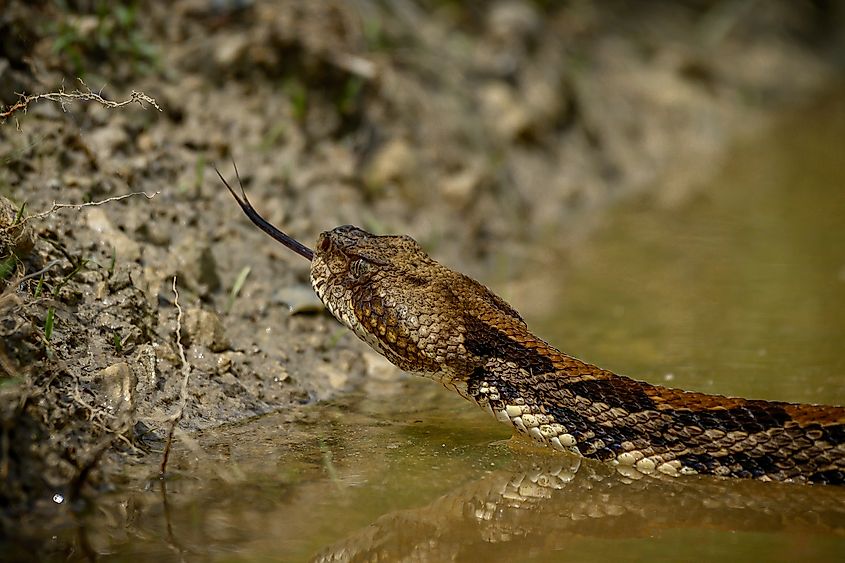 A timber rattlesnake.
Encounters are most common in late spring and early summer, when snakes emerge to soak up the sun and hunt for prey. While timber rattlesnakes are protected in New York and generally avoid humans, hikers and campers should remain vigilant, especially around stone walls, rock-covered slopes, and sunny clearings outside of the winter months.
Allegany State Park is also home to dozens of miles of hiking trails, campgrounds, dense hardwood forests that explode with color in the autumn, and multiple named streams and lakes, making it a prime spot for wildlife observation of all kinds, including beyond the snakes.
Catskill Mountains
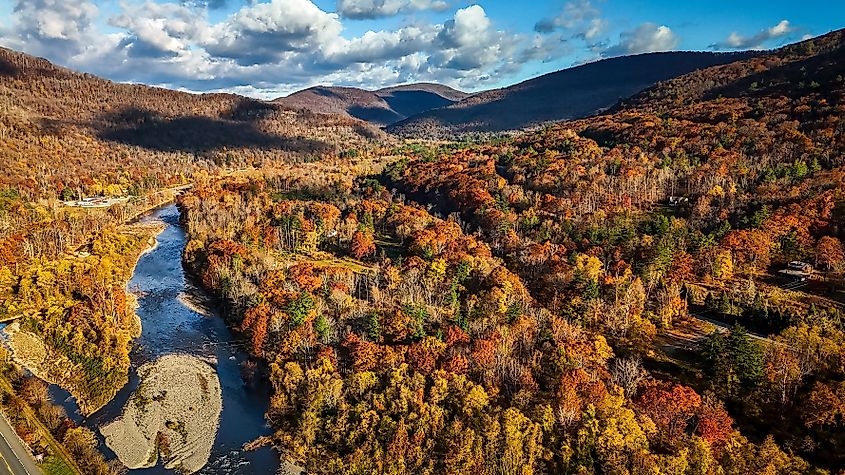 Foliage colors aerial view at Catskills Woodstock in New York at sunrise
Deep forest valleys, less than a 3-hour drive from Manhattan, numerous waterfalls, and remote backcountry campsites further make the Catskills a hotspot for both humans and wildlife. Just keep your eyes peeled wherever you go, and you should be in for a fun outing!
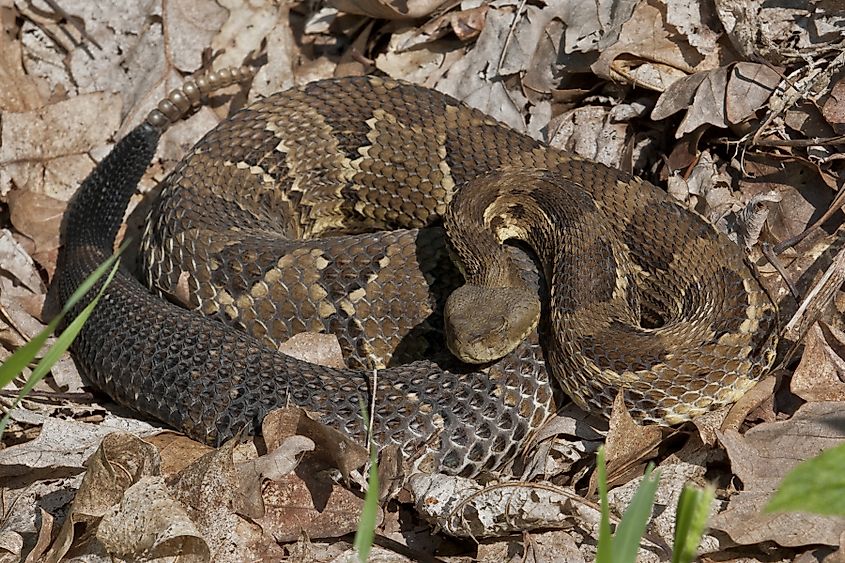 A coiled up timber rattlesnake.
The Catskills are one of the most consistent rattlesnake habitats in New York, particularly in more remote sections of the Catskill Park and along less-traveled ridgelines. As with the rest of the state, timber rattlesnakes are the most common species (if not the only), and favor south-facing slopes where they can regulate body temperature for long periods in direct sunlight.
Sightings are most likely to occur from late May through early September, especially during periods of warm, dry weather. While run-ins are uncommon, hikers and campers should be particularly cautious where they place their hands and feet when scrambling over rocks or stopping near cliffs.
Lake George
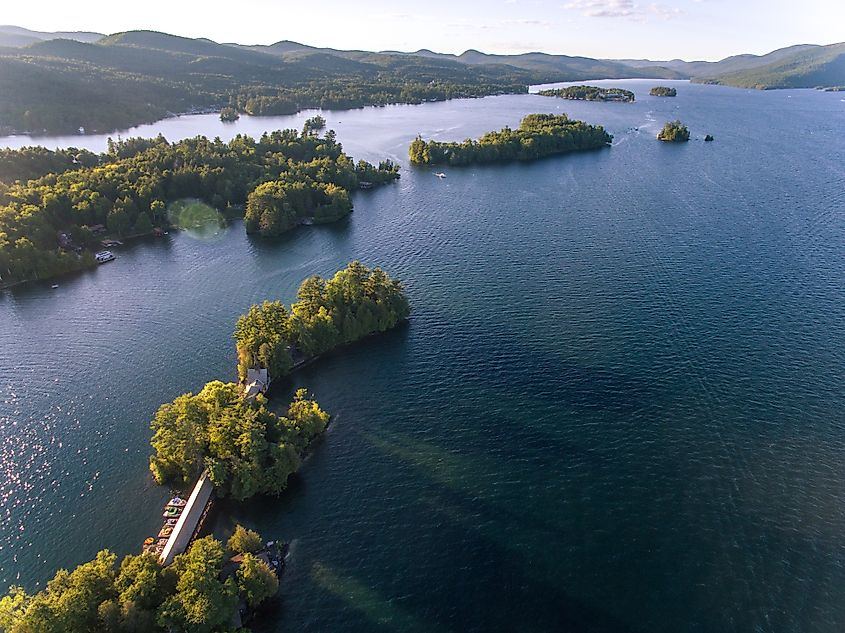 The Lake George Islands on Lake George, in New York.
Lake George is one of the more unexpected rattlesnake locations in the Empire State, particularly along the eastern shore and the Tongue Mountain Range. Areas such as Pilot Knob, Rogers Rock, and remote backcountry trails leading into the Adirondacks provide suitable habitats with minimal disturbances for wildlife, from birds to bears and rattlesnakes, places that are also popular for people looking to get off the grid for a while.
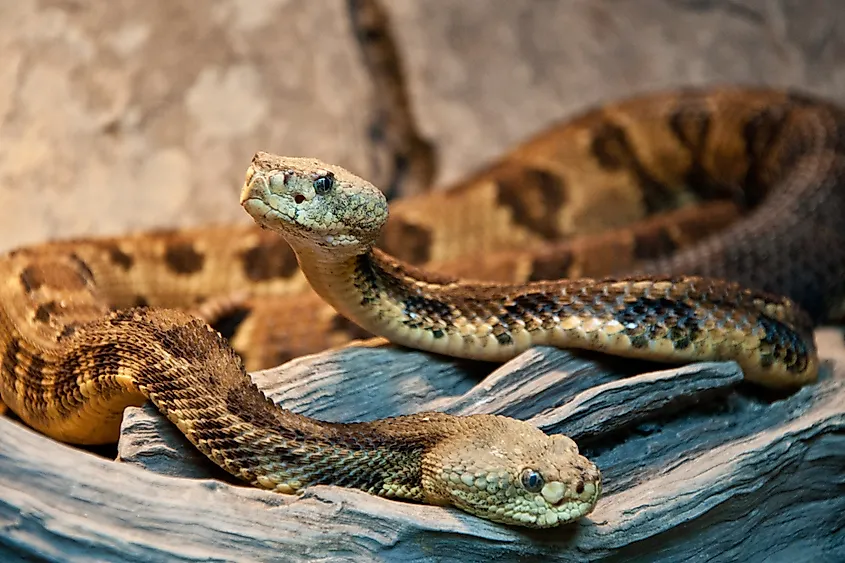 Eastern Timber Rattlesnakes (Crotalus-horridus), pictured here.
Lake George is perhaps better known to the general public for boating, historic sites, and busy waterfront towns, but its surrounding mountains remain surprisingly rugged and lightly developed in places. The combination of steep terrain, thin soils, and protected forestland allows rattlesnakes, specifically timber rattlesnakes, to persist here, making this renowned vacation destination one of the northernmost areas in the state where rattlesnake populations of any variety are still found.
Helderberg Escarpment
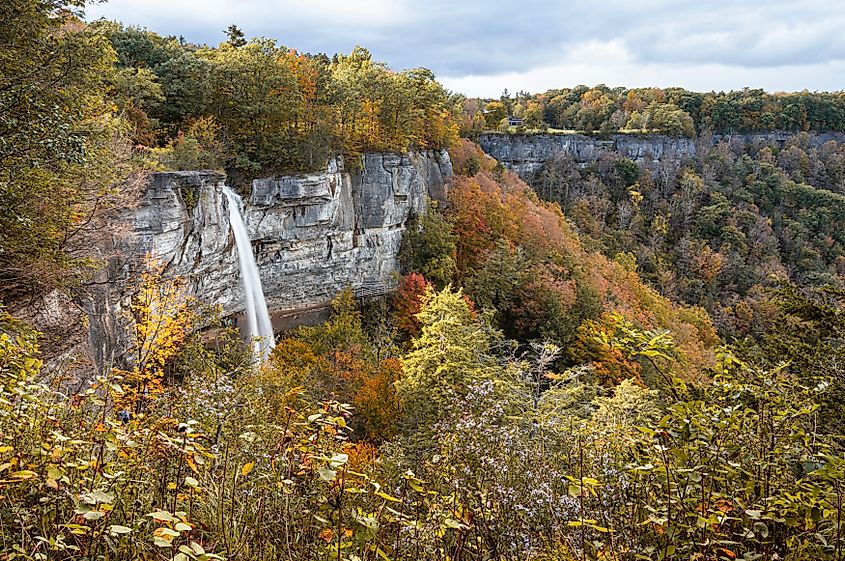 Minelot Falls and the Helderberg Escarpment with foliage in John Boyd Thacher State Park, Albany, New York
The Helderberg Escarpment near Albany is a low-key, yet excellent destination in New York for outdoor fun. Within its picturesque landscapes (largely encompassed by Thacher State Park), timber rattlesnakes are occasionally found along the rocky cliffs, talus slopes, and open ledges that are spread throughout. The region is also known for its network of scenic hiking trails, rare plant species, and panoramic views of the Hudson-Mohawk Valley.
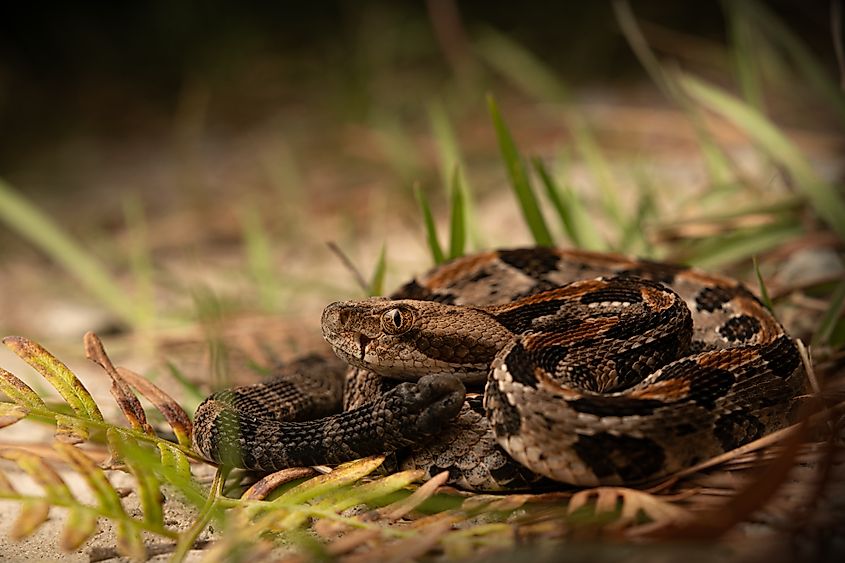 Baby timber rattlesnake (Crotalus horridus) close up full body
Helderberg’s plethora of well-preserved habitats makes it one of the few other areas in the state where spotting a timber rattlesnake is possible, offering a rare glimpse into New York’s limited populations. And, like usual in this 4-season corner of the United States, spring and summer are the busiest months for these cold-blooded reptiles, when they emerge to warm up and hunt for food before going back to rest the following winter again.
Rattlesnakes remain a small but essential part of New York’s natural landscape. Their limited range highlights the specificity and fragility of their habitat requirements, so knowing where these venomous snakes may occur helps outdoor enthusiasts move more carefully and responsibly. Do you plan on visiting any of the above-mentioned places this year?