
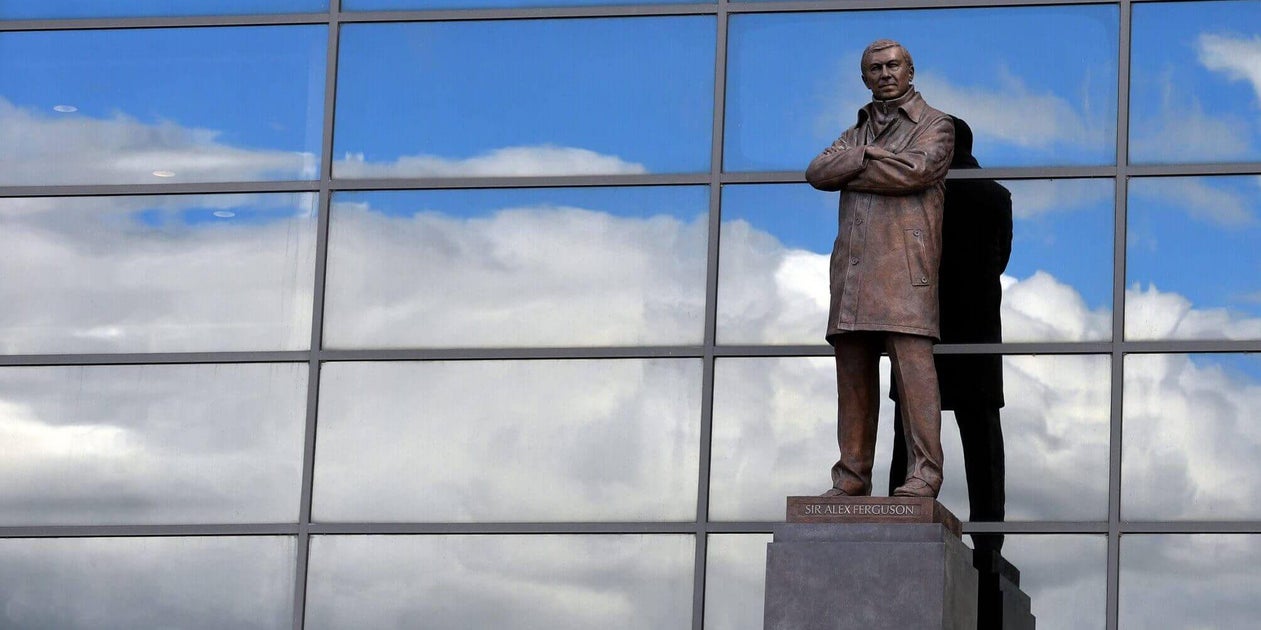
Before yet another of Gary Neville’s former team-mates, Darren Fletcher, prepared to take charge of his first game as interim head coach of Manchester United, the Sky commentator and pundit said United’s start to 2026 has been “like a movie that we’ve all seen before”.
Neville mentioned Groundhog Day, an appropriate choice, and yet the doom loop in Groundhog Day does end when (spoiler alert) Bill Murray’s character, Phil Connors, becomes a better person.
In the 12 and a half years since Sir Alex Ferguson retired and the two since Sir Jim Ratcliffe assumed control of the club’s football operations, United have evidently not become a better football club.
In the days after Ruben Amorim’s sacking, attention has returned to United’s identity. Who are they? What do they want to be? Rather than Groundhog Day, they have, as a club, started to resemble one of the many podcasts made by members of the Class of 92, inviting on one former team-mate after another to take a turn reminiscing about the good old days from the dugout as much as in the recording studio.
The football leadership team assembled by the Glazers and, more recently, Ratcliffe may as well be producers of The Overlap. “Shall we book Giggsy in this week? Carrick? How about Fletch? Ole was on recently, wasn’t he?”
Who knew Sir Alex’s legacy would be preparing a generation of players for a future as caretakers and content creators?
Paul Scholes and Nicky Butt recently laid out the essence of United on their podcast The Good, The Bad and The Football. It’s about risk-taking. Going for the throat. United can’t settle for a 1-0. They go for a second, a third, a fourth. 4-4-2, not three at the back. Attack, attack, attack! That’s United. This isn’t. He is. He’s not.
When asked if they’d take Roy Keane as the club’s next ‘manager’ — a key distinction — both replied: “Yes.” Keane’s last managerial job, apart from assisting Martin O’Neill with the Republic of Ireland, came at Ipswich. He was sacked from that role in 2011 when Sir Alex was still managing United.
But at this rate, why not Keane? Why not make Patrice Evra his assistant? Neville “wouldn’t not” have Solskjaer back, providing the club runs a proper process to hire someone in the summer.
That was the intention in 2018, but the clamour for Solskjaer to be given the job permanently reached such a pitch after a 3-1 win against Paris Saint-Germain that the noise drowned out judgement.
“Man United might not thank me,” Rio Ferdinand said on BT Sport. “But get the contract out, put it on the table, let him sign it, let him write whatever numbers he wants, given what he’s done now since he’s come in… Ole’s at the wheel.”
Yessss Ole is officially at The Wheel… Signed, Sealed, Delivered! Manager of @ManUtd! 🙌🏽 I hope my Thank You is in post Ole 🤣📝❤️ #MUFC #Ole pic.twitter.com/lUUel4f6zw
— Rio Ferdinand (@rioferdy5) March 28, 2019
True to form, after Amorim’s sacking, Ferdinand tweeted: “I would go De Zerbi/Tuchel /Xavi or Darren Fletcher if does well.”
United’s past is always at the wheel. As a club, they exist in a ‘retrotopia’, which sociologist Zygmunt Bauman defined as a tendency among people who are insecure and dissatisfied with the modern world to look for a solution to their problems in the days of yore. They are prisoners of the past.
As such, United are pure Hitchcockian cinema.
In Alfred Hitchcock’s film Rebecca, wealthy widow Maxim de Winter marries again and moves his new bride to Manderley, his English country estate. The house is overwhelmed, however, by the lingering presence of Maxim’s first wife, Rebecca. Her handwriting and initials are everywhere. Her routines are maintained by the housekeeper. Everyone speaks of her as the most beautiful woman, the greatest. Maxim even tries to dress his new wife in Rebecca’s clothes.
It is a story about the past tyrannising the present and how constant comparisons shape and affect identity. Only when Manderley burns down can the protagonists start anew.
If the same narrative device holds true of United, it will only be when they leave Old Trafford, the Theatre of Memes, for a new stadium that things will change.
But let’s not dwell on fiction.
There is, after all, nothing wrong with what Jose Mourinho called “football heritage”. Down the road at Manchester City, Pep Guardiola used to complain his club didn’t have enough of it to call upon, particularly on European nights when United and Real Madrid could reach back into the past for belief. These intangibles seemed to make the amazing routine.
United, for too long, have appeared overwhelmed by their history rather than inspired by it.
They have to stop thinking like United, or at least always referring back to what worked for them under Ferguson. Back then, their identity wasn’t bound up in concepts like 4-4-2, wingers and attack, attack, attack. It was bound up in Ferguson himself, but, at 84, he isn’t going to be in the technical area again, chewing gum and pointing at his watch. That United’s gone.
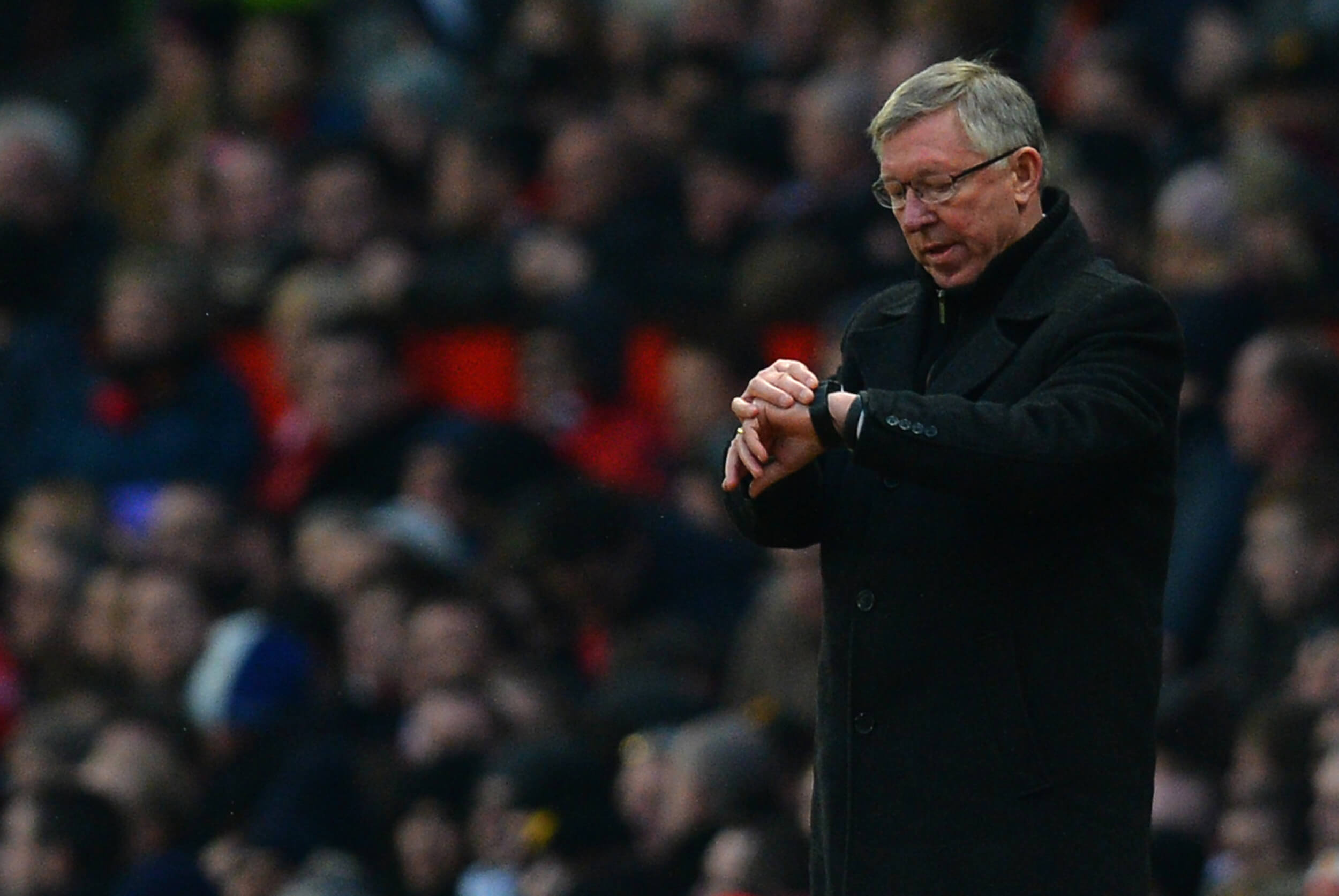
‘Fergie time’ seems a long time ago (Andrew Yates/AFP via Getty Images)
In Italy, Milan went through the same problems under former owner Silvio Berlusconi. They made Leonardo, Clarence Seedorf and then Pippo Inzaghi coach in the forlorn belief that one of them might be a younger version of Fabio Capello or Carlo Ancelotti.
None of them were and Milan, based in a league that didn’t have the growth mindset of the Premier League, entered the wilderness without the safety net of more and more TV money.
They only emerged out of it when new owners were able to persuade Paolo Maldini, who came back to the club as a technical director, to think not in terms of what worked for Milan decades ago, but what works for a club now.
That meant no longer using Berlusconi’s Milan as the one and only reference point. It meant being humble enough to look at upwardly mobile teams such as Dortmund and Atalanta, shopping where these teams shopped, not with a Ballon d’Or shortlist in hand, and learning from them while also trying to stay true to Milan.
It wasn’t an easy process. In fact, it was far from perfect, but in 2022, Milan won the league after 11 years and reached a Champions League semi-final without anywhere near the resources available to United.
If Ratcliffe’s leadership team were to bring back Solskjaer, Carrick or Ruud Van Nistelrooy — all in the running for the caretaker role, having all done it previously — how could they claim to be any different from United’s much maligned executive setup that pre-dated their acquisition of a minority stake?
It smacks of trying to signal that they’re in touch with United’s ‘identity’, but only underlines that they are out of touch with what a modern football club needs to be successful.
Upon listening to Jamie Redknapp make the case for United to go, right this minute, and get Andoni Iraola from Bournemouth, fellow Sky pundit Tim Sherwood cheekily asked if Bournemouth should hire Solskjaer to replace him.
“Absolutely not,” Redknapp replied. “No one else in the Premier League would. We like Ole, everyone likes Ole. But if he was that…(good)… why hasn’t he got a job in the Premier League since he’s left?”
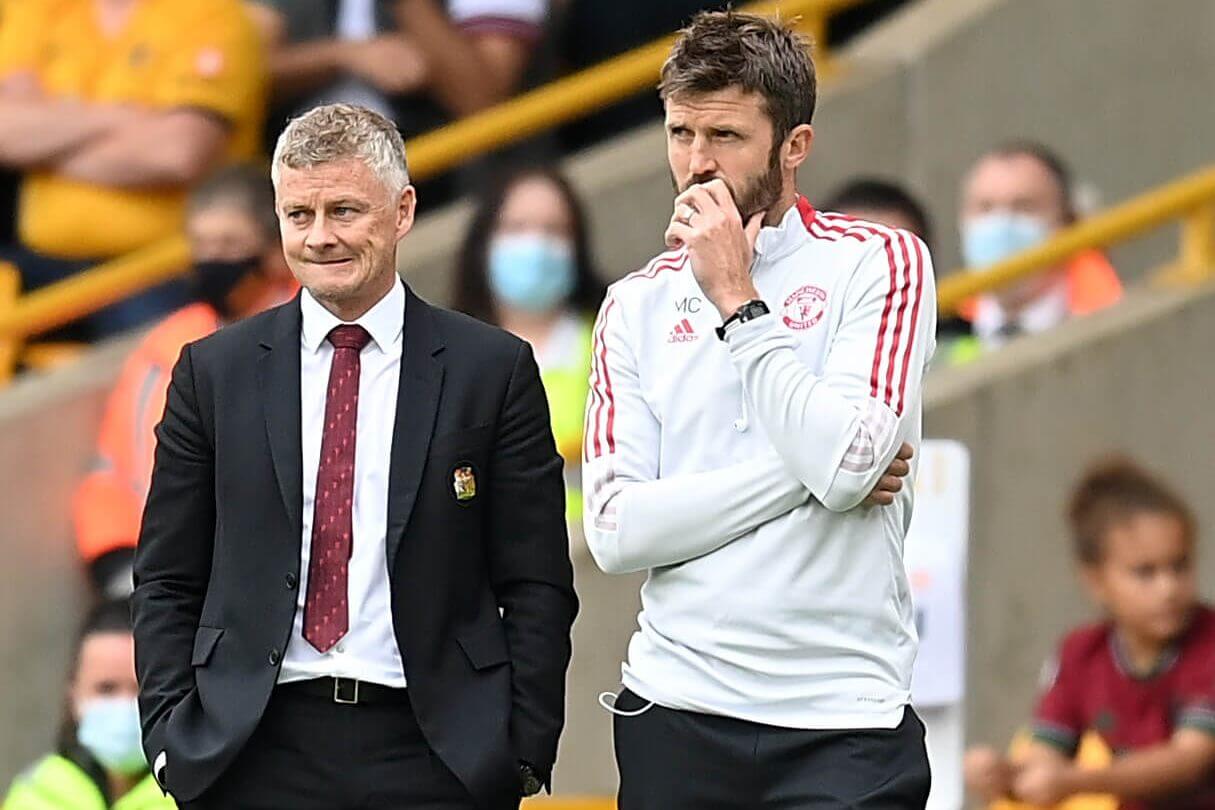
Are Ole Gunnar Solskjaer (left) or Michael Carrick really right options for United? (Michael Regan/Getty Images)
At a stretch, Fletcher as interim interim and, potentially, Solskjaer or Carrick as permanent interim could be defended as a logical short-term fix.
But all of this suggests Amorim’s dismissal was unplanned, despite Ratcliffe telling The Times Business podcast as recently as October that the Portuguese “needs to demonstrate that he’s a great coach over three years”. Asked if that meant he’d get the three years, he replied: “Yes”.
Ratcliffe also cited Arsenal in his thinking, pointing out that Mikel Arteta had “a miserable time the first couple of years”. Arsenal stood by him. United gave up on Amorim.
At least Amorim departed on his own terms, as a manager not a head coach (would Ferguson have accepted anything less?), having taken them to sixth place and on track for Champions League qualification. They had injuries, too, and players away at AFCON.
None of which is to say United should have stuck with him. But if you make that decision this early, with 18 league games remaining, the obvious question is why you wouldn’t at least appoint someone who offers greater assurance of a strong finish than a coach whose experience is confined to United’s under-18s (Fletcher), one who was sacked by Besiktas after losing to one of Ratcliffe’s other clubs, Lausanne, in the Conference League (Solskjaer), a man who earned plaudits in the Championship with Middlesbrough but only finished in the top six once in three seasons (Carrick), and another who helped contribute to Leicester’s slump to relegation last season (Van Nistelrooy).
Are they a better bet than Amorim?
In 2024, Roberto De Zerbi had his own press conference moments at Brighton that seemed as provocative, if not more so, than anything Amorim or Enzo Maresca recently said. He questioned the ambition of the owner. He wanted to know the “Tony plan” — a reference to owner Tony Bloom — because “if I don’t feel comfortable, I don’t feel the right motivation, I can’t stay any longer”.
That was in March. Did Brighton fire him there and then? Did they make Adam Lallana interim coach? No. They kept De Zerbi until the end of the season and then made their move.
Chelsea’s appointment of Liam Rosenior is at least understandable in terms of his work within the BlueCo network, which begs the question of why Ratcliffe’s own multi-club operation could not provide United with a wider network to tap into.
Nice, for instance, have fired Franck Haise and, fair enough, you could quibble with bringing him in and scoff at his profile. But Haise did lead Lens to the Champions League for the first time in 20 years, finished one point behind PSG in 2023, and did, to pluck a one-off game out of the ether, oversee a 2-1 win over Arteta’s Arsenal.
Are these achievements any less impressive than what Iraola got up to at Rayo Vallecano, Oliver Glasner at Wolfsburg and Eintracht Frankfurt, or Regis Le Bris at Lorient?
“He’s not a United manager” is a familiar refrain, but nobody is these days.
Could United not, for instance, hire an Edin Terzic or Thiago Motta until the end of the season and then review in June?
You will have your opinion on whether such candidates are right or wrong for United. The point is that there are options.
And besides, is it really beneficial to wait for someone to become available after the biggest and therefore longest World Cup ever, when pre-season will be shorter?
Can United be trusted to get the appointment right then, anyway, after the decision to retain Erik ten Hag and hire Dan Ashworth and Amorim?
And is there really a lack of top-class managers up for grabs for Premier League clubs in 2026, as my colleague Michael Cox argues? Is it not also the case that English clubs have become very prescriptive, perhaps too narrow, in what they want — a coach, not a manager. Someone who prepares the players for games and is also prepared to stay in their lane.
The club has to come first. Recruitment, for instance, can’t exclusively be run by the coach. Otherwise, you get something approximating Ten Hag’s team at Old Trafford; Ajax reunited, an Eredivisie side expected to compete in the Premier League.
Surely, though, there has to be some compromise, an acceptance that a top-class manager will challenge and provoke his employers every bit as he challenges and provokes the players, particularly if he is the only one facing media questions about decisions taken by people above him.
In the meantime at United, the doom loop clicks on and on and on. How did Albert Einstein define insanity, again? Wasn’t it the act of doing the same thing over and over again and expecting different results?