
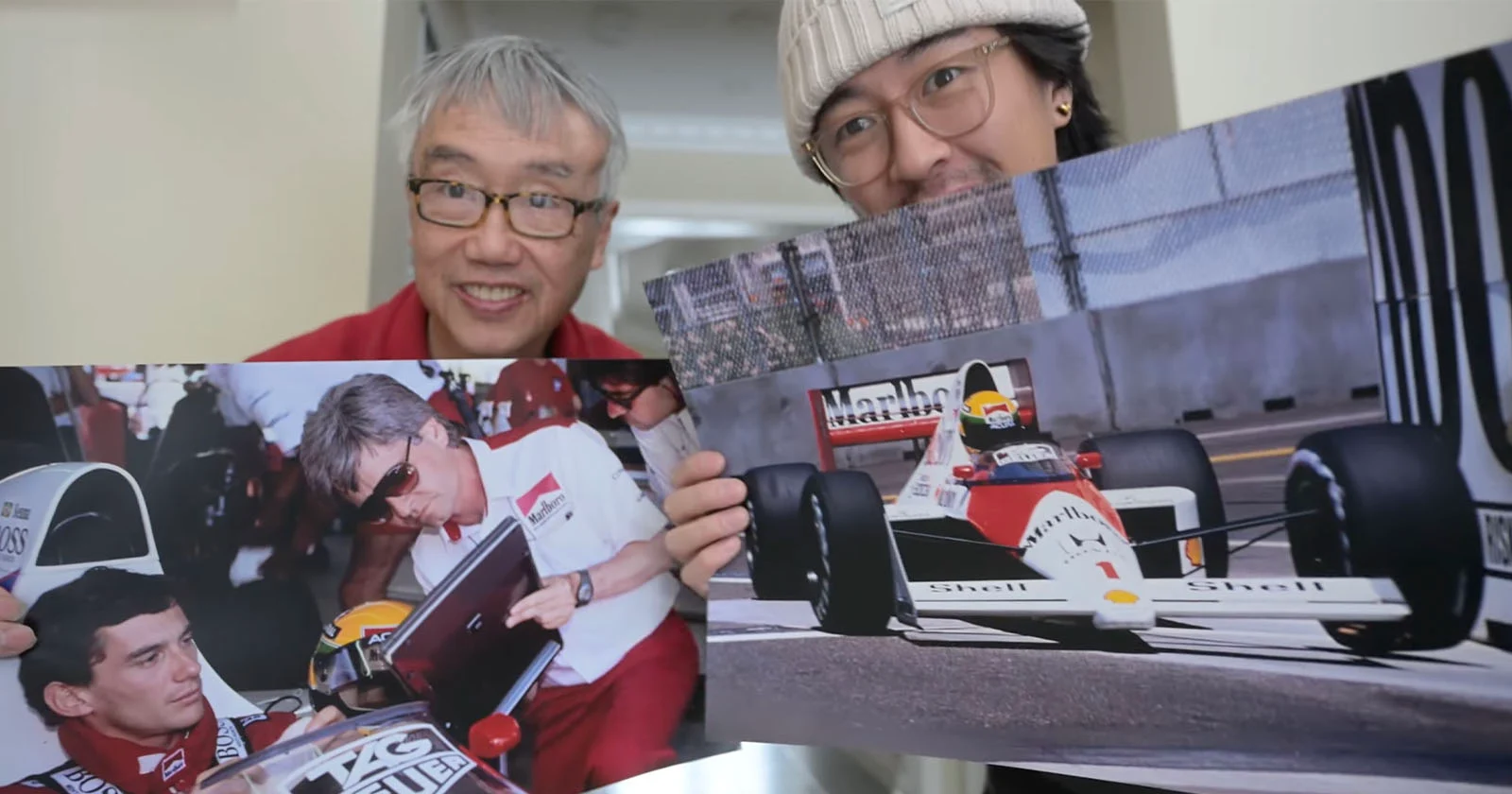
A Formula 1 photographer who was active in the 1980s and took fabulous photographs of F1 legend Ayrton Senna has had his photos printed as standalone works of art for the first time.
Henry Pang’s son, Jeffrey, runs a popular car drifting YouTube channel, and he recently made a mini-documentary about his pride and joy: a Porsche 911.
The film featured some of Henry’s photos, which capture the sport at a glorious time in its history — when the cars had screaming V10 engines, and there was a famous rivalry between Ayrton Senna and Alain Prost.
Viewers of his Jeffrey’s YouTube channel wanted prints of his dad’s photos, but it’s not so simple. Like many photographers in the 1980s, Pang’s father shot a lot of color transparency slides, which were designed to be printed in CMYK in magazines, not stand-alone photo prints.
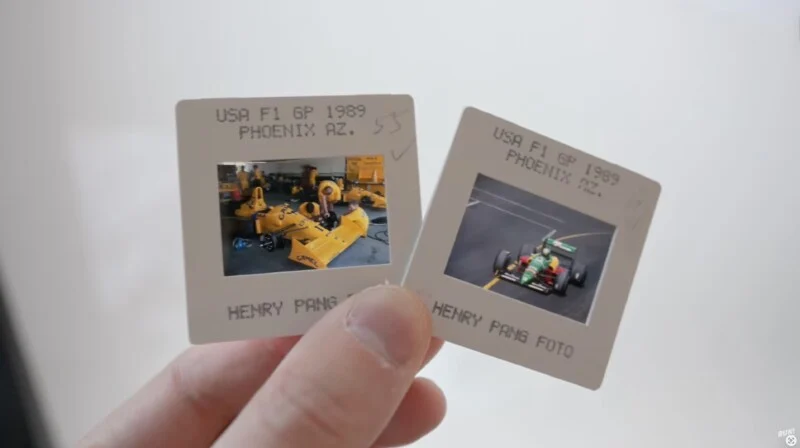 Henry shot color transparency slides.
“In the 70s, 80s, and 90s, press printing was called color separation,” Henry explains in a YouTube video. “Long before digital, you needed a color separation, which means you needed a positive print. Positive print means a transparency. A transparency means a slide.”
Quest
If Jeffrey wanted to make photo prints of his dad’s work, he would have to scan them. Unfortunately, the materials that allowed original positive transparencies to be directly printed on to photo-sensitive paper have long since been discontinued. While it is still possible to print negatives directly onto paper, positive transparencies must typically be scanned and then printed from digital.
Jeffrey took the slides to a photographer friend named Vince, who scanned them with a flatbed scanner and got bad results. The flatbed scans may have been good enough to share on Instagram, but the limited resolution means that if Jeffrey wanted large-scale prints, he had to find an alternative. While there are specialized scanners — both flat and drum style — that provide much better results, they’re uncommon and very expensive. Because of this, most photographers elect to go a different route.
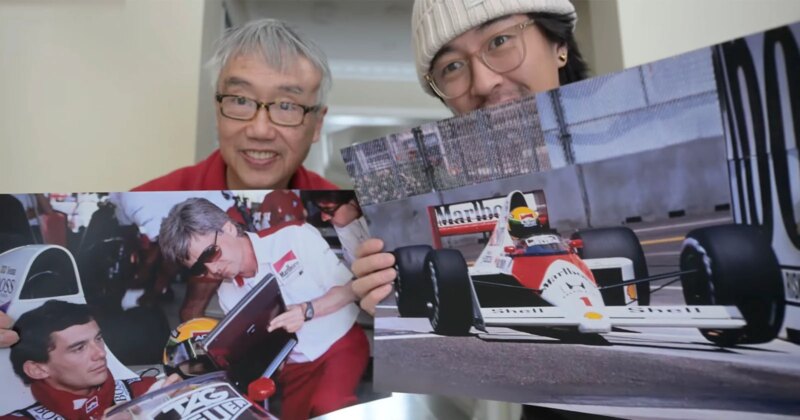 Henry and Jeffrey.
Jeffrey’s father Henry, evidently a photographic whizz, suggested using a 36-megapixel Nikon D800 that would solve the resolution limitations of the flatbed scanner.
Using a 55mm macro lens, the slide holder, a copy stand, an external shutter release, a lightbox, and an extension tube, Henry was able to get much better scans of his dad’s pictures.
While it is a time-consuming process — each photo has to be manually focused — it meant that Jeffrey was able to do justice to his dad’s awesome F1 photography. The scans were so good that details such as the air being disturbed around the wake of the car could be seen.
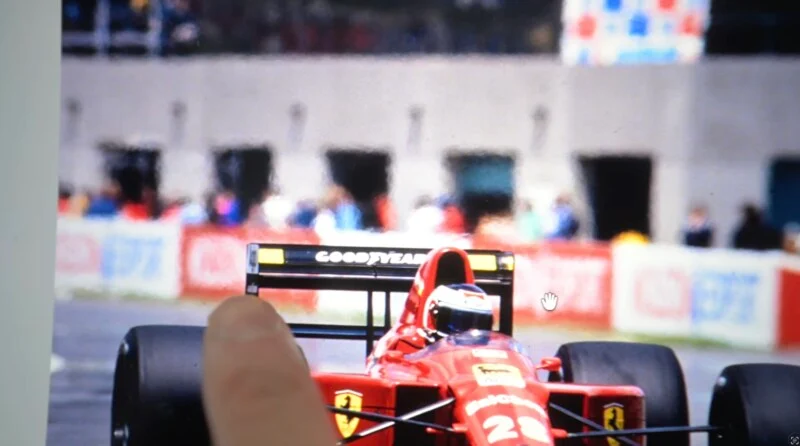 Jeffrey points to the air being disturbed around the Ferrari of Gerhard Berger.
The photos include incredible images of three-time world champion Ayrton Senna talking to engineers while wearing his trademark look of sheer intensity.
Lastly, Jeffrey visited a film lab called Foto Box in Toronto, which does chromogenic printing.
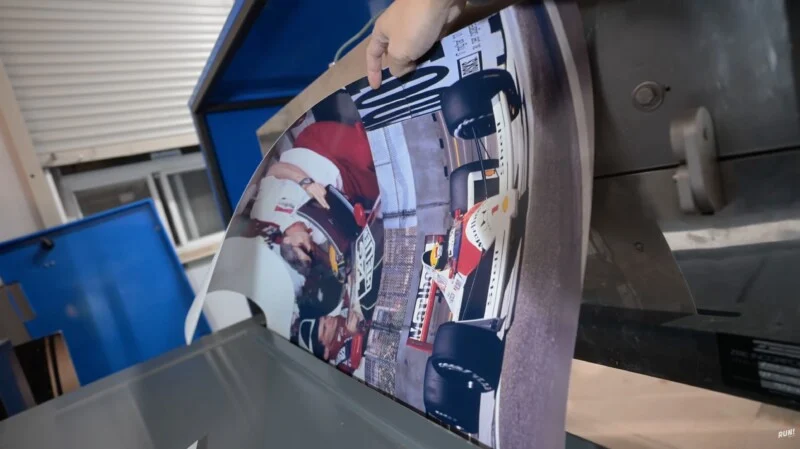 The chromogenic print appears, this particulary one hadn’t been dried so it comes out wet.
“These machines still use light-sensitive paper,” explains Jeffrey. “These machines expose the paper exactly how an enlarger would… Then the photo travels through some chemistry, then rinsed through two more tanks of water before being run through a dryer.”
While not a photographer himself — Jeffrey’s YouTube channel is about cars — he was clearly pleased with the results of the prints and enjoyed showing his dad the fruits of their joint labor.
If you’re interested in buying a print, you can purchase one here.
Last month, PetaPixel featured the story of Jack Smith, who discovered 80,000 of his grandfather’s photos, most of them color transparency slides, and his mission to bring the archive to live.