
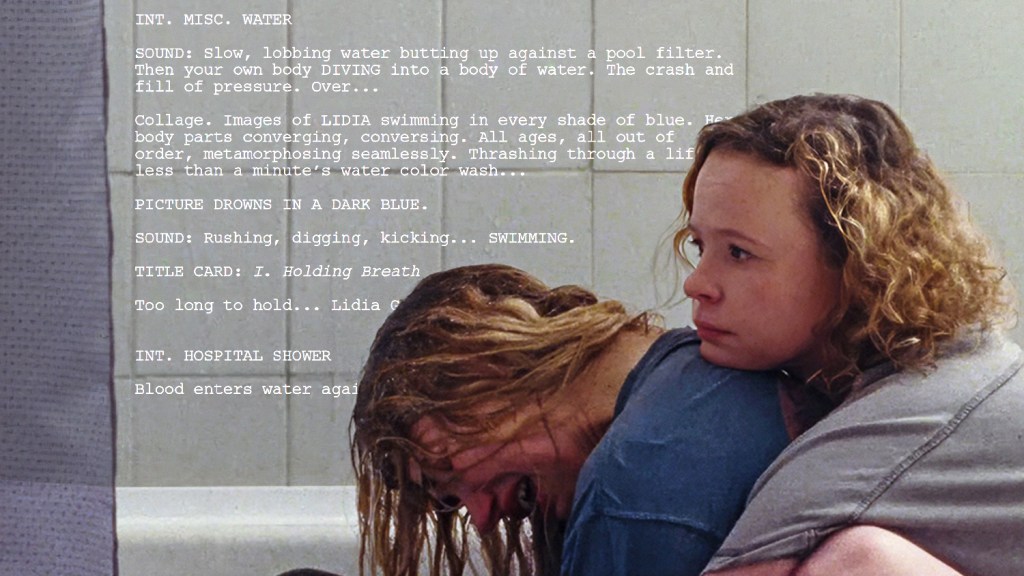
Deadline’s Read the Screenplay series spotlighting the scripts behind the year’s most talked-about movies continues with the Cannes Film Festival-premiering The Chronology of Water, directed and written by Kristen Stewart.
Stewart’s feature directorial debut screened in the Un Certain Regard section at Cannes, where it received a standing ovation lasting more than six minutes. The script is based on the acclaimed memoir by Lidia Yuknavitch and presents an unflinching, fragmented portrait of womanhood and survival.
The film was acquired by indie distributor The Forge and after an early awards-qualifying rollout last month it will hit theaters January 9.
The story follows Lidia (Imogen Poots) as she seeks escape from an abusive childhood through competitive swimming in the 1980s. When her athletic aspirations are derailed, she enters a spiral of addiction, toxic relationships and self-destructive impulses before eventually finding her voice and a path toward healing through the act of writing. Stewart has characterized the film as a lyrical battle cry, designed to be a visceral experience for the audience that mirrors the subconscious ways memory lives within the human body.
The journey to the screen was a rigorous eight-year process for Stewart, who first encountered the book in 2017 and immediately felt its electric current. She reportedly wrote and rewrote the script across 500 different versions, eventually adapting every single page of the original text to find the right balance. Rather than a tidy narrative, Stewart opted for a neurological structure that rejects traditional biographic tropes in favor of a fragmented, dream-like rhythm. She has described the writing process as intrinsic and open to exploration, aiming to create a film that pulses with immediacy through quick cuts and immersive sound design.
Stewart’s commitment to the project was so intense that she once stated she would quit acting until she could direct it, though she later admitted that was a form of yelling to get the project the attention it needed.
Stewart states the film is not just an adaptation but an act of reclaiming radical power through storytelling. By re-narrativizing trauma, she aimed to show that memories are not fixed facts but narratives that individuals have the power to rewrite. Alongside Poots, the film features a notable supporting cast including Thora Birch, Jim Belushi, Tom Sturridge and Kim Gordon.
The project stands as a testament to Stewart’s obsession with the creative process and her desire to redesign the traditional cinematic wheel to better reflect the honesty of the female experience.
Read the screenplay below.