
People who visited two hospitals in Linn County during specific times this week may have been exposed to measles, a highly infectious virus that spreads through the air and in rare cases can be fatal, Oregon officials said Saturday.
The two people with Oregon’s first confirmed measles cases in 2026 developed symptoms — a rash, fever, cough and runny nose — on Jan. 5.
The measles virus can linger for up to two hours after an infected person leaves an area. The Oregon Health Authority said that people who visited one of two hospitals Jan. 6 or Jan. 7 could have been exposed.
People could have been exposed to measles if they were at:
The Lebanon Community Hospital Emergency Department between 8:53 p.m. on Jan. 6 and 7 a.m. on Jan. 7The Albany General Hospital Emergency Department between 4:59 a.m. and 8:15 a.m. Jan. 7
Anyone who was at either of those hospitals during those times should immediately tell their doctor they may have been exposed to the measles virus, the health authority warned. Their doctor will then be able to determine whether they are immune to the virus based on their vaccination record and other factors.
Measles symptoms usually appear seven to 21 days after exposure and include fever, cough, runny nose and red eyes, followed by a rash that starts on the face and spreads to the rest of the body, the health authority said.
Most people infected with measles survive without complications. But the disease is nonetheless dangerous and can cause brain swelling and even death. The disease is particularly dangerous for infants and people with weakened immune symptoms.
Measles has been on the rise nationally, with the U.S. Centers for Disease Control and Prevention recording the worst year for measles spread in more than three decades just halfway through 2025.
The agency reported 2,144 confirmed cases nationwide by the end of the year, including three that were fatal.
Oregon had just one confirmed measles case last year, according to CDC data. But the state reported 31 confirmed infections in 2024, according to CDC data.
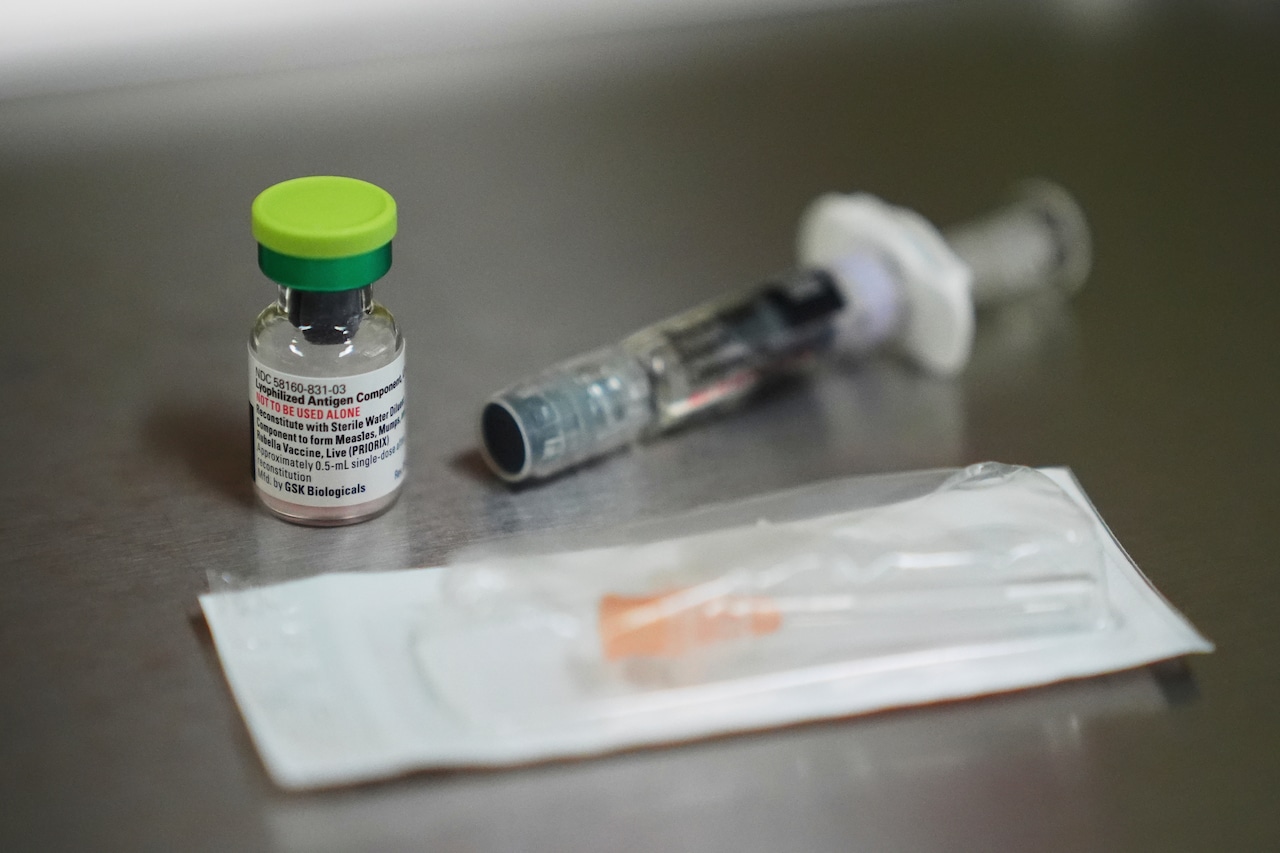
The measles vaccine is highly effective, with two doses of the measles-mumps-rubella vaccine preventing 97% of infections, according to the Oregon Health Authority.
Distrust in government and misinformation erroneously linking vaccines to autism have contributed to declining vaccination rates and a concomitant increase in infections.
The health authority continued to urge Oregonians to get themselves and their children vaccinated.
“Measles is here in Oregon and rates are increasing nationally,” said Dr. Howard Chiou, OHA’s medical director for communicable diseases and immunizations. “We encourage everyone to make sure they’re protected by talking with their providers about being up to date on vaccinations.”