
Your support helps us to tell the story
From reproductive rights to climate change to Big Tech, The Independent is on the ground when the story is developing. Whether it’s investigating the financials of Elon Musk’s pro-Trump PAC or producing our latest documentary, ‘The A Word’, which shines a light on the American women fighting for reproductive rights, we know how important it is to parse out the facts from the messaging.
At such a critical moment in US history, we need reporters on the ground. Your donation allows us to keep sending journalists to speak to both sides of the story.
The Independent is trusted by Americans across the entire political spectrum. And unlike many other quality news outlets, we choose not to lock Americans out of our reporting and analysis with paywalls. We believe quality journalism should be available to everyone, paid for by those who can afford it.
Your support makes all the difference.Read more
A group of monkeys of unknown origin is roaming around St. Louis, according to officials.
“The Department of Health has confirmed that multiple monkeys are on the loose around the vicinity of O’FallonPark in North City,” Justen Hauser, the city bureau chief of environmental health, wrote in a Saturday update. “Original reports suggested there were four animals, but we cannot confirm an actual number at this time, only that there is more than one.”
The monkeys were spotted near O’Fallon Park in northern St. Louis.
“We are working to get an idea of where they may be hiding or seeking food,” Hauser added. “We are engaging with partner agencies that are properly trained and equipped to safely capture these animals.”
Once captured, the monkeys will be taken to a facility certified to care for exotic animals.
open image in gallery
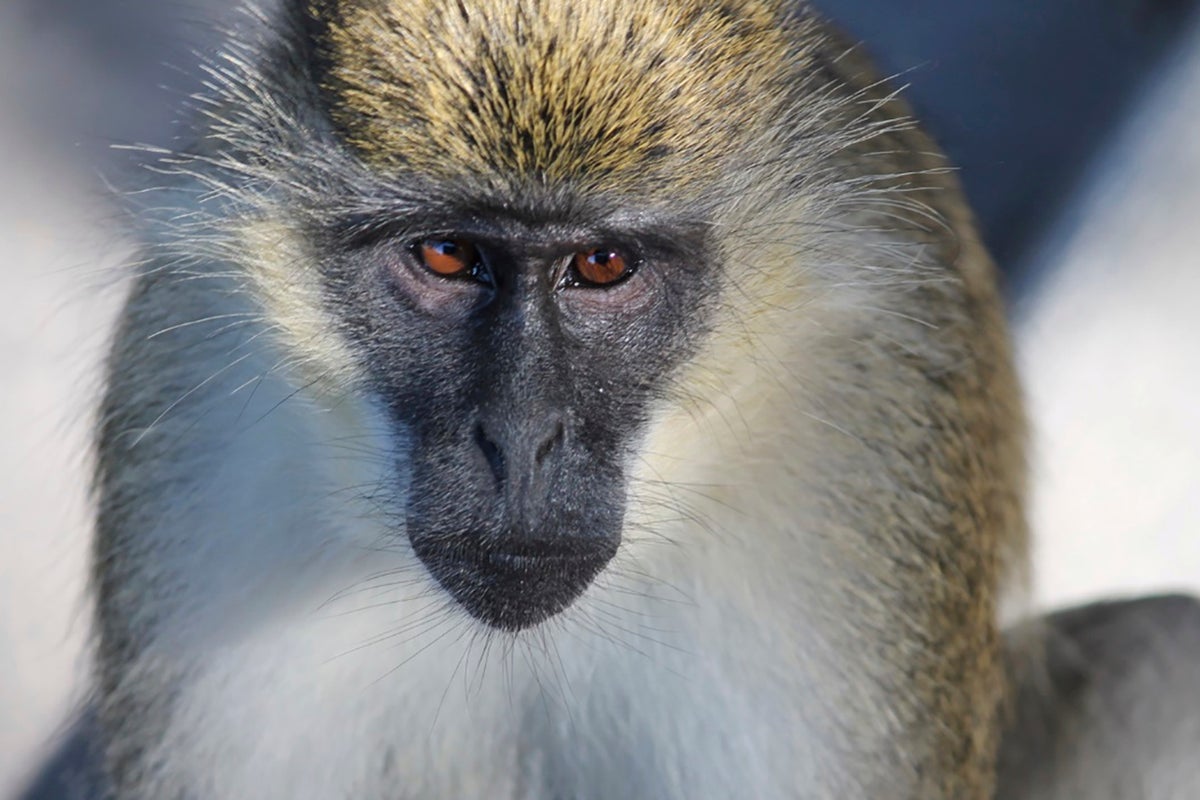
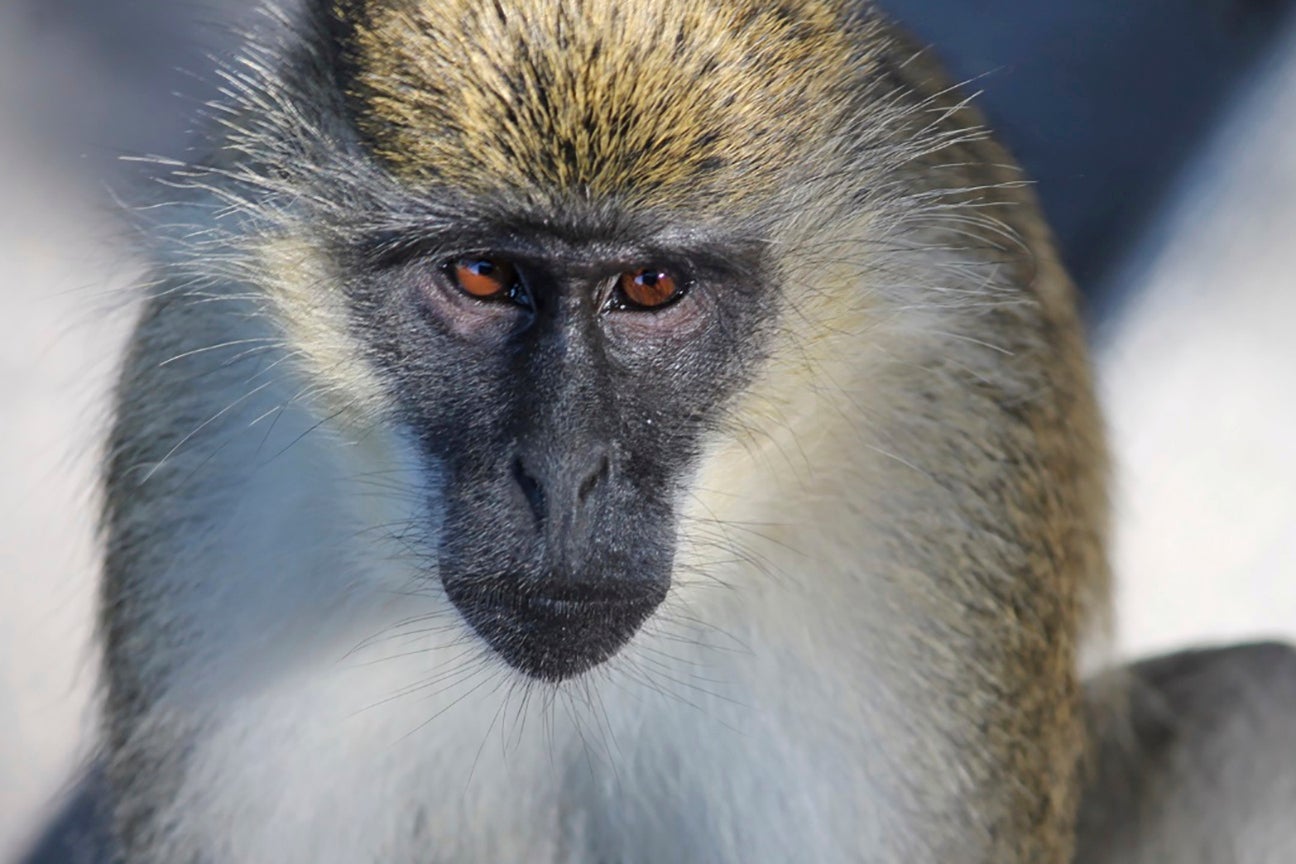
Vervet monkeys have been roaming St. Louis for multiple days, according to officials, and it is unknown where they came from (Deborah Williams)
At this time, officials do not know where the animals came from, though the St. Louis Zoo has identified them as vervet monkeys, native to sub-Saharan Africa and known to travel in groups called troops. They are sometimes called green monkeys due to their unique coloring.
The Independent has contacted city officials for comment.
City officials with the Animal Care and Control department began looking for the monkeys near the park on Thursday. Further patrols on Friday yielded no results.
Local residents are advised to avoid the creatures if encountered.
“I think of danger because that’s a wild animal. We have dogs, cats, and mice around here in this area, and now we have to worry about monkeys! I’m scared because I now have to keep my dog inside at certain times because I don’t want him to get attacked,” area resident Marva Young told KSDK.
open image in gallery
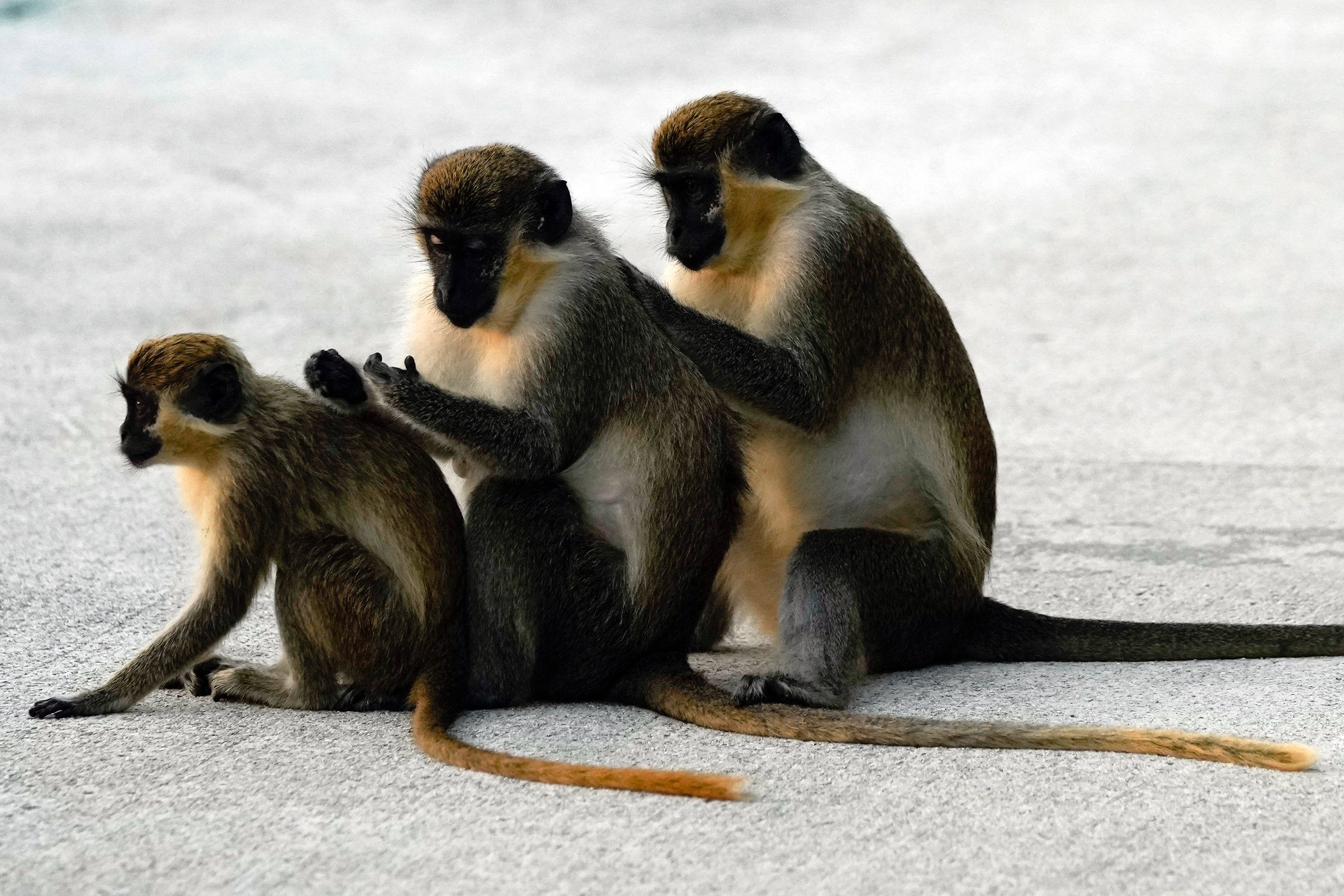
A troop of vervets has been roaming South Florida for decades (Copyright 2022 The Associated Press. All rights reserved.)
This is the first time the city has dealt with a group of monkeys “at large,” officials said Friday.
A troop of vervet monkeys that escaped from a breeding facility in the 1940s now roams the Dania Beach area of South Florida.
The animals were brought to the state from Africa for use in biomedical research.
They are not native to Florida, or the United States as a whole, but appear to have maintained a longstanding presence since escaping.
A 2020 census found that 40 monkeys descended from that original group remained in the area, according to the Daytona Beach News-Journal.
“Historically, they’ve been fed by people, so they’re really comfortable being around people, and they’ve learned to associate urban areas with people because they know people equal food,” Missy Williams, who heads the nonprofit Dania Beach Vervet Project, told NBC Miami in 2021.
“However, because they do come out into the urban spots, they can get electrocuted,” she added. “They’ve been hit by cars and then sadly, sometimes people even try to take them for the pet trade.”