
Archaeologists have made an unexpected discovery within a 2,000-year-old grave in Ukraine that may reshape our existing knowledge of ancient burial traditions in the region.
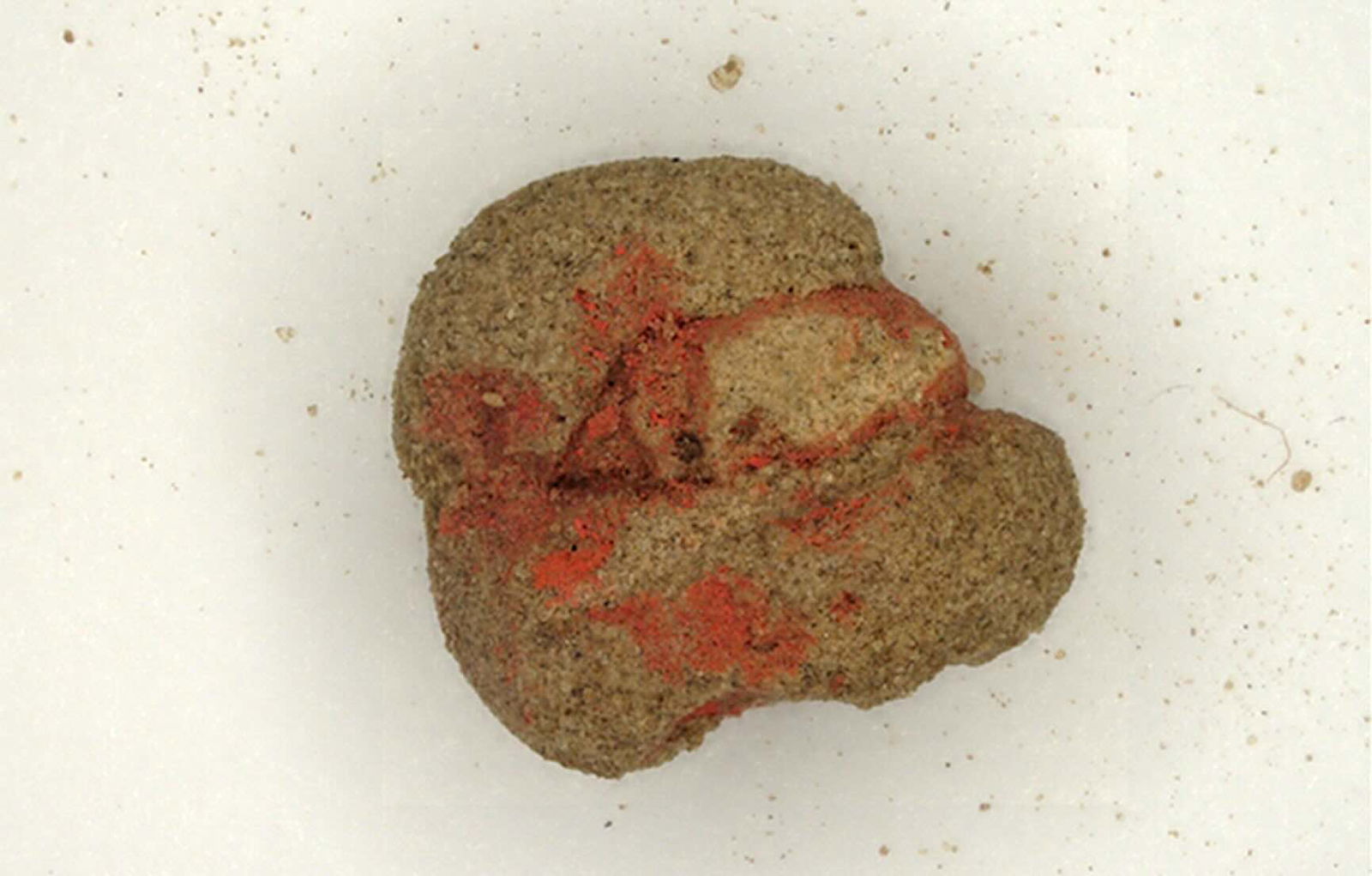
The discovery of a red pigment within a grave located at Chervony Mayak, an ancient Scythian cemetery in the southern part of the country, has revealed the presence of cinnabar, according to researchers who say the toxic mineral has never been previously identified within burial sites associated with the Late Scythian period.
“The pigment was found to be a thin layer covering sediment composed of quartz, microcline, albite, and calcite,” report the authors of a recent study that appeared in Antiquity describing the discovery, who note that the sample was comprised of small, sharp-edged particles amid “chemical compounds present in the grave fill” at the site.
The discovery is significant because it illustrates what appears to be a previously undocumented aspect of burial customs from the period. Presently, researchers believe the use of cinnabar at the location was intentional, possibly with ritual significance that has yet to be determined.
A Study in Scarlet
Cinnabar, sometimes also known as “cinnabarite” or “mercurblende,” bears a striking bright red coloration. A form of mercury sulfide, it is also the most abundant ore used in the refinement of elemental mercury. Past discoveries already recognize the mineral as having been used prevalently in the ancient world for its bright scarlet coloration, which was incorporated into a variety of pigments used in the ancient world.
Despite its striking appearance that attracted its use in colorful pigments, people in the ancient world also knew about the toxic properties of cinnabar, with some theories even suggesting that it may have been intentionally ingested under some circumstances as part of ritual ceremonies.
The archaeological team behind the recent discovery in Ukraine says the toxic mineral was found in grave 155, a location at Chervony Mayak where the remains of two women had been found. Evidence indicates their burials occurred at different times, and near the skull of the older of the two women, three small deposits of red material were found, alongside other items that included beaded jewelry and items made from copper alloy.
Analyzing a Toxic Discovery
While the appearance of red substances in graves from the period is not particularly unusual, past testing of their composition—if it occurs at all—had never previously identified the toxic mineral in question, according to study lead author Olena Dzneladze of the National Academy of Science of Ukraine.
In this instance, the presence of cinnabar was confirmed following testing that included examination of the substance using scanning electron microscopy and X-ray diffraction.
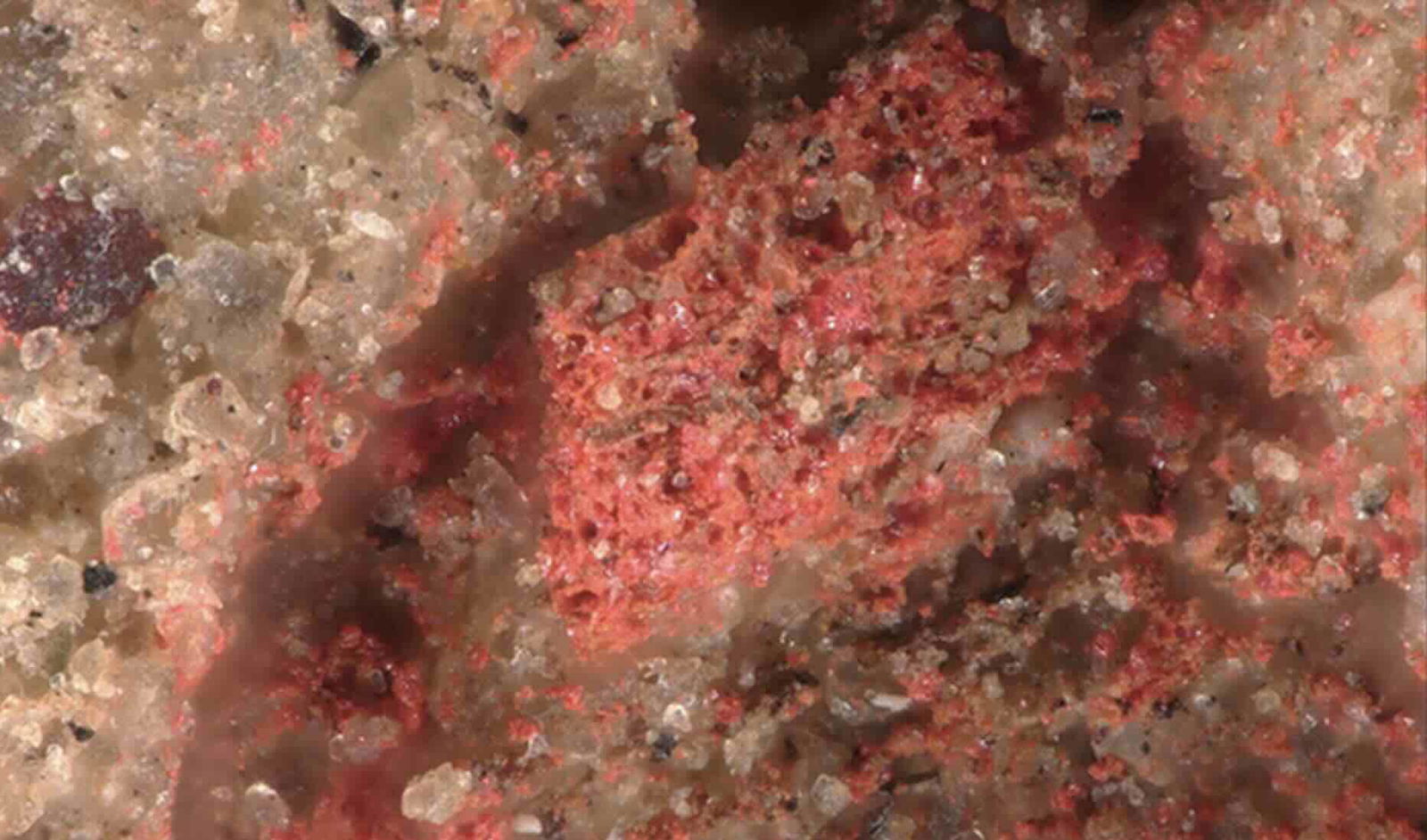 Detail view of cinnabar sample recovered from the site (Image Credit: Olena Dzneladze/Antiquity/Open Access)
“It is not currently possible to determine precisely the function(s) of cinnabar and the other red pigments found in Late Scythian graves, but their deposition in graves appears intentional,” Dzneladze and colleagues write in their paper. “Different pigments may have had distinct functions, although more broadly they likely had a ritual, germicidal, as well as cosmetic and pharmaceutical role,” they add.
Tracing Ancient Scythian Cinnabar
Although the location from which the cinnabar may have originated has not yet been determined, the team says that it is known to be found in southern Ukraine, and that its origin may be determinable through future studies, which may help to provide context for its appearance in the burial at Chervony Mayak, as well as how it might have been used in trade during this period in history.
“These results highlight the vital role of archaeometric analyses in examining and correcting the interpretation of mineral substances discovered at some archaeological sites,” Dzneladze and the team conclude.
“The application of such analyses is still rare, and further discussion of the function and provenance of pigments can proceed only with additional analyses and when the reference database is extended,” they add.
The team’s paper, “Mysterious red: cinnabar from the Chervony Mayak burial ground, Ukraine,” was published in the journal Antiquity last year.
Micah Hanks is the Editor-in-Chief and Co-Founder of The Debrief. A longtime reporter on science, defense, and technology with a focus on space and astronomy, he can be reached at micah@thedebrief.org. Follow him on X @MicahHanks, and at micahhanks.com.