
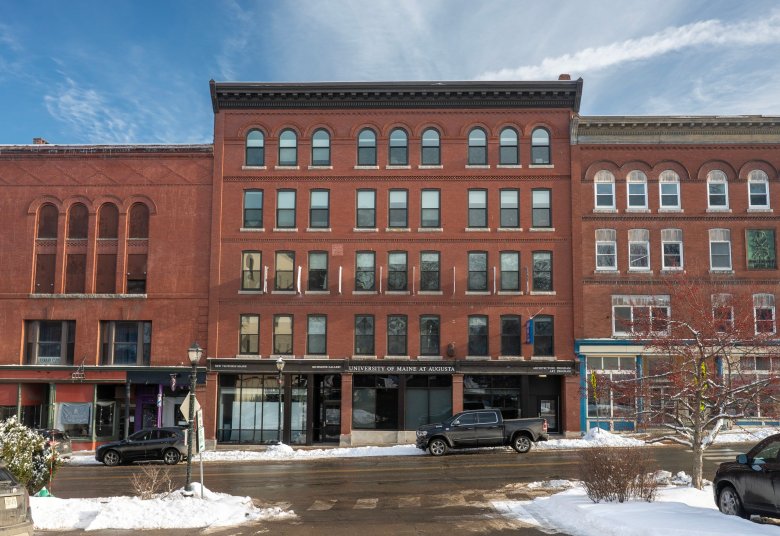
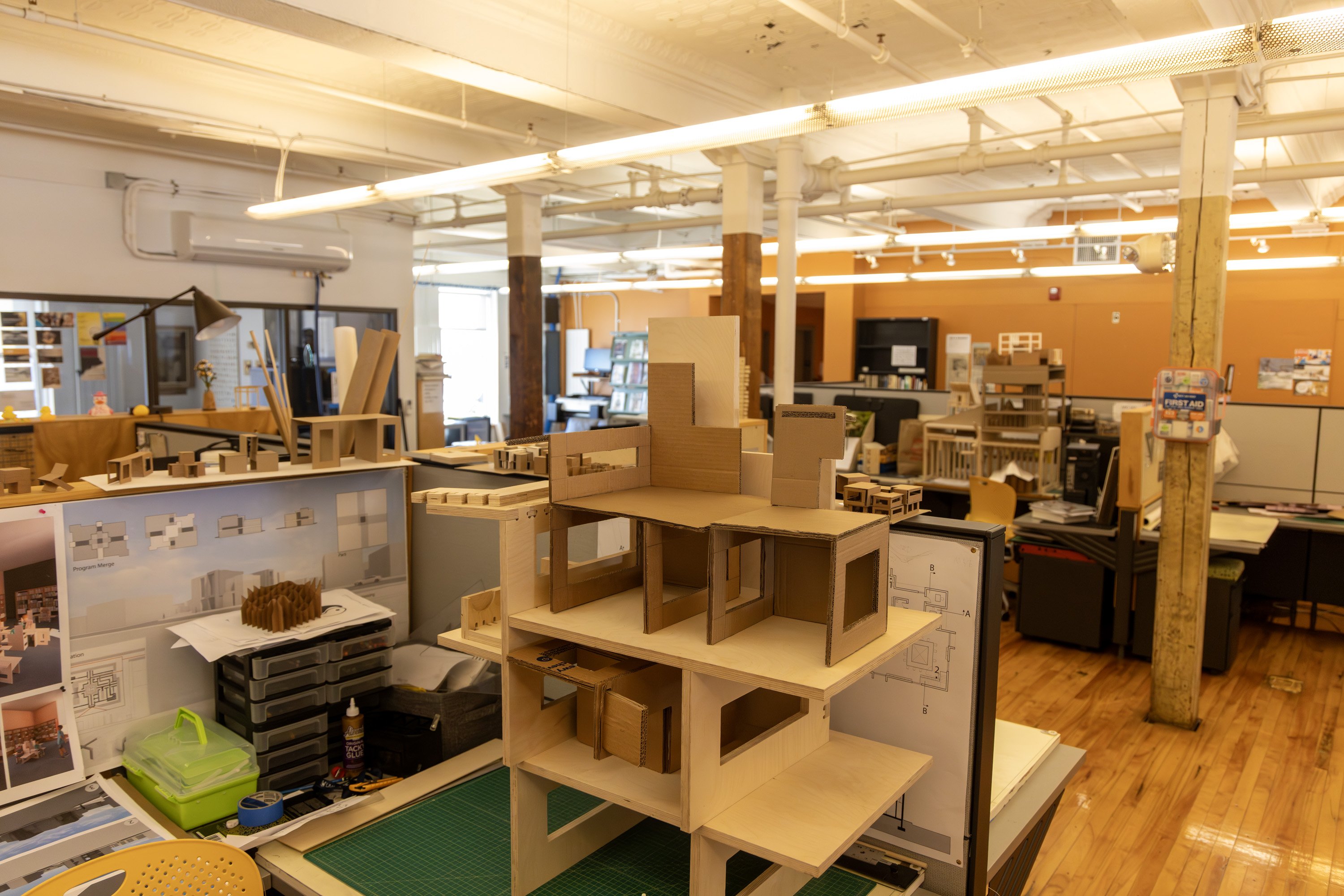
 Student projects are on display in a room in Handley Hall at the University of Maine in Augusta on Thursday. The building on Water Street in downtown Augusta houses both the art and architecture programs. (Anna Chadwick/Staff Photographer)
When Cassidy O’Dee was choosing architecture programs, Handley Hall was the deciding factor for her to choose the University of Maine at Augusta.
O’Dee, who is from Berwick, had been accepted to Roger Williams College and the Rhode Island School of Design, one of the best art schools in the country. She never considered attending any in-state school.
 Cassidy O’Dee, a first-year student at the University of Maine at Augusta, is studying architecture. (Courtesy of Cassidy O’Dee)
Even so, she decided she would check out the University of Maine at Augusta. The campus did not impress her, but then she took a trip to Water Street in downtown Augusta to visit Handley Hall.
O’Dee saw where she would have her own desk, where she and her classmates would hang up their work to be critiqued. She felt like she could see herself thriving as a student.
“I thought: ‘Wait a second. This is legit. They have a great thing here,’” she said.
Now, O’Dee, a first-year student, is second-guessing her decision. She, along with the other 45 students in the program, were told in late November by their professors that the university is moving its programs out of Handley Hall, due to the high costs of maintaining the downtown building.
Donated to the university in 2010 by Richard McGoldrick, the building played a key role in earning accreditation for the architecture program, which took years to achieve.
Neither the students nor professors have heard where the program will move to or anything from the university on the plans to maintain the accreditation for the architecture program.
“It’s hard to think about,” O’Dee said. “Everyone is upset.”
Kristen Eaton, a UMA spokesperson, said university officials have not decided whether to sell Handley Hall, but they plan to work with a local architecture firm and the university system’s management team to find a space on campus that meets the needs of the program to maintain the accreditation.
The timeline of the move is still being discussed, Eaton said.
“UMA has decided to relocate the art and architecture programs into campus-based space in Augusta following longstanding concerns about the condition and long-term sustainability of Handley Hall as an academic building,” said Eaton. “Those concerns include recurring flooding and significant deferred maintenance that would require substantial investments to address.”
Handley Hall’s annual operating costs are just over $110,000, including utilities, basic operations and custodial staff, according to UMA. The university system has put $190,000 into addressing maintenance and repairs into the building over the past two years, Eaton said.
The UMaine System currently has an $18 million budget deficit, but the University of Maine at Augusta is not affected by it, system spokesperson Samantha Warren said.
UMA is currently drafting its budget for the fiscal year that starts July 1 and is on track to generate a slight budget surplus during the current year, Warren said.
Peter Precourtt, an art professor and president of UMA’s faculty senate, said the decision to move the builidng should have been discussed with the faculty in accordance with the UMaine System’s shared governance bylaws.
“It feels like a moment where there is a conflicted way of thinking of the university as a business and not as an educational institution,” Amy Rahn, professor of art at UMA, said.
Eaton said any future decisions about the space will be discussed with faculty and other shared governance groups, with the goal of moving the program into campus-based spaces that support studio-based learning and modern, accessible facilities.
“We are working closely with faculty and shared governance groups to ensure a thoughtful, well-planned transition,” she said. “Students will continue to receive the high-quality education they expect from UMA, and we will keep them informed throughout the process.”
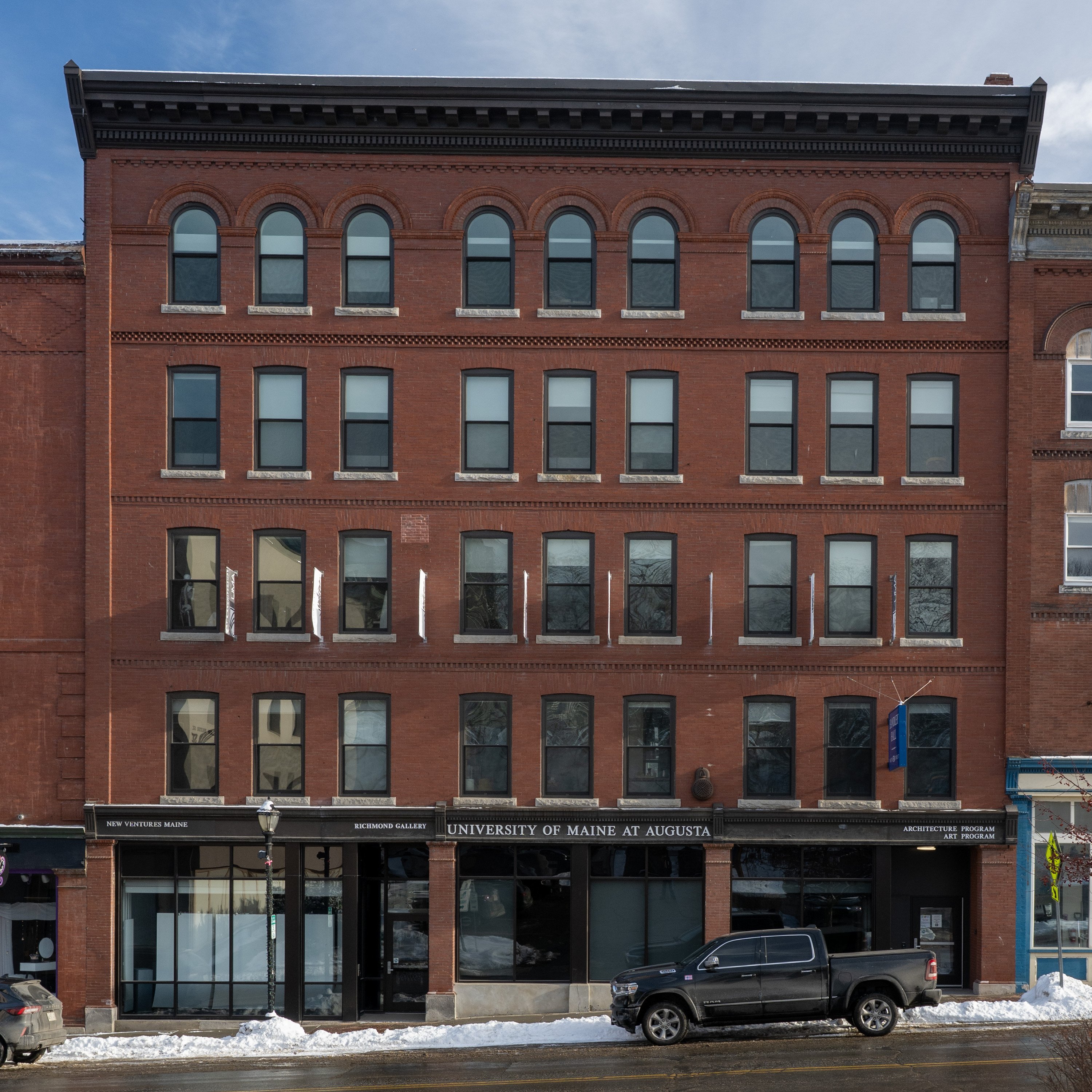 Handley Hall at 331 Water St. in Augusta, seen here Tuesday, is currently the home of University of Maine at Augusta’s art and architecture departments. (Joe Phelan/Staff Photographer)
ACCREDITATION MATTERS
Accrediting an architecture program is no simple task, according to Eric Stark, professor of architecture at UMA. It’s an extensive, yearslong process completed by the National Architecture Accrediting Board.
Accreditation ensures that the education provided by a university is of high quality. It validates that the course work will prepare students for a career once they graduate.
UMA’s five-year program allows students to take the Architect Registration Exam, which is required to become a licensed architect, immediately after graduation. In other programs, students have to attend additional schooling before taking the exam. UMA has an above-average pass rate for the exam.
Stark started the accreditation process in 2011.
The program started decades before that, in 1987, as a two-year program. In 2001, it became a four-year program, Stark said.
The building was exactly what the program needed to start the accreditation process. It provided the space for students to peer-review their work. A workshop, photo studio and laser-cutting space were added to optimize their learning.
Working together is a large part of the process of becoming an architect, said Stark, and the building provides the space to house every student in the five-year program.
The National Architecture Accrediting Board visited campus in 2012 to determine the university’s eligibility. The organization returned on a regular basis, visiting in 2013, 2015, 2017 and 2018 to review the students’ work through their drawings and models.
 Eric Stark, a professor of architecture at the University of Maine at Augusta, stands in front of the material library in Handley Hall on Thursday. The library gives students a sense of available materials, from stone and slate to wall systems. (Anna Chadwick/Staff Photographer)
In its accreditation certificate, the board cited Handley Hall as a space to support and encourage studio-based learning, allowing for a hands-on experience for students. The first accredited students graduated in 2018.
Any changes to the program must be approved by the board, including any building changes.
“The (board) needs to understand what the plan is. As of now, there isn’t one,” Stark said.
PROGRAM‘S FUTURE
O’Dee, along with several of her classmates, attended a UMA Student Senate meeting after emailing the student council president. O’Dee and her peers had been told that UMA President Jenifer Cushman would attend to answer their questions.
Cushman did not attend, so they tried another way to get in touch with her.
At Java with Jen, a designated time that Cushman sets aside to talk with students, Cushman told O’Dee to attend the UMA Faculty Senate meeting to get her questions answered.
O’Dee attended the December meeting and read a statement detailing her concerns.
At the same meeting, the faculty senate passed a resolution that called on the administration to stop the Handley Hall move until shared governance can take place; to begin a process of shared governance; and if faculty and administration can’t agree on a new space, that they hire an independent design firm that is familiar with architecture accreditation.
Neither she nor the professors received any answers and say that they still do not have them.
O’Dee also told the university that if they continue forward with the move, she hopes that the system will tell prospective students. She wishes she had known about it, especially as the discussion about the move began before she committed to the school in April.
Eaton, the UMA spokeswoman, said that because the specific timing of the move is still being worked through, the university administration is evaluating how and when future students may be impacted.
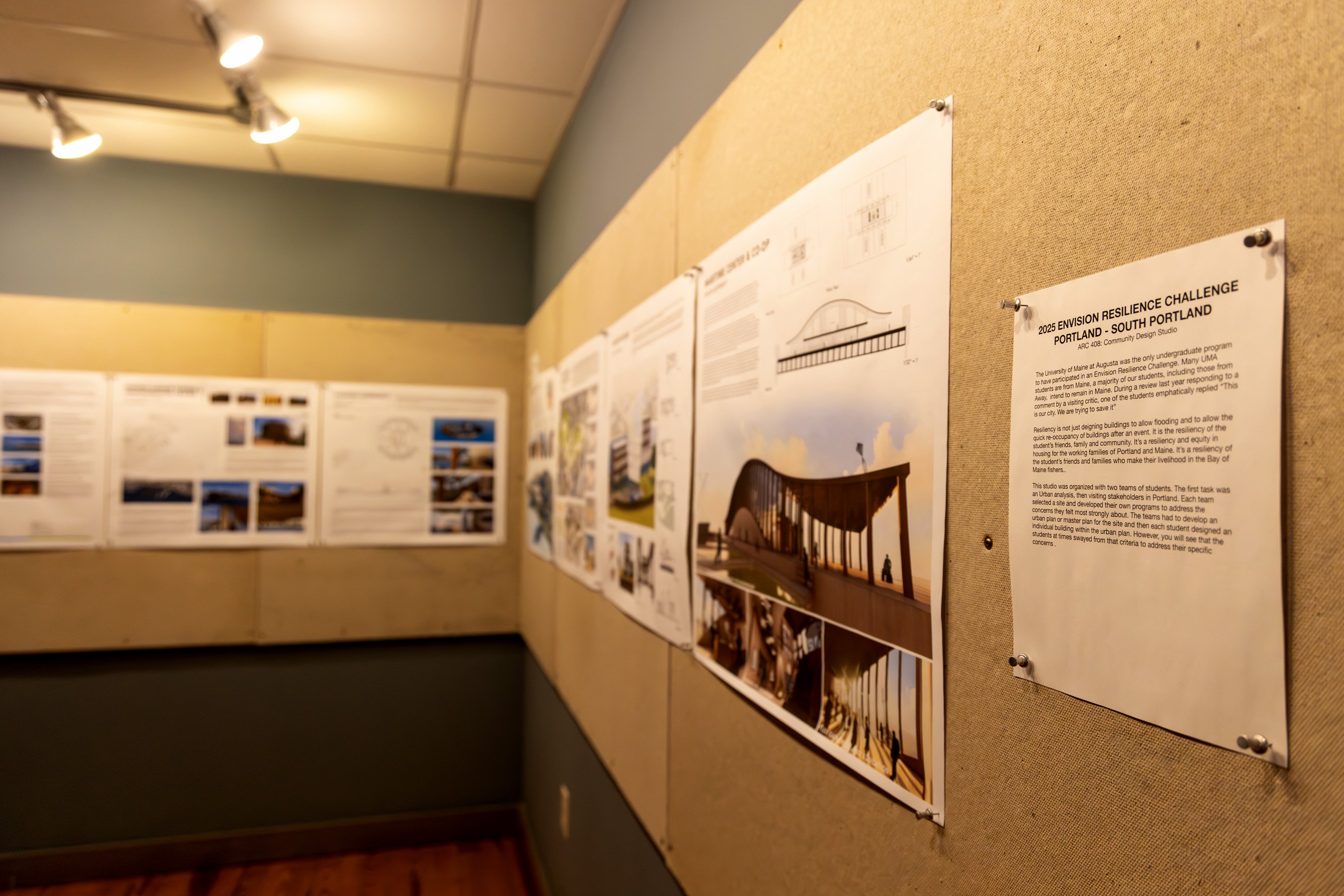 Printouts from the 2025 Envision Resilience Challenge in South Portland are seen Thursday on a floor of Handley Hall, which houses the University of Maine at Augusta architecture program. This year, students are working on a project in Bath. (Anna Chadwick/Staff Photographer)
“As planning progresses, we will communicate clearly with both current and prospective students so they understand the direction of the program and can make informed decisions,” she said.
From last year to this year, the program has had a 14% increase in students, Stark said.
Currently, the program has around 45 to 55 students. Stark said the enrollment number is by design, as it’s a very peer-focused and motivated program where students learn from each other. It’s considered an affordable university program for students.
Stark regularly hears from colleagues across the state on how prepared and educated the UMA students are upon entering the workforce.
“We are not only training future architects, but good architects,” he said. “We don’t want to lose that.”