As Santa Barbara County emerged from last weekend’s soaking storm, the new focus shifts to the water left behind and where it went.
The storm, which pushed the county past its average annual rainfall for the water year and claimed one life in Goleta, sent runoff coursing through creeks, across low-lying coastal areas, and into reservoirs already filled from the storms of November and December. County and city officials continue to assess and monitor flooding impacts along the waterfront as well as Lake Cachuma levels, which reached 101 percent over the weekend.
Waterfront Flooding Driven by Rain, Not Tides
Along the Santa Barbara waterfront, flooding was visible in familiar low spots — but officials said the water behaved differently this time.
“We weren’t entirely sure why the water took a different course,” said Angela Rodriguez, public information officer for the city’s waterfront operations. “This time we experienced some of the flooding near the harbor entrance.”
Rodriguez said the weekend’s king tides coincided with the storm but were not the primary driver of flooding.
“Most of the flooding this weekend was due to the rain, not the king tides,” she said. “It was two separate things happening.”
Water pooled in the harbor’s west parking lot and near the yacht club, areas that regularly see minor flooding during high tides. City crews closed off the first row of parking in those areas as a precaution.
“Other than cleanup, there was no damage,” Rodriguez said on Wednesday. “As of this morning, we’re pretty much back to normal.”
Inland Impacts
Walter Rubalcava, with Santa Barbara County Flood Control, said crews spent much of the weekend assessing conditions before beginning cleanup and maintenance work once water levels receded.
“We were removing debris — bushes, material caught in culverts and under bridges — to help the water get through,” Rubalcava said.
By Monday, crews shifted to evaluating whether debris basins needed to be desilted, particularly near the airport, which was forced to temporarily close due to flooding over the weekend, and along the Goleta Valley. “As water slows down closer to the coast, sediment drops out,” Rubalcava said. “Those basins fill up with silt, so we remove it so the water has a place to go again.”
He said no areas were considered immediately dangerous as of Wednesday, but officials are continuing to monitor historically vulnerable locations.
“The ground is saturated,” Rubalcava said. “People know their areas as well as we do. If you feel you’re in a risky situation, don’t wait for an emergency message — take action to minimize your risk.”
Lake Cachuma at Capacity
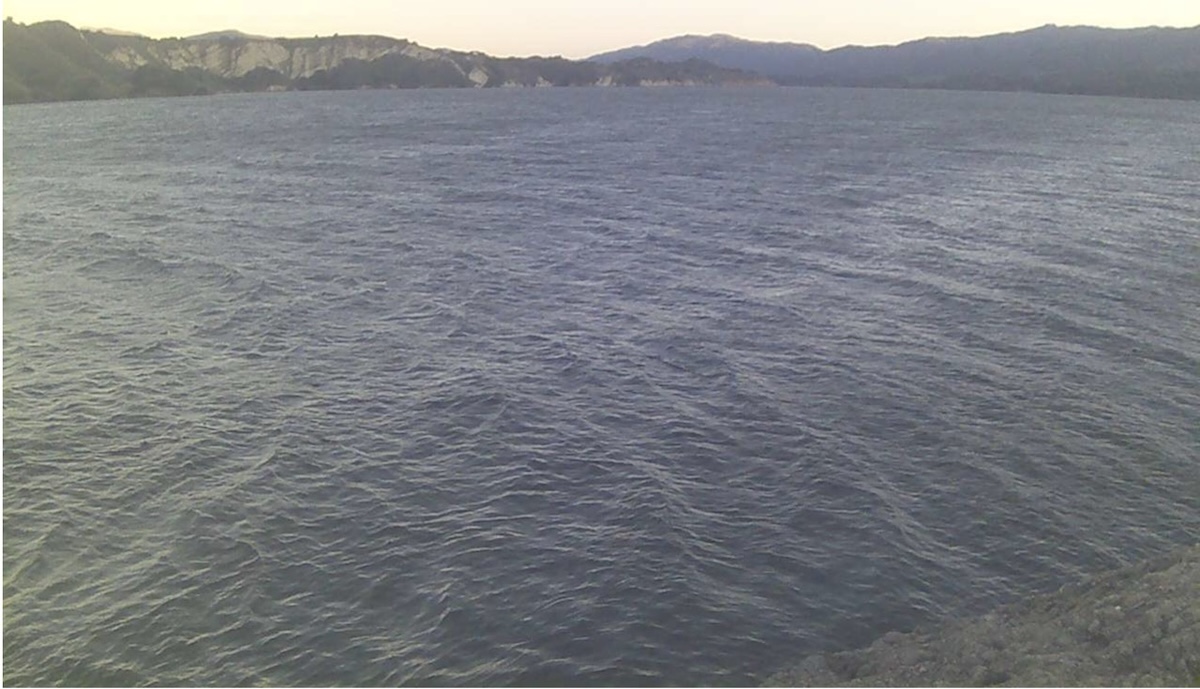
Farther northwest, Lake Cachuma has risen after weeks of steady rain, prompting proactive releases to balance reservoir levels and downstream impacts. During last weekend’s storm, county reservoir data showed Cachuma’s levels reached 101 percent capacity.
Rubalcava said county officials are working closely with the U.S. Bureau of Reclamation. “They do the releases, and we work with them to manage and balance outflows versus downstream impacts,” he said. “Everything’s going well right now. It’s going to be at full capacity.”
Water released from Lake Cachuma flows into the Santa Ynez River and eventually toward the ocean, passing through the Santa Ynez Valley and Lompoc area along the way. Rubalcava said there was some minor flooding downstream but nothing significant.