
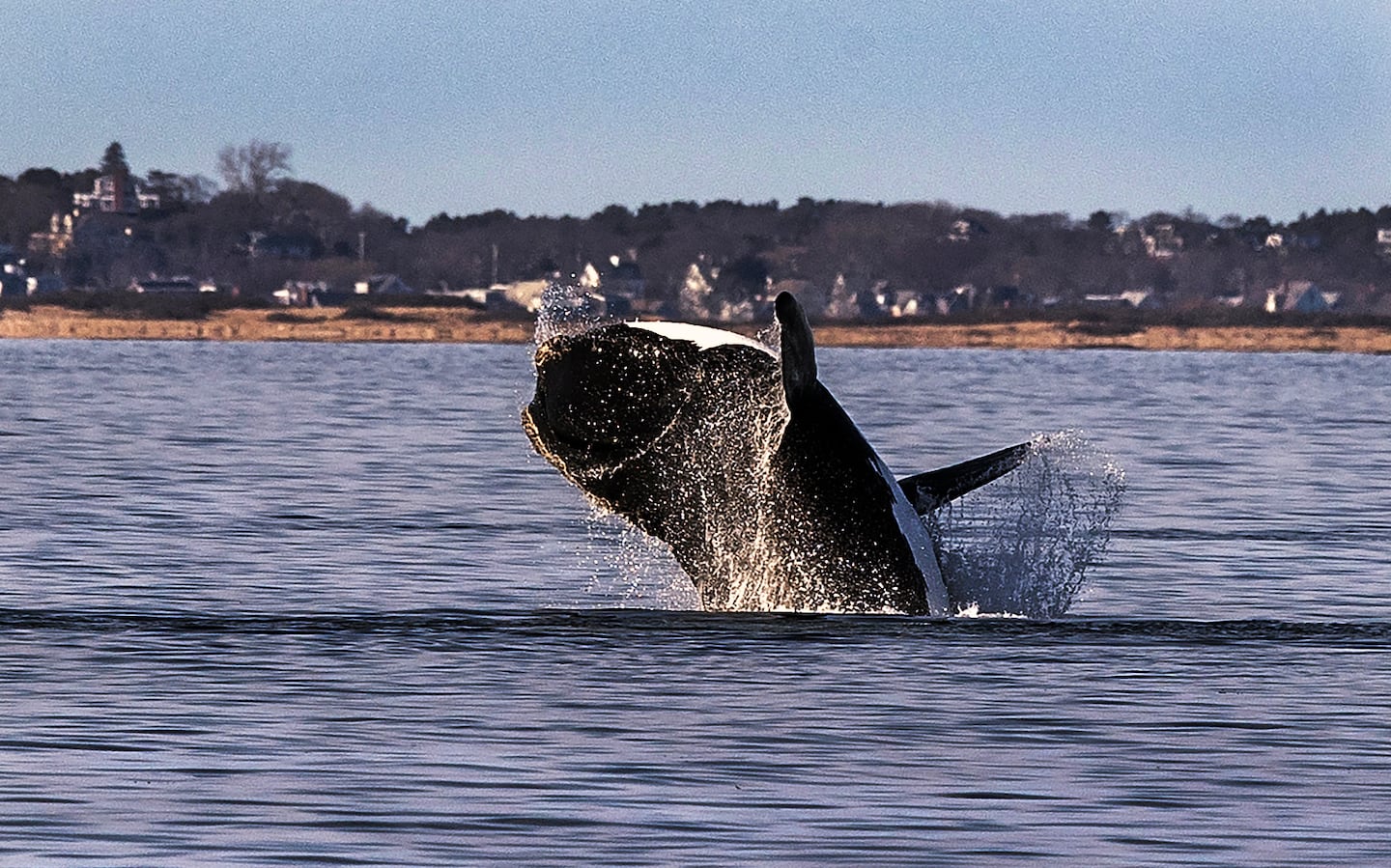
“It speaks to the whales’ resiliency and ability to make those adaptations,” said Heather Pettis, who leads the right whale research program at the New England Aquarium. “Those changes take time, but they’ve shown they can do it.”
Right whales, seasonal visitors to the waters off New England, can grow to be longer than an MBTA bus and are thought to be able to live for at least 70 years, though their lives are often cut short by humans. Only a few hundred are alive today.
The whales are especially vulnerable to vessel strikes, which can break bones and lacerate their bodies, because they often live in proximity to major ports and shipping lanes. Fishing gear is also a threat. When whales become entangled, they can slowly starve, lose limbs, or even suffocate if they are unable to come up to the surface to breathe.
Right whales mounted a slow recovery in the decades after whale hunting was banned, reaching a high of nearly 500 whales in 2011. But the following years were dire for the species. During the 2018 calving season, not a single right whale was born. By 2020, researchers estimated only 358 whales remained.
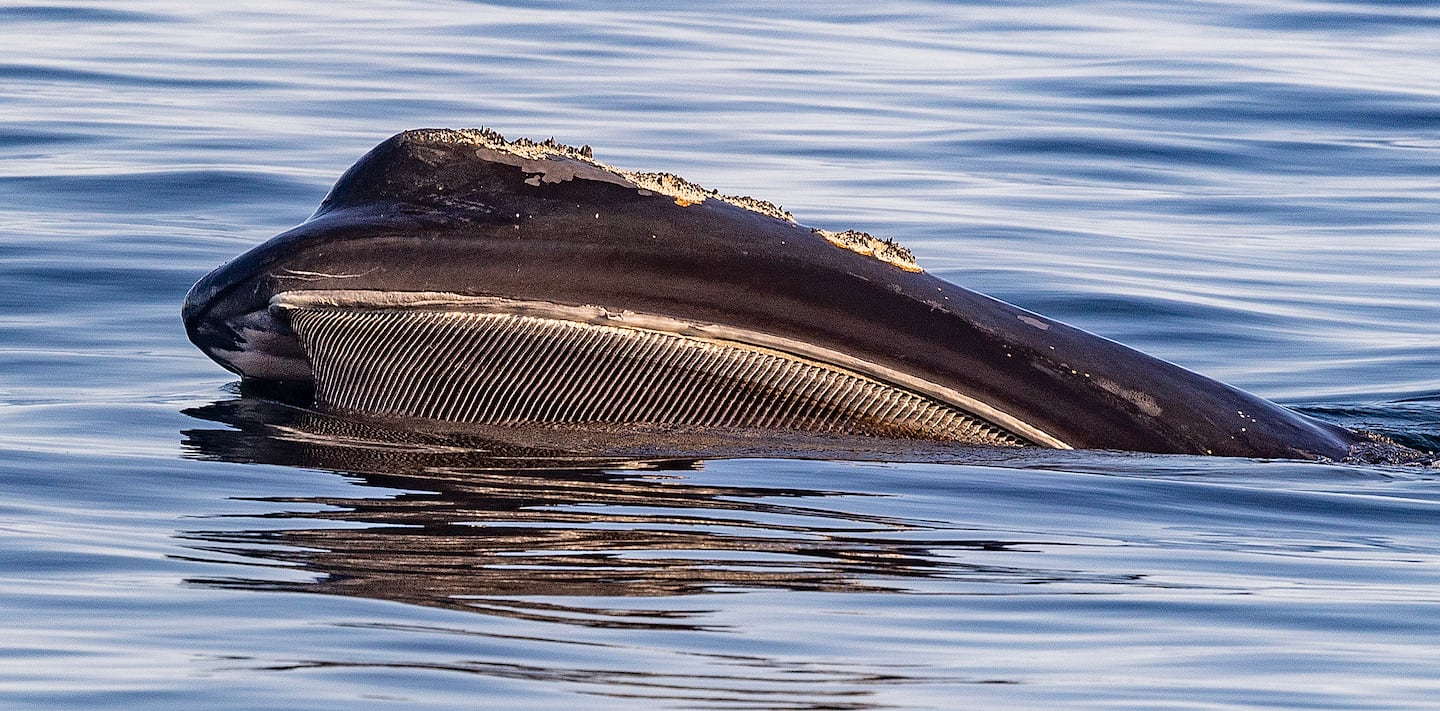 A right whale cruised in Cape Cod Bay with their mouth open, baleen filtering, eating copepods, tiny crustaceans in the zooplankton world in 2024.Stan Grossfeld/Globe Staff
Pettis, who also chairs the North Atlantic Right Whale Consortium, a collaborative group for research and conservation, said the whales were up against a “perfect storm.”
The whales underwent a dramatic shift in their distribution, congregating in new areas where they lacked the same protections from boat strikes and entanglements, she said. Scientists believe they may have been chasing prey affected by warming ocean temperatures driven by climate change, which may also have left the whales poorly nourished.
Since then, Pettis said, protections for whales have started to catch up. Officials have implemented measures like seasonal speed restrictions and limitations on fishing when whales are present. Fishermen have also adapted their gear, such as using rope that has weak areas, making it easier for whales to break free when caught.
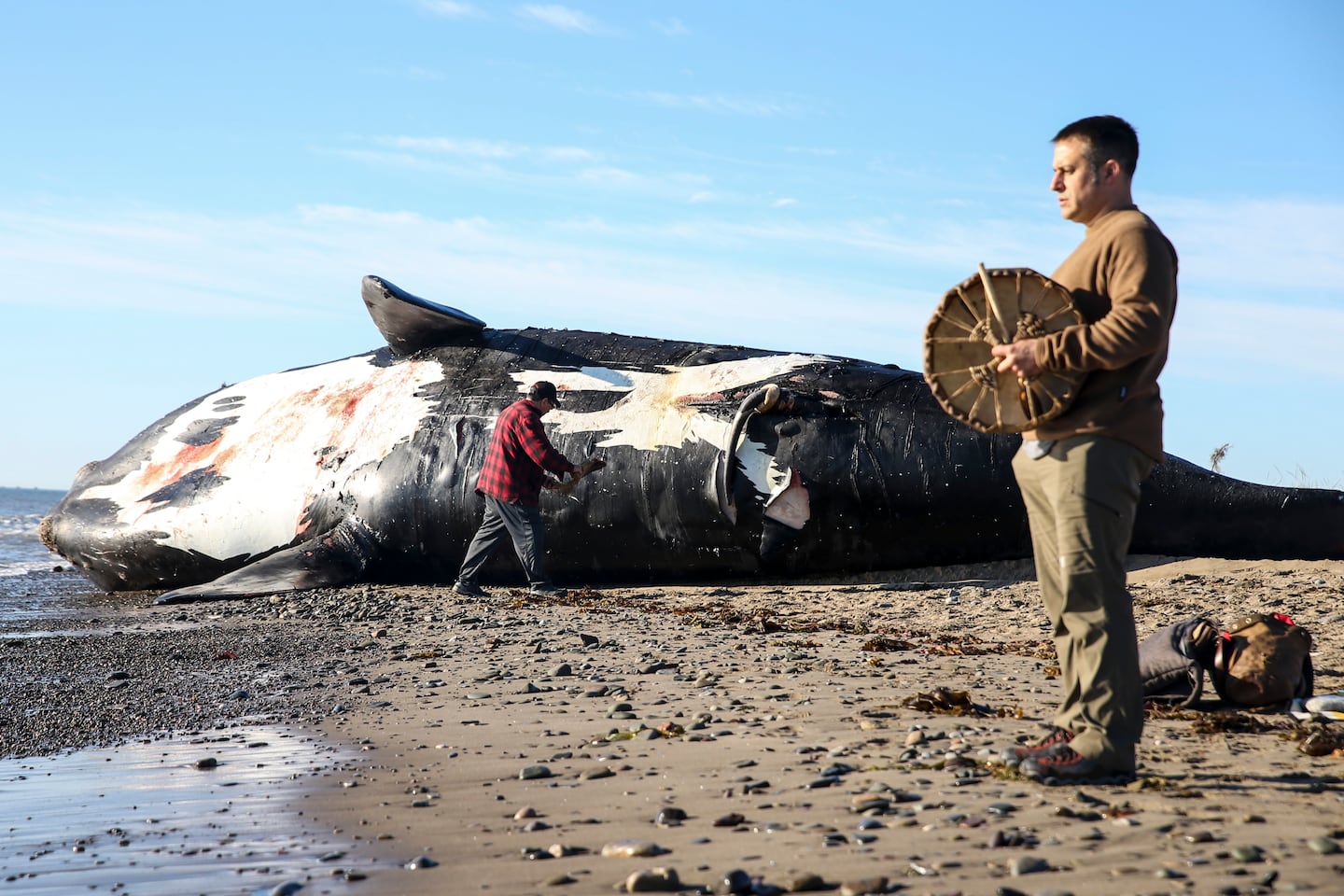 Patrick Goguen (right), an Acadian from Moncton, beat on a drum while Noel Milliea, an elder from Elsipogtog First Nation, performed a ceremony on a dead right whale to honor the animal’s spirit before the necropsy in Shippagan, New Brunswick, 2019.Nathan Klima for The Boston Globe
Since 2020, the population of whales has grown by about 7 percent. In 2024, the most recent year for which there is data available, the whale consortium estimated that there were 384 whales, an increase of about 2 percent from the year before. And in 2025, Pettis said, there were zero mortalities of right whales detected.
This year’s calving season, which began in November and runs through April, has brought more promising news. So far, 18 new calves have been spotted, including one on New Year’s Day. An aerial survey team identified a calf swimming off the coast of Florida with its mother, Boomerang, named for her boomerang-shaped white scar.
“We’re having a great year,” said Ryan Schosberg, a member of the right whale ecology program at the Center for Coastal Studies in Provincetown. He has been conducting aerial surveys to spot whales. Last year, there were only 11 calves spotted, he said.
Scientists at the National Oceanic and Atmospheric Administration have cautioned that about 50 or more calves would need to be born each year for many years to allow the whale population to recover.
Experts called for more action to protect the whales. The whale consortium wrote in its most recent annual report card for the species that measures to reduce whale deaths and injuries “must be a priority if this species is to survive.”
Research has shown that interventions can be effective. In Canada, 17 right whales were killed or injured in the Gulf of St. Lawrence, located northeast of Maine, over three months in 2017. Officials implemented a mandatory slow speed zone, a large fishery closure area where whales were most often found, and other interventions. The following year, no right whale deaths were documented.
A few days before leaving office in 2025, the Biden administration scrapped a proposal to expand protections for these whales that would have slowed down ships around Cape Cod and the Islands during parts of the year. Residents raised the alarm that the rule would have eliminated high-speed ferries and argued that whales did not regularly appear in some areas that would be regulated.
Governor Maura Healey said in a statement at the time that the decision was “good news” for residents and businesses.
“We look forward to continuing to work together to protect right whales and the local economy,” she said.
Erica Fuller, senior counsel in the ocean program at Conservation Law Foundation, said the Biden administration’s decision had been a disappointment, and federal action under President Trump did not appear forthcoming.
But she said Massachusetts continues to be a leader in right whale conservation.
“Time is of the essence,” she said.
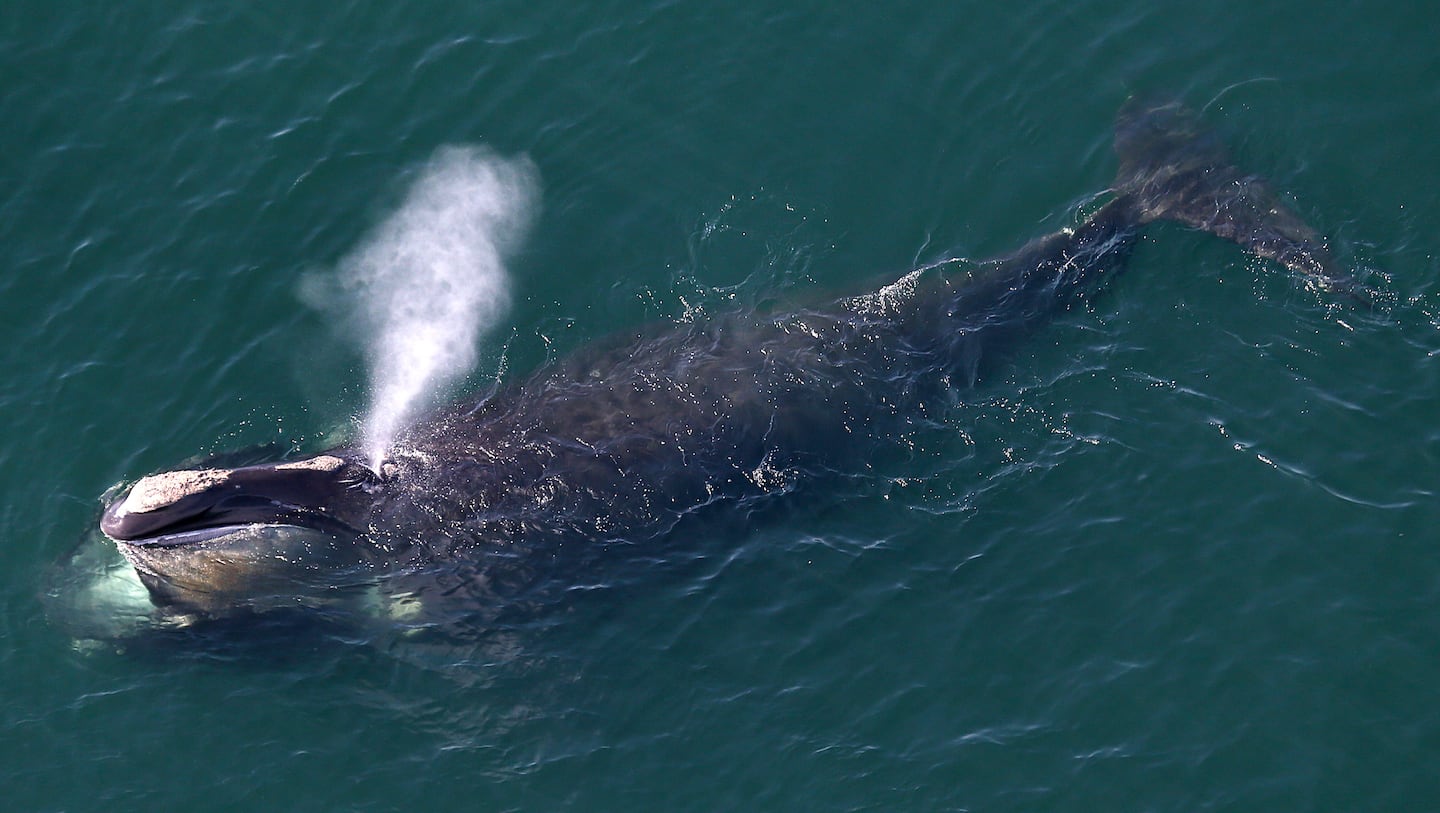 A group of the North Atlantic right whales swam off the shore of Duxbury in 2015. David L. Ryan/Globe Staff
Kate Selig can be reached at kate.selig@globe.com. Follow her on X @kate_selig.