
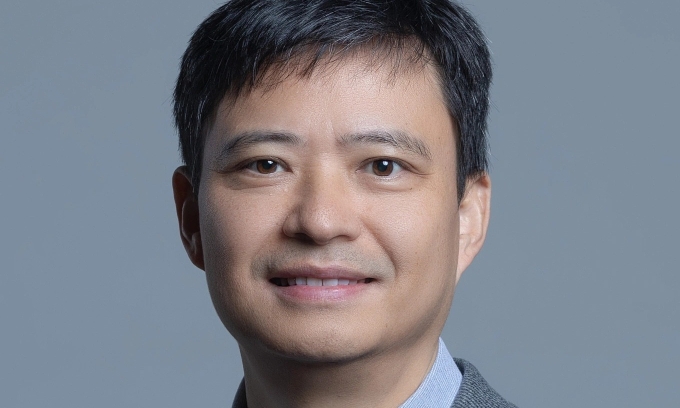
Westlake University announced in late December 2025 that Ling has joined the school as a chair professor in its Department of Artificial Intelligence and will lead its Intelligent Computing and Application Lab. The university is based in Hangzhou, a major technology hub in eastern China.
Ling is best known for his pioneering work in computer vision and AI, including his role in developing LeafSnap, the world’s first mobile application to use image recognition to identify plant species from photographs of leaves, the South China Morning Post reported.
He designed the app’s original leaf-recognition algorithm, a breakthrough that helped machines better interpret the visual world and laid the groundwork for technologies now widely used in augmented reality, medical imaging, and visual analysis.
Now 51, Ling said the move back to China was driven by the freedom to pursue unconventional research directions.
“Many traditional AI fields have matured,” he said. “Real breakthroughs now require exploring new and less-traveled paths.”
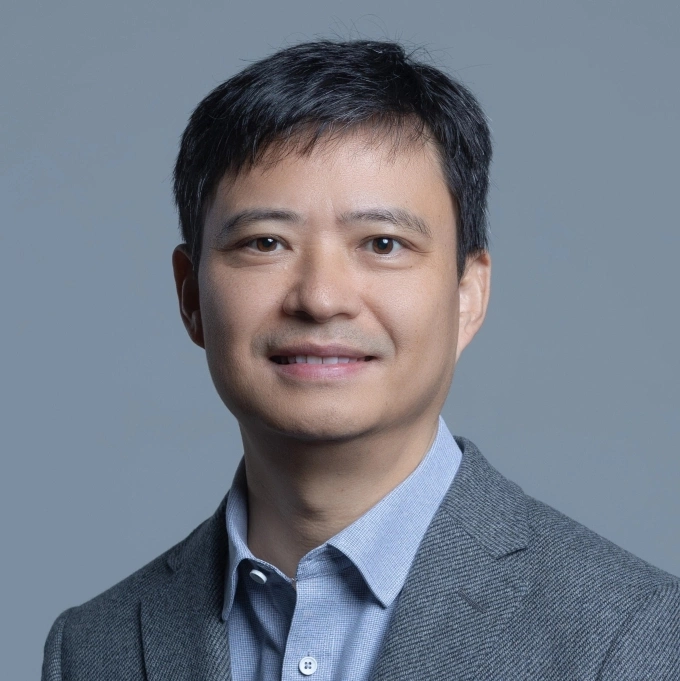
AI researcher Haibin Ling. Photo courtesy of Westlake University
Before returning to China, Ling had been a SUNY Empire Innovation Professor in the Department of Computer Science at Stony Brook University since 2019. He is also an IEEE Fellow, one of the highest honors awarded by the Institute of Electrical and Electronics Engineers.
Ling earned his bachelor’s degree in 1997 and master’s degree in 2000 in computer science from Peking University. He later worked as a research assistant at Microsoft Research Asia before moving to the University of Maryland in 2001, where he completed his PhD in 2006.
His early research focused on computer vision at a time when the field was still emerging. That work paved the way for LeafSnap, which quickly gained popularity and became a model for many plant-identification and visual-recognition apps that followed.
After completing his doctorate, Ling shifted his focus toward visual tracking and dynamic target tracking, technologies that are now central not only to security and surveillance systems but also to medical imaging and gesture-based interaction in AR and VR environments.
Over the years, Ling has received numerous high-profile awards, including the U.S. National Science Foundation CAREER Award, the Yahoo Faculty Research and Engagement Award, the Amazon Machine Learning Research Award, and the IEEE Transactions on Visualization and Computer Graphics Best Journal Paper Award at IEEE VR 2021, one of the world’s leading virtual reality conferences.
In 2024, Ling was named among the top 1% of the world’s most cited researchers by Clarivate, which manages the Web of Science database. His Google Scholar profile currently lists more than 51,000 citations.
Ling has also served on the editorial boards of multiple leading IEEE journals and regularly acts as an area chair at major international AI conferences.
His return comes amid a broader trend of overseas Chinese scientists moving back to China, bringing with them not only advanced expertise but also extensive international research networks, a shift that is increasingly reshaping China’s ambitions in global science and technology.