
The sweeping US military raid on Venezuela to seize the country’s president and his wife poses a new critical threat to the global rules-based order. Venezuelan President Nicolas Maduro was abducted by US forces from his compound in Caracas and taken to New York to face narcoterrorism and weapons charges, which he denies.
Washington has characterised the strike as a law enforcement operation. But it is a flagrant breach of international law and an affront to the core principles of the United Nations Charter. These include the independence and sovereignty of states and the requirement that disputes be settled peacefully.
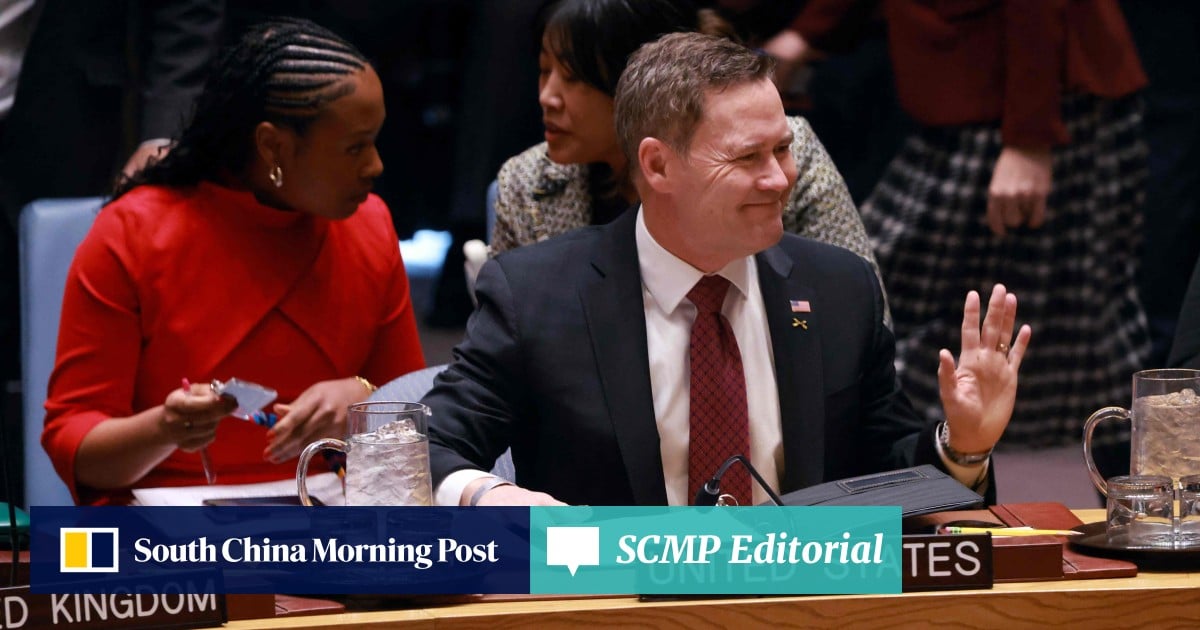
The UN is responsible for ensuring that the rules are observed. But it was a bystander, powerless to prevent the attack. There was no consultation with member states beforehand. An emergency meeting of the UN Security Council took place only after the raid and achieved little. Some states, including China, condemned the actions of the US.
The inability of the international body to intervene has renewed doubts about its relevance amid today’s geopolitical conflicts and tensions. It is seen by many as a paper tiger. Established after the second world war to maintain international peace and security, the UN celebrated its 80th anniversary last year. But it has failed to stop wars in Gaza, Ukraine and elsewhere.
The US played a leading role in forming the UN and its predecessor, the League of Nations. Now, Washington has turned the clock back to the gunboat diplomacy of the 19th century. It has set a dangerous precedent. Maduro is the first leader to be targeted now, but might not be the last. Thinly veiled threats have been issued to Colombia, Cuba, Mexico and Iran. US President Donald Trump has also reaffirmed his interest in annexing Greenland, a resource-rich autonomous Danish island, which would bring it into conflict with a Nato ally. This is all part of a US strategy to assert supremacy over the western hemisphere. US Secretary of War Pete Hegseth spoke of a “new era of great power competition”. It is not an attractive proposition. These developments should cause US allies to rethink their overdependence on Washington for security. The US is no longer the guarantor of a rules-based world order.
The principle of collective security – considering the implications for all rather than picking one side – needs to be reasserted. The UN is flawed, but it continues to provide a platform through which disputes can be resolved peacefully. It must restore its authority and credibility, ensuring that proposed reforms, including changes to the UN Security Council, are successful. That will not be easy amid deep divisions. Responsible nations need to pull together to ensure international law prevails and diplomacy triumphs over brute force.