
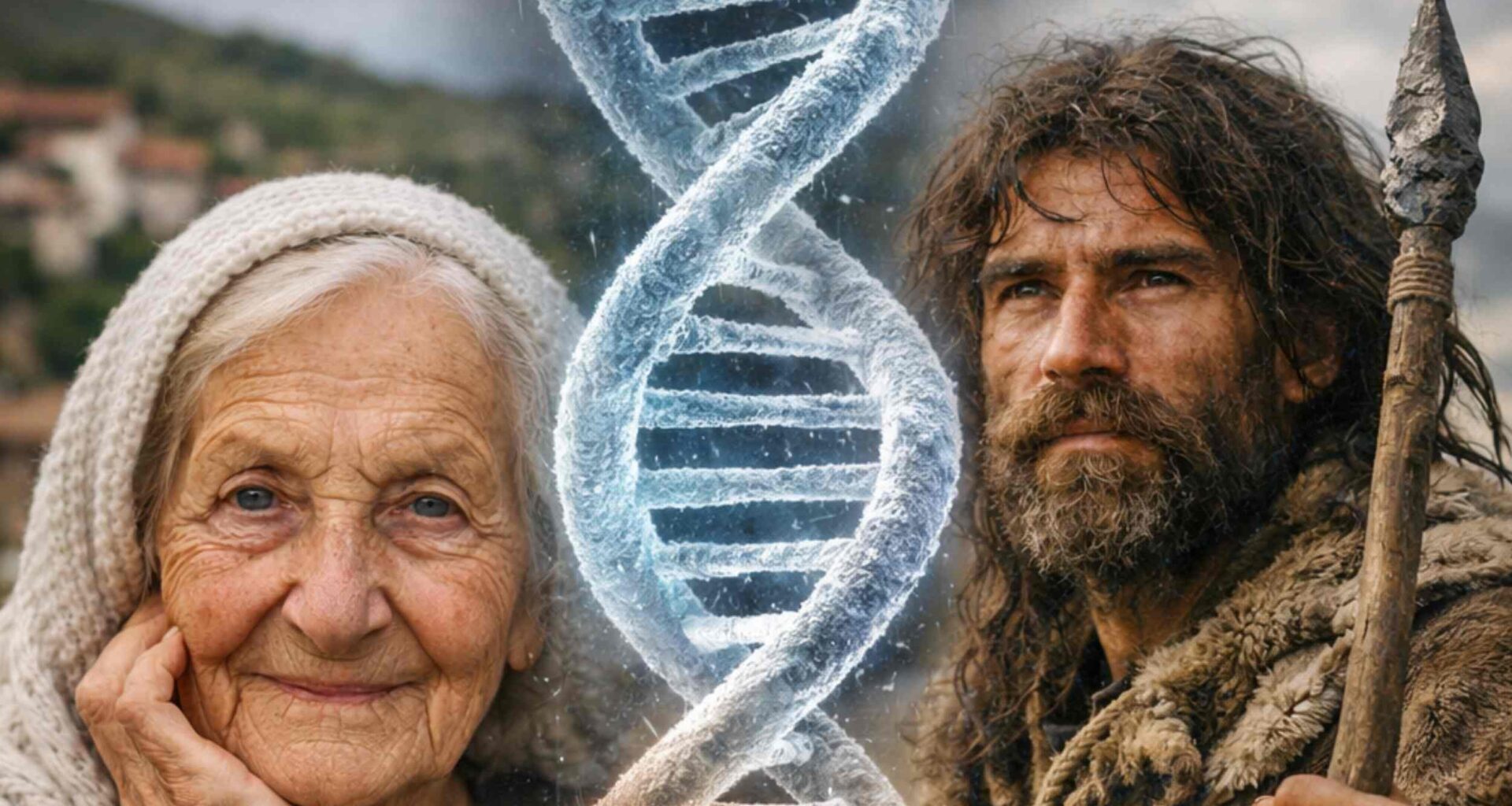
A team of Italian scientists recently found a link between super-agers, or people with exceptional longevity, to inherited DNA from Ice Age hunter-gatherer populations in Europe.
By comparing DNA from hundreds of adults and controls, the ancestry study tests how genetic ancestry, DNA patterns from earlier populations, affects aging.

Small differences in inherited DNA can change how bodies handle stress and infection over a lifetime.
The work was led by Prof. Cristina Giuliani, an associate professor, at the University of Bologna (UniBo) in Italy.
Her research follows epigenetics, chemical tags that change how genes behave, across populations, which fits a longevity study.
Italians, DNA, and longevity
Italy sits at a crossroads of ancient migrations, so its people carry layered DNA from several past groups.
An official report counted 23,548 residents aged 100 or older on January 1, 2025, and almost 83% were women.
That mix lets researchers test whether one ancient lineage shows up more often in people who reach extreme old age.
Longevity studies work best when scientists define the outcome clearly, because vague age cutoffs blur genetic signals.
Researchers recruited centenarians, people who reach age 100 or more, and compared their DNA with younger adults from similar regions.
This strict focus reduces noise from normal aging, but it cannot remove differences in childhood hardship, work, or pollution.
Comparing historical genomes
New lab methods now recover usable DNA from old bones, letting scientists compare past people with living genomes.
Researchers use paleogenomics, which is genome research using DNA from ancient remains, to compare prehistoric genomes with modern ones and map population history.
Ancient samples remain scarce, so any link between an old lineage and long life must be tested again elsewhere.
Western Hunter-Gatherers
Western Hunter-Gatherers, Ice Age Europeans living before farming, left DNA that still appears in many people today.
A paper describes the Villabruna cluster in Italy about 14,000 years ago, tied to this ancestry.
The label marks a genetic pattern, not a named tribe, and it cannot trace any one person’s family story.
Patterns across the genome let scientists estimate how much ancestry comes from different ancient sources within one person.
The ancestry study modeled each participant’s DNA as a blend of four components, including farmers, steppe herders, hunter-gatherers, and Iranian-Caucasus groups.
These estimates carry uncertainty, and small differences may reflect geography or sampling, so researchers used several tests for confidence.
Hunter-gatherer DNA and longevity
Across multiple analyses, centenarians showed a stronger pull toward Western Hunter-Gatherer ancestry than the younger comparison group.
The ancestry study analyzed 333 centenarians and 690 controls, compared them with 103 genomes, and linked this ancestry to 38% higher odds.
“In the present study, we demonstrate the contribution of ancient genetic components to the longevity phenotype.” wrote Prof. Giuliani.
Genome scans can spot where inherited segments cluster, revealing whether certain DNA changes track with extreme age.
Centenarians carried more Western Hunter-Gatherer variants, small DNA changes that can alter protein signals, at several longevity-linked spots.
That pattern suggests specific biology matters, but only lab experiments can show how these variants influence metabolism, immunity, or repair.
Women and harsh winters
Women often outnumber men among people who reach 100, and the ancestry study saw the effect most clearly there.
A smaller male sample limits power, so researchers could not test whether the same pattern holds for men.
Future datasets with more long-lived men could confirm whether this signal reflects biology, history, or simple sampling.
Harsh winters and scarce food once rewarded bodies that stored energy well and fought infections quickly.
During the Last Glacial Maximum, the coldest peak of the last Ice Age, some immune and metabolism variants may have aided survival.
Those same changes might now support healthier aging, yet modern diets and medicine differ greatly from Ice Age pressures.
Inflammation and aging risks
Aging often brings low-grade inflammation that damages tissues, raising the risk of heart disease, diabetes, and dementia.
Scientists call this inflammaging, long-lasting immune activation that rises with age, and it can speed cellular wear.
If Western Hunter-Gatherer variants dampen that process, they could help later-life health, but any tradeoff needs direct tests.
DNA, longevity, and human aging
Human longevity involves many biological pathways, linked steps that control cell maintenance and stress responses, not a single gene.
A recent review notes that only five main pathways have been consistently linked to longevity in humans.
The ancestry signal may point to one of those pathways, but no one should treat ancestry alone as a forecast.
Ancestry research can mislead when hidden factors move with genetics, especially in countries with strong regional structure.
A confounder, a hidden factor that distorts a result, could be local diet, income, or healthcare tied to region.
The ancestry study adjusted for genetic structure, but it still cannot prove cause and effect without deeper biological follow-up.
Taken together, the ancestry study links deep European history to modern aging, using ancient genomes to spotlight a longevity-related signal.
Researchers can now test whether those inherited variants change immune balance or energy use, while keeping lifestyle advice firmly separate.
—–
Like what you read? Subscribe to our newsletter for engaging articles, exclusive content, and the latest updates.
Check us out on EarthSnap, a free app brought to you by Eric Ralls and Earth.com.
—–